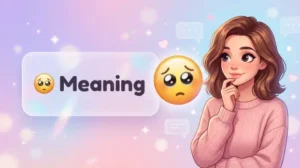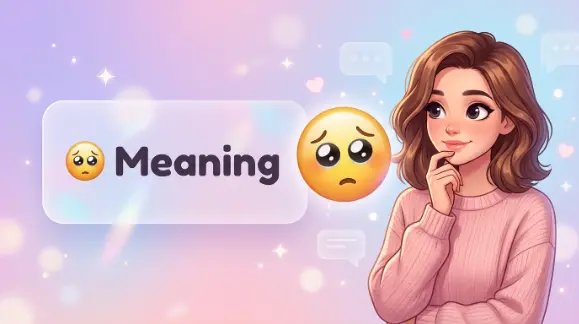
Few emojis can express a soft, emotional feeling quite like 🥺. The 🥺 Meaning can change slightly depending on the situation, but it commonly represents pleading, sadness, vulnerability, affection, or an adorable emotional reaction. People often use it when they want to make a message sound more heartfelt, gentle, or cute.
You may see 🥺 in texts between friends, romantic conversations, social media comments, and everyday chats. Someone might send it when they’re asking for a favor, feeling a little sad, showing affection, or playfully trying to convince someone. In a flirty conversation, the emoji can also add a sweet and innocent tone.
In this guide, you’ll discover the 🥺 Meaning in texting and social media, along with its emotional and romantic uses. We’ll also look at simple examples to help you understand what someone may be trying to express when they send 🥺.
Meaning & Definition
Officially called the Pleading Face emoji, 🥺 shows a round, slightly flushed face with big, glossy, puppy-dog eyes and a small trembling mouth. Its primary meaning across texting and social media is a mix of pleading, begging, or looking for sympathy , but in practice, it’s most often used to express feeling touched, moved, or overwhelmed with emotion (in a good way).
There are two broad “modes” of use:
- Sincere mode: Expressing genuine emotion, gratitude, affection, or vulnerability.
- Sarcastic/joking mode: Mock-begging or playfully guilt-tripping someone, often paired with humor.
Example messages:
- “I just found out my best friend bought my flight tickets 🥺 I’m literally crying”
- “Can you pleaseee cover my shift tomorrow 🥺🥺🥺”
Background & Origin
The Pleading Face emoji was approved as part of Unicode 11.0 in 2018 and added to major platforms like Apple, Google, and Samsung shortly after. Unlike emojis that were designed with one clear purpose (like 😂 for laughter), 🥺 was somewhat ambiguous from the start , its glossy, “about to cry” eyes could read as sad, hopeful, touched, or manipulative depending on context.
It exploded in popularity around 2018–2019, largely through Twitter and Tumblr meme culture, where it became attached to the “soft, shy, pleading” persona often used in fan communities and relationship-themed memes. From there, it crossed into TikTok trends, Instagram captions, and everyday texting, cementing itself as one of the most-used emotional emojis of the late 2010s and early 2020s.
Usage in Different Contexts
Texting/chat messages: Used to soften a request or express being emotionally affected by something.
“You didn’t have to do that for me 🥺 thank you so much”
Social media platforms: Used in captions, comments, and replies to express admiration, cuteness overload, or sentimental reactions.
Comment on a couple’s anniversary post: “This is so pure 🥺❤️”
Professional or technical settings: Rarely used , and when it is, it’s typically in very casual internal team chats (like Slack) to express light-hearted appreciation or a soft request, never in formal emails or client communication.
Slack message: “Could someone review my PR before EOD 🥺”
Platform-Specific Meanings
| Platform | Common Meaning | Example Use |
| Sincere emotional reaction or soft request | “Miss you so much 🥺” | |
| Admiration, cuteness reaction on posts/stories | “This photo of you two 🥺😍” | |
| TikTok | Reaction to wholesome, sad, or heartwarming content | Comment: “Why is this making me cry 🥺” |
| Snapchat | Playful pleading or flirty vulnerability | “Send me a pic pleaseee 🥺” |
| Twitter/X | Sarcastic or exaggerated emotional reaction, often meme-based | “My package got delayed AGAIN 🥺” |
Other Fields Using the Symbol
Since 🥺 is an emoji rather than a text abbreviation, it doesn’t carry alternate meanings in technical, legal, or medical fields the way letter-based acronyms (like DL or DOB) sometimes do. Its use stays largely confined to:
- Casual digital communication , texting apps, DMs, comments
- Marketing and social media captions , brands use it to appear relatable or evoke emotional engagement
- Fandom and meme culture , often layered onto reaction images, edits, and “soft” aesthetic content
Common Misconceptions & Mistakes
A common mix-up is confusing 🥺 (Pleading Face) with 😢 (Crying Face) or 🙏 (Folded Hands). While all three can express emotion, they land differently:
- 🥺 leans toward hopeful, endearing, or gently begging
- 😢 leans toward genuine sadness
- 🙏 leans toward gratitude or a literal request/prayer
Sending 🥺 without context can also be misread , what feels like an innocent “aww” reaction to one person might feel like flirtatious or emotionally manipulative pleading to another, especially in early-stage conversations or with a crush.
Similar Terms & Alternatives
| Emoji/Term | Meaning | Example Use |
| 😢 | Genuine sadness or crying | “I failed my exam 😢” |
| 🙏 | Gratitude, prayer, or polite request | “Thank you so much 🙏” |
| 😭 | Overwhelming emotion (happy or sad) | “This made me sob 😭” |
| 🥹 | Holding back tears, touched | “I’m so proud of you 🥹” |
| 😍 | Adoration or admiration | “You look amazing 😍” |
How to Respond , Chat Examples
With a friend:
Friend: “I got the job!! 🥺” You: “OMG YES you deserve this so much!! 🎉”
With a crush:
Crush: “Can we hang out this weekend? 🥺” You: “Of course, I’d love that 😊”
With a colleague:
Colleague: “Sorry to bug you again, could you send that file over? 🥺” You: “No worries at all, sending it now!”
Differences from Similar Words
Unlike words such as Secret, Private, or Confidential , which describe information that should not be shared , 🥺 communicates an emotional tone, not a status of privacy. It’s purely expressive, signaling vulnerability, softness, or a plea, rather than indicating that something is hidden or restricted.
Relevance in Online Conversations & Dating Apps
On dating apps and in flirty texting, 🥺 plays an outsized role because it signals vulnerability and openness without requiring explicit words.
Example:
“I know it’s soon, but I already miss talking to you 🥺”
This kind of message reads as endearing rather than intense specifically because of the emoji, making 🥺 a popular tool for lowering the emotional stakes of a vulnerable message.
Popularity & Trends Over Time
Google Trends data shows steady, high search interest for “pleading face emoji meaning” since around 2019, with recurring spikes tied to viral TikTok trends and meme formats. It remains one of the most-used emojis in casual conversation across Gen Z and younger millennial users, frequently appearing in “soft girl/soft boy” aesthetic content, reaction memes, and relationship-themed posts.
FAQs
1. What does 🥺 mean from a girl? It usually signals affection, vulnerability, or that she’s touched by something you said or did , context matters a lot here.
2. Is 🥺 flirty? It can be, especially in one-on-one chats with a romantic undertone, but it’s just as often used platonically or jokingly.
3. What’s the difference between 🥺 and 😭? 🥺 leans soft and hopeful; 😭 leans toward intense emotion, whether from laughter or sadness.
4. Can 🥺 be used in professional messages? It’s best avoided in formal settings, though it sometimes appears in casual internal team chats.
5. Why do people use 🥺 so much on social media? Because it conveys emotional nuance quickly and cutely, making captions and comments feel warmer and more relatable.
Conclusion
At its core, 🥺 , the Pleading Face emoji , is all about soft, vulnerable emotion: think gratitude, admiration, gentle begging, or being touched by something sweet.
Its meaning shifts with context, platform, and relationship, so the best approach is always to read the surrounding conversation rather than take it at face value. Once you understand its emotional range, you’ll never second-guess a stray 🥺 again.

I am James Carter, a passionate writer dedicated to creating informative, engaging, and valuable content for readers. I enjoy exploring different topics, researching new ideas, and sharing knowledge through clear and meaningful writing. I am committed to providing accurate information, helpful insights, and well-crafted articles that inspire and educate audiences. With a strong focus on quality and creativity, I aim to connect with readers and deliver content that adds real value.