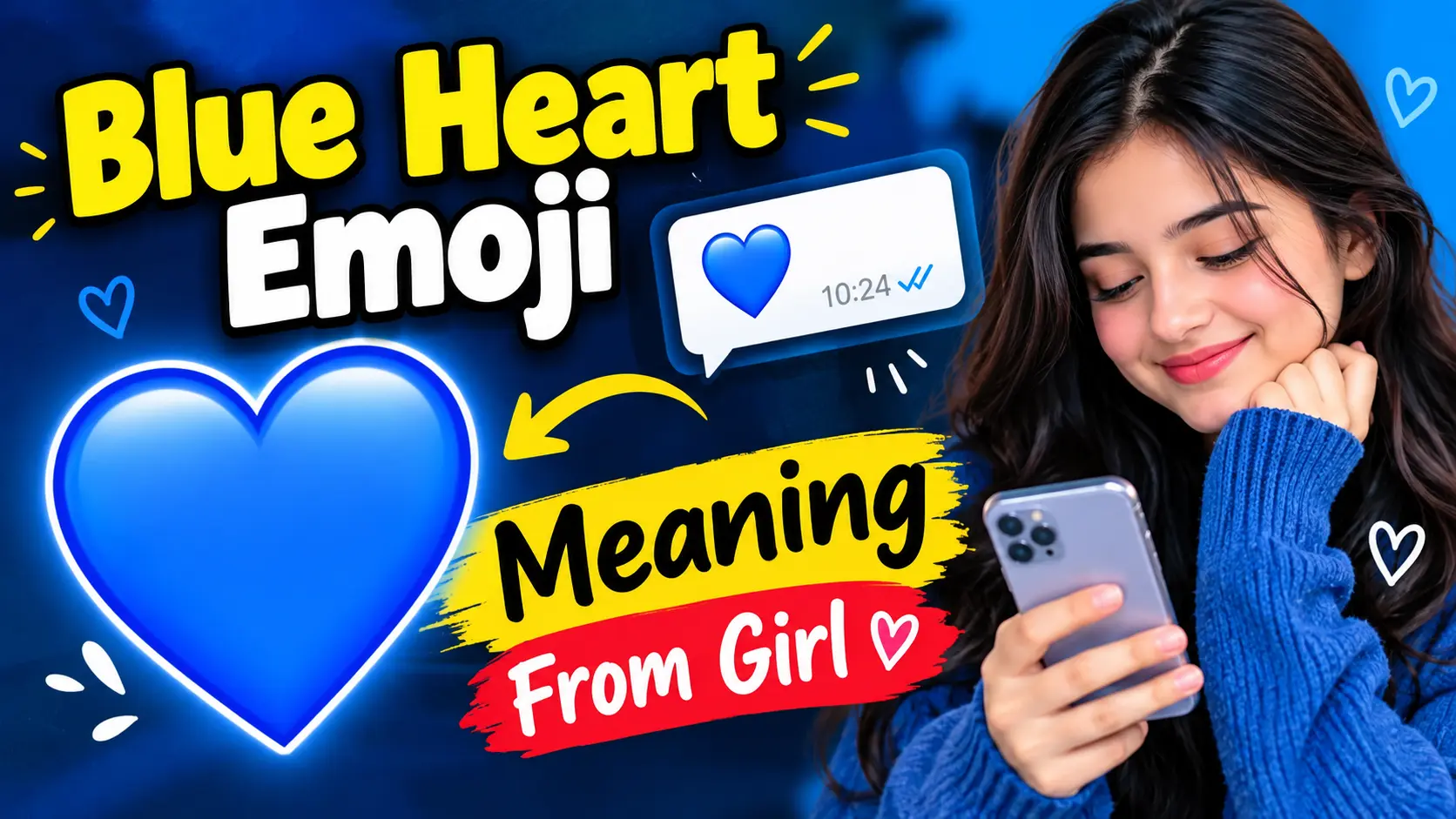
A 💙 from a girl can feel simple at first, but the meaning behind it may depend on the relationship you share. The blue heart emoji meaning from a girl can express trust, care, loyalty, friendship, support, or emotional closeness.
Unlike the red heart, the blue heart often has a calmer and more friendly tone, although it can still appear in romantic conversations. She might send 💙 when she wants to show that she cares about you, appreciates your support, or feels comfortable talking with you.
In some situations, it can represent a strong friendship rather than romantic attraction. If the conversation is already playful or affectionate, however, the same emoji may carry a more personal meaning.
Meaning & Definition
At its core, the 💙 blue heart is generally read as a symbol of trust, loyalty, and calm affection , a “safe” love, if you will. It’s often used to say “I care about you” without the intensity or romantic weight of a red heart ❤️. When a girl sends it, it commonly signals platonic warmth, deep friendship, or supportive love, though context can shift it toward something more romantic but still low-pressure.
Secondary meanings include:
- Support for a cause , many people use blue hearts to show solidarity (autism awareness, certain sports teams, or social movements).
- A “safe” romantic signal , some girls use it specifically because it feels less intense than red, making it a gentle way to show interest without overcommitting.
- Inside jokes or fandom colors , blue hearts sometimes reference a favorite team, K-pop group, or shared joke between friends.
Example messages:
- “Thanks for always listening to me 💙” , platonic, appreciative.
- “Missed you today 💙” , could be soft romantic interest or close friendship, depending on the relationship.
Background & Origin
Emoji hearts became part of everyday digital communication once Unicode expanded its emoji set in the early-to-mid 2010s, giving people more than just the single red heart to express emotion. As texting culture matured, users began assigning unofficial meanings to each heart color based on common associations , blue with calm, trust, and water; red with passion; yellow with friendship; and so on.
The blue heart specifically gained popularity as a “safe” alternative to the red heart, especially among younger texters and social media users who wanted to express affection without the romantic implication. Over time, its use spread across platforms, communities, and even into activism, where blue became linked to specific awareness campaigns.
Usage in Different Contexts
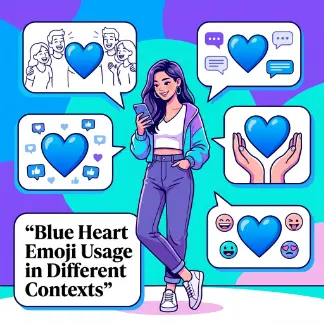
Texting or chat messages: A girl might text “you’re the best 💙” to a close friend, signaling appreciation without romantic intent , or she might use it with a crush as a low-key way of showing she cares.
Social media platforms: On Instagram or TikTok, a blue heart in a comment or caption often shows support for a friend’s post, a favorite creator, or a cause, e.g., “So proud of you 💙” under a friend’s achievement post.
Professional or technical settings: While rare in workplace chat, blue hearts occasionally appear in casual internal messaging (like Slack) to show team appreciation , “Great job on the launch 💙” , though it’s far less common than in personal texting.
Platform-Specific Meanings
| Platform | Common Meaning | Example Use |
| Trust, friendship, quiet affection | “Goodnight 💙” to a close friend or partner | |
| Support, admiration, fandom | “This edit is everything 💙” in comments | |
| TikTok | Fan appreciation, aesthetic/mood match | “Obsessed with this sound 💙” |
| Snapchat | Casual affection, streak-related warmth | “Best snap streak ever 💙” |
| Twitter/X | Solidarity, cause support, community | “Standing with you 💙” on an awareness post |
Other Fields Using the Symbol
Beyond texting, the color blue and blue-heart imagery show up in several unrelated fields:
- Awareness campaigns , blue is associated with causes like autism awareness and child abuse prevention.
- Branding , some companies and sports teams use blue hearts in marketing tied to their brand color.
- Medical/scientific contexts , blue is sometimes used symbolically in health campaigns (unrelated to the emoji itself but worth noting if you see it in official materials).
Common Misconceptions & Mistakes
A lot of people assume the blue heart automatically means “just friends,” but that’s not always true , many girls use it specifically because it’s a softer, less-forward way to show romantic interest. Others confuse it with being a “rejection” emoji, when in reality it’s often the opposite: a gentle green light rather than a hard no.
The biggest pitfall is reading it without context. The same emoji from a stranger, a friend, and a crush can mean three completely different things , tone, conversation history, and frequency of use all matter more than the emoji alone.
Similar Terms & Alternatives
| Emoji/Term | Meaning | Example Use |
| ❤️ Red Heart | Strong romantic love | “I love you ❤️” |
| 💛 Yellow Heart | Friendship, happiness | “Besties forever 💛” |
| 💚 Green Heart | Support, sometimes jealousy jokes | “So jealous of your trip 💚” |
| 💜 Purple Heart | Compassion, sometimes deep affection | “Thinking of you 💜” |
| 🖤 Black Heart | Dark humor, mourning, or edgy affection | “That’s so us 🖤” |
How to Respond , Chat Examples
With a friend: Her: “You always know how to make me laugh 💙” You: “That’s my job lol, love you too 💙”
With a crush: Her: “Had such a good time today 💙” You: “Me too, can’t stop thinking about it 😊 what are you up to this weekend?”
Differences from Similar Words
Unlike “secret,” “private,” or “confidential,” which imply hidden or restricted information, the blue heart isn’t about concealment at all , it’s about emotional tone. Where those words signal who can know something, the blue heart signals how someone feels, specifically leaning toward calm, trustworthy, and non-pressuring affection rather than intensity or exclusivity.
Relevance in Online Conversations & Dating Apps
On dating apps, a blue heart can be a strategic move , it lets someone express interest without the pressure that comes with a red heart. Many girls use it early in a conversation to test the waters, e.g., replying to a good first date recap with “Had fun today 💙” instead of something more intense. It keeps things light while still signaling genuine interest, which is exactly why it’s so popular in early-stage dating texts.
Popularity & Trends Over Time
Google Trends data consistently shows spikes in searches for “blue heart emoji meaning” around Valentine’s Day and after viral TikTok trends explaining emoji “codes.” Meme culture has also played a role, with countless posts joking about overanalyzing a single blue heart text , proof that this tiny symbol carries a surprisingly large emotional weight in modern digital communication.
FAQs
1. Does a blue heart mean she just wants to be friends? Not necessarily , it often signals warmth and trust, which can be platonic or an early romantic signal depending on context.
2. Is blue heart better than red heart for a crush? It can be a safer, lower-pressure way to show interest without going “all in” too soon.
3. Why do girls use blue hearts instead of red ones? Many prefer it because it feels genuine and calm rather than overly intense or presumptuous.
4. Can a blue heart mean support for a cause? Yes, it’s frequently used to show solidarity with awareness campaigns or communities.
5. How do I know what she really means by it? Look at the full conversation , tone, frequency, and relationship history matter more than the emoji alone.
Conclusion
The blue heart emoji is far more nuanced than it first appears , it can mean deep friendship, quiet trust, cautious romantic interest, or solidarity with a cause, all depending on who’s sending it and why.
Instead of overanalyzing a single symbol in isolation, pay attention to the bigger conversation around it. Once you understand the context, that little 💙 stops being confusing and starts being exactly what it was meant to be: a simple, genuine way to say “I care.”

I am Daniel Scott, a passionate writer dedicated to creating meaningful and engaging content that informs, inspires, and connects with readers worldwide. I am passionate about exploring ideas, sharing knowledge, and presenting stories with clarity and creativity. My writing focuses on delivering valuable insights through well-researched articles and thoughtful perspectives. I am committed to maintaining accuracy, originality, and a reader-first approach in every piece I create.