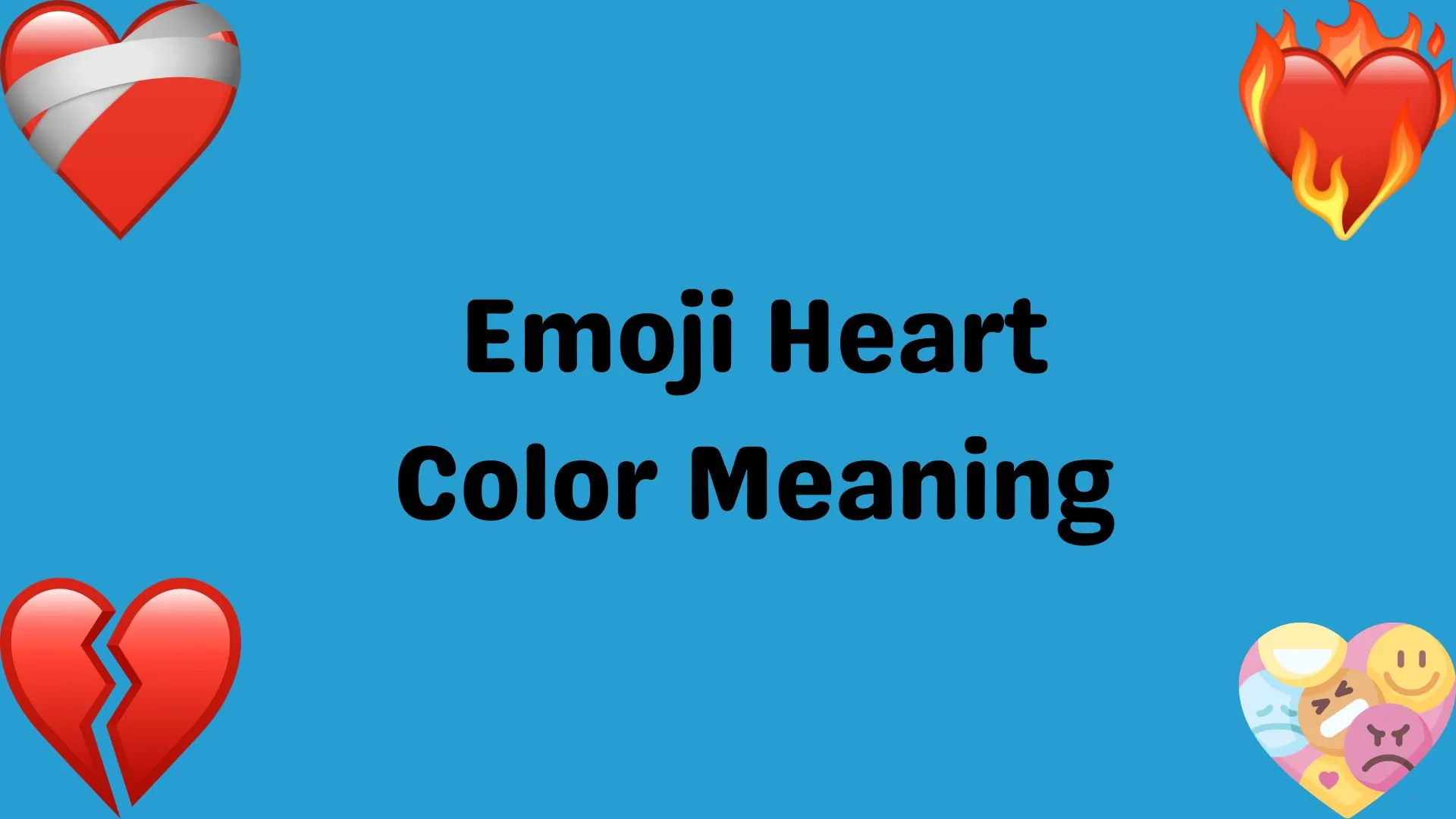
Have you ever wondered why someone sends you a ❤️ red heart instead of a 💙 blue heart or 💜 purple heart? Emoji heart colors may look like simple decorations, but they can express surprisingly different emotions, relationships, and intentions.
From love and romance to friendship, support, kindness, and even heartbreak, each heart color can add a unique meaning to a message. Understanding the emoji heart color meaning can help you interpret texts more clearly and avoid confusing signals, especially when chatting with someone you care about.
Whether you received a heart from a friend, partner, crush, girl, or guy, the color may provide an extra clue about what they are trying to communicate.
Meaning & Definition
At its core, the heart emoji is a symbol of affection, love, or emotional connection , but the color attached to it changes the tone, intensity, and sometimes the entire message.
- ❤️ Red Heart , the default symbol of romantic love, passion, or deep affection.
- 🧡 Orange Heart , warmth, encouragement, or platonic care (common between close friends).
- 💛 Yellow Heart , happiness, friendship, and “sunshine” energy; also historically tied to Snapchat’s Best Friends feature.
- 💚 Green Heart , nature, growth, jealousy (playfully), or support for eco-causes.
- 💙 Blue Heart , trust, loyalty, calm friendship, or support (also used for autism awareness).
- 💜 Purple Heart , deep affection often used for a crush, or support for causes like domestic violence awareness.
- 🖤 Black Heart , dark humor, edgy aesthetic, or sometimes grief , not literal hatred.
- 🤍 White Heart , purity, peace, or minimalism.
- 🤎 Brown Heart , used to represent Black and brown skin tones in solidarity or representation contexts.
Example in a message: “Just wanted to say thank you for today 💛” (friendly, warm gratitude , not romantic). Example in a message: “Can’t stop thinking about last night 💜” (flirty, affectionate undertone).
Background & Origin
Heart emojis trace back to Unicode’s early emoji sets in the mid-2000s, originally popularized through Japanese mobile carriers before spreading globally via smartphones. The red heart was the first and remains the most universally recognized. As Unicode expanded its emoji library over the years, more heart colors were added , giving users a nuanced way to express emotion without needing extra words.
Social media culture accelerated this evolution. Instagram, Snapchat, and TikTok users began assigning specific meanings to specific colors , sometimes officially (like Snapchat’s friend emojis) and sometimes purely through community trends. Over time, this turned a simple symbol into a color-coded emotional shorthand used worldwide.
Usage in Different Contexts
Texting or Chat Messages “Miss you already 🧡” , a warm, caring message to a friend or sibling.
Social Media Platforms A comment on a friend’s post: “You’re glowing 💚” , supportive, uplifting tone.
Professional or Technical Settings While rare in formal emails, hearts do appear in casual workplace chat tools like Slack: “Great job on the presentation ❤️” , a quick, friendly acknowledgment rather than anything romantic.
Platform-Specific Meanings
| Platform | Common Meaning | Example Use |
| General affection across all colors; red remains default for love | “Good morning ❤️” to a partner | |
| Colors often match aesthetic/theme of a post or profile | 💚 used in comments on nature or fitness posts | |
| TikTok | Heart colors trend with challenges or “code” videos | 🖤 used for edgy or aesthetic captions |
| Snapchat | Yellow/red hearts tied to Best Friend streak emojis | 💛 appears automatically for mutual best friends |
| Twitter/X | Often used to show support for causes or communities | 💙 for mental health awareness posts |
Other Fields Using the Abbreviation
Heart symbols and their colors extend beyond casual chatting:
- Medical & Health Apps , a red heart icon often represents heart rate or cardiovascular health tracking.
- Military & Honors , the “Purple Heart” is a real U.S. military decoration, unrelated to the emoji’s romantic connotation.
- Branding & Marketing , companies use specific heart colors in campaigns to align with brand identity (e.g., blue hearts for trust-focused brands).
- Charity & Awareness Campaigns , specific colors represent causes, such as blue for autism awareness or purple for domestic violence awareness.
Common Misconceptions & Mistakes
One of the biggest mix-ups is assuming all hearts mean romance. In reality, an orange or yellow heart is far more likely to signal friendship than love. People also confuse the black heart with negativity or hatred, when it’s usually just a stylistic or humorous choice. Another common error is reading too much into color choice from someone who simply uses whatever heart is closest on their keyboard, with no deeper meaning intended , context always matters more than color alone.
Similar Terms & Alternatives
| Term/Emoji | Meaning | Example Use |
| 💔 Broken Heart | Sadness, heartbreak, disappointment | “Just found out the trip got canceled 💔” |
| 💕 Two Hearts | Mutual affection, growing love | “So happy we found each other 💕” |
| 💖 Sparkling Heart | Excitement, admiration | “You looked amazing today 💖” |
| 💞 Revolving Hearts | Deep mutual love | “Can’t imagine life without you 💞” |
| ❣️ Heart Exclamation | Emphasis on affection or urgency | “Miss you ❣️” |
How to Respond , Chat Examples
With a Friend Friend: “Thanks for helping me move today 💛” You: “Anytime! That’s what friends are for 😊”
With a Crush Crush: “Had a really good time tonight 💜” You: “Me too, can’t stop smiling 😄”
With a Colleague Colleague: “Loved your idea in the meeting ❤️” You: “Thank you! Glad it landed well 🙌”
Differences from Similar Words
People often lump heart emojis together with words like secret, private, or confidential, assuming a colored heart implies some hidden message. In reality, heart color is about emotional tone, not secrecy. Something marked “confidential” is about information control, while a heart emoji , regardless of color , is about expressing feeling openly. The nuance lies in intensity and relationship context, not concealment.
Relevance in Online Conversations & Dating Apps
On dating apps, heart color can subtly signal interest level. A red or purple heart might suggest romantic interest, while a yellow or green heart tends to feel more casual or friendly. For example, matching with someone and receiving “Loved your profile 💜” reads very differently than “Nice profile 💚” , the former leans flirtatious, the latter more neutral. Understanding these small color cues can help you gauge tone before a conversation even gets serious.
Popularity & Trends Over Time
Search interest in emoji heart color meaning spikes regularly, especially around Valentine’s Day, viral TikTok “heart color code” trends, and whenever a new emoji update rolls out. Meme culture has also played a role , jokes about overthinking heart color choices are a recurring theme across Twitter/X and TikTok, keeping the topic consistently relevant year-round.
FAQs
1. Does the color of a heart emoji really matter? Yes, to an extent , colors often carry different emotional tones, though personal and cultural context still play the biggest role.
2. What does a black heart emoji mean? It’s usually used for dark humor, edgy style, or aesthetic captions , not literal hatred or hostility.
3. Is the purple heart emoji romantic? It can be, especially in flirty or crush-related messages, but it’s also used for awareness causes like domestic violence support.
4. Why did Snapchat make my heart yellow? Snapchat automatically assigns emojis based on your interaction frequency with friends , yellow indicates a mutual best friend.
5. Can heart color mean something different on each platform? Yes, platform culture influences interpretation, so the same color can feel different on Instagram versus TikTok or Snapchat.
Conclusion
At the end of the day, emoji heart color meaning comes down to context, relationship, and platform , not a strict universal rulebook.
Whether it’s a red heart signaling romance, a yellow heart marking friendship, or a black heart adding some edge to a caption, understanding these subtle cues helps you communicate (and interpret messages) more clearly.

I am Daniel Scott, a passionate writer dedicated to creating meaningful and engaging content that informs, inspires, and connects with readers worldwide. I am passionate about exploring ideas, sharing knowledge, and presenting stories with clarity and creativity. My writing focuses on delivering valuable insights through well-researched articles and thoughtful perspectives. I am committed to maintaining accuracy, originality, and a reader-first approach in every piece I create.