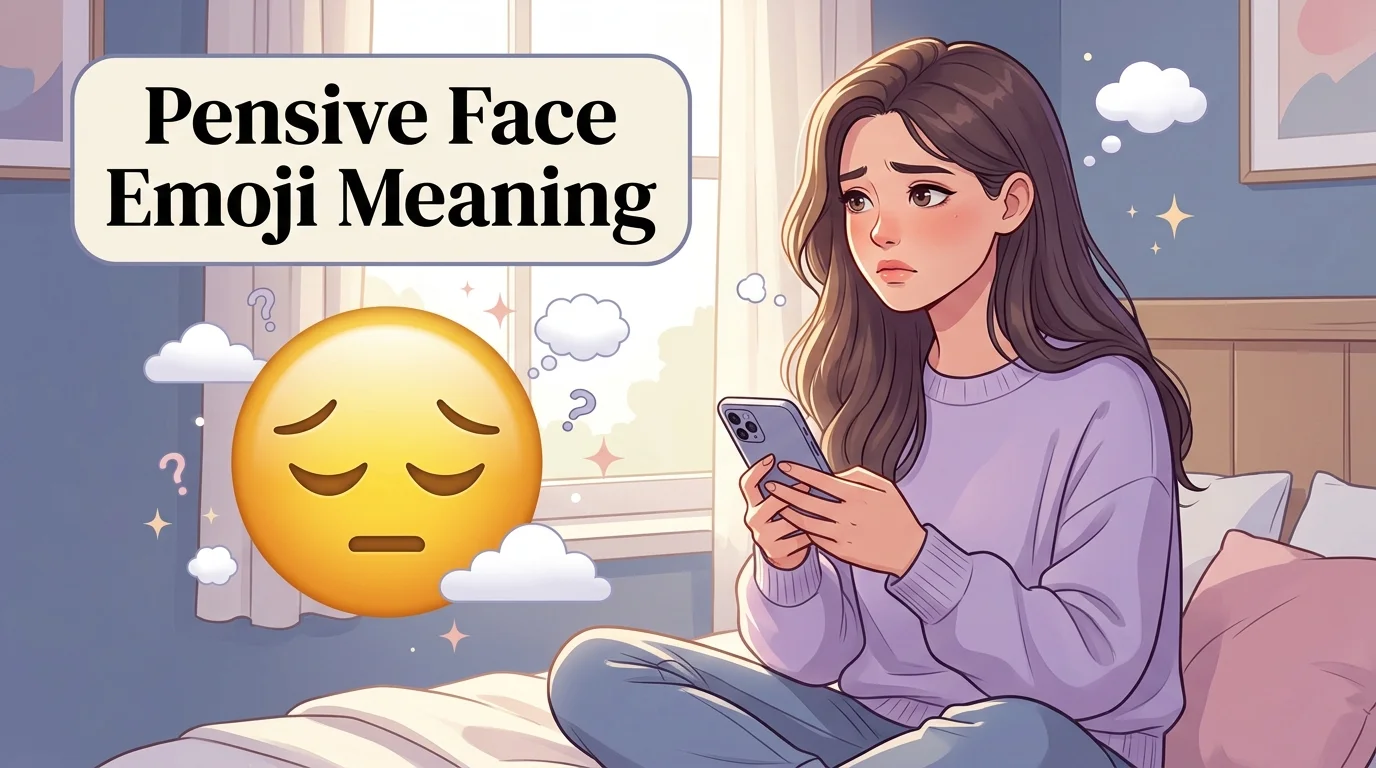
Some emotions are difficult to express with words, especially when you are feeling thoughtful, disappointed, or quietly emotional. The Pensive Face Emoji Meaning 😔 is often associated with sadness, reflection, regret, loneliness, or deep thought. Its downcast expression gives messages a soft and serious emotional tone.
In texting, someone might use 😔 when they are going through a difficult moment, thinking about something that happened, or feeling disappointed by a situation. It can also show sympathy or a quiet emotional response without making the conversation overly dramatic. The intended meaning depends on the surrounding message and the relationship between the people chatting.
This guide explains the Pensive Face Emoji Meaning in simple terms, with examples from texting, social media, friendships, and relationships. You’ll learn what 😔 can communicate and how to understand it correctly when someone sends it to you.
Meaning & Definition
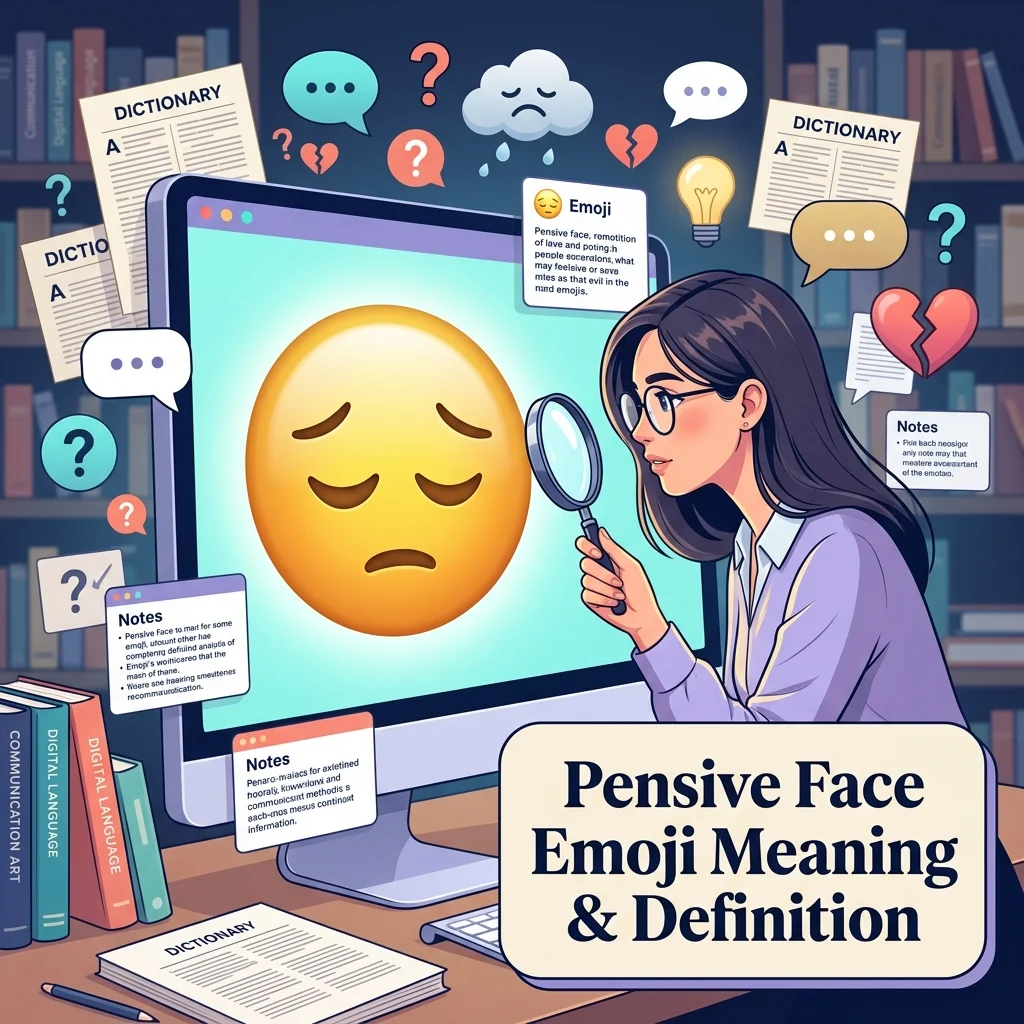
The primary meaning of the pensive face emoji 😔 is quiet sadness, disappointment, or regret. The closed eyes, slightly furrowed brows, and flat mouth show someone lost in thought or feeling down without full-blown tears.
Secondary meanings include loneliness, mild hurt, thoughtful reflection, or a soft “I’m not okay right now.” It is less intense than crying emojis and more inward-looking than an angry or frustrated face.
Examples in messages:
- “I didn’t get the job 😔”
- “Been thinking about everything that happened 😔”
Background & Origin
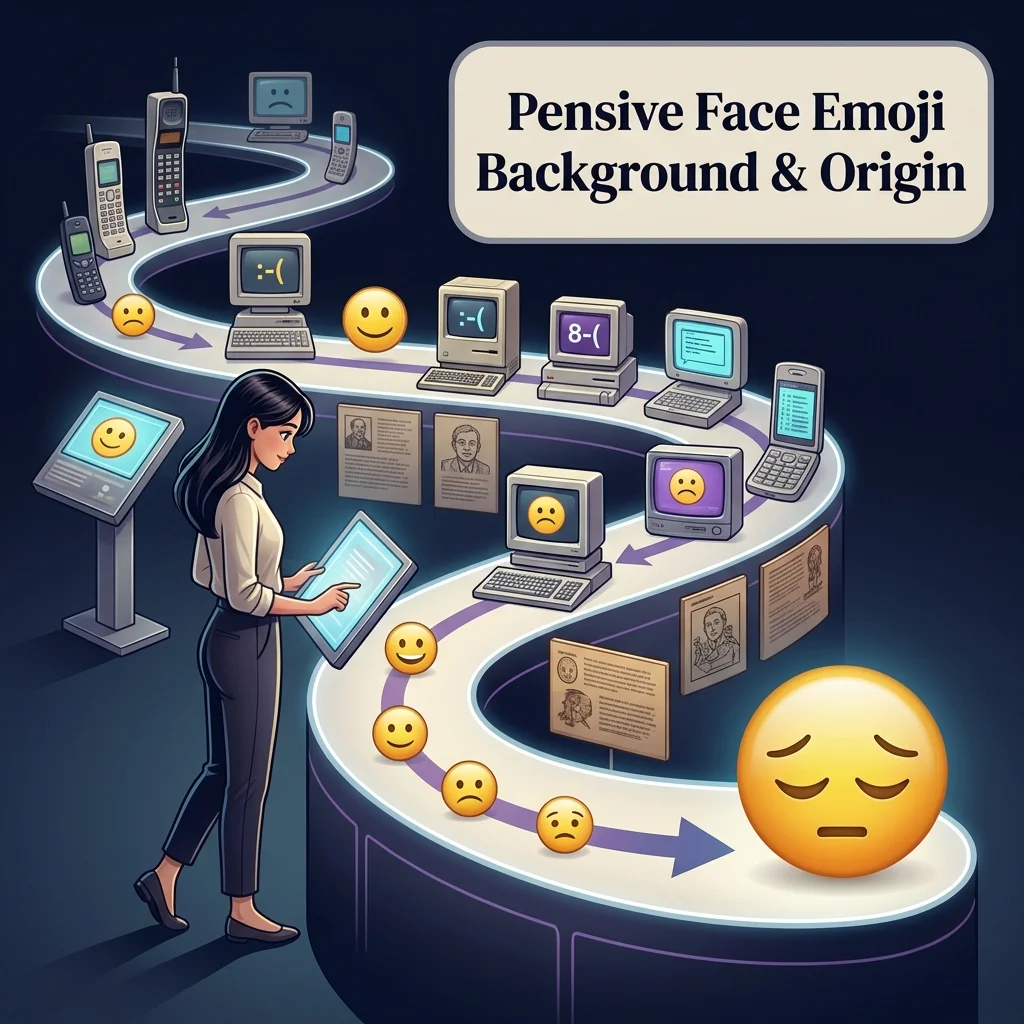
The pensive face emoji was approved in Unicode 6.0 in 2010 and became widely available with Emoji 1.0. Its design draws from classic sad or contemplative facial expressions seen in cartoons and early digital emoticons.
Over the years the emoji settled into everyday use as a gentle way to signal low mood or disappointment. Platform designs vary slightly, some look more remorseful, others more neutral, but the core feeling of quiet sadness and reflection has remained consistent across devices.
Usage in Different Contexts
Texting or chat messages
Friends send it after sharing bad news or admitting they feel down: “Rough day today 😔.”
Social media platforms
It appears in captions and comments when someone wants to express disappointment or a reflective mood without dramatic emotion: “Missed the deadline 😔.”
Professional or technical settings
Rare in formal work emails. In casual team chats it can soften the delivery of disappointing updates, though many prefer clearer language.
Platform-Specific Meanings
| Platform | Common Meaning | Example Use |
| Mild sadness or disappointment | “Didn’t go as planned 😔” | |
| Reflective or low mood in captions | “Feeling a bit quiet today 😔” | |
| TikTok | Soft reaction to sad or thoughtful content | “This hit different 😔” |
| Snapchat | Quick signal of feeling down | Reply to story: “Sorry you’re going through that 😔” |
| Twitter/X | Quiet disappointment or regret | “That news was hard to read 😔” |
Other Fields Using the Abbreviation
Outside personal messaging the pensive feeling shows up in:
- Mental-health and wellness content
- Storytelling about disappointment or loss
- Music and art posts that carry a melancholic mood
- Everyday reflections on social media
It is not a technical acronym, the emoji itself carries the emotional weight.
Common Misconceptions & Mistakes
Many people treat the pensive face emoji as identical to a full crying face 😭. In reality it is softer and more thoughtful, more “I’m quietly sad” than “I’m breaking down.”
Another mix-up is confusing it with the relieved face 😌, which has similar closed eyes but a happier overall expression. Misreading the tone can make a supportive reply feel out of place.
Similar Terms & Alternatives
- 😢 Crying face – more open sadness with a tear
- 🙁 Slightly frowning face – milder disappointment
- 😞 Disappointed face – clearer sense of let-down
- 🥺 Pleading face – softer, more vulnerable request
Example: “I’m feeling off 😔” feels more introspective than “I’m feeling off 😢.”
How to Respond , Chat Examples
Friend:
You: “Didn’t make the team this year.”
Friend: “That’s really tough 😔 I’m here if you want to talk.”
Crush:
You: “Been in a quiet mood lately.”
Crush: “Sorry you’re feeling that way 😔 want some company?”
Colleague (casual chat):
You: “The client went with another option.”
Colleague: “Disappointing news 😔 we’ll bounce back.”
Differences from Similar Words
Unlike “secret,” “private,” or “confidential,” the pensive face emoji does not hide information, it gently reveals an inner state. It is closer to “I’m feeling low / thoughtful” than to any closed-off term. Its power comes from quiet visibility rather than concealment.
Relevance in Online Conversations & Dating Apps
On dating apps and casual social media the pensive face can signal emotional honesty. Using 😔 after sharing something personal shows vulnerability without heavy drama. In early conversations it can invite care and deeper connection when someone is open about feeling down.
Example: “Had a rough day and just needed to say it 😔 thanks for listening.”
Popularity & Trends Over Time
Since its 2010 debut the pensive face has remained a steady, reliable emoji for everyday low moods. It does not spike dramatically like trend-driven faces, but consistent use across messaging and social platforms shows it fills a lasting need for soft, reflective sadness. Google Trends and usage data confirm its place as a core emotional emoji rather than a passing fad.
FAQs
What does the pensive face emoji mean?
It usually means quiet sadness, disappointment, regret, or thoughtful low mood.
Is 😔 stronger than other sad emojis?
No. It is gentler and more introspective than crying or loudly sad faces.
Can it mean someone is just thinking?
Sometimes, but the overall tone is still tinged with sadness or disappointment.
Is it okay to use in work chats?
Only in casual settings. Clearer language is usually better for professional updates.
How should I reply to 😔?
A kind, open response that offers support or space to talk works best.
Conclusion
The pensive face emoji 😔 offers a quiet way to share disappointment, regret, or a low mood without overwhelming intensity. Whether someone is reflecting on a setback, feeling lonely, or simply not okay, the downcast expression invites understanding rather than drama.
Context and the rest of the message will always clarify the exact feeling. Next time you see that thoughtful, slightly sad face, you’ll know the sender is letting you into a softer, more introspective moment.

I am Daniel Scott, a passionate writer dedicated to creating meaningful and engaging content that informs, inspires, and connects with readers worldwide. I am passionate about exploring ideas, sharing knowledge, and presenting stories with clarity and creativity. My writing focuses on delivering valuable insights through well-researched articles and thoughtful perspectives. I am committed to maintaining accuracy, originality, and a reader-first approach in every piece I create.