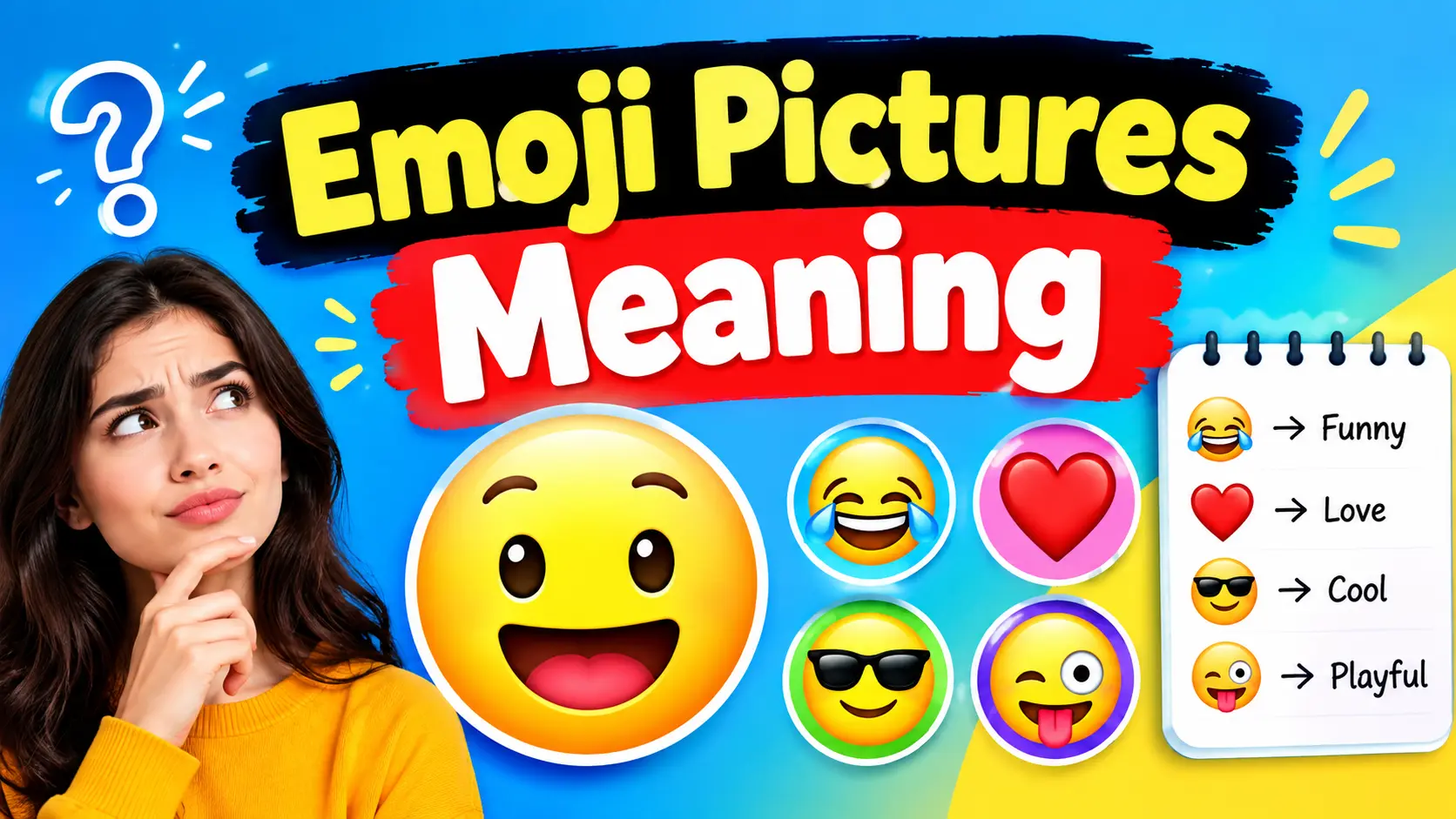
A single picture can sometimes express an emotion faster than a full sentence. That’s exactly why emoji pictures have become such a common part of texting, social media, and online conversations.
From smiling faces and hearts to funny reactions and expressive symbols, each image can add a different feeling to your message. Understanding emoji pictures meaning can help you avoid confusion when someone sends an emoji without any words.
The same picture may show happiness, love, sarcasm, excitement, embarrassment, or even a hidden reaction depending on the conversation. Whether you’re chatting on WhatsApp, Instagram, Facebook, or another messaging app, knowing what different emojis mean makes communication easier.
Meaning & Definition
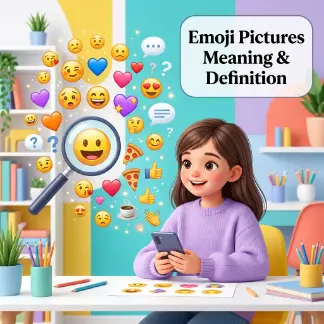
At its core, emoji pictures meaning refers to the actual message or emotion a small digital picture is meant to convey when someone sends it in a text, DM, or comment , as opposed to just decoration.
Every emoji technically has an official Unicode name and definition (the “dictionary” meaning set by the Unicode Consortium, the organization that standardizes emoji across every phone and platform). But almost every popular emoji also picks up a slang or cultural meaning that has nothing to do with its official name. For example:
- 🍑 is officially named “Peach,” but online it’s widely used as slang for a person’s backside.
- 💀 officially represents a skull, but on TikTok and Twitter/X it usually means “I’m dead” , i.e., something is hilarious.
- 🙏 is called “Folded Hands,” yet depending on context it can mean “please,” “thank you,” “praying,” or a literal high-five.
Example in a message:
“That tweet had me 💀💀💀” → translation: “That tweet was extremely funny.” “Can you send the file? 🙏” → translation: “Please, I’m asking nicely.”
Background & Origin
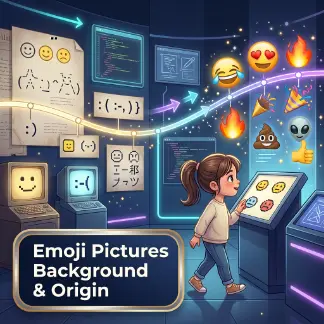
Emoji didn’t start as an internet trend , they started as a practical fix for a small screen. In 1999, interface designer Shigetaka Kurita created a set of 176 simple pictograms for a Japanese mobile carrier, aiming to pack more meaning into tiny character limits than plain text allowed.
The idea caught on fast in Japan, and by 2010 the Unicode Consortium , the nonprofit that has coordinated text and character standards since 1991 , folded emoji into its official standard with a huge release, which is largely why emoji now look (mostly) the same whether you’re on an iPhone, Android, or laptop. From there, smartphones, texting apps, and social platforms did the rest, turning emoji from a Japanese carrier feature into a global shorthand.
Since then, the emoji library has kept expanding. Skin tone options arrived in 2015, regional flags in 2017, and today the Unicode standard includes around 3,953 emoji across dozens of categories , with new batches like Emoji 17.0 and the upcoming Emoji 18.0 adding fresh symbols almost every year.
Usage in Different Contexts
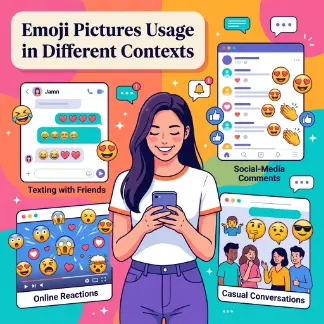
The same emoji can shift meaning entirely depending on where it’s used.
Texting or chat messages: Emoji fill in the tone that plain text can’t , sarcasm, warmth, excitement , so a friend might text “running late 😭” where the crying-laughing emoji signals “I’m stressed but it’s funny,” not actual grief.
Social media platforms: On Instagram or TikTok, emoji often act as inside jokes or reactions. A comment like “😭😭 not you posting this” reads as amused disbelief, not sadness.
Professional or technical settings: In Slack or workplace email, emoji tend to soften tone or confirm receipt , a simple 👍 on a message means “got it, approved,” while ✅ often marks a task as done.
Platform-Specific Meanings
Emoji culture isn’t identical everywhere , each platform has developed its own shorthand.
| Platform | Common Meaning | Example Use |
| Mostly literal/emotional tone, family & friend groups | “Reached home safe 🙏😊” | |
| Reaction to posts, flirtation, aesthetic captions | “You ate this look 🔥🔥” | |
| TikTok | Comedic exaggeration, trend-driven slang | “The way she said that 💀” |
| Snapchat | Streaks, closeness rankings (🔥 = active streak, 😊 = close friend) | “We’re on a 100-day streak 🔥” |
| Twitter/X | Sarcasm, meme culture, quick reactions | “This take 🤡” |
Other Fields Using the Abbreviation
Emoji aren’t confined to casual chat , they’ve spread into other professional and technical spaces too:
- Marketing & branding: Companies use emoji in subject lines and ads to boost open rates and add personality.
- UX/UI design: Apps use emoji as universal icons because they translate across languages without needing text.
- Data & analytics: Emoji are studied as sentiment signals in social listening tools to gauge public mood.
- Legal contexts: Courts have increasingly had to interpret emoji as evidence , a thumbs-up 👍 has even been argued in contract disputes as a form of agreement.
- Healthcare apps: Some mental health and mood-tracking apps use emoji faces as quick, low-barrier ways for users to log how they’re feeling.
Common Misconceptions & Mistakes
Misreading emoji is one of the easiest ways to send the wrong message:
- Fruit emoji confusion: 🍆 (eggplant) and 🍑 (peach) are read as suggestive slang by most younger users, but older or less online recipients may take them completely literally , leading to awkward mix-ups.
- The “passive-aggressive” thumbs-up: Older users often send 👍 to mean simple agreement, while some younger users read a bare thumbs-up as cold or dismissive in casual chats.
- Skull vs. genuine distress: 💀 usually means laughter online, but out of context it can look alarming to someone unfamiliar with the slang.
- Praying hands mix-up: 🙏 gets read as “please,” “thank you,” or literal prayer , tone and prior context matter more than the icon itself.
The core pitfall: the same emoji can mean opposite things depending on the sender’s age, platform, and relationship to you. Always read it alongside the rest of the message.
Similar Terms & Alternatives
| Term | Meaning | Example Use |
| Emoticon | Text-based face made from punctuation, e.g. 🙂 | “See you soon :)” |
| Sticker | Larger, often animated image sent in chat apps | Sending an animated cat sticker in WhatsApp |
| GIF | Short looping video/animation used as a reaction | Replying with a celebrity reaction GIF |
| Meme | Image/text combo referencing a cultural joke | Sharing a captioned meme in a group chat |
How to Respond , Chat Examples
With a friend:
Friend: “Guess who just got the job 🎉” You: “NO WAY congrats 🙌🔥 we’re celebrating this weekend”
With a crush:
Crush: “Had a really fun time tonight 😊” You: “Same, already looking forward to next time 😄”
With a colleague:
Colleague: “Sent the report your way ✅” You: “Perfect, reviewing now , thanks! 👍”
Differences from Similar Words
Emoji sit in an interesting middle ground compared to purely textual descriptors like Secret, Private, or Confidential. Those words are explicit , there’s no ambiguity about what “confidential” means in a sentence. An emoji, by contrast, is a visual placeholder for tone or emotion that relies on shared cultural context to be understood. Where “private” tells you something directly, an emoji like 🤫 (shushing face) implies privacy or secrecy indirectly, and its exact weight , playful versus serious , depends entirely on the conversation around it.
Relevance in Online Conversations & Dating Apps
On dating apps, emoji often carry the emotional weight that a short bio or message can’t. A well-placed 😉 can signal playful interest, while 😍 in a comment can hint at attraction without saying it outright. Because dating app messages are usually brief, small emoji cues often become the difference between a message reading as friendly or flirty.
Example:
“Loved your hiking photos 😍” reads as genuine attraction. “Loved your hiking photos 😂” reads as more casual, joking interest.
Misjudging these small signals is a common reason for mixed signals in online dating , which is exactly why understanding emoji nuance matters so much in casual digital communication.
Popularity & Trends Over Time
Emoji usage has only grown since their 2010 mainstream debut. The Unicode standard now sits at roughly 3,953 emoji across 24 character blocks, with the newest batch, Emoji 17.0, already rolling out on updated iPhones, Androids, and Galaxy devices, and Emoji 18.0 set to become official later in 2026. Beyond raw numbers, individual emoji rise and fall in popularity the way memes do , Emojipedia has tracked emoji like the Pleading Face surging in 2020 before being overtaken by other trending symbols. World Emoji Day (celebrated every July 17) has also become a yearly moment where brands and platforms announce “Emoji of the Year” picks, keeping emoji culture firmly in the meme-and-trend cycle rather than a static, unchanging alphabet.
FAQs
1. Do emoji mean the same thing on every platform? No , the base picture looks similar, but slang meaning shifts by platform and by generation using it.
2. Why do older and younger people interpret the same emoji differently? Because emoji slang evolves online faster than official definitions do, so meaning is often generational rather than fixed.
3. Is there an official source for what an emoji “really” means? Yes , the Unicode Consortium sets the official name and description, though everyday slang usage often diverges from it.
4. Can emoji be misread in professional settings? Absolutely , a casual emoji that feels friendly to you might read as unprofessional or unclear to a colleague, so context and workplace norms matter.
5. Why do dating apps rely so heavily on emoji? Because short messages leave little room for tone, so emoji quickly signal whether a message is playful, flirty, or purely friendly.
Conclusion
At the end of the day, emoji pictures meaning comes down to context: the same small picture can be a joke, a compliment, an official symbol, or a flirt signal depending on who sent it, where, and to whom.
Whether you’re texting a friend, sliding into a dating app chat, or replying to a coworker, taking a beat to read the emoji alongside the rest of the message , rather than in isolation , is the easiest way to avoid mixed signals. The more digital conversation leans on these tiny pictures, the more useful it is to actually understand what they’re saying.

I am Daniel Scott, a passionate writer dedicated to creating meaningful and engaging content that informs, inspires, and connects with readers worldwide. I am passionate about exploring ideas, sharing knowledge, and presenting stories with clarity and creativity. My writing focuses on delivering valuable insights through well-researched articles and thoughtful perspectives. I am committed to maintaining accuracy, originality, and a reader-first approach in every piece I create.