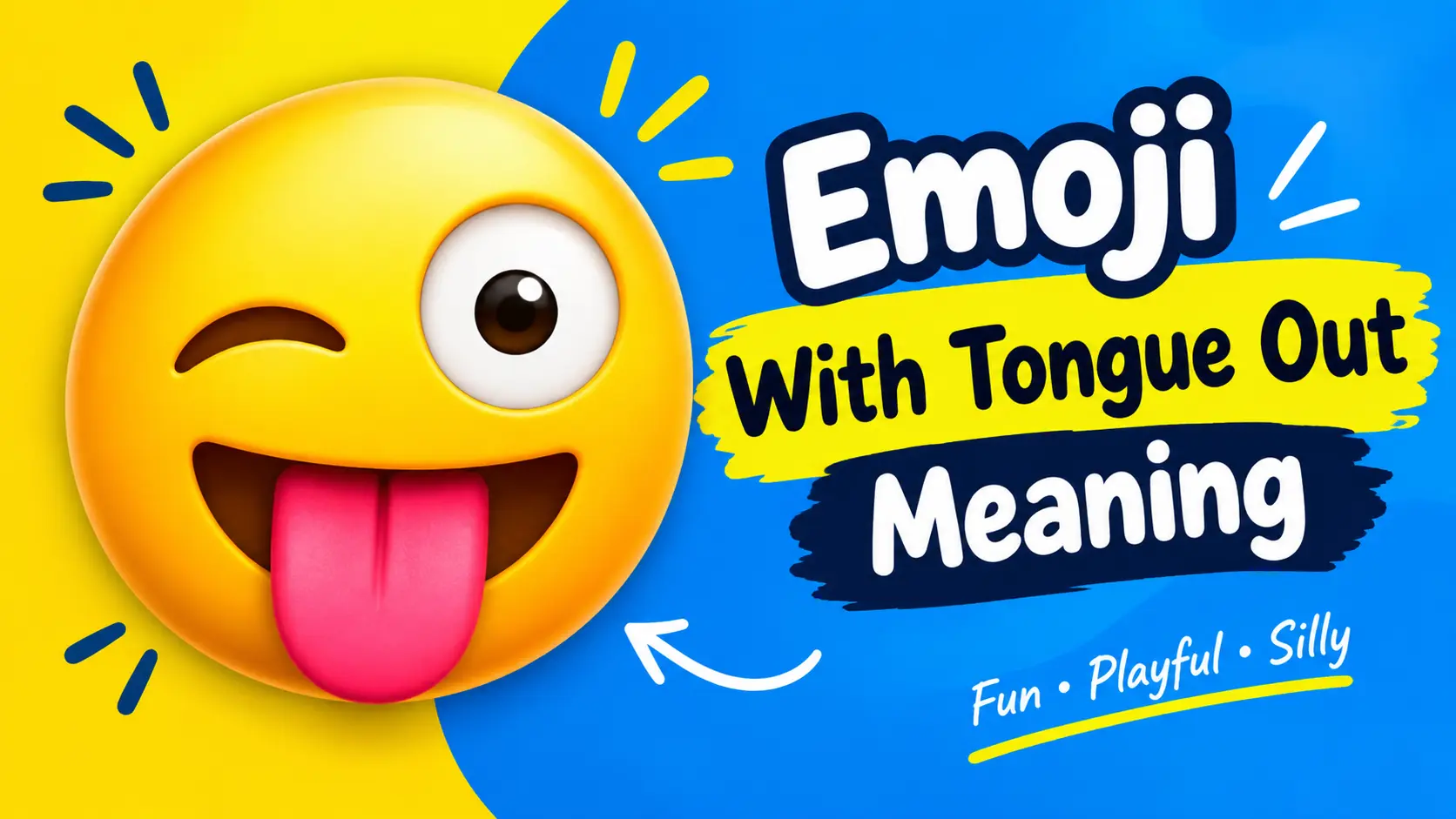
A tongue sticking out can turn a plain text into something much more playful. 😛, 😝, and 😜 are commonly used to show teasing, silliness, joking, or a lighthearted mood. However, the Emoji With Tongue Out Meaning can change depending on the emoji, conversation, and relationship between the people texting.
For example, someone might send 😛 after making a silly comment, while 😝 can suggest a more exaggerated or goofy reaction. The 😜 emoji, with its winking eye, often adds a stronger teasing or mischievous tone. These emojis can also soften a message that might otherwise sound too serious or direct.
In this guide, we’ll explain the Emoji With Tongue Out Meaning, what each tongue-out emoji can express, and how people commonly use them in texting, social media, and casual conversations. You’ll also learn what these emojis may mean from a guy or girl and how context changes their message.
Meaning & Definition
The emoji with tongue out (officially called “Face With Tongue” 😛, along with its close cousins 😜 Winking Face With Tongue and 😝 Squinting Face With Tongue) primarily signals playfulness, silliness, or lighthearted teasing. It’s the digital equivalent of sticking your tongue out at a friend to say “just kidding” or “I’m being cheeky.”
Primary meaning: Joking around, sarcasm, or harmless teasing. Secondary/alternative meanings: Flirtation (especially 😜), mock disgust or “yuck,” excitement or goofiness, and sometimes a cheeky “I got you” after a prank.
Example messages:
- “I ate your leftovers 😛” , teasing, not serious.
- “Can’t believe you fell for that 😜” , playful gloating after a joke.
Background & Origin
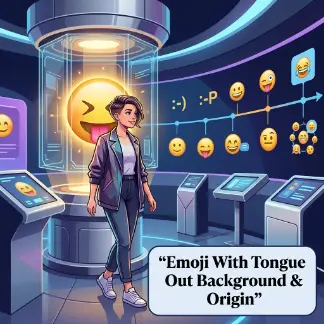
Like most emojis, the tongue-out face traces back to Unicode’s original emoji set, introduced in the early 2010s as smartphone keyboards standardized emoji across platforms. It borrowed heavily from emoticon culture , the pre-emoji era of text-based faces like 😛 and ;P, which internet users had already been typing since the 1990s on instant messenger platforms like AIM and MSN Messenger.
As smartphones made expressive, colorful emoji mainstream, the tongue-out face evolved from a niche emoticon into one of the most recognizable “joking” symbols online, cementing its place in texting shorthand right alongside 😂 and 😉.
Usage in Different Contexts
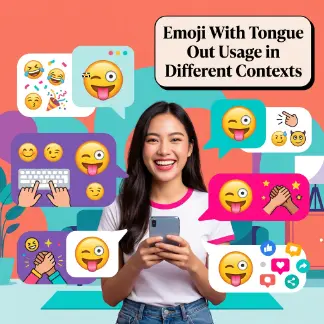
Texting or chat messages: Used to soften a joke or sarcastic comment so it doesn’t come across as mean. “You’re so extra 😛”
Social media platforms: Common in captions and comments to signal humor or a playful vibe. “Monday mood 😜”
Professional or technical settings: Rare and generally discouraged , the tongue-out emoji reads as too casual for formal emails or client-facing chats, though it occasionally appears in relaxed internal team chats to lighten the tone.
Platform-Specific Meanings
| Platform | Common Meaning | Example Use |
| Playful teasing between friends/family | “Running late again 😛” | |
| Fun, quirky caption energy | “New haircut, don’t judge 😜” | |
| TikTok | Comedic or over-the-top reactions | “When the audio hits different 😝” |
| Snapchat | Flirty or silly selfie captions | “Feeling cute 😛” |
| Twitter/X | Sarcastic commentary or banter | “Sure, that’ll totally work 😜” |
Other Fields Using the Abbreviation
Outside of texting, similar-looking symbols or the concept of “tongue out” appear in a few other niches:
- Emoji design/Unicode documentation: Referred to formally as “Face With Tongue” (U+1F61B).
- Branding/logos: Famously associated with the Rolling Stones’ tongue-and-lips logo, unrelated to the emoji but often confused visually.
- Animation and cartoons: A tongue-out expression is a classic visual shorthand for cheekiness or mock rudeness, predating emoji entirely.
Common Misconceptions & Mistakes
A common mix-up is assuming every tongue-out emoji means the same thing , it doesn’t. 😛 usually reads as neutral teasing, while 😜 (with a wink) leans flirty, and 😝 (with scrunched eyes) often signals exaggerated silliness or “just kidding, don’t be mad.” Sending the wrong variant can shift a joke into something that feels flirtatious when you didn’t intend it to. Another pitfall: using it in professional or first-time conversations, where it can come across as overly familiar or immature.
Similar Terms & Alternatives
| Term/Emoji | Meaning | Example Use |
| 😂 | Laughing hard, something is funny | “That’s hilarious 😂” |
| 😉 | Wink, subtle flirtation or hint | “You know what I mean 😉” |
| 🙃 | Sarcasm or playful irony | “Great, love that for me 🙃” |
| 😏 | Smirking, sly or suggestive | “Look who showed up 😏” |
How to Respond , Chat Examples
With a friend: Friend: “You owe me ice cream 😛” You: “Only if you admit you lost the bet first 😂”
With a colleague: Colleague: “Guess who forgot the meeting notes 😛” You: “Classic! I’ll send mine over, no worries.”
Differences from Similar Words
Unlike words such as Secret, Private, or Confidential, which describe information you’re withholding, the tongue-out emoji is purely about tone and emotion , it doesn’t hide anything, it colors how a statement should be read. Think of it as punctuation for playfulness rather than a stand-in for meaning, the way an abbreviation like DL (Download or Driver’s License) actually replaces a word.
Relevance in Online Conversations & Dating Apps
On dating apps, tone is everything since there’s no voice or face to soften a message. The tongue-out emoji , especially 😜 , is a go-to way to flirt without being overly serious, signaling “I’m interested but keeping this light.” Example: “You’re trouble, aren’t you? 😜” instantly reads as playful flirting rather than a genuine accusation.
Popularity & Trends Over Time
Search interest and usage of the tongue-out emoji have stayed consistently strong for over a decade, spiking around casual social trends, meme formats, and playful captioning styles on TikTok and Instagram Reels. It remains one of the most frequently used “joking” emojis across major platforms, especially among younger users who favor expressive, low-effort ways to signal humor.
FAQs
1. What does the tongue-out emoji mean in texting? It generally means playful teasing, sarcasm, or lighthearted joking , not to be taken seriously.
2. Is the tongue-out emoji flirty? It can be, especially the winking version (😜), which is often used in flirty or teasing exchanges.
3. What’s the difference between 😛, 😜, and 😝? 😛 is neutral teasing, 😜 adds a flirty wink, and 😝 (scrunched eyes) leans more exaggerated or silly.
4. Is it okay to use the tongue-out emoji at work? It’s best avoided in formal settings; it can come across as too casual or unprofessional.
5. Where did the tongue-out emoji come from? It evolved from classic text emoticons like :P, later becoming a standardized emoji as smartphones adopted Unicode emoji sets.
Conclusion
At its core, the emoji with tongue out meaning boils down to one thing: playfulness. Whether it’s softening a joke, flirting on a dating app, or adding a silly tone to a caption, this small icon carries a lot of emotional nuance depending on context and which variant you use.
Next time you see it pop up in a chat, take a second to read the room , the meaning changes with the conversation, the platform, and the person sending it.

I am William Harris, a passionate writer dedicated to creating informative, engaging, and valuable content for readers around the world. I enjoy researching different topics and sharing well-crafted articles that provide useful insights, practical tips, and meaningful information. I am committed to delivering high-quality content with accuracy, clarity, and a reader-focused approach. Through my writing, I aim to educate, inspire, and help people discover new ideas.