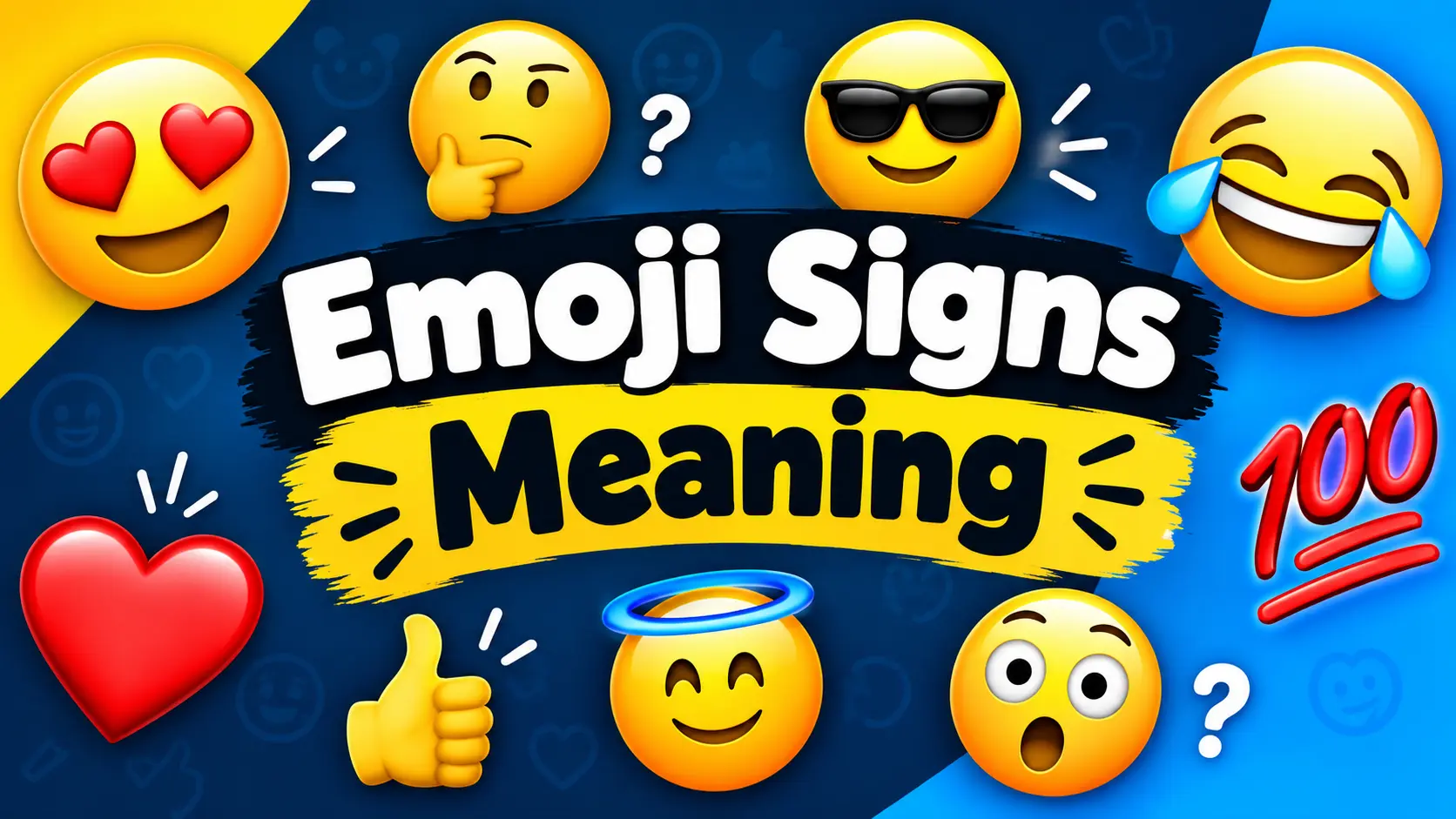
From a simple thumbs-up to a heart or a pointing hand, emoji signs can communicate feelings and ideas without using many words.
People use these symbols every day in texts, comments, captions, and social media posts to make their messages clearer or more expressive. However, the same emoji sign can sometimes have different meanings depending on the situation.
The emoji signs meaning usually comes from the symbol itself, the message around it, and the relationship between the people talking. For example, a hand sign may show approval, a heart can express affection, and a warning symbol may draw attention to something important.
Meaning & Definition
At its core, an emoji sign is a small digital icon , a face, object, symbol, or gesture , used to add tone, emotion, or shorthand meaning to a message that plain text can’t always convey. The primary meaning of most emoji is literal: a 😂 shows laughter, a ❤️ shows love, a 🔥 shows something impressive or attractive.
But emoji rarely stop at their literal meaning. Secondary and niche meanings develop through slang, memes, and community usage. For example:
- 🙏 can mean “thank you,” “please,” or literally “praying,” depending on context.
- 💀 in modern texting usually means “I’m dead” (i.e., something is hilarious), not literal death.
- 🍑 is often used as a playful stand-in for a body part rather than an actual peach.
Example messages:
- “Can you send me the notes? 🙏” → here it means please.
- “That video was so bad 💀” → here it means I’m laughing uncontrollably.
Background & Origin
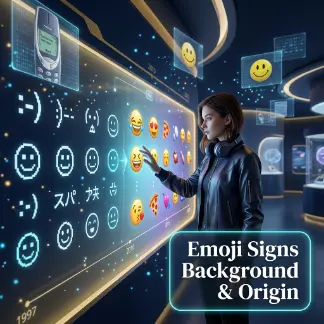
Emoji originated in Japan in the late 1990s, created by Shigetaka Kurita for a mobile internet platform called i-mode. The word itself comes from the Japanese e (picture) and moji (character) , it has nothing to do with the English word “emotion,” despite the coincidental overlap.
Emoji went global after Apple added a built-in emoji keyboard to the iPhone in 2011, and Unicode standardized emoji across platforms shortly after. As texting and social media exploded, users began layering slang meanings on top of the official ones , turning simple icons into an entire nonverbal language shaped by memes, dating culture, and internet humor.
Usage in Different Contexts
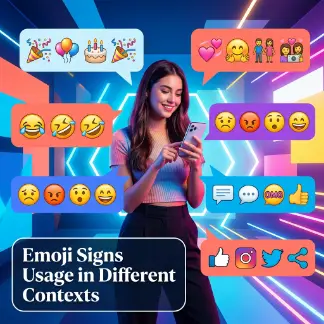
Texting or chat messages: “Running 10 min late 🙏” , used here as a polite, apologetic gesture.
Social media platforms: A caption like “New apartment tour 🏠✨” uses emoji to add excitement and visual flair to a post.
Professional or technical settings: A workplace Slack message such as “Deck is ready for review ✅” uses emoji as quick status indicators rather than emotional expression.
Platform-Specific Meanings
| Platform | Common Meaning | Example Use |
| Often literal/polite (🙏 = thanks/please) | “Sent the file, thanks 🙏” | |
| Aesthetic, trend-driven (✨🔥💯) | “New post 🔥✨” | |
| TikTok | Meme-heavy, ironic (💀😭 = funny/dead) | “This trend has me 💀” |
| Snapchat | Relationship/streak symbols (🔥😊❤️) | “3 day streak 🔥” |
| Twitter/X | Sarcasm, reaction shorthand (💀😭🙃) | “Not this happening again 💀” |
Other Fields Using Emoji-Like Signs
Beyond casual chat, symbol-based shorthand shows up in several professional and technical fields:
- Tech/UX design: Icons and emoji are used in app notifications and status indicators (✅, ⚠️, 🔴).
- Medical/scientific shorthand: Warning symbols (⚠️, ☣️) are used in official signage, unrelated to casual emoji slang.
- Traffic and safety signs: Standardized pictograms (not emoji, but visually related) convey instructions without words.
Common Misconceptions & Mistakes
One of the biggest mix-ups is assuming an emoji always means its literal picture. For instance, 🍆 and 🍑 are frequently used in a suggestive slang sense rather than literally referring to food , a pitfall for anyone unfamiliar with internet culture. Similarly, 💀 does not mean actual death in casual chat; it means something is extremely funny. Misreading tone-based emoji as literal (or vice versa) is one of the most common texting misunderstandings, especially across generations or cultures.
Similar Terms & Alternatives
| Term/Symbol | Meaning | Example Use |
| 😂 | Laughing, mild humor | “lol that’s so true 😂” |
| 🤣 | Intense laughter | “I can’t stop laughing 🤣” |
| 💯 | Full agreement/emphasis | “This is 💯 correct” |
| 🥺 | Pleading, cute request | “Can we go? 🥺” |
| 😭 | Overwhelmed emotion (sad or funny) | “This made me cry 😭” |
How to Respond , Chat Examples
With a friend: Friend: “Just failed my exam 💀” You: “Nooo 😭 let’s talk tonight”
With a crush: Crush: “Miss hanging out with you 🥺” You: “Miss you too 😊 let’s plan something soon”
Differences from Similar Words
Emoji-based cues are often mistaken for direct equivalents of words like Secret, Private, or Confidential, especially when used in coded or flirtatious messaging (e.g., 🤫 implying secrecy). However, an emoji rarely carries a fixed, formal meaning the way those words do , its interpretation shifts based on tone, relationship, and platform, making it far more fluid and context-dependent than a literal label.
Relevance in Online Conversations & Dating Apps
On dating apps, emoji often do the emotional heavy lifting that words can’t casually convey. A 😉 can signal flirtation, a 🔥 can compliment appearance, and a 🥺 can soften a request or express vulnerability. Getting these signs right (or misreading them) can shape the entire tone of a budding conversation , which is why understanding emoji nuance matters just as much as vocabulary in modern digital dating.
Popularity & Trends Over Time
According to Google Trends data and social listening patterns, emoji-related searches spike around major cultural moments , new emoji releases, viral memes, and shifts in slang (like 💀 overtaking “lol” as the default laughter symbol among younger users). Emoji usage tends to evolve every few years as new generations adopt platforms like TikTok and reinterpret older symbols in fresh, often ironic ways.
FAQs
1. What does 🙏 mean in texting? It usually means “please,” “thank you,” or gratitude , though it can also represent literal prayer depending on context.
2. Why do people use 💀 instead of 😂? 💀 has become slang for “I’m dead” (laughing so hard), popularized through meme culture and TikTok.
3. Do emoji mean the same thing on every platform? No , meanings can shift slightly between WhatsApp, Instagram, TikTok, and Twitter/X based on each platform’s culture.
4. Can emoji be misunderstood in professional settings? Yes. Casual or slang-based emoji can come across as unprofessional or confusing in formal work communication, so context matters.
5. Why are emoji meanings different across generations? Because slang evolves quickly online, older users may interpret emoji literally, while younger users often use them ironically or as shorthand humor.
Conclusion
Emoji signs carry far more meaning than their tiny size suggests , blending literal definitions, internet slang, and platform-specific trends into a constantly evolving digital language.
Whether you’re texting a friend, flirting on a dating app, or sending a quick workplace update, understanding the context behind an emoji is just as important as recognizing the symbol itself. The next time a stray 🙏 or 💀 shows up in your messages, you’ll know exactly how to read the room.

I am Daniel Scott, a passionate writer dedicated to creating meaningful and engaging content that informs, inspires, and connects with readers worldwide. I am passionate about exploring ideas, sharing knowledge, and presenting stories with clarity and creativity. My writing focuses on delivering valuable insights through well-researched articles and thoughtful perspectives. I am committed to maintaining accuracy, originality, and a reader-first approach in every piece I create.