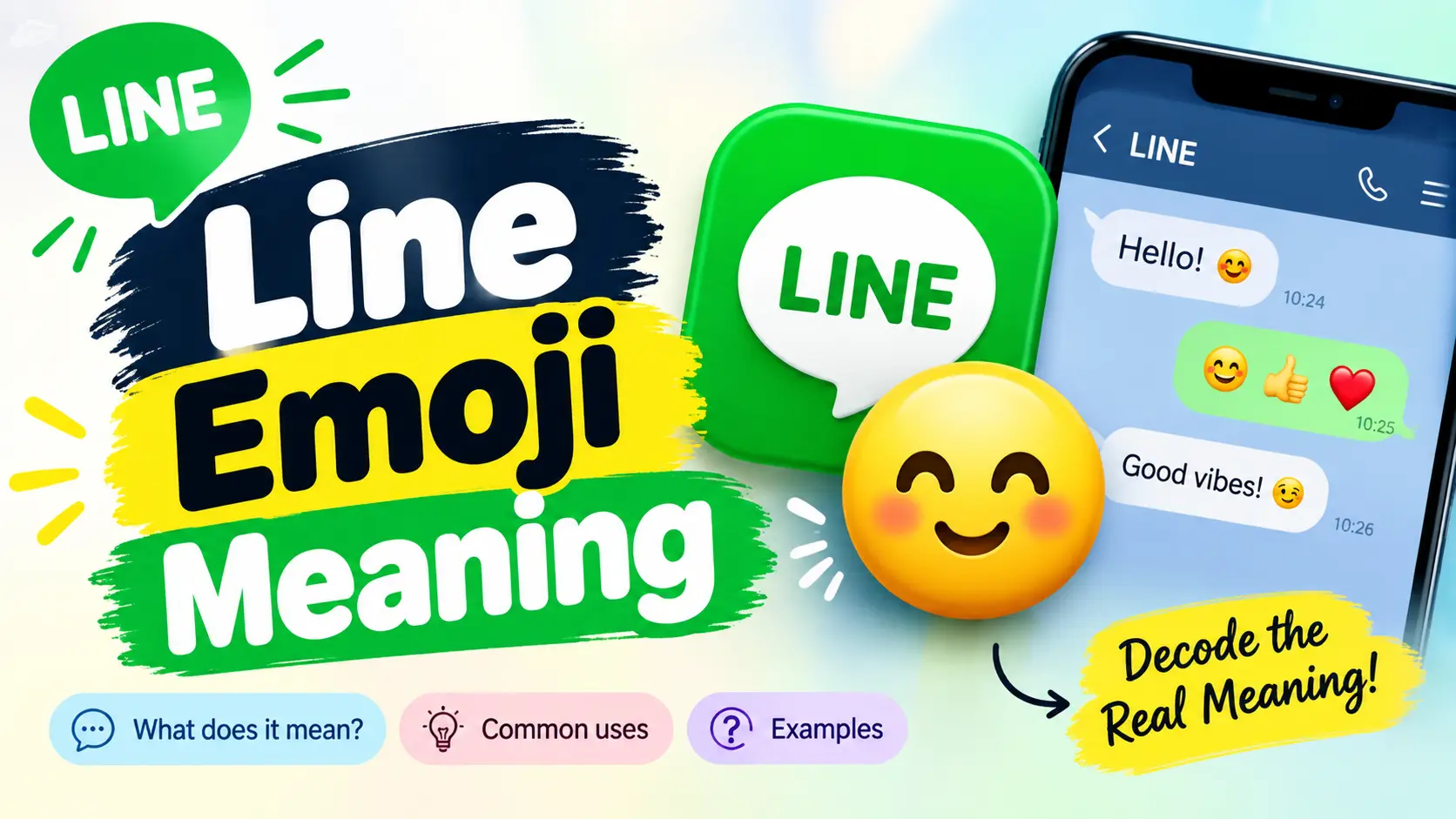
A simple line can look ordinary, but when you see it used as an emoji or symbol in a message, you may wonder what the sender actually means. The line emoji meaning can vary because several line-like symbols exist, and each one can serve a different purpose.
Depending on the symbol, it may represent separation, emphasis, continuation, direction, or a simple visual element. People often use line symbols in texts, captions, bios, and social media posts to organize information or create a particular style.
A horizontal line may separate ideas, while a vertical line can divide words or sections. Some line symbols can also be used decoratively to make a message look cleaner or more eye-catching. That’s why identifying the exact line symbol matters before interpreting it.
Meaning & Definition
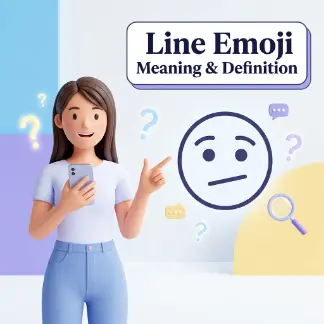
The term “line emoji” usually refers to the ➖ Heavy Minus Sign, though people also use it loosely for the 〰️ Wavy Dash and the ▬ Black Rectangle. In everyday texting, the ➖ is most often used as a deadpan or “meh” reaction , a flat, expressionless response to something that doesn’t warrant excitement.
Its secondary meanings include:
- Subtraction or removal in a literal sense (math, budgeting, lists)
- A visual pause or separator between two thoughts in a message
- Sarcastic flatness, similar to saying “…okay” in a monotone voice
Example messages:
Friend: “I got dumped again lol” You: ➖
Coworker: “Meeting moved to 8am tomorrow” You: ➖ (translation: not thrilled, but acknowledging it)
Background & Origin
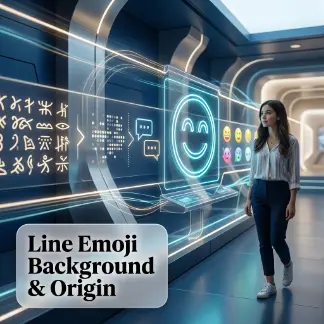
Unlike acronyms such as LOL or BRB, the line emoji didn’t start as a word , it’s a symbol emoji pulled from Unicode’s early “dingbats” and math-symbol blocks. The ➖ was added in Unicode 6.0 (2010), originally meant for basic arithmetic use in messaging apps and keyboards.
Its meaning shifted as Gen Z and millennial texting culture embraced minimalist reactions. Instead of typing “lol okay” or “not funny,” people realized a single flat line visually looked like a straight face , no curve, no expression, just a dash. This made it the perfect low-effort way to react to something without committing to actual words, and it spread through group chats, Discord servers, and comment threads throughout the mid-2010s into today.
Usage in Different Contexts
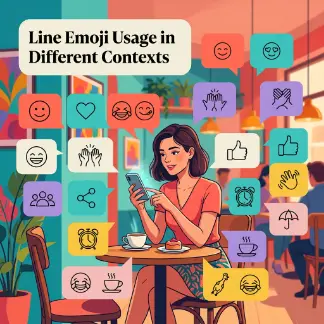
In texting or chat messages, the line emoji is a quick, wordless reaction:
“You seriously ate the last slice?” “➖”
On social media platforms, it often appears in comment sections as a subtle sarcastic jab or a way to react to a post without leaving a written comment.
In professional or technical settings, the ➖ is rarely used emotionally , instead, it shows up literally in spreadsheets, formulas, or as a bullet-style separator in formatted documents and presentations.
Platform-Specific Meanings
| Platform | Common Meaning | Example Use |
| Deadpan reaction / “meh” | “Boss said no raises” → “➖” | |
| Sarcastic comment reaction | Comment: “➖” under an awkward post | |
| TikTok | Ironic disapproval or unbothered vibe | Reply to a cringe video: “➖” |
| Snapchat | Quick non-committal response | Snap caption: “➖ this week has been a lot” |
| Twitter/X | Subtweet-style flatness or dry humor | Quote tweet: “➖” under bad news |
Other Fields Using the Abbreviation
Outside of texting, symbols related to the line emoji show up across very different industries:
- Mathematics , the minus sign for subtraction
- Music notation , a tie or slur line connecting notes
- Programming , dashes used in code comments, flags (–verbose), or Markdown formatting
- Medical/scientific charts , a flat line on a monitor readout (sometimes referenced darkly online as “flatline” humor)
- Design and UX , dividers or separators in layouts and menus
Common Misconceptions & Mistakes
A frequent mix-up is assuming the line emoji always signals negativity , it doesn’t. Many people use it playfully, almost like a wink without the wink. Another common error is confusing the ➖ with the underscore (_) or hyphen (-) typed from a keyboard; these read as plain text, not an emoji, and don’t carry the same visual “flatline” tone.
People also sometimes mistake the wavy 〰️ for the straight ➖. The wavy dash usually implies something more like sarcasm or “kind of, sort of,” while the straight line reads as blunt and final.
Similar Terms & Alternatives
| Symbol/Term | Meaning | Example Use |
| 💀 | “I’m dead” (funny/embarrassing) | “He tripped on stage 💀” |
| 😐 | Neutral/awkward face | “That joke… 😐” |
| 〰️ | Sarcastic or unsure flatness | “Sure, ‘fine’ 〰️” |
| . | Silent disapproval (single period) | “K.” |
| 🙃 | Passive-aggressive positivity | “Great, love that for me 🙃” |
How to Respond , Chat Examples
With a friend:
Friend: “I failed my driving test again” You: “➖ okay we’re getting boba, no arguments”
With a crush:
Crush: “I forgot our plans, sorry” You: “➖… it’s fine, we’ll reschedule 👀”
With a colleague:
Colleague: “The client pushed the deadline up by a week” You: “➖ noted, I’ll rework the timeline”
Differences from Similar Words
The line emoji isn’t the same as words like Secret, Private, or Confidential , those describe information control, while the ➖ describes tone. It’s closer to a facial expression than a category label. Where “Confidential” tells someone what they can’t share, the line emoji tells someone how you feel about what was just shared , flatly, without much emotional investment either way.
Relevance in Online Conversations & Dating Apps
On dating apps, tone is everything, and the line emoji has become a subtle tool for testing the waters. A flat ➖ in response to a cheesy pickup line signals playful unimpressed energy rather than outright rejection , it keeps the conversation open while showing personality.
Match: “Are you a magician? Because whenever I look at you, everyone else disappears.” You: “➖ that one needed work, try again”
This kind of low-effort, high-tone reaction has become a small but recognizable part of modern flirting shorthand.
Popularity & Trends Over Time
Search interest in emoji meanings tends to spike whenever a symbol goes viral in a meme format, and the line emoji has ridden several waves tied to “deadpan reaction” meme culture on TikTok and Twitter/X. While it’s never reached the searchability of emojis like 💀 or 😭, its usage has steadily grown as internet communication leans more toward minimalist, ironic responses.
FAQs
1. What does the line emoji mean in texting? It usually signals a flat, unimpressed, or sarcastic reaction to something, similar to a deadpan facial expression.
2. Is the line emoji rude? Not inherently , context and relationship matter. Among friends it’s often playful; in unfamiliar settings it can read as dismissive.
3. What’s the difference between ➖ and 〰️? The straight ➖ feels blunt and final, while the wavy 〰️ implies uncertainty or gentle sarcasm.
4. Do professionals use the line emoji? Rarely for emotional tone , in professional settings, dashes are mostly used literally, like in formulas or document formatting.
5. Why has the line emoji become popular in dating app chats? It offers a low-effort, tone-testing way to react to messages without fully committing to enthusiasm or rejection.
Conclusion
The line emoji meaning ultimately comes down to context , it can be a deadpan joke, a sarcastic jab, a professional separator, or a subtle flirty tease depending on where and who you’re talking to.
Whether you’re decoding a friend’s group chat message or figuring out a dating app reply, paying attention to tone, platform, and relationship will always tell you more than the symbol alone. Next time that flat little dash shows up in your messages, you’ll know exactly how to read between the lines.

I am James Carter, a passionate writer dedicated to creating informative, engaging, and valuable content for readers. I enjoy exploring different topics, researching new ideas, and sharing knowledge through clear and meaningful writing. I am committed to providing accurate information, helpful insights, and well-crafted articles that inspire and educate audiences. With a strong focus on quality and creativity, I aim to connect with readers and deliver content that adds real value.