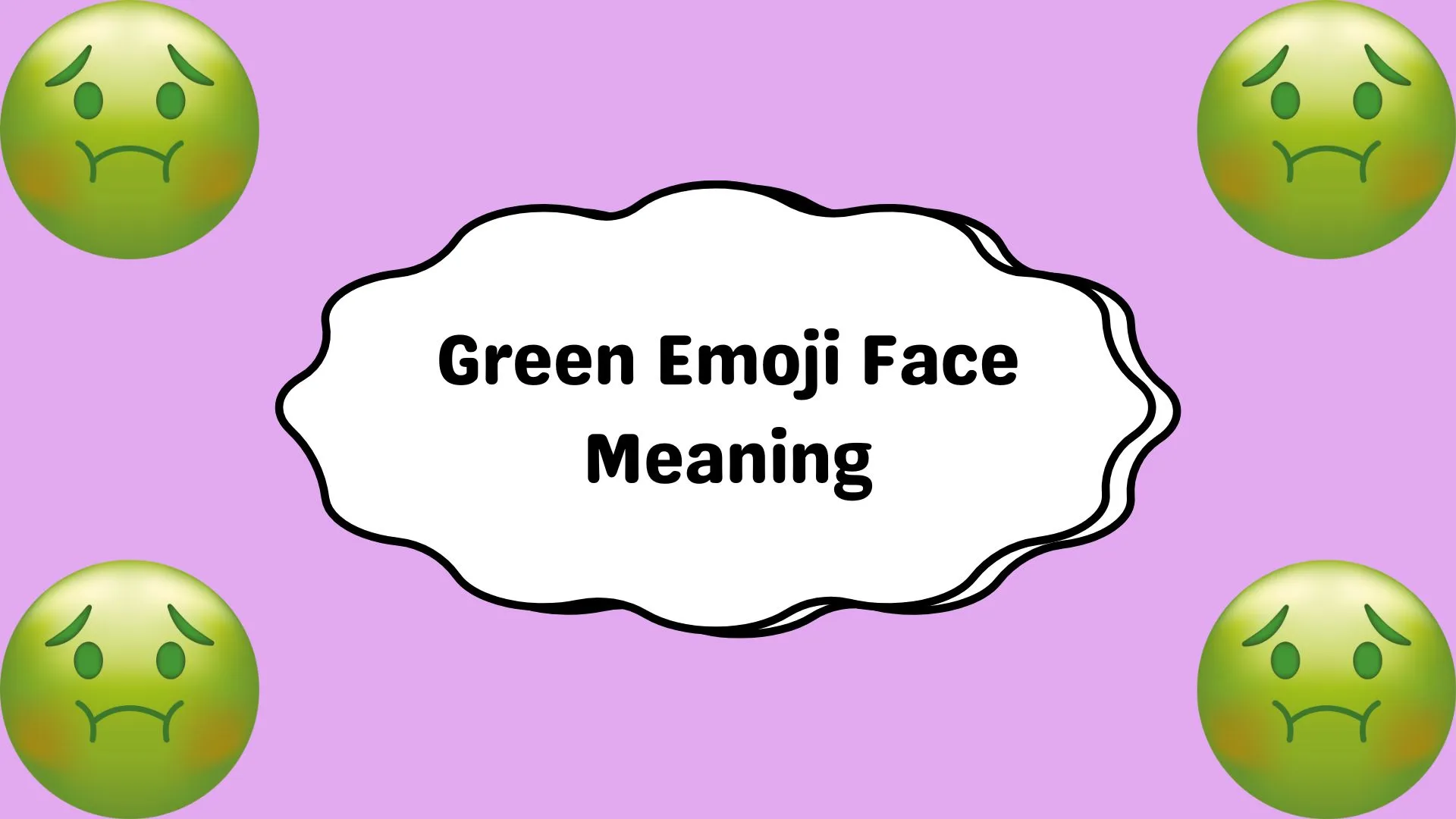
Have you ever received a green emoji face and wondered, “What does that actually mean?” 💚 The green emoji face meaning can be surprisingly different depending on the conversation, the sender, and even the emojis used around it.
Sometimes, a green face can express jealousy, envy, sickness, awkwardness, or an unusual emotional reaction.
In other situations, it may simply be used for fun, humor, or to create a unique mood in a chat. This is why understanding the context is important before assuming what someone means.
Meaning & Definition
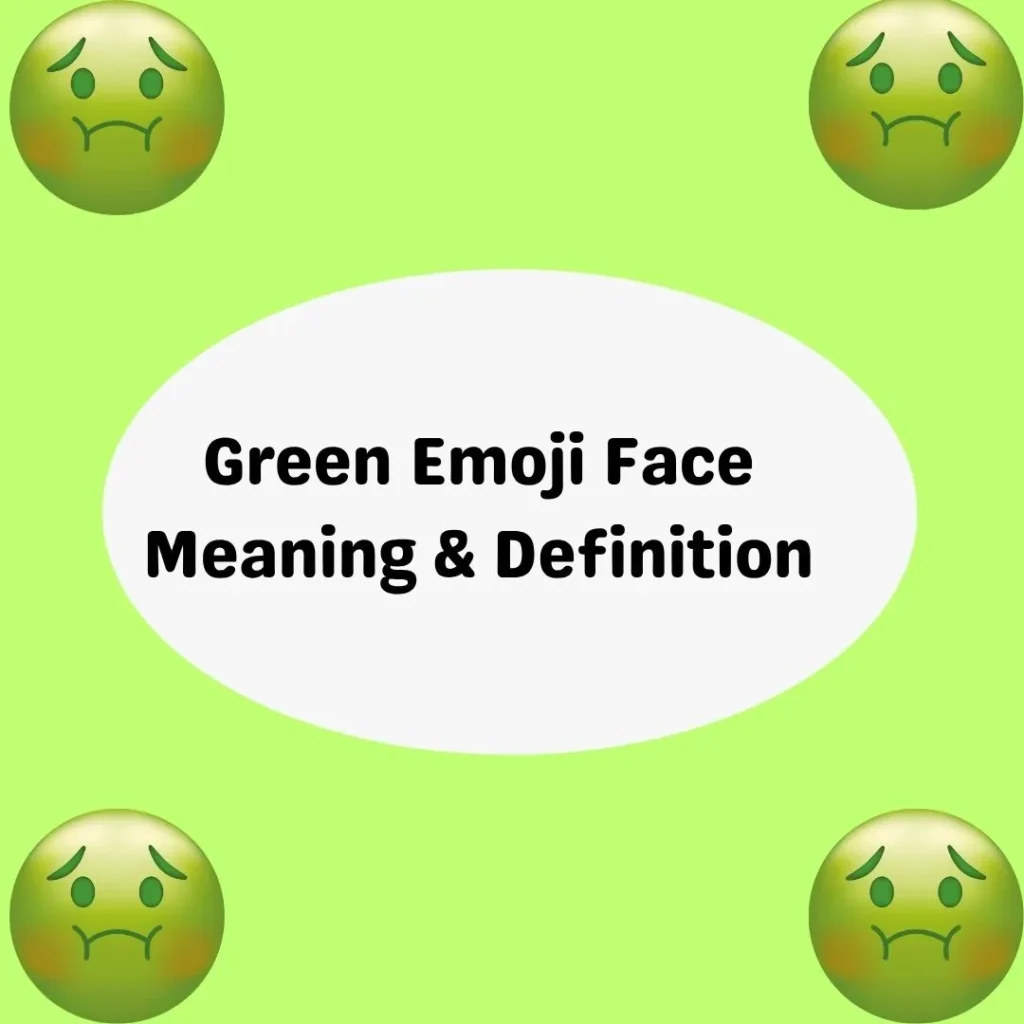
The phrase “green emoji face” almost always points to one of two emojis: the Nauseated Face 🤢 and the Face Vomiting 🤮. Both use a sickly green skin tone deliberately, because green is the color most cultures associate with illness, nausea, and “feeling gross.”
- 🤢 Nauseated Face , the primary meaning is disgust, sickness, or “that’s gross.” It’s the go-to reaction for something unappetizing, cringeworthy, or physically nauseating.
- 🤮 Face Vomiting , a stronger version of the same idea, used for extreme disgust or, more literally, actual sickness or a hangover.
Secondary and niche meanings exist too. Some people use 🤢 sarcastically to mean “I’m so jealous I could be sick” (seeing a friend’s vacation photos, for example), while gamers sometimes use it to mock a bad play.
Example messages:
“He texted his ex ‘happy birthday’ 🤢” “Just found expired milk in my fridge 🤮”
Background & Origin
The Nauseated Face 🤢 was approved as part of Unicode 8.0 in 2015 and added to major platforms like Apple, Google, and Samsung shortly after. The Face Vomiting 🤮 followed a couple of years later with Unicode 10.0 in 2017, giving users an even more graphic option for extreme reactions.
Both emojis quickly moved beyond literal sickness. As texting culture leaned into sarcasm and exaggeration, the green face became shorthand for cringe, secondhand embarrassment, jealousy, and mock disgust , the emoji equivalent of saying “ew” or “gross” out loud, just with more visual punch.
Usage in Different Contexts
Texting or chat messages: Usually reactive , a quick, wordless way to respond to something gross, awkward, or cringe.
“She’s back with him again 🤢”
Social media platforms: Commonly used as a comment or reaction emoji under posts, especially food, fashion, or relationship content.
Comment on a questionable food combo post: “🤮 who eats this”
Professional or technical settings: Rare, but occasionally used informally in casual team chats (Slack, Teams) to react to a bad idea, ugly design draft, or buggy code , always in a light, joking tone, never in formal emails.
“This spreadsheet formatting… 🤢 let’s fix it before the client sees it”
Platform-Specific Meanings
| Platform | Common Meaning | Example Use |
| Disgust or “gross” reaction to a message/photo | “That smells 🤢” | |
| Sarcastic disgust in comments, often jokingly | “🤮 stop it’s too cute” (ironic use) | |
| TikTok | Reaction to cringe content or bad takes | “The way he said that… 🤢” |
| Snapchat | Quick reaction to a snap; can signal real disgust or teasing | “🤢🤢🤢” replying to a gross snap |
| Twitter/X | Used in quote-tweets or replies to mock or express distaste | “🤢 this take” |
Other Fields Using the Abbreviation
Outside of texting, “green face” or related green symbols show up in a few other places:
- Emoji design & accessibility: Designers discuss “green-faced emojis” as a category when talking about how skin-tone modifiers do or don’t apply to non-human-colored faces.
- Medical & health content: Articles about nausea, motion sickness, or morning sickness often use 🤢 as a visual shorthand in headlines or infographics.
- Gaming culture: Streamers and gamers use the green face to react to embarrassing gameplay moments or “cringe” clips.
- Meme culture: The green face is a staple reaction image format, often paired with captions like “me watching this” for comedic effect.
Common Misconceptions & Mistakes
A common mix-up is treating 🤢 and 🤮 as interchangeable , they’re not. 🤢 (Nauseated Face) implies discomfort or disgust without the visual of vomiting, while 🤮 (Face Vomiting) is more extreme and literal. Sending 🤮 to a mild joke can come across as overly harsh.
Another pitfall: context blindness. A green face sent right after a compliment (“you looked great tonight 🤢”) is almost always jealous admiration, not literal disgust , misreading tone here can cause real confusion, especially with people you don’t know well.
Similar Terms & Alternatives
| Emoji | Meaning | Example Use |
| 🤢 | Mild to moderate disgust or nausea | “That smell 🤢” |
| 🤮 | Extreme disgust or literal sickness | “🤮 never again” |
| 😖 Confounded Face | Frustration or discomfort, less about disgust | “This traffic 😖” |
| 🫤 Diagonal Mouth | Mild disapproval, skepticism | “Idk about that 🫤” |
| 😬 Grimacing Face | Awkwardness or cringe, not disgust | “Oof, awkward 😬” |
How to Respond , Chat Examples
With a friend:
Friend: “I ate a whole pizza by myself last night” 🤢 You: “Iconic behavior tbh, no judgment 😂”
With a crush:
Crush: “Saw you post that gym selfie 🤢 stop being so fit” You: “That’s a compliment, right? 😏”
With a colleague:
Colleague: “This UI mockup… 🤢” You: “Fair, let’s redo the color scheme before the review”
Differences from Similar Words
People sometimes lump the green face emoji in with words like Secret, Private, or Confidential, assuming it signals something being hidden. It doesn’t. The green face is purely reactive and emotional , it expresses how someone feels about something, not whether information is being concealed. Where “confidential” implies restricted access, 🤢 simply says “this grosses me out” or “this is cringe,” with zero connection to privacy or secrecy.
Relevance in Online Conversations & Dating Apps
On dating apps and in flirty texting, the green face often gets used ironically. Instead of literal disgust, it’s a playful way to say “you’re too much” or express exaggerated jealousy over someone else’s attractiveness or lifestyle. It softens compliments, teases without being too sincere too fast, and adds humor to conversations that might otherwise feel awkward or overly serious , which is exactly why it’s so common in early-stage dating chats.
“You went on a trip to Bali without me 🤢 I’m so jealous”
Popularity & Trends Over Time
Search interest for emoji meanings, including the green face family, has stayed steadily high over the past several years, spiking around major cultural moments (viral food trends, celebrity drama, or meme cycles). Emoji trackers like Emojipedia regularly rank 🤢 and 🤮 among the more frequently used “reaction” emojis on Twitter/X and TikTok, especially in comment sections tied to food, relationships, and cringe content.
FAQs
1. What does the green face emoji mean in texting? It typically means disgust, sickness, or exaggerated jealousy, depending on context.
2. Is 🤢 the same as 🤮? No , 🤢 is milder disgust or nausea, while 🤮 signals extreme disgust or literal vomiting.
3. Can the green face emoji be used positively? Yes, often ironically , as playful jealousy over something impressive or attractive.
4. Which platforms use the green face emoji most? It’s especially common on TikTok, Instagram comments, and Snapchat reactions.
5. Is it appropriate to use in professional chats? Only in casual, informal internal messages , never in client-facing or formal communication.
Conclusion
At its core, the green emoji face meaning boils down to disgust, discomfort, or playful exaggeration , whether that’s 🤢 for mild “ew” reactions or 🤮 for full-blown extremes.
Its meaning shifts with tone, platform, and relationship, so context is everything before you hit send or try to interpret one yourself. Next time a green face lands in your inbox, take a second to read the room , it might be an insult, a joke, or a compliment in disguise.

I am William Harris, a passionate writer dedicated to creating informative, engaging, and valuable content for readers around the world. I enjoy researching different topics and sharing well-crafted articles that provide useful insights, practical tips, and meaningful information. I am committed to delivering high-quality content with accuracy, clarity, and a reader-focused approach. Through my writing, I aim to educate, inspire, and help people discover new ideas.