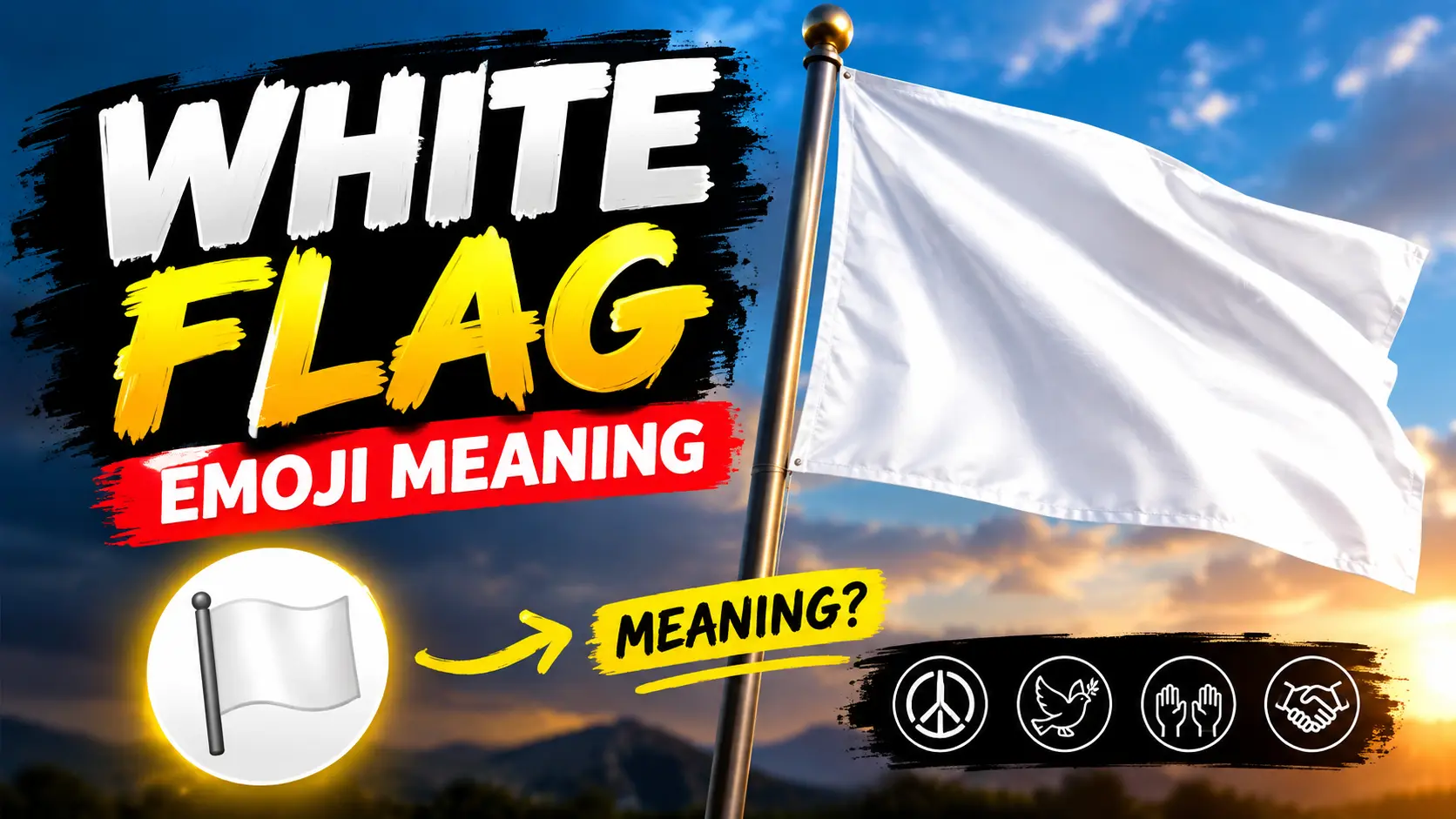
Seeing a white flag emoji 🏳️ in a message can leave you wondering whether someone is giving up, asking for peace, or simply trying to express a certain feeling. The white flag emoji meaning usually relates to surrender, peace, truce, or admitting that you no longer want to argue.
In casual texting, though, people often use it in a more playful way. For example, someone might send 🏳️ after losing an argument, struggling with a situation, or joking that they cannot handle something anymore.
Its meaning can also depend on the words around it and the relationship between the people chatting. You may see the white flag emoji on Instagram, Snapchat, TikTok, WhatsApp, or in everyday text messages.
Meaning & Definition
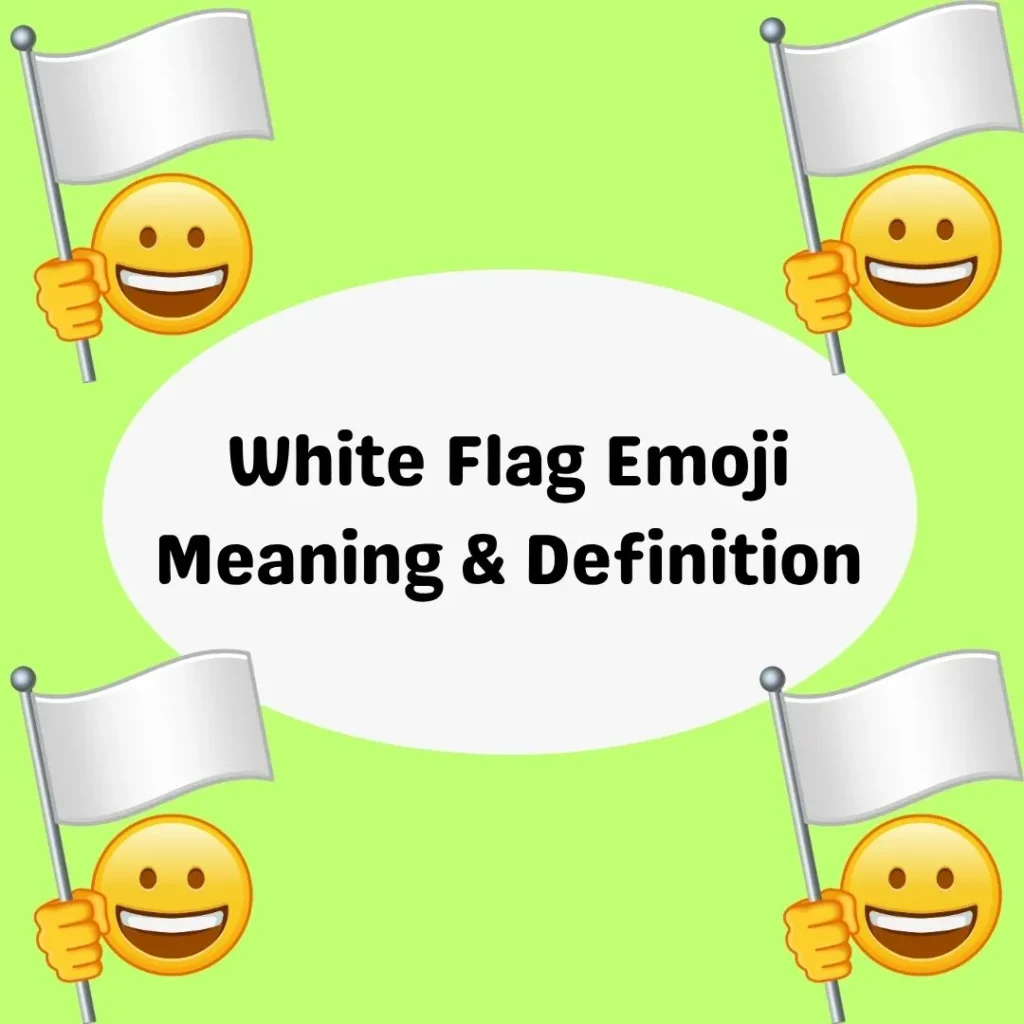
The primary meaning of the white flag emoji 🏳️ is surrender, truce, or giving up. It is the digital equivalent of waving a white flag to end a fight, admit defeat, or call for peace.
Secondary meanings include a calm request to stop arguing, a playful “you win,” or simply signaling neutrality. In lighter chats it can also mean “I’m done with this topic” without any hard feelings.
Examples in messages:
- “Alright, you win this round 🏳️”
- “This argument is going nowhere… 🏳️ truce?”
Background & Origin
The white flag has been used for centuries as a sign of truce and surrender in warfare. It was formally protected under the Hague Conventions of 1899 and 1907, meaning anyone carrying it should not be attacked and should not attack either.
The emoji version was approved in Unicode 7.0 in 2014 under the name “Waving White Flag” and rolled out widely with Emoji 1.0 in 2015. Once it reached every smartphone keyboard, the old military signal quickly became a humorous way to concede in online debates, games, and everyday texting.
Usage in Different Contexts
Texting or chat messages
Friends use it to end light arguments or admit they can’t keep going: “I literally can’t argue with you anymore 🏳️.”
Social media platforms
It appears under posts when someone wants to exit a debate or declare peace: “Comment section is chaos today 🏳️.”
Professional or technical settings
Rare in formal emails, but it occasionally shows up in casual team chats to signal “I’m stepping back from this discussion” or to cool down a tense brainstorming session.
Platform-Specific Meanings
| Platform | Common Meaning | Example Use |
| Playful surrender or truce | “Fine, you choose the movie 🏳️” | |
| Ending a debate in comments | “Okay I take it back 🏳️” | |
| TikTok | Giving up on a challenge | “This trend is impossible 🏳️” |
| Snapchat | Quick “you win” in private chat | “I can’t keep up 🏳️” |
| Twitter/X | Conceding a point or calling peace | “I’m leaving this thread 🏳️” |
Other Fields Using the Abbreviation
Beyond casual chats, the white-flag idea appears in:
- Military and international law as the official sign of truce
- Sports when a competitor or team concedes
- Business language (“we’re waving the white flag on that project”)
- Historical documentaries and museums
It is not a technical acronym, the emoji itself carries the full meaning.
Common Misconceptions & Mistakes
Many people think the white flag emoji always means total defeat or weakness. In reality it often shows emotional maturity, choosing to end a pointless fight.
Another common mix-up is confusing it with the red flag 🚩, which signals danger or a warning. Sending 🏳️ when you actually mean “this is a red flag” completely changes the message.
Similar Terms & Alternatives
- 🚩 Red flag – warning or deal-breaker
- ✌️ Peace sign – friendly truce or goodbye
- 🤝 Handshake – mutual agreement
- 😴 Sleeping face – “I’m too tired to continue”
Example: “I’m done arguing 🏳️” feels more final than “I’m done arguing ✌️.”
How to Respond , Chat Examples
Friend:
You: “Okay you were right about the restaurant.”
Friend: “Finally! 🏳️ I’ll take the win.”
Crush:
You: “Fine, your playlist is better.”
Crush: “Haha 🏳️ now we can listen in peace.”
Colleague (casual chat):
You: “I can’t keep defending that idea.”
Colleague: “No problem, white flag accepted 🏳️ let’s try the other option.”
Differences from Similar Words
Unlike “secret,” “private,” or “confidential,” the white flag emoji does not hide anything. It openly declares the end of conflict. It is closer to “I yield” or “truce” than to any privacy term, its power comes from being visible, not concealed.
Relevance in Online Conversations & Dating Apps
On dating apps and casual social media the emoji softens tension. After a small disagreement or teasing banter, dropping 🏳️ shows you are willing to move past it without drama. It signals emotional maturity and a preference for harmony, which many people find attractive.
Example: “Okay you win the ‘who texted first’ debate 🏳️ now can we plan the date?”
Popularity & Trends Over Time
Since its 2015 release the white flag emoji has remained steadily useful rather than exploding in short-lived trends. It appears regularly in gaming chats, heated Twitter/X threads, and meme culture whenever someone wants a clean exit. Google searches for its meaning rise during viral online arguments and then settle back into consistent everyday use.
FAQs
What does the white flag emoji mean in texting?
It usually means “I give up,” “you win,” or “let’s call a truce.”
Is the white flag emoji only about surrender?
Mostly yes, but it can also simply mean “peace” or “I’m done with this topic.”
Can I use 🏳️ in a positive way?
Yes. Offering a truce is often seen as mature and kind.
Does it mean the same on every platform?
Yes, the core meaning of surrender or truce stays consistent across WhatsApp, Instagram, TikTok, and others.
Is waving the white flag weak?
In digital conversations it is usually viewed as smart, knowing when to stop is a strength.
Conclusion
The white flag emoji 🏳️ carries centuries of history into modern chats as a clear signal of surrender, truce, or peaceful exit. Whether you drop it after a friendly roast, a long debate, or a tough day, context decides how soft or final it feels.
Understanding that it is an invitation to end conflict, not a permanent admission of failure, helps you read and use it with the right energy. Next time the conversation gets too intense, you’ll know exactly when to wave that digital white flag.

I am William Harris, a passionate writer dedicated to creating informative, engaging, and valuable content for readers around the world. I enjoy researching different topics and sharing well-crafted articles that provide useful insights, practical tips, and meaningful information. I am committed to delivering high-quality content with accuracy, clarity, and a reader-focused approach. Through my writing, I aim to educate, inspire, and help people discover new ideas.