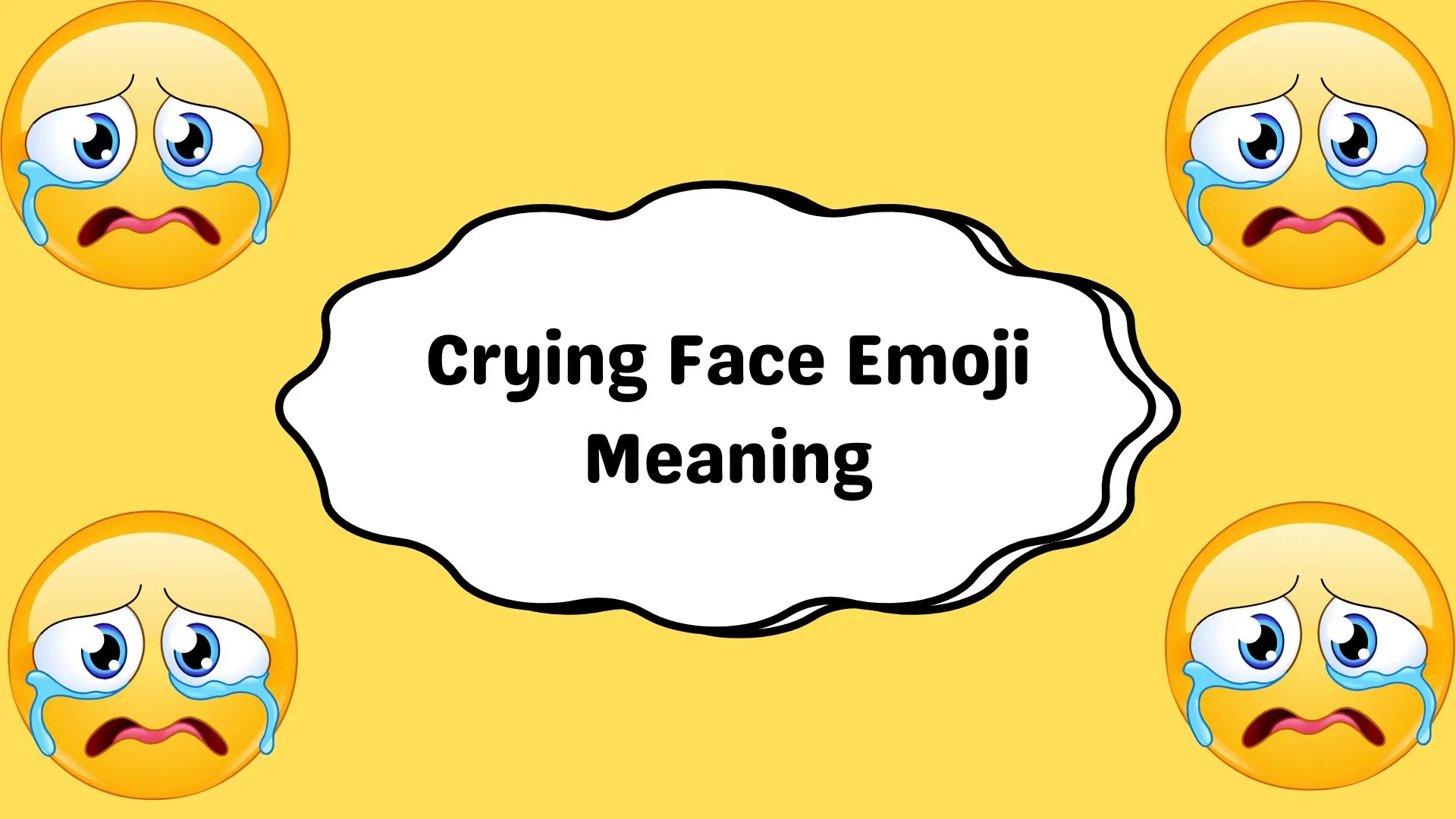
Have you ever received a crying face emoji 😢 and wondered what the person was really trying to say? This small yellow face can express much more than simple sadness. The Crying Face Emoji Meaning can change depending on the conversation, relationship, and situation.
Someone might use 😢 to show genuine sadness, disappointment, emotional pain, or even sympathy, while in some chats, it may simply mean that something touched their heart.
Understanding the meaning behind this emoji can help you avoid misunderstandings and respond in the right way.
Meaning & Definition
The primary meaning of the crying face emoji 😢 is sadness, disappointment, or mild distress. It shows a yellow face with a slight frown and one single tear rolling down the cheek. It expresses a quieter, more restrained kind of unhappiness compared to louder crying faces.
Secondary meanings include empathy, feeling sorry for someone, or soft disappointment. It can also appear in lighter moments when someone is mildly upset or feeling a bit down without being overwhelmed.
Examples:
- “I missed the last train home 😢”
- “So sorry to hear about your pet 😢”
Background & Origin
The crying face emoji 😢 was approved as part of Unicode 6.0 in 2010 and added to the official emoji set in 2015. It belongs to the early group of emotional face emojis designed to show clear feelings that plain text often misses. Over time, users adopted it as the go-to choice for moderate sadness because it feels more sincere and less dramatic than the loudly crying face. Its simple single-tear design helped it become a standard reaction for everyday disappointment and quiet empathy across messaging apps and social platforms.
Usage in Different Contexts
Texting or chat messages
People use it when sharing mild bad news or reacting to something upsetting.
Example: “My favorite café closed down 😢”
Social media platforms
It appears in comments and captions to show sympathy or soft sadness.
Example: “This ending made me emotional 😢”
Professional or technical settings
Rare and usually avoided. In very casual team chats it can show mild disappointment over a small setback, but most people skip it in formal messages.
Example (Slack): “The client delayed the meeting again 😢”
Platform-Specific Meanings
| Platform | Common Meaning | Example Use |
| Mild sadness or empathy | “Couldn’t make it tonight 😢” | |
| Soft disappointment or sympathy | Comment: “This is so sad 😢” | |
| TikTok | Emotional reaction to a video | “Why did this make me cry 😢” |
| Snapchat | Quiet upset or feeling down | Reply to bad news with 😢 |
| Twitter/X | Disappointment or mild frustration | “Another delay announced 😢” |
Other Fields Using the Abbreviation
The crying face emoji has no technical, medical, or official abbreviation meaning. It remains purely emotional and visual. Its only real-world link is the universal human expression of shedding a tear when feeling sad or touched.
Common Misconceptions & Mistakes
Many people confuse 😢 with the loudly crying face 😭. The single-tear version is quieter and more genuine, while 😭 is often exaggerated or used for laughter and overwhelming emotion. Another common mistake is assuming every 😢 means deep depression. Most of the time it simply shows mild sadness or empathy. Reading it as sarcasm can also miss the mark , this emoji is rarely used ironically.
Similar Terms & Alternatives
- 😭 Loudly Crying Face → intense sadness, overwhelm, or sometimes laughter
- 🥲 Smiling Face with Tear → bittersweet or mixed emotions
- 😥 Sad but Relieved Face → worry mixed with relief
- 😔 Pensive Face → quiet sadness or disappointment without tears
- 🥺 Pleading Face → soft sadness mixed with a request for sympathy
How to Respond , Chat Examples
With a friend
Them: “I didn’t get the job 😢”
You: “I’m really sorry. You’re going to find something better soon ❤️”
With a crush
Them: “Feeling a bit down today 😢”
You: “Want to talk about it? I’m here if you need”
With a colleague (casual chat)
Them: “The presentation didn’t go as planned 😢”
You: “Rough day. Let’s grab coffee and reset”
Differences from Similar Words
Unlike the words “secret,” “private,” or “confidential,” the crying face emoji does not hide information , it openly shows a soft emotional state. It is closer to saying “I’m a little sad” or “I feel for you” than to any formal or serious term. While “disappointed” is a clear word, 😢 adds a gentle visual that makes the feeling warmer and more human.
Relevance in Online Conversations & Dating Apps
On dating apps the crying face emoji often signals vulnerability or soft emotion. It can show that someone is sharing something personal or reacting with genuine feeling. In casual social media chats it helps express empathy without needing many words.
Example on a dating app: “That story about your dog got me 😢”
Popularity & Trends Over Time
The crying face emoji 😢 has remained steadily popular since 2010. It appears regularly in everyday chats, sympathetic comments, and soft emotional posts. While louder crying faces often trend in meme culture, this quieter version stays the preferred choice for sincere sadness and empathy.
FAQs
What does the crying face emoji mean?
It usually means mild sadness, disappointment, or empathy.
Is 😢 the same as 😭?
No. 😢 is quieter and more genuine. 😭 is stronger and often exaggerated.
Can 😢 be used for laughter?
Rarely. People usually choose 😭 or 😂 when they mean crying from laughter.
Is it okay to use at work?
Only in very casual chats. Avoid it in formal messages.
Why do people search for the crying face emoji meaning so often?
Because a single tear can mean different levels of sadness or empathy, and context decides the exact feeling.
Conclusion
The crying face emoji meaning centers on soft sadness, quiet disappointment, and gentle empathy. Whether someone is sharing mild bad news or reacting with care, 😢 adds a clear emotional tone that words alone sometimes miss.
Next time you see that single tear, look at the message around it. The context will almost always show whether the sender feels a little down or simply wants to share a moment of understanding.

I am James Carter, a passionate writer dedicated to creating informative, engaging, and valuable content for readers. I enjoy exploring different topics, researching new ideas, and sharing knowledge through clear and meaningful writing. I am committed to providing accurate information, helpful insights, and well-crafted articles that inspire and educate audiences. With a strong focus on quality and creativity, I aim to connect with readers and deliver content that adds real value.