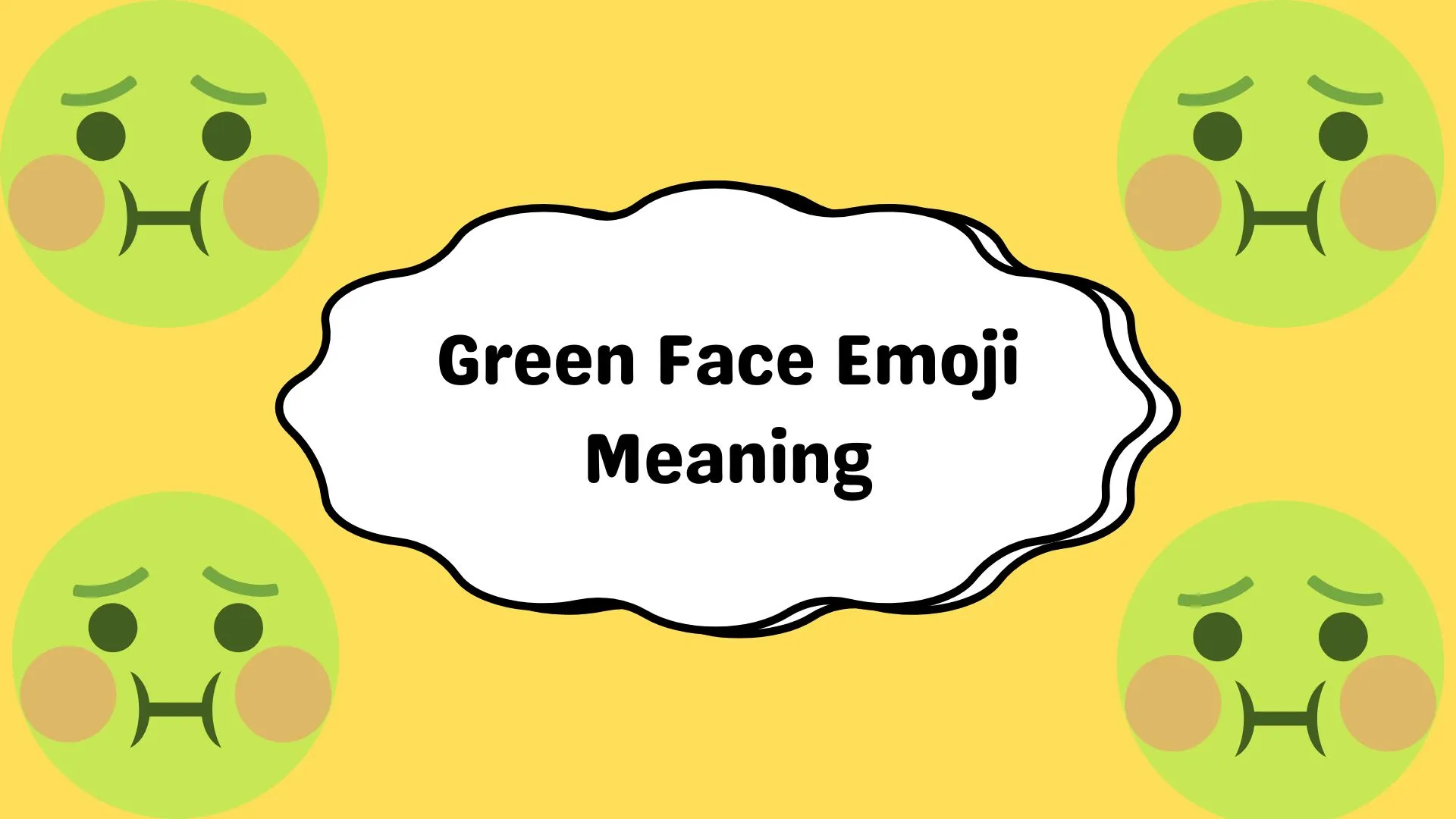
Have you ever received a 😐💚 green face emoji and wondered, “What does this actually mean?” The green face emoji can be surprisingly confusing because its meaning often changes depending on the conversation, tone, and context.
It may express feelings such as jealousy, envy, sickness, discomfort, disgust, nervousness, or an unusual reaction. In some conversations, people use it simply because they feel emotionally “green,” while in others, it can add a funny, awkward, or dramatic touch to a message.
Understanding the Green Face Emoji Meaning can help you interpret texts, social media comments, and online conversations more accurately.
Meaning & Definition
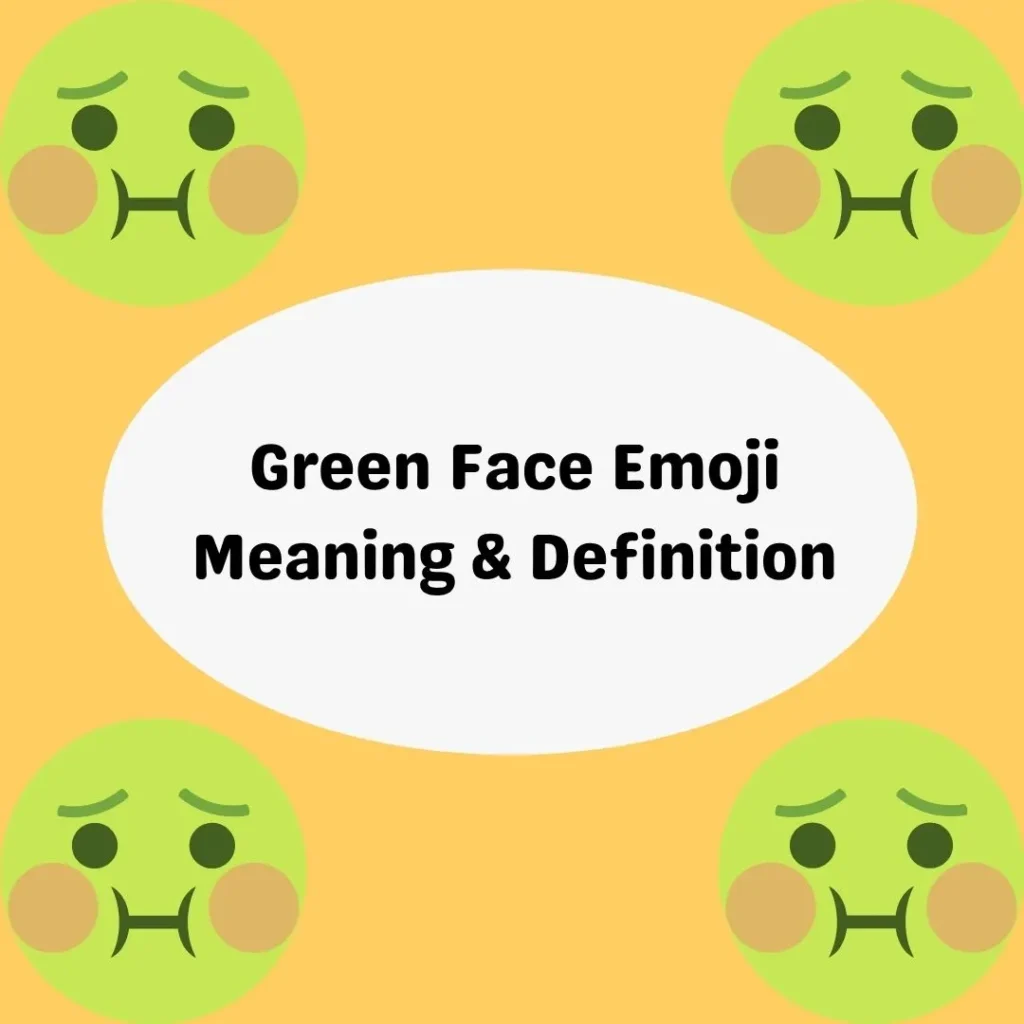
The primary meaning of the green face emoji 🤢 (officially Nauseated Face) is physical nausea, feeling sick, or strong disgust. It shows a face that has turned green with puffed cheeks and a queasy expression, like someone about to throw up.
Secondary meanings include intense dislike, the “ick” factor, or reacting to something cringey or repulsive. It can also show mild illness or food that did not sit well.
Examples:
- “That sushi did not agree with me 🤢”
- “I can’t watch that video again 🤢”
Background & Origin
The green face emoji 🤢 was approved as part of Unicode 9.0 in 2016 and added to Emoji 3.0 the same year. Designers created it to give people a clear way to show nausea or disgust that the regular yellow faces could not capture. The green color was chosen because it is the classic visual for feeling sick. Once smartphones added it, the emoji spread quickly as the go-to reaction for anything gross, sickening, or emotionally repulsive.
Usage in Different Contexts
Texting or chat messages
People use it when they feel unwell or react to something disgusting.
Example: “I think I’m getting sick 🤢”
Social media platforms
It appears in comments and captions when something looks unappetizing or cringeworthy.
Example: “Why would anyone eat that 🤢”
Professional or technical settings
Very rare. It almost never appears in work chats unless the conversation is extremely casual and someone is joking about feeling unwell.
Example (casual team chat): “That leftover lunch is looking risky 🤢”
Platform-Specific Meanings
| Platform | Common Meaning | Example Use |
| Feeling sick or strong disgust | “Stomach is not happy 🤢” | |
| Gross reaction or food fail | Comment: “This looks so wrong 🤢” | |
| TikTok | Cringe or “ick” reaction | “When he said that 🤢” |
| Snapchat | Queasy or disgusted reply | Reaction to a gross snap with 🤢 |
| Twitter/X | Strong dislike or second-hand ick | “I can’t believe that happened 🤢” |
Other Fields Using the Abbreviation
The green face emoji has no technical, medical, or official abbreviation meaning. It remains purely emotional and visual. Its only real-world connection is the common description of someone “turning green” when they feel nauseous or disgusted.
Common Misconceptions & Mistakes
Many people confuse 🤢 with the vomiting face 🤮. The green face shows the feeling of nausea, while 🤮 shows the actual act of throwing up. Another common mistake is reading it as mild dislike. This emoji is strong — it usually means real disgust or physical queasiness. Assuming it is always about food can also miss the mark, since it is frequently used for emotional or social “ick” moments.
Similar Terms & Alternatives
- 🤮 Face Vomiting → stronger, shows actual vomiting
- 😷 Face with Medical Mask → illness or wanting to stay protected
- 🥴 Woozy Face → dizziness or feeling off
- 😖 Confounded Face → general discomfort or frustration
- 😤 Face with Steam from Nose → anger rather than disgust
How to Respond — Chat Examples
With a friend
Them: “I just saw the most disgusting video 🤢”
You: “Why did you watch it then 😂 delete it from your brain”
With a crush
Them: “That date story made me feel 🤢”
You: “Yikes, sounds rough. Want to hear a better one?”
With a colleague (casual chat)
Them: “The office fridge is looking dangerous today 🤢”
You: “Noted. Bringing my own lunch from now on”
Differences from Similar Words
Unlike the words “secret,” “private,” or “confidential,” the green face emoji does not hide information — it openly shows strong physical or emotional disgust. It is closer to saying “that makes me sick” or “I feel queasy” than to any formal term. While “disgusted” is a clear word, 🤢 adds the visual of a green, nauseated face that makes the feeling more intense and immediate.
Relevance in Online Conversations & Dating Apps
On dating apps the green face emoji is a clear red flag signal. It often shows the “ick” reaction when someone shares something off-putting. In casual social media chats it helps express strong dislike without needing many words.
Example on a dating app: “He said that on the first date 🤢”
Popularity & Trends Over Time
The green face emoji 🤢 has stayed popular since its 2016 release. It appears regularly in posts about bad food, cringe moments, and strong reactions. Its clear visual of nausea keeps it relevant whenever people need to show they are truly put off by something.
FAQs
What does the green face emoji mean?
It usually means nausea, feeling sick, or strong disgust.
Is 🤢 the same as 🤮?
No. 🤢 shows the feeling of nausea. 🤮 shows actual vomiting.
Can 🤢 be used for emotional disgust?
Yes. It is very common for the “ick” factor or cringe reactions.
Is it okay to use at work?
Almost never. Keep it for casual personal chats.
Why do people search for the green face emoji meaning so often?
Because the same sickly green face can mean real illness or strong emotional disgust, and context decides the exact feeling.
Conclusion
The green face emoji meaning centers on nausea, physical queasiness, and strong disgust. Whether someone feels actually sick or is reacting to something repulsive, 🤢 makes the feeling clear and visual.
Next time you see that green, puffed-cheek face, look at the message around it. The context will almost always show whether the sender is dealing with a real stomach issue or simply expressing a powerful “nope” reaction.

I am Daniel Scott, a passionate writer dedicated to creating meaningful and engaging content that informs, inspires, and connects with readers worldwide. I am passionate about exploring ideas, sharing knowledge, and presenting stories with clarity and creativity. My writing focuses on delivering valuable insights through well-researched articles and thoughtful perspectives. I am committed to maintaining accuracy, originality, and a reader-first approach in every piece I create.