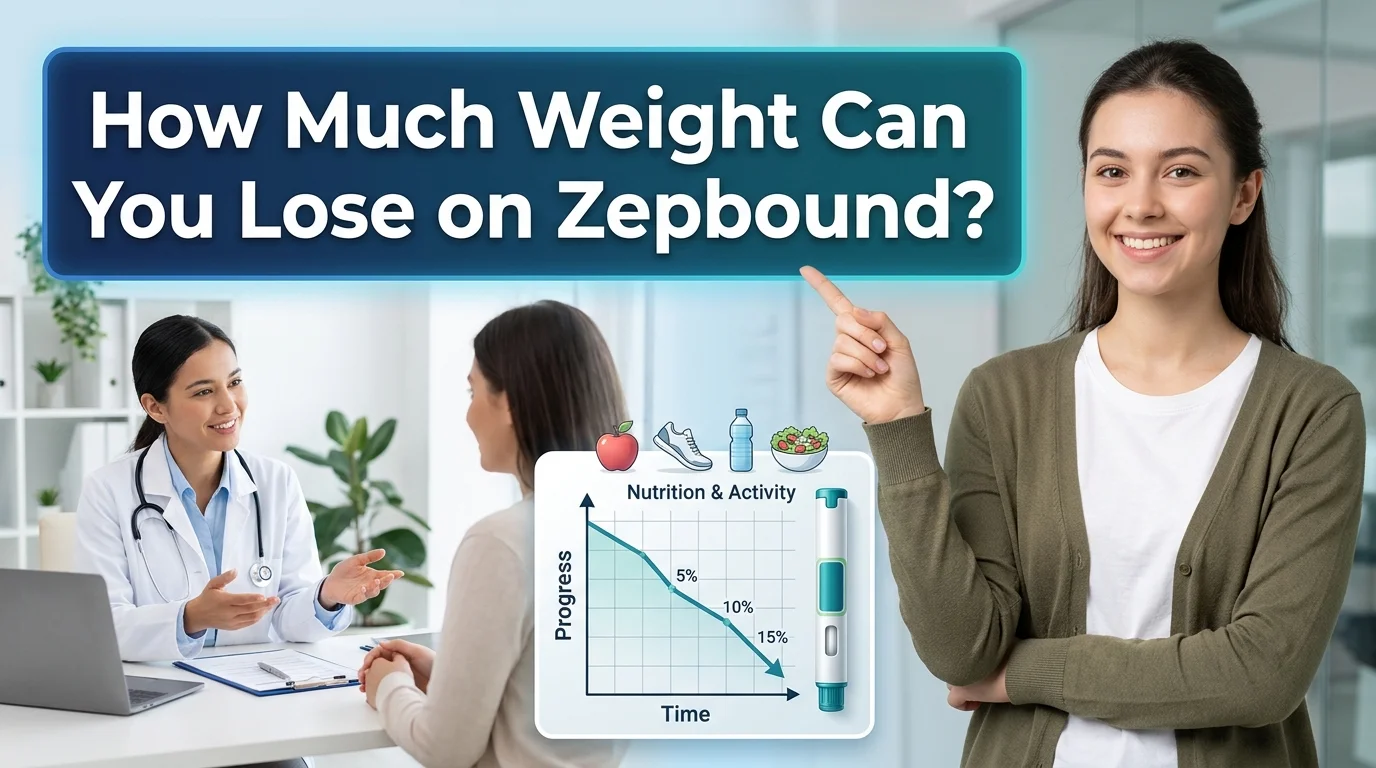
Zepbound can help eligible adults lose a substantial amount of weight. The best-known clinical evidence comes from the SURMOUNT-1 trial, which evaluated three maintenance doses of tirzepatide over 72 weeks.
Researchers reported the following average reductions using the treatment-regimen estimand:
| Weekly maintenance dose | Average weight reduction |
| 5 mg | 15.0% |
| 10 mg | 19.5% |
| 15 mg | 20.9% |
| Placebo | 3.1% |
The treatment-regimen estimand is important because it evaluates outcomes regardless of whether participants discontinued their assigned treatment. It provides a more realistic picture of treatment results than an analysis limited to participants who remained on medication throughout the study.
What Do These Weight-Loss Percentages Mean?
Percentages can be difficult to understand without practical examples. The following calculations show how the clinical-trial averages translate into pounds.
| Starting weight | 15% reduction | 19.5% reduction | 20.9% reduction |
| 150 lbs | 22.5 lbs | 29.3 lbs | 31.4 lbs |
| 180 lbs | 27 lbs | 35.1 lbs | 37.6 lbs |
| 200 lbs | 30 lbs | 39 lbs | 41.8 lbs |
| 220 lbs | 33 lbs | 42.9 lbs | 46 lbs |
| 250 lbs | 37.5 lbs | 48.8 lbs | 52.3 lbs |
| 275 lbs | 41.3 lbs | 53.6 lbs | 57.5 lbs |
| 300 lbs | 45 lbs | 58.5 lbs | 62.7 lbs |
| 350 lbs | 52.5 lbs | 68.3 lbs | 73.2 lbs |
| 400 lbs | 60 lbs | 78 lbs | 83.6 lbs |
These are mathematical estimates based on SURMOUNT-1 averages, not individual predictions or guaranteed results.
For example, someone weighing 200 pounds could lose approximately 30 pounds at a 15% reduction. A person weighing 300 pounds could lose approximately 60 pounds at a 20% reduction.
The same percentage produces different amounts of weight loss because starting weights differ.
Can You Lose 20, 50, or 100 Pounds on Zepbound?
Losing 20 pounds: This may be achievable for someone with a relatively modest starting weight. However, the time required depends on individual treatment response.
Losing 50 pounds: This is possible for some people with higher starting weights. For someone weighing 250 pounds, a 50-pound reduction represents 20% of their starting weight.
Losing 100 pounds: This is possible for some individuals, but it requires a substantial percentage reduction unless their starting weight is very high. For example, losing 100 pounds from 400 pounds represents a 25% reduction.
In SURMOUNT-1, 36.2% of participants receiving 15 mg achieved at least 25% weight reduction by week 72. This shows that substantial reductions are possible, but they are not the average outcome for everyone.
What Do Zepbound Clinical Trial Results Tell Us?

Clinical trials help explain what people may expect from a medication beyond individual success stories and online before-and-after photographs.
The SURMOUNT-1 study was a large, randomized, double-blind, placebo-controlled clinical trial. It included 2,539 adults with obesity or higher-weight person and at least one weight-related health condition.
Participants received weekly tirzepatide injections at 5 mg, 10 mg, or 15 mg, or a placebo. All groups received lifestyle counseling that included calorie reduction and increased physical activity.
The study lasted 72 weeks.
Important Findings From SURMOUNT-1
The percentage of participants reaching different weight-loss milestones varied by dose.
| Weight-loss milestone | 5 mg | 10 mg | 15 mg |
| At least 5% | 85.1% | 88.9% | 90.9% |
| At least 10% | 68.5% | 78.1% | 83.5% |
| At least 15% | 48.0% | 66.6% | 70.6% |
| At least 20% | 30.0% | 50.1% | 56.7% |
| At least 25% | 15.3% | 32.3% | 36.2% |
These figures help put the average weight-loss percentages into perspective.
For example, more than half of participants in the 10 mg and 15 mg groups reached at least 20% weight reduction. However, not everyone achieved that milestone.
The study also reported reductions in waist circumference. The average reductions were 14 cm, 17.7 cm, and 18.5 cm in the 5 mg, 10 mg, and 15 mg groups, respectively.
This is useful because weight and waist measurements provide different information about changes in body size.
Important limitation: SURMOUNT-1 studied tirzepatide in a particular group of adults without diabetes. Its findings should not automatically be applied to every person, including people with different medical conditions or treatment histories.
Zepbound Weight Loss Timeline: What Happens During Treatment?
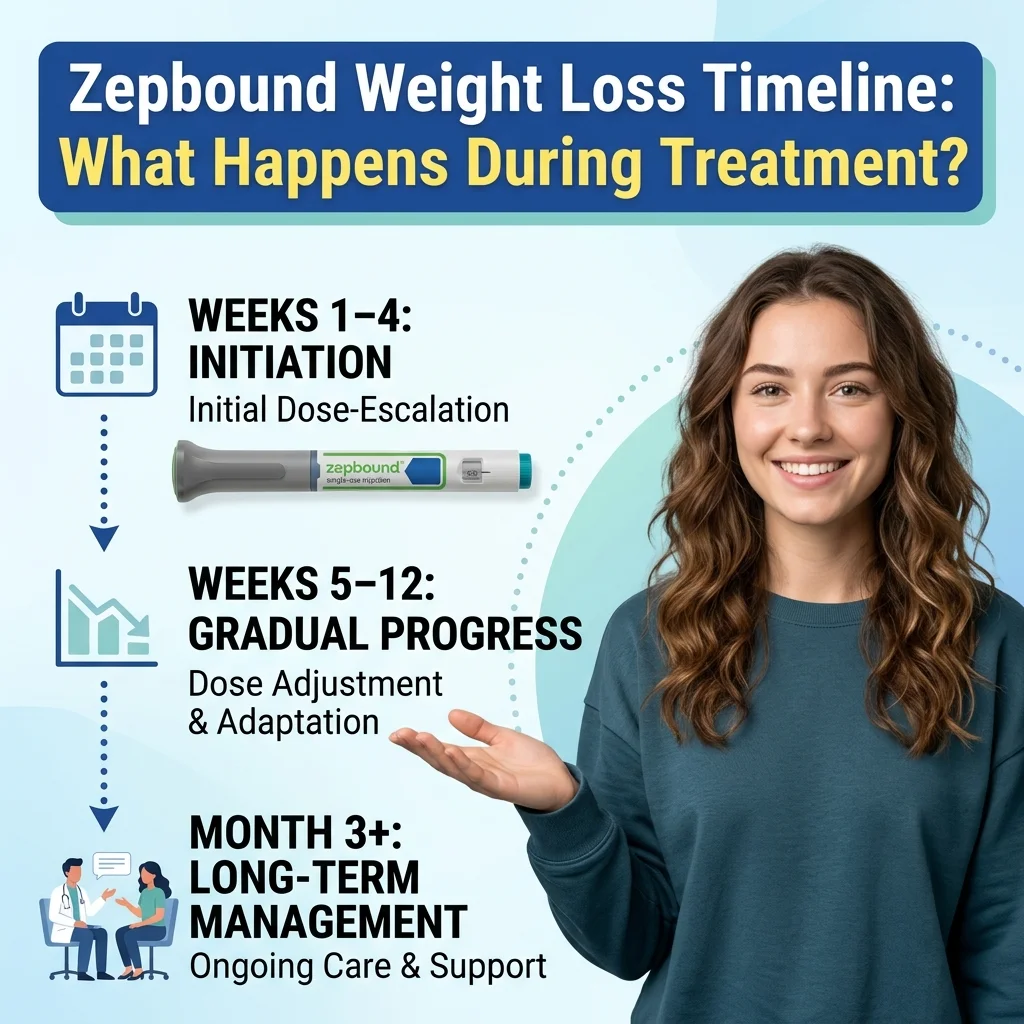
The Zepbound weight loss timeline is different for each person. Some people notice appetite changes soon after starting treatment, while measurable weight reduction may take longer.
There is no scientifically established rule that everyone should lose a particular number of pounds each week or month.
How Much Weight Can You Lose on Zepbound in a Month?
The first month usually involves the 2.5 mg introductory dose.
Patients generally receive one injection per week for four weeks. This starting dose allows the body to adjust to tirzepatide.
Some people notice that they feel full sooner, eat smaller portions, or experience fewer hunger signals. Others notice relatively little change in body weight.
Losing 10 pounds in the first month is possible for some individuals, but it should not be considered a normal requirement or a measure of treatment success.
Early changes can also reflect differences in fluid balance, food intake, and digestive activity rather than fat loss alone.
How Much Weight Can You Lose on Zepbound in 3 Months?
After approximately three months, some patients may have progressed beyond the introductory dose.
Their healthcare professional may have increased the dosage according to treatment response and tolerability.
By this stage, changes in appetite, portion sizes, and body weight may become more noticeable. However, there is no reliable universal three-month average from SURMOUNT-1 that can be used to predict everyone’s results.
A useful progress review should consider:
- Changes in starting and current body weight.
- Waist measurements.
- Appetite and eating patterns.
- Medication tolerance.
- Physical activity.
- Any changes in other health conditions.
How Much Weight Can You Lose on Zepbound in 6 Months?
Six months provides a longer period to evaluate treatment progress.
Some patients may have achieved meaningful weight reduction by this stage. Others may be progressing more gradually.
Weight loss is not necessarily linear. You might lose more during one period and less during another.
Your healthcare professional can evaluate whether your progress, dosage, and side effects support continuing the current treatment plan.
How Much Weight Can You Lose on Zepbound in a Year?
The SURMOUNT-1 trial lasted 72 weeks, which is approximately 16.5 months.
At the end of that period, average weight reductions ranged from 15% to 20.9% across the three maintenance doses.
These results provide useful evidence about longer-term treatment, but they should not be presented as exact one-year predictions.
Your 12-month results may be higher or lower depending on your individual response and treatment consistency.
Zepbound Weight Loss Calculator: Estimate Your Potential Results
A Zepbound weight loss calculator can help you understand how different weight-loss percentages translate into pounds.
You can calculate a potential reduction using this simple formula:
Weightloss=StartingweightPercentage100
For example, suppose your starting weight is 250 pounds and you want to understand what a 15% reduction would mean.
25015100=37.5
Your estimated weight reduction would be 37.5 pounds, leaving a calculated weight of 212.5 pounds.
This is an illustration of percentage-based weight loss, not a prediction that you will achieve that result.
What Is a Realistic Zepbound Weight-Loss Goal?
A realistic goal should consider your medical needs, starting weight, treatment response, and ability to maintain healthy habits.
Rather than setting an arbitrary target such as losing 50 or 100 pounds, discuss an appropriate percentage reduction with your healthcare professional.
Even a relatively modest reduction can be meaningful for some people, particularly when it improves weight-related health measures.
Your goal should also account for muscle preservation, nutritional health, and long-term weight maintenance.
How Does Zepbound Work for Weight Loss?
Zepbound is the brand name for tirzepatide, a prescription medication that activates two hormone receptors: GIP and GLP-1.
These receptors are involved in appetite regulation, digestion, and blood glucose control.
Tirzepatide helps reduce food intake through several connected effects.
1. It Helps Regulate Appetite
Tirzepatide acts on pathways involved in appetite and food intake.
Some people experience fewer hunger signals and find it easier to eat smaller portions. This can help reduce daily calorie intake without relying entirely on willpower.
However, appetite changes vary. Some patients notice a strong effect, while others experience a more gradual response.
2. It Increases Feelings of Fullness
Zepbound can help people feel satisfied after eating smaller amounts of food.
This may make portion management easier and reduce the urge to continue eating after a meal.
It is still important to consume enough nutritious food, even when appetite decreases.
3. It Delays Gastric Emptying
Tirzepatide slows the movement of food from the stomach into the small intestine, particularly after treatment begins.
This can contribute to longer-lasting fullness.
However, delayed gastric emptying may also cause nausea, vomiting, abdominal discomfort, and other digestive problems.
4. It Helps Regulate Blood Sugar
Tirzepatide increases insulin secretion in response to elevated blood glucose and reduces glucagon secretion when appropriate.
These effects contribute to improved blood glucose regulation.
People taking insulin or certain diabetes medications may need additional monitoring because combining treatments can increase the risk of low blood sugar.
5. It Supports a Calorie Deficit
Weight reduction generally requires the body to use more energy than it receives from food and drinks.
By helping regulate appetite and food intake, Zepbound can support a calorie deficit.
A balanced eating pattern and regular physical activity remain important parts of treatment.
Does Zepbound Dosage Affect Weight Loss?
Yes. SURMOUNT-1 found greater average weight reduction with higher maintenance doses.
However, that does not mean everyone should use the highest available dose.
The appropriate dose depends on how well the medication works, how well you tolerate it, and your healthcare professional’s assessment.
Understanding Zepbound Dosages
| Dose | Role in treatment |
| 2.5 mg | Starting dose for the first four weeks |
| 5 mg | Recommended maintenance option |
| 7.5 mg | Dose-escalation step |
| 10 mg | Recommended maintenance option |
| 12.5 mg | Dose-escalation step |
| 15 mg | Maximum recommended maintenance dose |
Treatment generally begins with 2.5 mg once weekly for four weeks. The dose can then increase in 2.5 mg steps after at least four weeks at the current dose, according to the prescribed schedule.
The recommended maintenance doses for chronic weight management are 5 mg, 10 mg, and 15 mg once weekly.
The 7.5 mg and 12.5 mg doses are escalation steps rather than recommended maintenance doses for this indication.
Zepbound 5 mg Weight Loss
In SURMOUNT-1, participants taking 5 mg experienced an average weight reduction of 15% at week 72.
This demonstrates that meaningful weight loss is possible at the lowest recommended maintenance dose.
Zepbound 10 mg Weight Loss
Participants taking 10 mg experienced an average weight reduction of 19.5%.
This was higher than the average reduction observed in the 5 mg group.
Zepbound 15 mg Weight Loss
The 15 mg group experienced an average weight reduction of 20.9%.
Although this was the highest average result in SURMOUNT-1, it does not mean everyone needs the maximum dose.
Your prescriber may recommend staying at a lower maintenance dose if it provides an appropriate response and is better tolerated.
What Factors Affect Your Zepbound Weight Loss Results?
Two people can take the same medication and experience different results. Your starting weight, health, treatment duration, and daily habits can all influence your progress.
Starting Body Weight
Your starting weight affects how many pounds you lose at a particular percentage.
For example, a 15% reduction equals 30 pounds for someone weighing 200 pounds and 45 pounds for someone weighing 300 pounds.
This is why comparing percentage reductions is often more useful than comparing total pounds lost.
Treatment Duration
Weight reduction generally develops over time.
Someone who has taken Zepbound for three months has had less time to experience its full effects than someone who has completed a longer treatment period.
Consistency and regular medical follow-up are important.
Eating Habits
Zepbound can reduce appetite, but your food choices still matter.
A balanced eating pattern can help you meet nutritional needs while managing calorie intake.
Consider including:
- Lean protein such as eggs, chicken, and fish.
- Vegetables and fresh fruits.
- Whole grains and high-fiber foods.
- Healthy fats from nuts and seeds.
- Beans, lentils, and other plant-based proteins.
Avoid extreme calorie restriction, particularly when your appetite is already reduced.
Physical Activity
Physical activity supports overall health and can help preserve muscle during weight reduction.
You do not need to start with intense exercise. Walking, swimming, cycling, and resistance training are practical options.
Choose activities that match your fitness level and medical needs.
Sleep and Stress
Sleep and stress can influence appetite, food choices, and daily activity.
Poor sleep may make it harder to manage hunger and maintain healthy routines.
Try to maintain consistent sleep hours and use practical stress-management techniques.
Medical Conditions and Other Medications
Certain health conditions and prescription medications can affect body weight and treatment response.
For example, diabetes, hormonal conditions, and medications associated with weight gain may influence your progress.
Tell your healthcare professional about all your current medications and medical conditions before starting treatment.
Why Am I Not Losing Weight on Zepbound?
Not everyone experiences rapid weight reduction after beginning treatment.
If you are wondering why you are not losing weight on Zepbound, several explanations may apply.
You Are Still Taking the Starting Dose
The 2.5 mg dose is designed to help your body adjust to tirzepatide.
It is not a recommended maintenance dose for chronic weight management.
Therefore, early results may differ from the averages reported in studies involving maintenance doses.
Your Body Is Adjusting to Treatment
People respond differently to tirzepatide.
Some notice reduced hunger within the first few weeks, while others experience gradual changes.
A slower initial response does not automatically mean treatment will be unsuccessful.
Your Calorie Intake Has Not Changed Enough
Reduced appetite does not guarantee a particular calorie intake.
High-calorie drinks, frequent snacks, large portions, and calorie-dense foods can still affect your progress.
Keeping a food diary may help you understand your eating habits.
You Are Experiencing a Weight-Loss Plateau
A weight-loss plateau occurs when your weight remains relatively stable for a period.
As your body becomes lighter, its energy requirements can change. Your previous eating and activity patterns may no longer produce the same calorie deficit.
A healthcare professional or registered dietitian can help review your progress and identify appropriate adjustments.
You Need More Time to Evaluate Results
A few weeks is not enough to determine your long-term response.
The major SURMOUNT-1 trial evaluated outcomes over 72 weeks. Comparing your first-month results with the final clinical-trial averages would be misleading.
Do not increase your dosage independently because your weight is changing slowly.
Does Zepbound Cause Muscle Loss?
Yes, some of the weight lost during treatment can come from lean body mass, which includes muscle and other non-fat tissues.
This is an important consideration because losing too much muscle can affect strength, physical function, and long-term health.
You can support muscle preservation through several habits.
Eat adequate protein: Include protein sources in your meals, such as eggs, fish, chicken, dairy products, beans, and lentils.
Include resistance training: Strength exercises can help maintain muscle during weight reduction.
Avoid excessive calorie restriction: Eating too little can make it difficult to meet your nutritional requirements.
Monitor physical strength: Pay attention to changes in strength, exercise performance, and daily physical function.
If you experience significant weakness or difficulty meeting your nutritional needs, speak with your healthcare professional.
What Should You Eat While Taking Zepbound?
A balanced eating pattern can support weight management while helping you avoid nutritional deficiencies.
Because Zepbound can reduce appetite and cause digestive symptoms, choosing nutrient-dense foods is particularly important.
Protein-Rich Foods
Protein supports muscle maintenance and helps your body recover from physical activity.
Good choices include:
- Eggs.
- Chicken breast.
- Fish.
- Greek yogurt.
- Cottage cheese.
- Lentils.
- Beans.
- Tofu.
High-Fiber Foods
Fiber supports digestive health and can help manage constipation.
Consider adding vegetables, fruits, oats, beans, and whole grains to your meals.
Increase fiber gradually if you experience digestive discomfort.
Healthy Fats
Healthy fats provide energy and help your body absorb certain vitamins.
Avocados, nuts, seeds, and olive oil are useful options.
Foods That May Worsen Digestive Symptoms
Some people experience more discomfort after eating large, greasy, or very rich meals.
If nausea or reflux becomes a problem, consider smaller portions and identify foods that trigger your symptoms.
There is no single Zepbound diet that works for everyone. A registered dietitian can help you develop a suitable eating plan.
What Are the Side Effects of Zepbound?
Like other prescription medications, Zepbound can cause side effects.
Most commonly reported reactions involve the digestive system. They may be more noticeable when treatment begins or when the dose increases.
| Side effect | Possible symptoms |
| Nausea | Feeling sick, especially after meals |
| Diarrhea | Frequent or loose bowel movements |
| Vomiting | Throwing up |
| Constipation | Difficulty passing stools |
| Abdominal pain | Stomach discomfort or cramps |
| Indigestion | Discomfort after eating |
| Fatigue | Feeling unusually tired |
| Acid reflux | Burning sensation or stomach contents moving toward the esophagus |
| Hair loss | Increased hair shedding |
Other reported reactions include injection-site reactions, belching, and hypersensitivity reactions.
Serious Zepbound Risks
Some side effects require urgent medical attention.
- Pancreatitis: Severe or persistent abdominal pain, sometimes extending toward the back, may indicate inflammation of the pancreas.
- Gallbladder problems: Severe abdominal pain, fever, or yellowing of the skin or eyes can indicate a gallbladder complication.
- Kidney problems: Persistent vomiting or diarrhea can cause dehydration and potentially affect kidney function.
- Severe allergic reactions: Facial swelling, throat swelling, or difficulty breathing requires emergency medical care.
- Low blood sugar: The risk can increase when Zepbound is used with insulin or certain other diabetes medications.
Thyroid Tumor Warning
Zepbound carries a boxed warning because tirzepatide caused thyroid C-cell tumors in animal studies.
It is not known whether the same risk applies to humans.
The medication is contraindicated in people with a personal or family history of medullary thyroid carcinoma or multiple endocrine neoplasia syndrome type 2 (MEN 2).
Discuss these risks with your healthcare professional before treatment.
Important Zepbound Medication Precautions and Interactions
Weight-loss results are only one part of treatment. Understanding medication precautions is equally important.
According to the prescribing information, Zepbound delays gastric emptying and may affect how the body absorbs certain oral medications.
Here are several important precautions.
Oral Birth Control
Zepbound may reduce the effectiveness of oral hormonal contraceptives, particularly after starting treatment or increasing the dose.
People using oral hormonal contraceptives should discuss switching to a non-oral method or adding a barrier contraceptive method for four weeks after starting Zepbound and four weeks after each dose increase.
Other Weight-Loss Injections
Zepbound should not be combined with other tirzepatide products or GLP-1 receptor agonist medications.
Combining these treatments without appropriate medical direction may increase risks.
Pregnancy
Zepbound may cause fetal harm.
If pregnancy is recognized during treatment, the prescribing information advises discontinuing the medication and contacting a healthcare professional.
Surgery and Anesthesia
Because Zepbound delays stomach emptying, it may affect the risk of complications during procedures involving general anesthesia or deep sedation.
Tell your surgical and anesthesia teams that you take tirzepatide before any planned procedure.
For complete precautions and interactions, consult the current Zepbound prescribing information.
Zepbound vs. Wegovy for Weight Loss
Zepbound and Wegovy are prescription medications used for weight management in eligible patients.
However, they contain different active ingredients and work through different hormone-receptor pathways.
Zepbound™ Rx Weight Loss Treatment – From $344.99 Per Dose
Zepbound
- Active ingredient: Tirzepatide.
- Activates GIP and GLP-1 receptors.
- SURMOUNT-1 average weight reduction: 15% to 20.9% at 72 weeks.
Wegovy 0.25 mg 1 Prefilled Pen 1.5 ml
Wegovy
- Active ingredient: Semaglutide.
- Activates GLP-1 receptors.
- STEP 1 average weight reduction: approximately 14.9% at 68 weeks.
What Does the SURMOUNT-5 Study Show?
The SURMOUNT-5 trial directly compared tirzepatide with semaglutide in adults with obesity or higher-weight person and a weight-related health condition, without diabetes.
After 72 weeks, participants experienced average weight reductions of:
| Treatment | Average weight reduction |
| Tirzepatide | 20.2% |
| Semaglutide | 13.7% |
The study found greater average weight reduction with tirzepatide.
This head-to-head comparison is more informative than comparing separate clinical trials because participants were evaluated within the same study.
However, the result does not mean Zepbound is automatically the best option for every patient. Treatment decisions should consider medical history, side effects, treatment goals, and individual needs.
Read the SURMOUNT-5 clinical trial results.
What Happens When You Stop Taking Zepbound?
Weight regain after stopping Zepbound is possible.
Tirzepatide helps regulate appetite and food intake while you are taking it. When treatment stops, these effects gradually wear off.
You may notice increased hunger or find it harder to maintain your previous eating habits.
What Does SURMOUNT-4 Reveal About Weight Regain?
The SURMOUNT-4 clinical trial examined the effects of continuing or discontinuing tirzepatide after an initial treatment period.
Participants first received tirzepatide for 36 weeks. During this period, they experienced an average weight reduction of 20.9%.
Researchers then assigned participants to continue tirzepatide or switch to placebo for another 52 weeks.
The results showed:
- Participants who continued tirzepatide lost an additional average of 5.5% during the next 52 weeks.
- Participants who switched to placebo regained an average of 14% relative to their weight at the time of switching.
This demonstrates that continued treatment helped maintain weight reduction in the study.
It also highlights why obesity management often requires a long-term plan rather than a short medication course.
Read the SURMOUNT-4 study published in JAMA.
Who Is Eligible to Use Zepbound?
Zepbound is not intended for everyone who wants to lose a few pounds.
Under its US prescribing indications, it is used alongside a reduced-calorie diet and increased physical activity for eligible adults with:
- Obesity, generally defined as a BMI of 30 or higher.
- Higher-weight person, generally defined as a BMI of 27 or higher, with at least one weight-related medical condition.
It is also approved for certain adults with obesity and moderate-to-severe obstructive sleep apnea.
A healthcare professional can assess your BMI, medical history, current medications, and treatment goals.
Eligibility rules and product authorization may differ by country, so people outside the United States should check local prescribing requirements.
Frequently Asked Questions About Zepbound Weight Loss
1. How much weight does the average person lose on Zepbound?
In SURMOUNT-1, participants lost an average of 15% to 20.9% of their starting body weight over 72 weeks, depending on their maintenance dose.
2. Can you lose 20 pounds on Zepbound?
Yes. Losing 20 pounds is possible, although the time required depends on your starting weight, dosage, treatment duration, and individual response.
3. Can you lose 50 pounds on Zepbound?
Yes. Some people can lose 50 pounds, particularly those with higher starting weights. However, this is not a guaranteed result.
4. Can you lose 100 pounds on Zepbound?
It may be possible for some people with higher starting weights. A 100-pound reduction represents 25% of a 400-pound starting weight, so it requires substantial weight reduction.
5. How much weight can you lose on Zepbound in the first month?
There is no established first-month average that applies to everyone. Some people notice appetite changes and weight reduction, while others experience little initial change.
6. How much weight can you lose on Zepbound 2.5 mg?
The 2.5 mg dose is intended for treatment initiation. It is not a recommended maintenance dose for chronic weight management.
7. How much weight can you lose on Zepbound 5 mg?
In SURMOUNT-1, participants receiving 5 mg experienced an average weight reduction of 15% at week 72.
8. How much weight can you lose on Zepbound 10 mg?
Participants receiving 10 mg experienced an average weight reduction of 19.5% over 72 weeks in SURMOUNT-1.
9. How much weight can you lose on Zepbound 15 mg?
The 15 mg group experienced an average reduction of 20.9% over 72 weeks. This was the highest average among the three maintenance doses studied.
10. Does Zepbound reduce belly fat?
Zepbound can reduce overall body weight and waist circumference. However, it does not specifically target belly fat.
11. Can you lose weight on Zepbound without exercising?
Weight reduction can occur without a structured exercise program. However, physical activity supports muscle preservation, cardiovascular health, and general fitness.
12. Does Zepbound cause muscle loss?
Some weight reduction can come from lean body mass. Adequate protein intake and appropriate resistance training can help support muscle preservation.
13. Why am I not losing weight on Zepbound?
Possible reasons include being early in treatment, individual differences in medication response, calorie intake, health conditions, and changes in activity levels.
A healthcare professional can help evaluate persistent lack of progress.
14. Will you regain weight after stopping Zepbound?
Weight regain is possible. SURMOUNT-4 found substantial regain among participants who switched from tirzepatide to placebo after initial treatment.
15. How long can you stay on Zepbound?
There is no universal treatment duration that applies to everyone. Zepbound is intended for chronic weight management in eligible patients. Your healthcare professional should regularly evaluate its benefits, risks, and ongoing suitability.
Final Thoughts:
So, how much weight can you lose on Zepbound? Clinical research suggests that eligible adults taking tirzepatide alongside lifestyle changes can achieve average weight reductions of approximately 15% to 21% over 72 weeks, depending on the maintenance dose.
For someone starting at 200 pounds, this could represent approximately 30 to 42 pounds. Someone weighing 300 pounds could potentially lose around 45 to 63 pounds at the same percentages. However, these numbers are averages from a clinical trial, not guaranteed personal outcomes.

I am William Harris, a passionate writer dedicated to creating informative, engaging, and valuable content for readers around the world. I enjoy researching different topics and sharing well-crafted articles that provide useful insights, practical tips, and meaningful information. I am committed to delivering high-quality content with accuracy, clarity, and a reader-focused approach. Through my writing, I aim to educate, inspire, and help people discover new ideas.