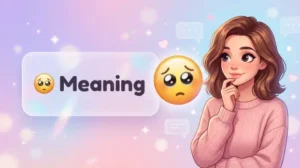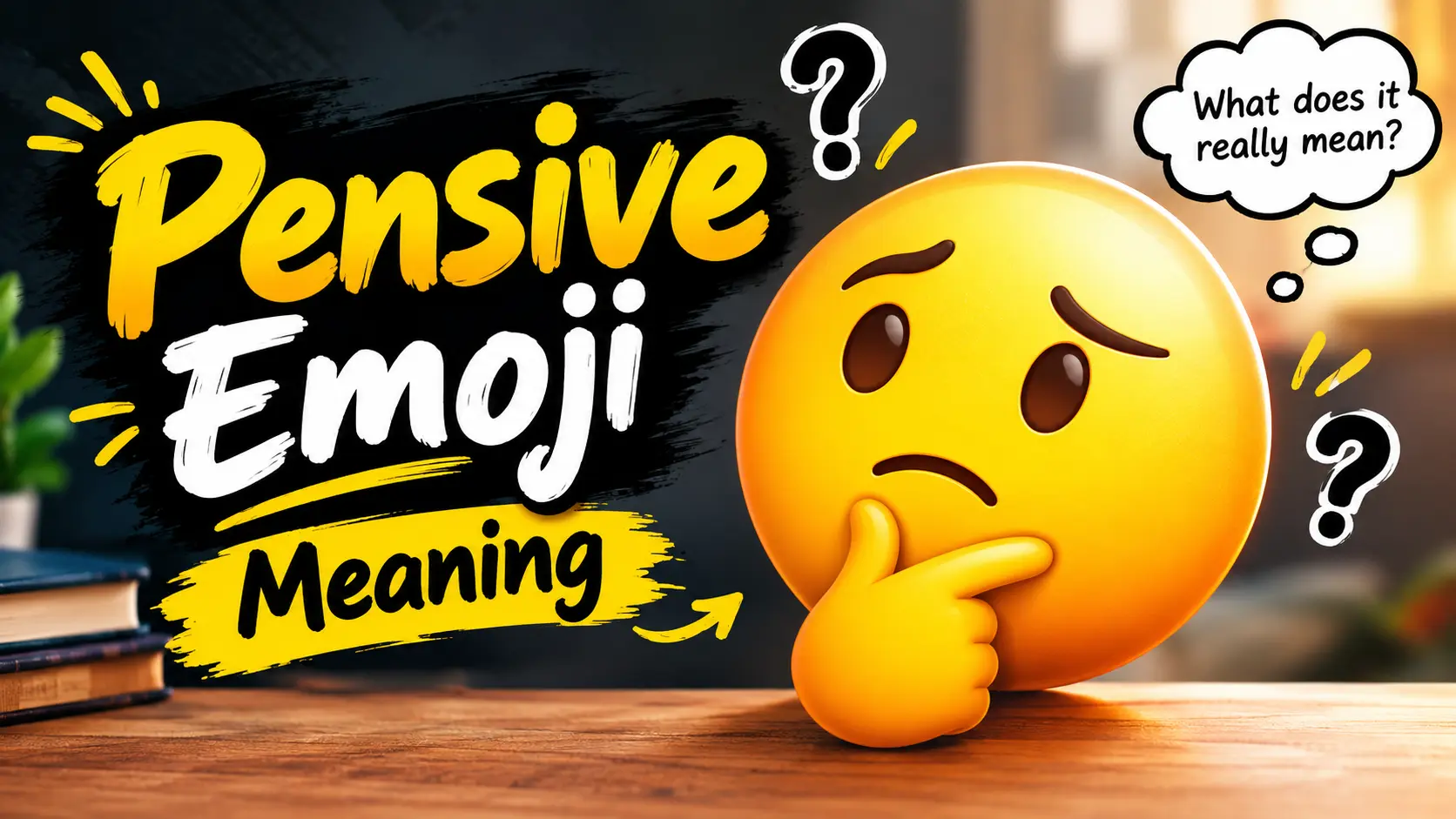
You’ve probably seen the 😔 emoji pop up in a late-night text, a friend’s Instagram story, or a dating-app chat and wondered, “What are they really feeling?”
That soft, downward-gazing face with a slight frown creates instant curiosity, and sometimes mild confusion, because it can signal quiet sadness, deep thought, mild disappointment, or just a reflective mood.
People search for the pensive emoji meaning because modern texting and social media rely so heavily on these tiny faces to convey emotion without words. One small emoji can shift the whole tone of a message, so understanding 😔 helps you read the room (or the chat) correctly.
Meaning & Definition
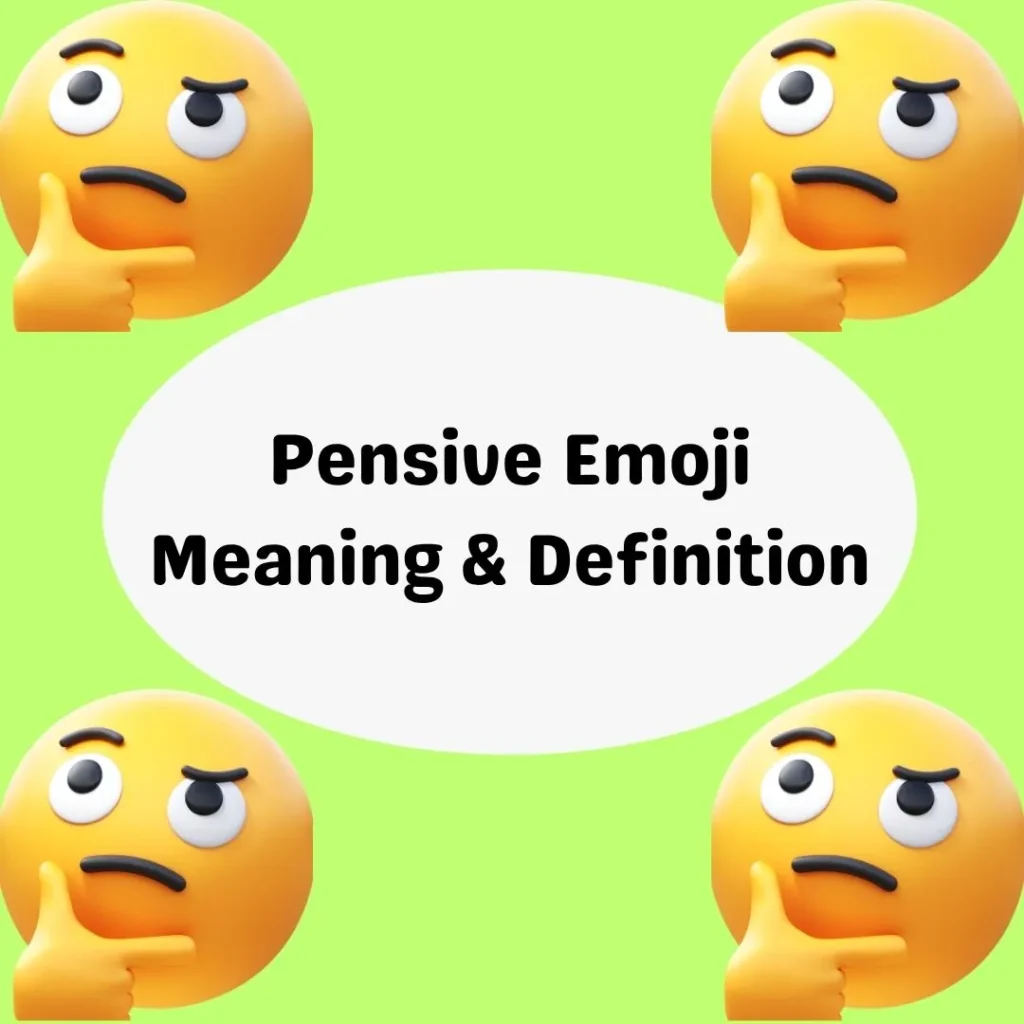
The primary pensive emoji meaning is a thoughtful, reflective, or mildly sad expression. Officially called the “Pensive Face,” it shows a face looking downward with closed or half-closed eyes and a slight frown, suggesting someone is lost in thought, feeling a bit down, or quietly disappointed.
Secondary meanings appear depending on context:
- Mild regret or “that’s a shame”
- Quiet empathy (“I feel you”)
- Contemplative mood rather than full sadness
Examples in messages:
- “Just finished the book… 😔” (reflective, a little emotional)
- “Missed the concert 😔 but at least I got the album” (mild disappointment)
Background & Origin
The pensive face was introduced in Unicode 6.0 in 2010 and later added to major emoji keyboards. It belongs to the “Smileys & Emotion” category and was designed to fill the gap between a neutral face and a full crying or frowning emoji. As smartphones and messaging apps exploded in popularity, users quickly adopted 😔 for those in-between feelings that didn’t need dramatic crying faces or angry ones. Its soft, introspective look made it a natural fit for social media captions and late-night chats, helping it become one of the more commonly used emotional emojis.
Usage in Different Contexts
Texting or chat messages
People use 😔 to soften bad news or show they’re processing something:
“Didn’t get the job 😔 but I’ll keep trying.”
Social media platforms
On Instagram or TikTok captions it often adds a reflective or vulnerable vibe:
“Sunday evening thoughts 😔 #mood”
Professional or technical settings
It’s rarer in formal emails, but can appear in team chats for light empathy:
“The project got delayed 😔 let’s regroup tomorrow.”
Platform-Specific Meanings
| Platform | Common Meaning | Example Use |
| Mild sadness or reflection | “Traffic is inexplicable today 😔” | |
| Contemplative or aesthetic mood | Caption under a sunset photo: “Quiet nights 😔” | |
| TikTok | Relatable “low-key sad” energy | Video of rainy day: “That feeling 😔” |
| Snapchat | Soft disappointment or thought | Snap reply: “Oof 😔” |
| Twitter/X | Reflective or mildly frustrated | “Another Monday 😔” |
Other Fields Using the Abbreviation
The pensive emoji itself isn’t an abbreviation, but similar reflective language appears in:
- Mental-health discussions (describing low mood without alarm)
- Creative writing and song lyrics (capturing quiet introspection)
- Customer-support chats (showing empathy without over-dramatizing)
Common Misconceptions & Mistakes
People sometimes treat 😔 as full-blown depression or anger when it’s usually milder. It’s not the same as 😢 (crying face) or 😞 (disappointed face). Misreading it as pure sadness can make replies feel too heavy. Always check the surrounding message, context decides whether it’s thoughtful, tired, or a little down.
Similar Terms & Alternatives
- 😢 Crying Face – stronger sadness or emotional release
- 😞 Disappointed Face – clearer letdown
- 🤔 Thinking Face – pure curiosity or problem-solving
- 😌 Relieved Face – calm after tension
- 🫠 Melting Face – overwhelmed or embarrassed exhaustion
How to Respond , Chat Examples
Friend:
Them: “Long day… just need a minute 😔”
You: “Totally get it. Want to vent or just chill later?”
Crush:
Them: “Was hoping to see you this weekend 😔”
You: “Same here 😔 Rain check soon?”
Colleague:
Them: “Client pushed the deadline again 😔”
You: “Ugh, rough. Let’s adjust the plan tomorrow.”
Differences from Similar Words
Unlike saying “I’m sad,” “I’m private,” or “this is confidential,” the pensive emoji is subtle and visual. It doesn’t demand a big emotional response the way “I’m heartbroken” might. It’s softer than “disappointed” and more open-ended than “thinking.” That nuance makes it perfect for keeping the conversation light while still showing feeling.
Relevance in Online Conversations & Dating Apps
On dating apps the pensive emoji often signals vulnerability without being intense. Someone might write “Had a rough week 😔” to invite support or simply share mood. It helps gauge emotional availability and can spark deeper chats when matched with an empathetic reply. In casual social media it keeps posts feeling human and relatable instead of overly polished.
Popularity & Trends Over Time
The pensive face stays consistently popular because it covers a wide emotional middle ground. It appears regularly in meme culture for “quiet disappointment” moments and shows steady use across Google searches and social platforms whenever people want to express low-key feelings without drama.
FAQs
What does the pensive emoji really mean?
It usually means thoughtful, reflective, or mildly sad, not full-blown distress.
Is 😔 the same as being depressed?
No. It’s typically lighter and more temporary than clinical sadness.
When should I use the pensive emoji?
Use it for quiet reflection, mild letdown, or soft empathy in casual chats.
Can it mean something positive?
Sometimes it just shows deep thought or a peaceful, introspective mood.
How is it different from the thinking face?
🤔 is more about active problem-solving; 😔 leans toward quiet emotion or reflection.
Conclusion
The pensive emoji meaning centers on quiet thoughtfulness mixed with mild sadness or reflection. Whether it appears in a text, Instagram caption, TikTok video, or dating-app message, context is everything.
Understanding 😔 helps you respond with the right amount of empathy and keeps online conversations feeling natural. Next time you see that soft, downward gaze, you’ll know it’s inviting a gentle reply rather than a dramatic one.

I am Daniel Scott, a passionate writer dedicated to creating meaningful and engaging content that informs, inspires, and connects with readers worldwide. I am passionate about exploring ideas, sharing knowledge, and presenting stories with clarity and creativity. My writing focuses on delivering valuable insights through well-researched articles and thoughtful perspectives. I am committed to maintaining accuracy, originality, and a reader-first approach in every piece I create.