
Finding information about someone online is not always easy. You might remember an old friend’s name but have forgotten their contact details. Perhaps you received a call from an unfamiliar number and want to understand who might be behind it. In other situations, you may simply want to check what personal information about you is available online.
This is where Fast People Search becomes relevant. It is an online people-search platform that allows users to explore information associated with individuals through different search methods. These include searches using names, phone numbers, and addresses.
Many people look for Fast People Search because they want a convenient way to find publicly available information without manually visiting multiple websites. However, convenience is only one part of the experience. Users also want to know whether the service is free, how accurate its results are, whether it is legitimate, and how they can protect their personal information.
This detailed Fast People Search review explores the platform’s purpose, search functionality, available information, advantages, disadvantages, privacy considerations, and alternatives. It also explains how to use Fast People Search and how to submit an opt-out request if you discover your information on the website.
What Is Fast People Search?
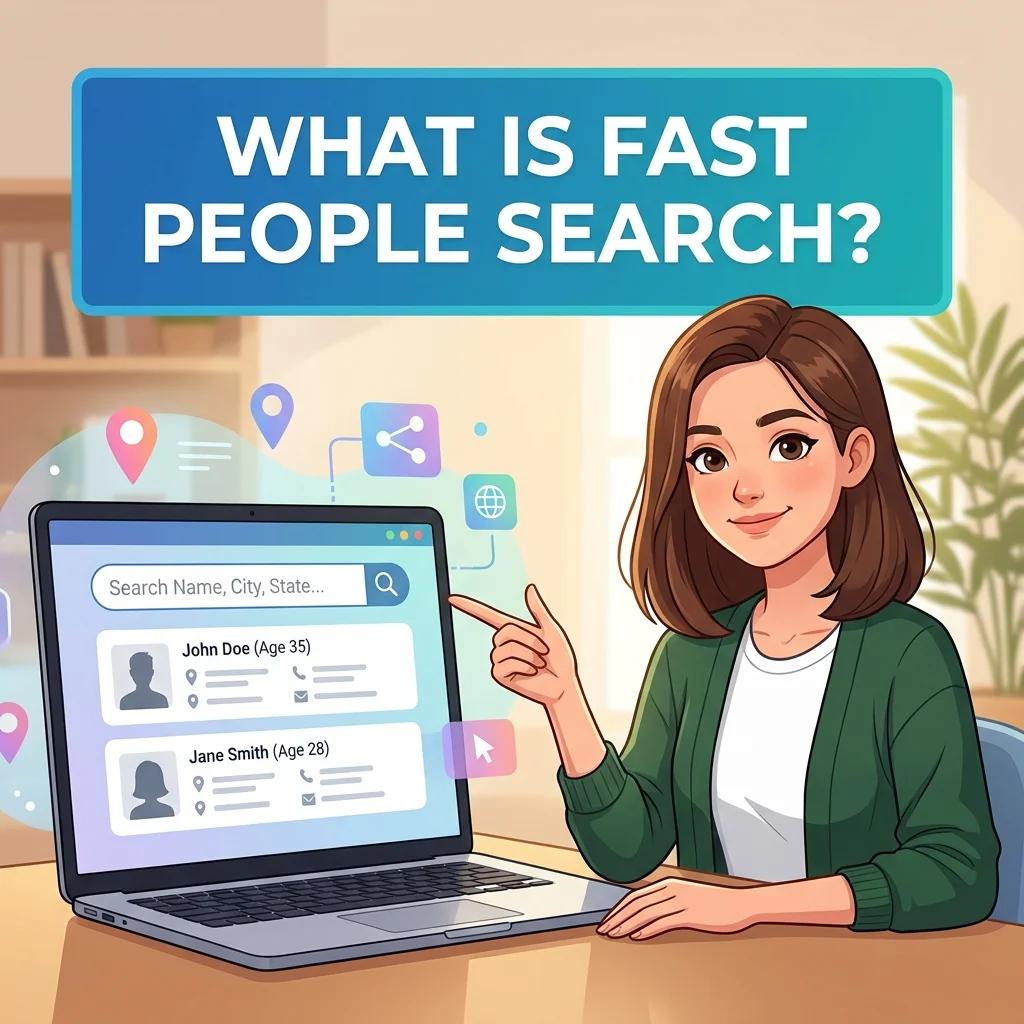
Fast People Search is an online people-search website that helps visitors look up information associated with individuals. Users can start with identifying details such as a person’s name, phone number, or address.
The platform primarily focuses on information associated with people in the United States. Its purpose is to make certain information easier to search by bringing together details from different data sources.
For example, imagine that you receive repeated calls from an unfamiliar telephone number. You might want to investigate whether the number has an identifiable association. A reverse phone lookup can provide a starting point for that research.
Similarly, suppose you want to reconnect with a former classmate but only remember their first and last name. A people-search service may help you explore possible matches.
Fast People Search belongs to a broader category of online people-search services and data brokers. According to the Federal Trade Commission (FTC), people-search websites can collect information from other data brokers, publicly accessible social media profiles, and government records.
Depending on the available information, people-search websites may organize details such as:
- Names and name variations.
- Current and previous addresses.
- Associated telephone numbers.
- Approximate age information.
- Possible relatives and associates.
- Certain publicly available records.
However, these are general categories of information associated with people-search services. They are not a guarantee that Fast People Search displays every type of information for every individual.
It is also important to understand that Fast People Search is not an official government database. Its search results should be treated as informational leads rather than verified identity records.
How Does Fast People Search Work?
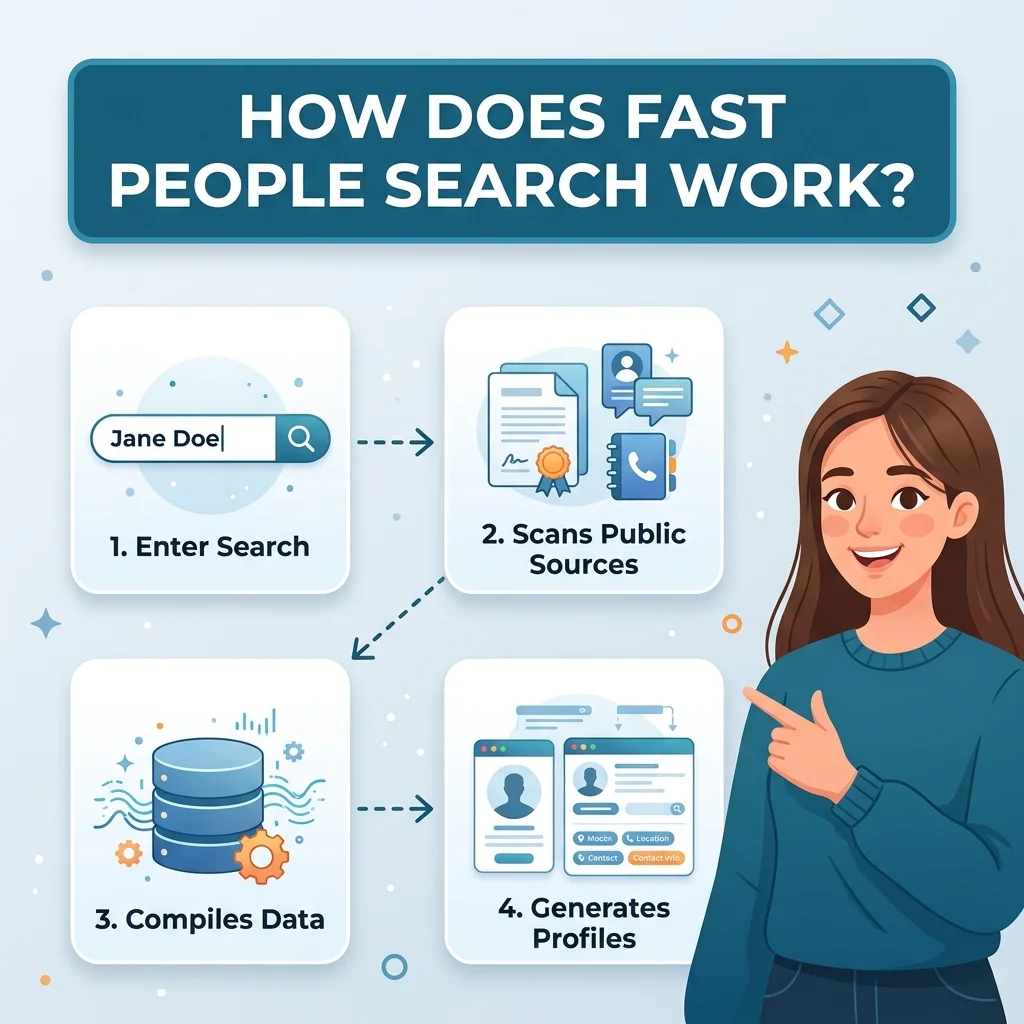
Understanding how Fast People Search works can help you use the website more effectively.
The basic process involves entering identifying information, reviewing matching records, and evaluating the available results.
Searching With a Person’s Name
The simplest way to begin a search is by entering someone’s first and last name.
If the name is common, the website may return several possible matches. Additional location information can help distinguish between individuals.
For example, searching for someone named Michael Brown may produce multiple results. Adding a known city or state can make the search more specific.
However, a matching name does not automatically establish that a listing belongs to the person you are looking for.
Searching With a Phone Number
A reverse phone lookup starts with a telephone number instead of a person’s name.
This approach can be useful when you receive an unfamiliar call and want to investigate whether the number has an identifiable association.
Phone-number information can change over time. Numbers may be transferred, reassigned, or registered under another person’s name.
Therefore, even when a search produces a possible match, you should not assume that the listed individual personally made the call.
Searching With an Address
An address-based search starts with a location rather than a person’s name.
Depending on the available information, a people-search service may identify individuals associated with a particular address or display historical address information.
However, an association with an address does not establish current residence. Someone may have moved, sold a property, or previously shared an address with another individual.
Matching Available Information
After receiving search details, the platform attempts to identify relevant records within its available information.
Different records may contain overlapping details. The website organizes matching information to make it easier to explore.
The quality of a match depends on the information available and how accurately different records have been connected.
Reviewing the Results
Once the search is complete, review the available information carefully.
Look for relevant details and possible inconsistencies. If something is important, verify it through an authoritative source.
This is especially important when several individuals have similar names or when the available information is outdated.
Main Features of Fast People Search
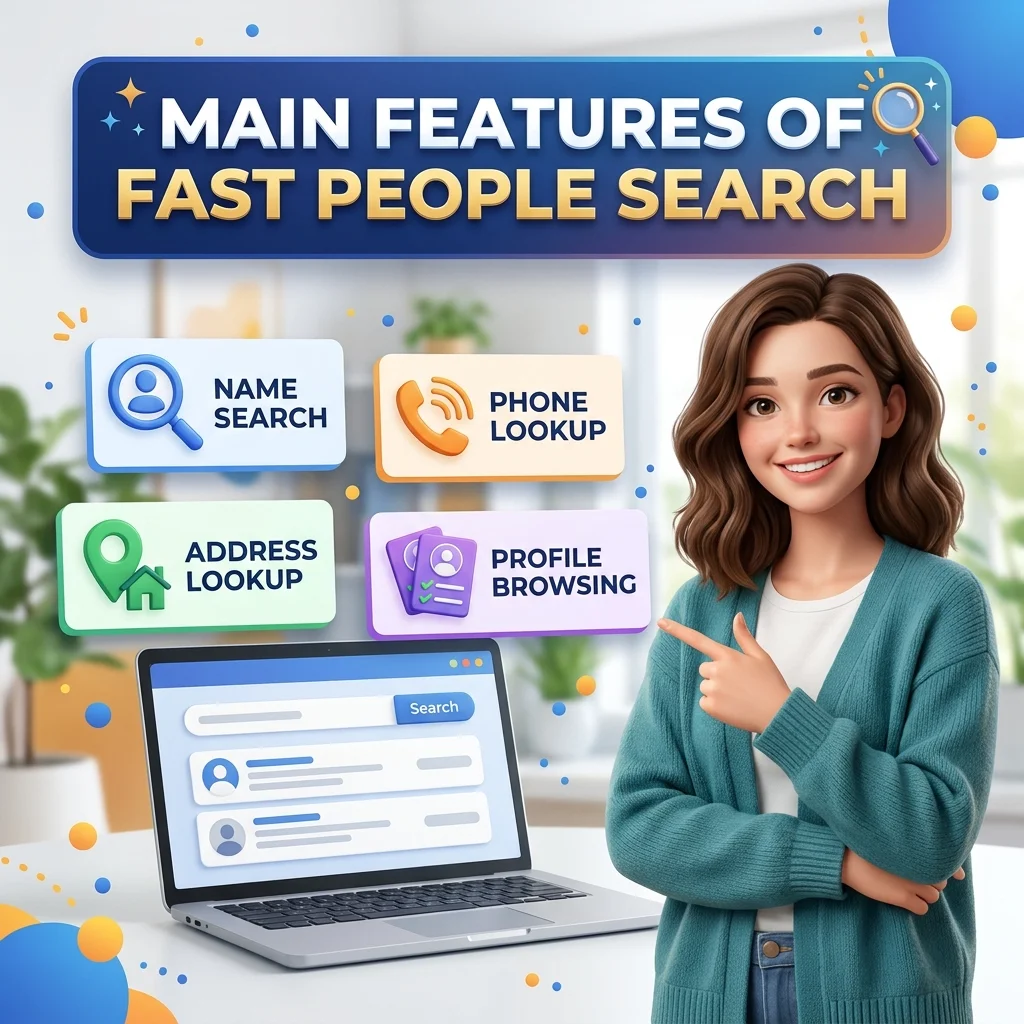
Fast People Search is designed around people-related lookup functionality. Understanding its main search categories can help you decide whether the platform is suitable for your needs.
Fast People Search by Name
Name-based searching is useful when you know the person’s identity but have limited contact information.
You can start with a first and last name. Adding a location may help narrow down possible matches.
This search method may be relevant when:
- Looking for a former classmate.
- Searching for an old acquaintance.
- Trying to reconnect with someone.
- Exploring information associated with your own name.
- Checking whether different public listings may refer to the same individual.
For the best results, use accurate spelling and any relevant location information you already know.
Fast People Search Phone Lookup
Fast People Search phone lookup is relevant when you want to investigate an unfamiliar telephone number.
Instead of entering someone’s name, you start with the number itself.
For example, imagine receiving an unexpected call from a number you do not recognize. A reverse phone lookup may help you investigate whether that number appears in available records.
However, there are limitations.
A phone number can change owners, and publicly available records may not reflect its current user. Some numbers may also be unlisted or missing from available databases.
Do not treat a reverse phone lookup result as proof of who placed a particular call.
Fast People Search by Address
Fast People Search by address is another way to explore information associated with a location.
Depending on the records available, an address-related search may identify individuals historically connected with that location.
This functionality can be useful for researching your own address information or understanding historical associations.
However, an address search should not be used to make assumptions about someone’s current residence or personal circumstances.
Possible Relatives and Associates
Some people-search websites display possible relatives or associates based on connections found in their databases.
These associations may be generated using shared addresses, public records, or other information.
For example, two individuals who previously lived at the same address might appear as associated people.
This does not necessarily mean they are relatives. The connection could be based on a previous household, shared property, or another data relationship.
Always distinguish between a possible database association and a confirmed family relationship.
Historical Information
People-search databases may include older information that remains associated with an individual.
This could involve previous addresses, former telephone numbers, or other historical details.
Historical information can help explain why multiple records appear in a search. However, older information should not be confused with current details.
What Information Can You Find on Fast People Search?
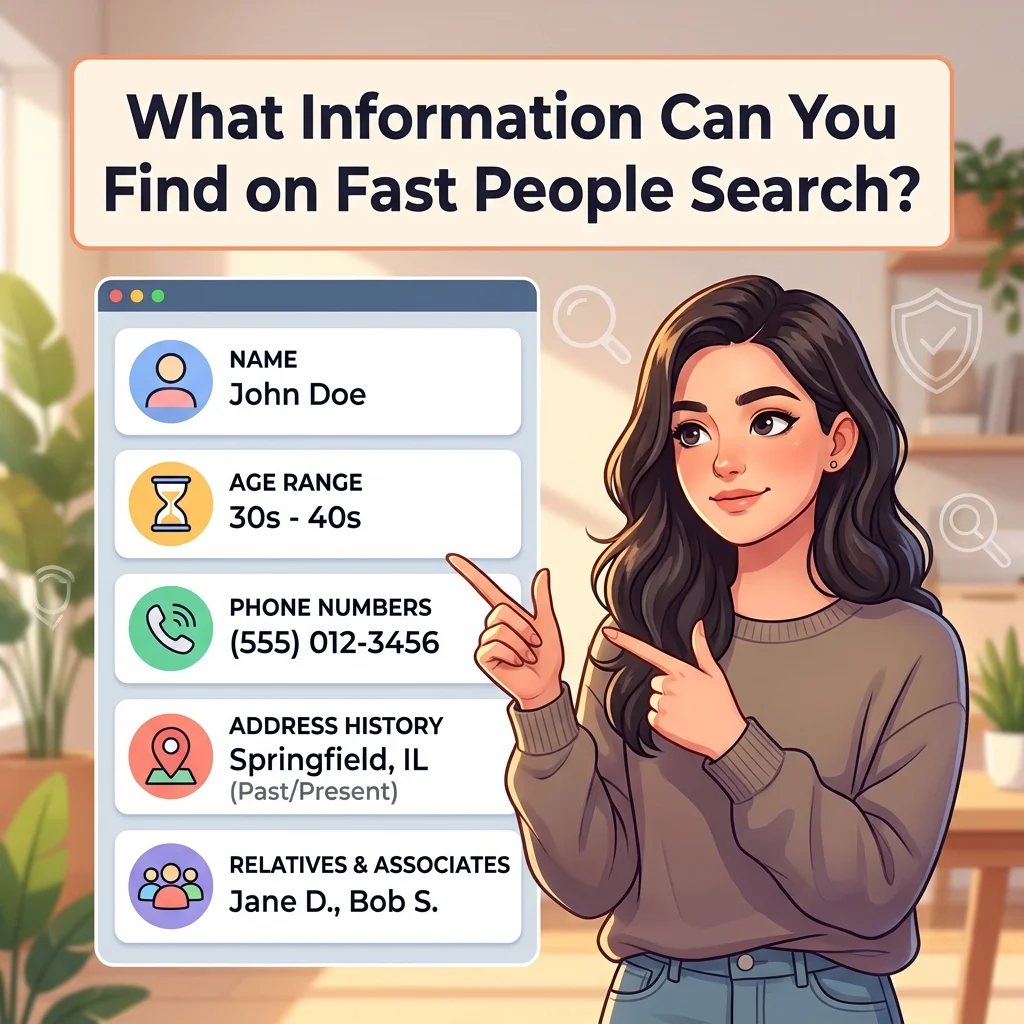
One of the most common questions about Fast People Search concerns the information available through its database.
The answer depends on the individual and the records accessible to the platform.
The FTC explains that people-search websites can collect information from public government records, other data brokers, and publicly accessible social media information.
Here are some general categories that may appear in people-search results.
| Information category | Possible information |
| Personal identity | Names and name variations |
| Age information | Age or approximate age |
| Contact details | Associated phone numbers |
| Location information | Current or previous address associations |
| Relationships | Possible relatives and associates |
| Public records | Certain publicly available records |
| Historical details | Previously associated information |
These categories describe information commonly associated with the people-search industry. They do not confirm that every category is available in every Fast People Search listing.
Does Fast People Search Show Personal Addresses?
People-search websites may display address information associated with individuals.
However, an address in a search result does not necessarily represent someone’s current home.
It may be an older address, a shared household, or a record that has not been updated.
Can Fast People Search Find Phone Numbers?
Phone-number lookup is one of the main reasons people explore people-search websites.
The available results depend on the information collected by the platform and its data providers.
Some numbers may have no matching record. Others may be associated with outdated information.
Does Fast People Search Show Relatives?
People-search services may display possible relatives or associates.
These connections should be interpreted cautiously because they may be based on database associations rather than confirmed family relationships.
How to Use Fast People Search
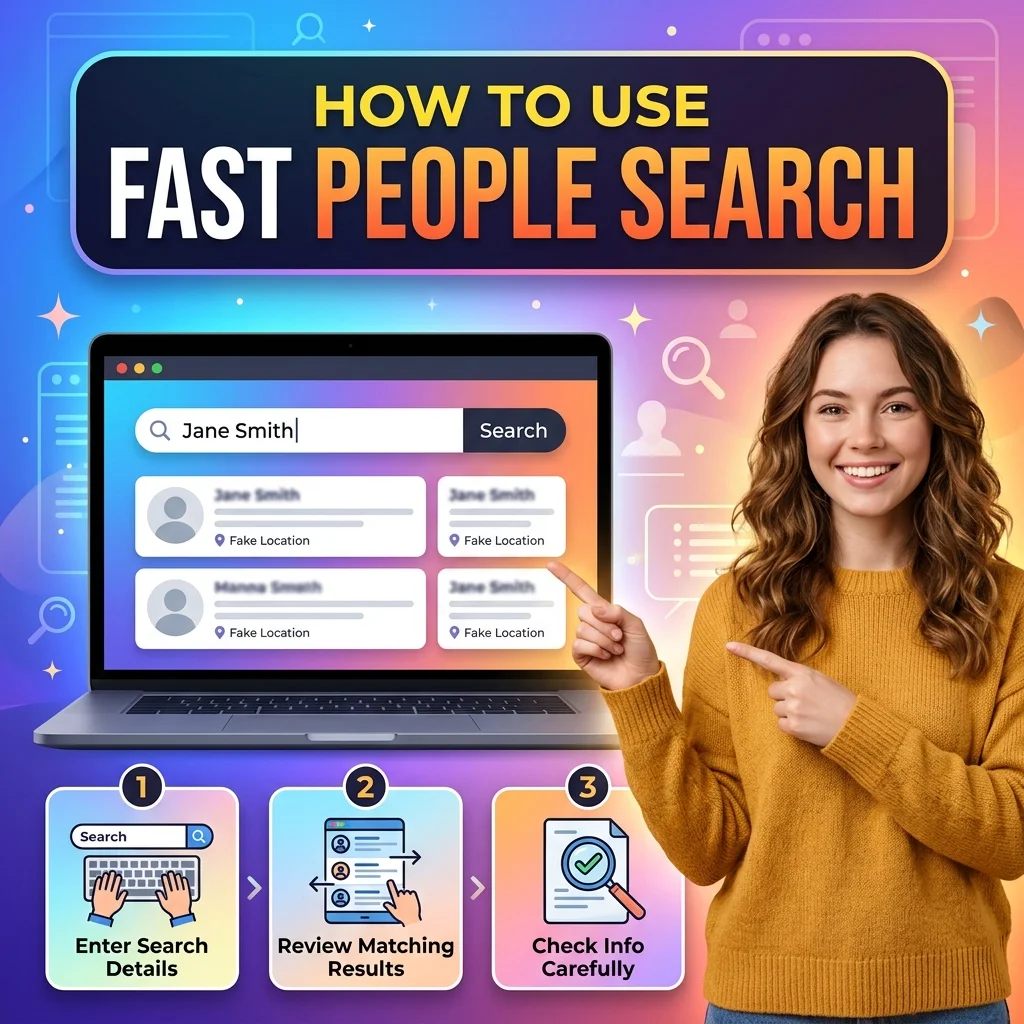
If you want to understand how to use Fast People Search, follow these general steps.
Step 1: Visit the Official Website
Open your browser and visit:
Check the website address carefully. Unrelated websites may use similar names or misleading advertisements.
Step 2: Choose Your Search Method
Select the search method that matches the information you have.
For example:
- Use a name search if you know someone’s name.
- Use a phone lookup if you have an unfamiliar telephone number.
- Use an address search if you want to investigate address-related records.
The website’s interface and available search options may change over time.
Step 3: Enter the Available Details
Enter the information requested by the search interface.
Use accurate spelling and relevant location details where applicable.
Avoid submitting unnecessary personal information.
Step 4: Review the Matching Information
Examine the results carefully.
If several people have similar names, compare the available details instead of choosing the first result.
Pay attention to outdated information and possible inconsistencies.
Step 5: Verify Important Details
If you identify a possible match, verify important information through independent sources.
For example, consult an official government record holder when you need authoritative public-record information.
A people-search result should never be your only source for an important personal, legal, or financial decision.
Is Fast People Search Free?

Many people search for Fast People Search free because they want to know whether they can use the website without purchasing a subscription.
Fast People Search has been associated with free people-search functionality. However, the availability of free search results should not be confused with a guarantee that every type of information or report is available without charge.
Before using the platform, consider these points:
- Check whether the specific search you want is free.
- Read any payment or premium-service notices.
- Review the terms before entering payment information.
- Pay attention to redirects to third-party websites.
- Check subscription and cancellation conditions before purchasing anything.
A free search can still involve privacy considerations. The information displayed may come from databases that collect details from several different sources.
You should also remember that free access does not guarantee complete or accurate results.
Is Fast People Search Legit?

A common question is whether Fast People Search is legit.
Fast People Search is an identifiable online people-search website. However, being a real website does not mean every piece of information displayed by the platform is accurate.
There are several important distinctions to understand.
It Is a Third-Party Search Platform
Fast People Search organizes information associated with individuals. It is not the original source of every record displayed in a search result.
Some information may come from public records or third-party providers.
It Is Not a Government Database
The platform is not an official government website.
If you need an authoritative record, consult the relevant government agency rather than relying on a third-party listing.
Its Information May Be Incomplete
Search results can contain outdated details, incorrect associations, or missing information.
For example, an old telephone number may still appear in a record even after its owner has changed.
It Is Not a Consumer Reporting Agency
Fast People Search states that its service is not a consumer reporting agency under the Fair Credit Reporting Act (FCRA).
Its information should not be used for employment, credit, tenant screening, or other purposes covered by that law.
The FTC has taken enforcement action against other people-search and background-report companies over inaccurate reporting and FCRA violations. This demonstrates why informal online searches should not replace legally compliant screening services.
Is Fast People Search Safe to Use?

Whether Fast People Search is safe depends on how you use it and what information you provide.
There are two important areas to consider: website security and personal privacy.
Protect Your Personal Information
Avoid submitting unnecessary sensitive details.
You should not provide passwords, banking credentials, or financial account information to complete an ordinary people search.
Check the Website Address
Use the official domain and be cautious of websites that imitate the platform.
Do not assume that a website is legitimate simply because its name resembles Fast People Search.
Be Careful With Third-Party Offers
If the website redirects you to another service, review its terms, pricing, and privacy policy.
Do not enter payment details without understanding what you are purchasing.
Respect Other People’s Privacy
Publicly accessible information should be handled responsibly.
Do not use people-search results to harass, threaten, intimidate, or expose someone.
Overall, treat Fast People Search as an informational tool rather than a completely reliable source of personal information.
Fast People Search Pros and Cons
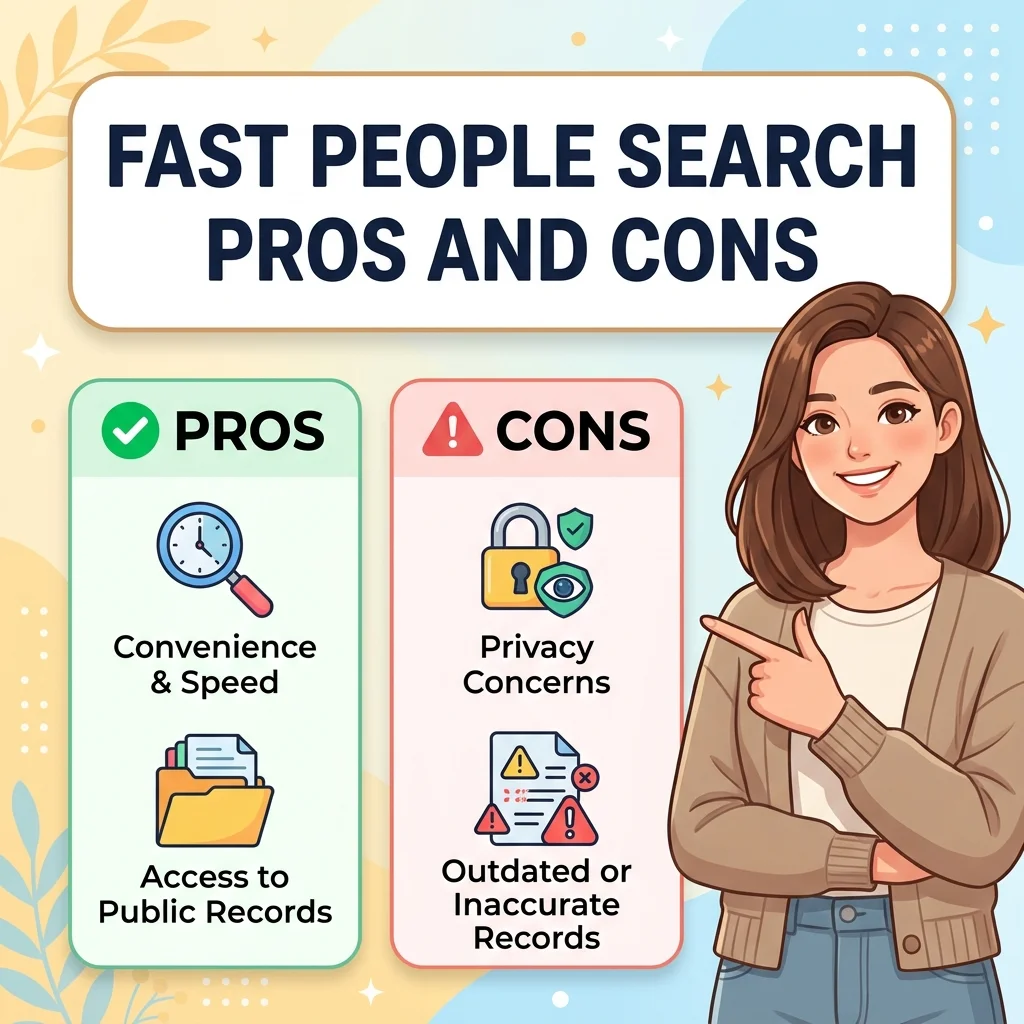
Before using the platform, consider its potential advantages and disadvantages.
Advantages
Convenient searching: A centralized search interface can make it easier to begin researching information associated with an individual.
Different lookup methods: Name, phone, and address searches provide different starting points.
Potential access to public information: The platform may organize information obtained from publicly available records and other data sources.
Useful for personal research: People may find it helpful when looking for old acquaintances or investigating unfamiliar telephone numbers.
Privacy awareness: Searching your own name can help you discover what personal information may be displayed online.
Disadvantages
Outdated records: Previously associated addresses and telephone numbers may remain visible.
Incorrect matches: Individuals with similar names can be confused with one another.
Privacy concerns: Some people may not want their personal details displayed on searchable websites.
Incomplete information: The absence of a record does not mean the information does not exist elsewhere.
Limited removal control: Opting out of one website does not automatically remove information from other data brokers or original public records.
Not suitable for regulated screening: The platform is not a replacement for an appropriate consumer reporting agency.
Fast People Search vs. Traditional Search Engines
You might wonder why someone would use Fast People Search instead of Google or another traditional search engine.
Both can help users find information online, but their purposes are different.
Traditional search engines index webpages and display relevant links. People-search platforms focus on organizing information associated with individuals.
| Comparison | Fast People Search | Traditional search engines |
| Main purpose | People-related lookup | General internet searching |
| Name searches | People-focused records | Indexed webpages |
| Phone searches | People-search functionality | Indexed phone information when available |
| Address searches | Address associations may appear | Depends on indexed pages |
| Results format | Organized people listings | Website links |
| Information sources | Records and data providers | Indexed online content |
| Accuracy | Requires verification | Requires verification |
A traditional search engine may be more useful when looking for news articles, official websites, or professional profiles.
Fast People Search may be more convenient when exploring information associated with a person’s name or phone number.
Neither option guarantees complete or accurate information.
Best Fast People Search Alternatives
Fast People Search is not the only website in the people-search industry.
Several alternatives provide different search services, information reports, and pricing arrangements.
Here are five recognizable platforms worth comparing.
Whitepages
Whitepages provides people-search and contact-information services.
Its offerings may include searches involving names, telephone numbers, and address-related information.
Official website: https://www.whitepages.com/
TruePeopleSearch
TruePeopleSearch is another website associated with people searches and publicly available information.
Users can explore its available search options for names, phone numbers, and addresses.
Official website: https://www.truepeoplesearch.com/
Spokeo
Spokeo provides people-search and information-aggregation services.
Some of its reports and features may require payment or a subscription.
Official website: https://www.spokeo.com/
BeenVerified
BeenVerified offers public-record and people-related information-search services.
Its pricing and subscription terms should be reviewed before purchasing a report.
Official website: https://www.beenverified.com/
Intelius
Intelius is another platform associated with people searches and public-information reports.
Its available services and pricing may vary.
Official website: https://www.intelius.com/
Which Alternative Should You Choose?
There is no universally best alternative.
Your decision should depend on the information you want, the cost of the service, and how the platform handles personal data.
Before choosing a service, compare:
- Available search methods.
- Free and paid features.
- Subscription requirements.
- Privacy policies.
- Information-removal procedures.
- Limitations on how search results may be used.
Avoid choosing a platform based solely on promotional claims.
Fast People Search Privacy: How Does It Handle Personal Information?
Privacy is one of the most important topics surrounding Fast People Search.
People-search websites can make personal information easier to locate. This may be convenient for some users, but it can also create concerns for people who do not want their details publicly displayed.
How Do People-Search Websites Collect Information?
According to the Federal Trade Commission, people-search websites are a type of data broker.
They may collect information from:
- Other data brokers.
- Public government records.
- Publicly accessible social media profiles.
- Commercial information providers.
- Other available databases.
The collected information may then be organized into searchable reports.
This means that a record displayed on a people-search website may have originally appeared somewhere else.
Why Is This a Privacy Concern?
There are several reasons people may not want their personal details displayed online.
Unwanted contact: Publicly available contact information may make it easier for strangers to reach someone.
Residential privacy: Some people do not want their home address associated with their name in online search results.
Personal safety: People experiencing harassment or stalking may have additional reasons to limit the visibility of their information.
Identity-related risks: Names, addresses, and other identifying details may contribute to social engineering attempts when combined with information from other sources.
For these reasons, it is worth reviewing your online presence and understanding the removal options offered by people-search websites.
How to Remove Your Information From Fast People Search
If you discover your personal information on Fast People Search and do not want it displayed, you can investigate its official opt-out process.
Fast People Search provides an online procedure for submitting removal requests.
Official opt-out page:
The current destination is important because older guides may refer to a different removal-page URL.
Step 1: Open the Official Opt-Out Page
Visit the official Fast People Search opt-out page.
Check the domain carefully before entering any information.
Step 2: Enter Your Name and Email Address
Follow the form’s instructions and provide the information it requests.
The process may require a CAPTCHA or another human-verification check.
Step 3: Open the Verification Email
The website may send a link to your email address so you can continue the request.
Follow the instructions in the message. If the link expires, return to the official page and request another one.
Step 4: Complete the Removal Form
Use the emailed link to access the next stage.
Identify the listing you want removed and provide the information requested.
Make sure the information matches the relevant record. Incorrect or incomplete details may delay the request.
Step 5: Submit the Request
Review the information before submitting the form.
Keep any confirmation message or email for your records.
Step 6: Check the Listing Again
Fast People Search’s published opt-out instructions have indicated that users should allow approximately three days for a record to be fully removed.
This is an estimated processing period, not a guarantee.
After the stated period, search for your listing again to check whether it is still visible.
Does Opting Out Remove Information Everywhere?
No.
Removing a listing from Fast People Search does not automatically delete information from:
- Government public records.
- Other people-search websites.
- Independent data brokers.
- Original commercial databases.
- Search engine caches or previously indexed pages.
The FTC explains that opting out of one people-search website does not remove the underlying information from public records. Information may also reappear when databases receive updated records.
Therefore, you may need to submit separate requests to other websites.
What Do Users Say About Fast People Search?
Online reviews can provide additional insight into people’s experiences with a service.
However, reviews should be evaluated carefully because individual experiences do not necessarily represent the entire user base.
Fast People Search has received feedback on platforms such as Trustpilot and the Better Business Bureau.
Some publicly visible consumer feedback raises concerns about:
- Information accuracy.
- Personal-data removal.
- Customer support.
- Unwanted exposure of personal information.
The BBB’s published complaint records include consumer concerns about privacy requests and customer-service experiences.
Trustpilot also contains reviews of Fast People Search. However, its small review sample should not be treated as a statistically representative survey.
How Should You Evaluate These Reviews?
Rather than relying on one rating, consider several factors:
- Read both positive and negative reviews.
- Check publication dates.
- Look for repeated concerns.
- Read company responses where available.
- Compare feedback across different review platforms.
Remember that an online complaint represents an individual experience, not necessarily a verified finding about every aspect of the service.
A balanced Fast People Search review should consider the website’s functionality, privacy practices, limitations, and available consumer feedback.
Who Should Use Fast People Search?
Fast People Search may be relevant to people who want to explore information associated with an individual.
People Looking for Old Friends
Someone who has lost contact with a former classmate may use a people-search platform as an initial research tool.
However, any attempt to reconnect should respect the other person’s privacy and preferences.
People Investigating Unknown Numbers
Someone receiving unexpected calls may want to investigate whether a telephone number has an identifiable association.
A reverse phone lookup can provide a starting point, but it cannot establish who actually placed a call.
People Checking Their Own Information
Individuals may use people-search websites to understand what information is publicly accessible about them.
This can help them decide whether to submit an opt-out request.
People Researching Public Information
Some users may want to explore information associated with publicly available records.
For important matters, however, official sources should always take priority over third-party search results.
Who Should Avoid Relying on Fast People Search?
Although people-search platforms have informational uses, they are not appropriate for every situation.
You should not rely on Fast People Search for:
Employment decisions: Do not use its results to decide whether to hire someone.
Tenant screening: Do not use its information to approve or reject a rental applicant.
Credit decisions: Do not use it to evaluate someone’s creditworthiness.
Official background checks: An ordinary people-search result is not a substitute for a legally compliant background-check report.
Legal evidence: Information displayed online should not automatically be treated as authenticated evidence.
If you need information for a regulated screening purpose, use an appropriate consumer reporting agency and follow applicable laws.
Practical Tips for Protecting Your Personal Information Online
Whether or not you use Fast People Search, protecting your personal information is important.
Here are some practical steps to help manage your online privacy.
Review Your Online Presence
Search for your name using reputable search engines.
Check whether your name, phone number, address, or other personal details appear on publicly accessible websites.
Adjust Social Media Privacy Settings
Review the privacy settings on platforms such as Facebook, Instagram, and other social networks.
Limit access to personal details that you do not want strangers to see.
Avoid Publishing Residential Information
Think carefully before sharing your home address online.
Photos, public posts, and profile information can sometimes reveal more personal details than intended.
Use Strong and Unique Passwords
Avoid using the same password across multiple accounts.
A password manager can help you create and manage unique passwords.
Enable Two-Factor Authentication
Where available, use two-factor authentication to add another layer of protection to your online accounts.
Submit Privacy-Removal Requests
If your information appears on people-search websites, check whether they offer opt-out or privacy-request procedures.
You may need to submit requests individually.
Check Your Information Periodically
An opt-out request does not necessarily prevent information from appearing again after database updates.
The FTC recommends periodically checking people-search websites and repeating removal requests when necessary.
Frequently Asked Questions About Fast People Search
What Is Fast People Search Used For?
Fast People Search is an online people-search platform that allows users to explore information associated with individuals. Its search functionality is associated with names, phone numbers, and addresses.
Is Fast People Search Free?
Fast People Search has been associated with free people-search functionality. However, you should check the current website terms to understand which features are free and whether any third-party services involve charges.
Is Fast People Search Legit?
Fast People Search is an identifiable online people-search website. However, not every search result is necessarily accurate or independently verified. Important details should always be checked through reliable sources.
How Does Fast People Search Work?
The platform uses identifying information to search for matching records in its available databases. Users can review the results and investigate relevant information.
Can I Use Fast People Search for Reverse Phone Lookup?
The platform is associated with reverse phone lookup functionality. This allows users to investigate whether an unfamiliar number has an identifiable association, although results may be incomplete or outdated.
Can Fast People Search Find Someone’s Address?
People-search websites may display current or historical address associations when those details are available. However, an address listing does not prove that someone currently lives there.
Does Fast People Search Show Relatives?
Some people-search services display possible relatives or associates. These connections may be based on shared addresses or other database relationships and should not automatically be treated as confirmed family relationships.
Can I Remove My Information From Fast People Search?
Yes. The website provides an opt-out procedure through its official privacy page. You can submit a request and follow the verification instructions to ask for your listing to be removed.
How Long Does Fast People Search Take to Remove Information?
The website’s published instructions have indicated that users should allow approximately three days for removal. Actual processing times may vary.
Does Fast People Search Remove Information From Google?
Removing a listing from Fast People Search does not automatically remove previously indexed information from search engines. You may need to submit a separate request to the relevant search engine.
Is Fast People Search a Government Website?
No. Fast People Search is a privately operated people-search platform, not an official government records database.
Can I Use Fast People Search for Employment Background Checks?
No. Fast People Search states that it is not a consumer reporting agency under the Fair Credit Reporting Act. Do not use its information for employment, housing, credit, or other regulated screening purposes.
Are Fast People Search Results Always Accurate?
No. Results may contain outdated information, incomplete records, or incorrect associations. Verify important details independently.
Does Fast People Search Work Outside the United States?
The platform primarily focuses on US-based people searches. Its coverage and usefulness for individuals outside the United States may be limited.
What Are the Best Fast People Search Alternatives?
Some recognizable alternatives include Whitepages, TruePeopleSearch, Spokeo, BeenVerified, and Intelius. Each platform has different search options, pricing arrangements, and privacy policies.
Can I Trust Fast People Search Completely?
No. Like other people-search services, Fast People Search should be treated as an informational starting point rather than a completely reliable source. Always consider accuracy, privacy, and the purpose of your search.
Final Thoughts
Fast People Search is an online people-search platform that provides a convenient starting point for exploring information associated with individuals. Its search methods may help users investigate unfamiliar telephone numbers, look for old acquaintances, or understand what personal information appears in online records.
However, convenience does not guarantee accuracy. Search results may contain outdated addresses, incorrect associations, or incomplete information. The platform is also not an official government database or a substitute for a legally compliant background-check service.

I am Daniel Scott, a passionate writer dedicated to creating meaningful and engaging content that informs, inspires, and connects with readers worldwide. I am passionate about exploring ideas, sharing knowledge, and presenting stories with clarity and creativity. My writing focuses on delivering valuable insights through well-researched articles and thoughtful perspectives. I am committed to maintaining accuracy, originality, and a reader-first approach in every piece I create.