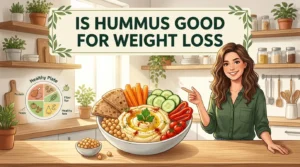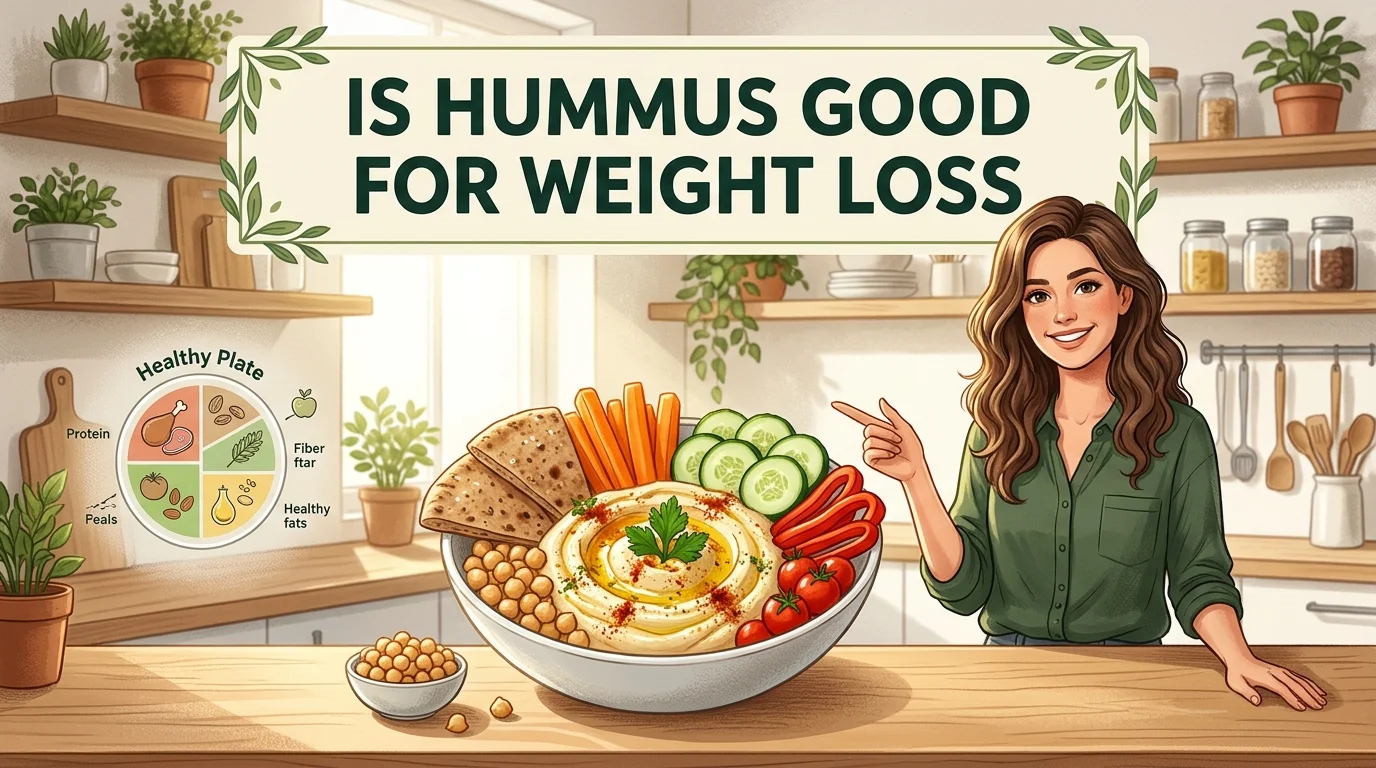
If you’re trying to lose weight, choosing foods that satisfy your hunger while providing essential nutrients can make a big difference. Hummus is one food worth considering. Made primarily from chickpeas, tahini, olive oil, lemon juice, and garlic, this creamy Mediterranean dip offers plant-based protein, dietary fiber, and unsaturated fats.
But is hummus good for weight loss, or does its fat content make it harder to reach your goals?
The short answer is yes. Hummus can be part of a healthy weight-loss diet because it provides fiber, some protein, and satisfying fats. These nutrients can help make meals and snacks more enjoyable. However, hummus also contains calories, so eating large portions without considering your overall diet may slow your progress.
The key is knowing how much to eat and what foods to pair it with. A measured serving of hummus with fresh vegetables, for example, can be a nutritious alternative to many highly processed snacks.
In this guide, you’ll learn about hummus nutrition facts, calories, potential weight-management benefits, healthy serving sizes, and easy ways to include it in your daily meals. We’ll also compare homemade and store-bought hummus and answer common questions about eating it while losing weight.
Is Hummus Good for Weight Loss?
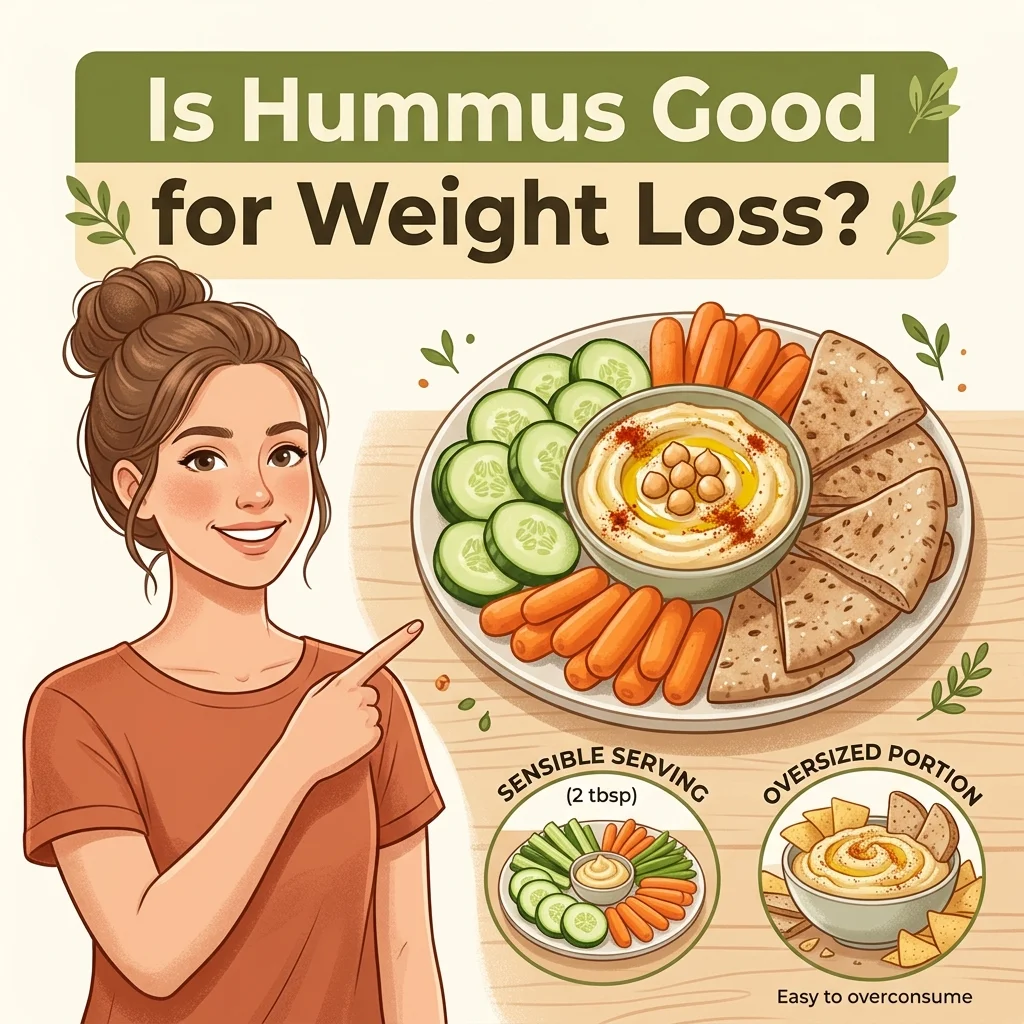
Yes, hummus can support a weight-loss eating plan when you include it in appropriate portions. Its nutritional combination makes it a useful option for people who want satisfying snacks and balanced meals.
The main ingredient, chickpeas, provides carbohydrates, fiber, and plant-based protein. Tahini and olive oil contribute unsaturated fats, which help give hummus its creamy texture and rich flavor.
These nutrients can contribute to a satisfying snack, particularly when you combine hummus with vegetables or other nutritious foods.
Here are four reasons hummus may fit into your weight-loss routine:
- Fiber: Chickpeas provide dietary fiber, which supports digestion and contributes to fullness.
- Protein: Hummus supplies some plant-based protein, although it is not a particularly concentrated protein source.
- Unsaturated fats: Tahini and olive oil provide fats that can be part of a balanced eating pattern.
- Food versatility: You can use hummus instead of some higher-calorie spreads and dips, depending on the portion and product.
However, eating hummus does not automatically make you lose weight. Weight loss generally requires maintaining an appropriate calorie deficit over time. This means consuming fewer calories than your body uses.
The Centers for Disease Control and Prevention (CDC) explains that healthy weight management involves a combination of nutritious eating patterns, physical activity, adequate sleep, and stress management.
Hummus can contribute to that eating pattern, but it is only one part of the bigger picture.
Hummus Nutrition Facts: Calories, Protein, Carbs, and Fat
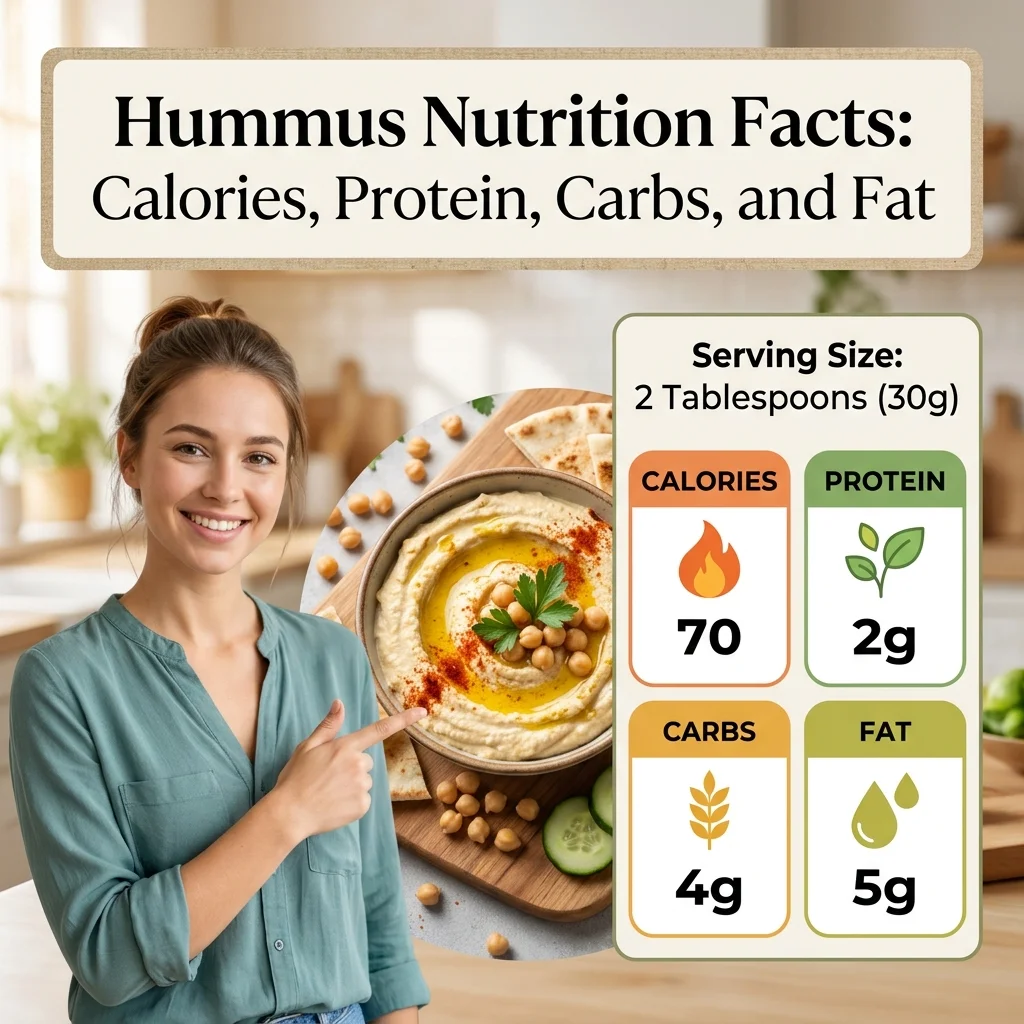
Understanding hummus nutrition facts can help you decide how much to include in your diet.
Hummus contains a combination of macronutrients, including carbohydrates, fats, and protein. It also provides several vitamins and minerals in smaller amounts.
According to commonly reported USDA FoodData Central values for prepared hummus, a two-tablespoon serving weighing approximately 30 grams contains around 70 calories. Exact values vary depending on the recipe and manufacturer.
Nutrition in Two Tablespoons of Hummus
| Nutrient | Approximate amount |
| Calories | 70–75 |
| Protein | 2–2.5 g |
| Carbohydrates | 4–5 g |
| Dietary fiber | 1.5–2 g |
| Total fat | 5–6 g |
| Sugar | Less than 1 g |
These figures are estimates rather than universal values. Products with additional oil, different amounts of tahini, or other ingredients may contain more or fewer calories.
How Many Calories Are in Different Hummus Portions?
Portion size matters because hummus contains calorie-dense ingredients.
Here is an approximate calorie guide:
| Serving size | Approximate calories |
| 1 tablespoon (15 g) | 35–40 |
| 2 tablespoons (30 g) | 70–75 |
| ¼ cup (60 g) | 140–150 |
| ½ cup (120 g) | 280–300 |
| 1 cup (240 g) | 560–600 |
For example, adding two tablespoons of hummus to a vegetable snack contributes approximately 70 calories. Eating half a cup with several servings of pita chips creates a much larger snack.
This doesn’t mean you should avoid larger portions. Instead, consider how the food fits into your total daily calorie intake.
Does Hummus Have Enough Protein?
Hummus contains plant-based protein because chickpeas are its primary ingredient.
However, a small serving generally provides only around 2–3 grams of protein. This makes hummus a useful additional protein source rather than a complete high-protein meal by itself.
If you want to increase your protein intake, combine hummus with:
- Boiled eggs.
- Grilled chicken.
- Tuna.
- Tofu.
- Plain Greek yogurt.
- Lentils or other legumes.
These combinations provide more protein while allowing you to enjoy the flavor and nutritional benefits of hummus.
Is Hummus High in Fat?
Hummus contains fat primarily from tahini and olive oil.
Most of this fat is unsaturated, which can be included in a balanced eating pattern. However, fat contains approximately nine calories per gram, so oil-based ingredients can increase the energy content of hummus.
This is why a product made with generous amounts of olive oil may contain more calories than a version prepared with less oil.
The important distinction is that healthy fats still contribute calories. You can enjoy them while paying attention to serving sizes.
6 Potential Benefits of Hummus for Weight Loss
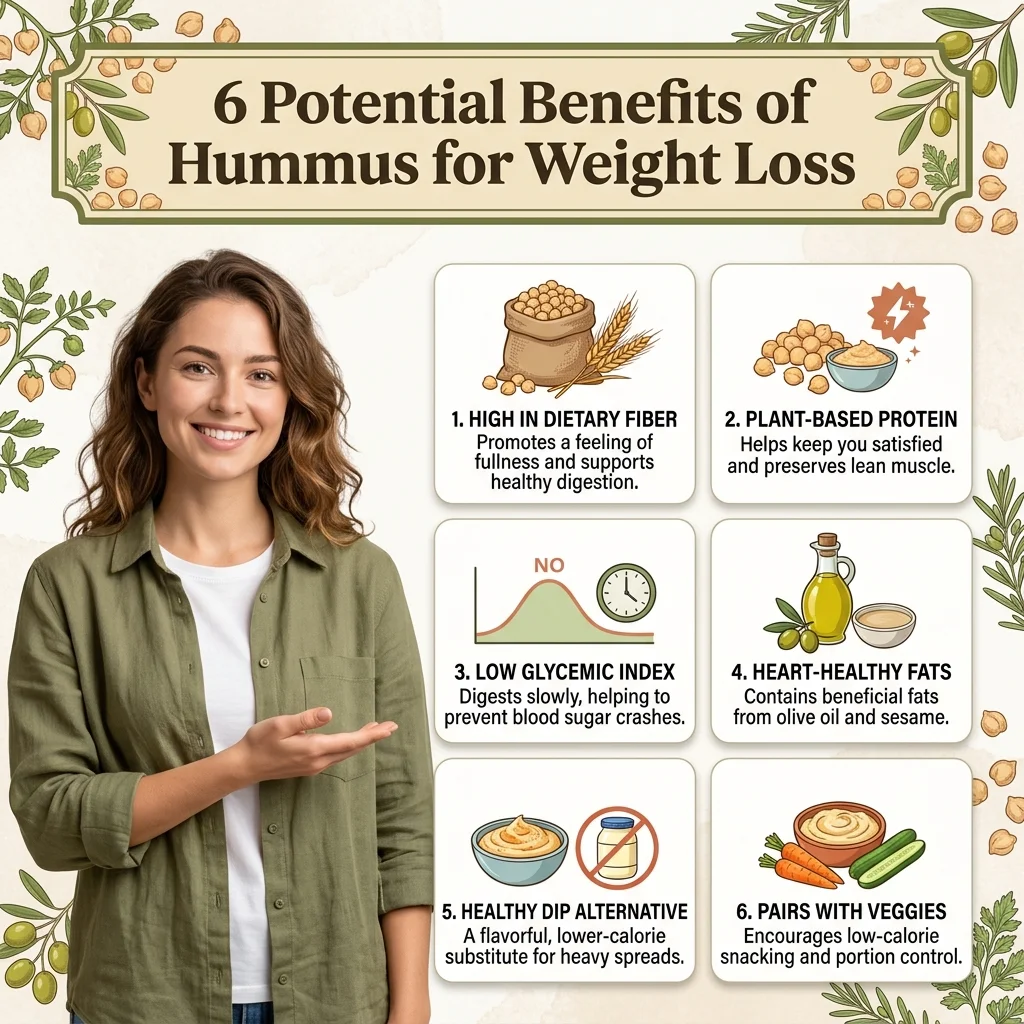
Hummus offers several nutritional advantages that may make it useful in a weight-management diet. However, its benefits should be understood realistically. It supports healthy eating rather than directly burning fat.
1. Provides Fiber That Supports Fullness
Dietary fiber is an important part of a satisfying diet.
Chickpeas contain fiber, which contributes to digestive health and can help you feel satisfied after eating. Fiber also adds bulk to meals without providing as many calories as many high-fat foods.
For example, eating hummus with cucumber and carrots gives you a combination of fiber, water, and other nutrients.
This can make a snack more satisfying than eating a small portion of a low-fiber food alone.
However, the amount of fiber in two tablespoons of hummus is relatively modest. You should also include whole fruits, vegetables, beans, oats, and whole grains to meet your daily fiber needs.
2. Adds Plant-Based Protein to Your Diet
Protein supports muscle maintenance, tissue repair, and normal body functions.
When you’re losing weight, consuming sufficient protein can help preserve muscle mass, particularly when combined with resistance exercise.
Hummus provides some protein from chickpeas. It is especially convenient for people following vegetarian or mostly plant-based eating patterns.
However, don’t rely on hummus as your only protein source.
A more balanced meal could include a whole-grain wrap with hummus, grilled tofu, lettuce, cucumber, and tomatoes.
This combination provides a wider range of nutrients and more protein than hummus alone.
3. Supplies Unsaturated Fats
Traditional hummus contains tahini and often olive oil.
Both ingredients provide unsaturated fats, which can replace some sources of saturated fat in a balanced eating pattern.
Fat also helps your body absorb vitamins A, D, E, and K. It contributes to food flavor and can make meals more satisfying.
Still, adding extra olive oil to an already prepared serving increases its calories.
You don’t need to remove all fat from your diet to lose weight. Instead, choose appropriate portions and consider the nutritional quality of your overall meals.
4. Offers an Alternative to Some Processed Dips
What you eat instead of hummus can be just as important as the hummus itself.
For example, replacing some mayonnaise-based dips or creamy dressings with a measured portion of hummus may increase your fiber intake and introduce more plant-based nutrients.
You can also use it as a sandwich spread instead of adding large amounts of mayonnaise.
The nutritional difference depends on the products being compared, so check serving sizes and nutrition labels.
5. Helps Make Vegetable Snacks More Enjoyable
Eating vegetables regularly can become easier when you have a flavorful dip available.
Hummus pairs well with cucumber, celery, carrots, broccoli, and bell peppers.
Instead of eating vegetables plain, you can add a small portion of hummus for flavor and texture.
This approach can help you include more vegetables in your daily eating routine without relying on heavily processed dips.
6. Provides Useful Vitamins and Minerals
Chickpeas and sesame-based tahini contribute several essential nutrients.
Depending on the recipe, hummus can provide:
- Folate: Supports normal cell division and DNA production.
- Iron: Helps your body produce hemoglobin, which carries oxygen in the blood.
- Magnesium: Supports normal muscle and nerve function.
- Manganese: Helps several enzymes function properly.
- Copper: Contributes to normal iron metabolism and connective tissue formation.
Hummus is not a complete source of all essential nutrients. Eating different vegetables, fruits, whole grains, legumes, and protein-rich foods remains important.
How Much Hummus Should You Eat for Weight Loss?
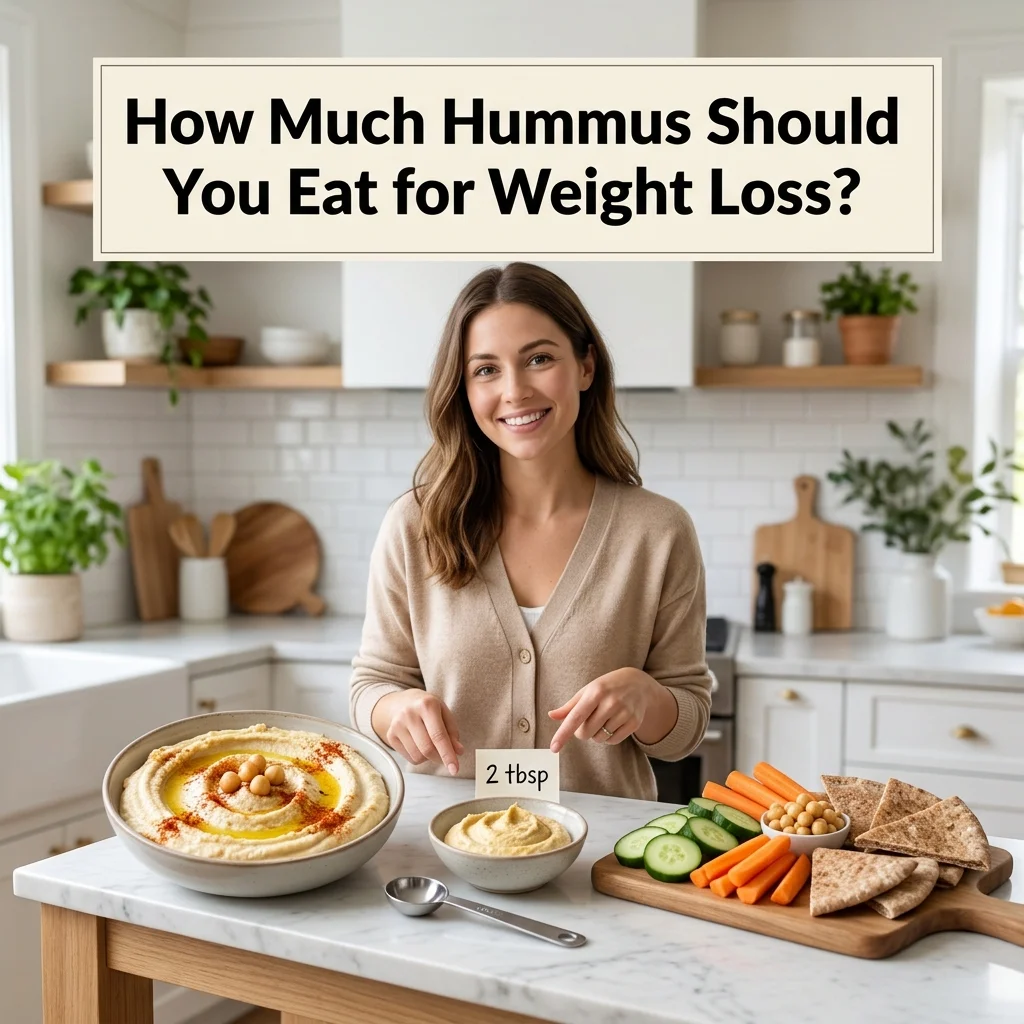
There isn’t one perfect hummus serving size for everyone. Your ideal amount depends on your daily calorie requirements, activity level, other meals, and personal preferences.
However, two tablespoons to one-quarter cup can be a practical starting point for many people.
Consider this portion guide:
| Portion | Approximate calories | Suggested use |
| 2 tablespoons | 70–75 | Small snack or sandwich spread |
| ¼ cup | 140–150 | Vegetable dip or meal addition |
| ½ cup | 280–300 | Larger portion within a meal |
If you’re unsure how much hummus to eat for weight loss, start with two tablespoons and pair it with fresh vegetables.
You can adjust the amount depending on your hunger and daily nutritional needs.
Can You Eat Hummus Every Day?
Yes, most people can enjoy hummus daily if it suits their dietary needs and fits into their overall eating pattern.
There is no special requirement to eat it every day, either. You can rotate hummus with other nutritious foods, including:
- Plain yogurt.
- Guacamole.
- Bean dips.
- Lentil spreads.
- Cottage cheese.
- Nut and seed spreads.
Eating a variety of foods helps provide different nutrients and keeps your meals interesting.
Best Foods to Eat With Hummus for Weight Loss
The foods you pair with hummus can change the overall calorie and nutritional content of your snack.
If you’re looking for healthy hummus snacks, vegetables are particularly convenient because they provide fiber, water, vitamins, and minerals.
Here are seven good options.
1. Cucumber
Cucumber contains plenty of water and relatively few calories.
Cut it into sticks or rounds and use it to scoop hummus. Its refreshing flavor balances the creamy texture of the dip.
This is a convenient option when you want a light afternoon snack.
2. Carrots
Carrots provide fiber and beta-carotene, which your body can convert into vitamin A.
Their natural sweetness pairs well with the slightly nutty flavor of hummus.
Slice fresh carrots into sticks and serve them with a measured portion of hummus.
3. Bell Peppers
Red, yellow, and green bell peppers contain vitamin C and other beneficial plant compounds.
Their crunchy texture makes them a useful alternative to chips and crackers.
Cut them into strips and enjoy them with hummus.
4. Celery
Celery contains water and provides a crunchy texture.
Spread a small amount of hummus inside celery sticks for an easy snack.
You can also combine celery with carrots and cucumber to create a vegetable platter.
5. Broccoli
Broccoli provides fiber, vitamin C, vitamin K, and several other nutrients.
You can eat it raw or lightly steamed with hummus.
If raw broccoli causes digestive discomfort, try lightly cooking it first.
6. Whole-Grain Pita Bread
Whole-grain pita bread provides carbohydrates and fiber.
It can make hummus a more substantial snack or meal component.
However, bread adds calories, so consider your portion size. Pair it with vegetables or a protein source for a more balanced meal.
7. Boiled Eggs
Boiled eggs provide high-quality protein and several essential nutrients.
Combining one egg with hummus and vegetables can create a satisfying snack or light meal.
This is especially useful if you’re trying to increase your protein intake.
Is Homemade Hummus Better for Weight Loss?
Homemade hummus can be a good choice because you control the ingredients and quantities.
Traditional recipes often contain chickpeas, tahini, olive oil, garlic, and lemon juice. However, you can adjust the recipe to suit your nutritional preferences.
For example, using a measured amount of tahini and olive oil can help you manage the calorie content.
Easy Homemade Hummus Recipe
Ingredients
- 1 cup cooked chickpeas.
- 1 tablespoon tahini.
- 1 tablespoon fresh lemon juice.
- 1 small garlic clove.
- 2–4 tablespoons cold water.
- ½ teaspoon ground cumin.
- A small pinch of salt.
- 1 teaspoon olive oil, optional.
Instructions
Step 1: Prepare the chickpeas.
If you’re using canned chickpeas, drain and rinse them. If you’re using dried chickpeas, cook them until tender.
Step 2: Combine the ingredients.
Add the chickpeas, tahini, lemon juice, garlic, cumin, and salt to a food processor.
Step 3: Blend until smooth.
Process the ingredients until they form a creamy mixture. Add cold water gradually to adjust the texture.
Step 4: Taste and adjust.
Add additional lemon juice, garlic, or seasoning according to your preference.
Step 5: Serve.
Transfer the hummus to a clean container. Serve a measured portion with fresh vegetables or whole-grain pita bread.
How to Make Lower-Calorie Hummus
If you want to reduce the calories in your homemade hummus, try these practical adjustments:
- Measure olive oil rather than pouring it freely.
- Use cold water or chickpea cooking liquid to improve the consistency.
- Measure tahini carefully.
- Add lemon juice, garlic, cumin, and herbs for flavor.
- Avoid unnecessary calorie-dense toppings.
- Serve it with vegetables instead of large quantities of chips.
Reducing the amount of oil can lower the calorie content, but you don’t need to eliminate healthy fats completely.
How Many Calories Does Homemade Hummus Contain?
The calorie content depends on the quantity of chickpeas, tahini, olive oil, and other ingredients.
For this reason, it’s better to calculate the nutrition of your complete recipe using the ingredient amounts and divide it by the number of servings.
This gives you a more accurate estimate than relying on a general calorie figure for every homemade hummus recipe.
Is Store-Bought Hummus Good for Weight Loss?
Yes, store-bought hummus can fit into a weight-loss diet.
Packaged hummus is convenient, particularly when you have limited time to prepare meals. However, products can differ considerably in their ingredients and nutritional composition.
Some varieties contain more oil or sodium than others.
What to Check Before Buying Hummus
Serving size: Check how many grams or tablespoons the nutrition information represents.
Calories: Compare products using the same serving size rather than comparing different package portions.
Fat content: Look at the total fat and saturated fat amounts. Remember that unsaturated fats can be part of a balanced diet.
Sodium: Compare sodium levels if you’re monitoring your salt intake.
Ingredients: Check whether the product contains chickpeas, tahini, olive oil, or other ingredients that you prefer.
Flavored varieties: Roasted garlic, red pepper, and other flavors can be enjoyable, but their nutritional values may differ from plain hummus.
Homemade vs. Store-Bought Hummus
| Feature | Homemade hummus | Store-bought hummus |
| Ingredient control | High | Depends on the brand |
| Preparation | Requires time | Ready to eat |
| Oil quantity | Adjustable | Varies |
| Sodium | Adjustable | Varies |
| Portion control | Easy when measured | Requires checking serving size |
| Convenience | Moderate | High |
Neither option is automatically better for weight loss.
Choose homemade hummus if you enjoy preparing your own food. Choose packaged hummus if convenience helps you maintain a consistent eating routine.
Hummus vs. Chickpeas for Weight Loss: Which Is Better?
Both hummus and whole chickpeas can fit into a healthy weight-loss diet.
However, they have some nutritional differences.
Whole chickpeas provide fiber and plant-based protein without the additional tahini and oil found in traditional hummus.
Hummus combines chickpeas with other ingredients, which can increase its fat content and calorie density.
Here’s a practical comparison:
| Feature | Whole cooked chickpeas | Traditional hummus |
| Main ingredient | Chickpeas | Chickpeas |
| Protein | Plant-based protein | Plant-based protein |
| Fiber | Generally higher per calorie | Depends on recipe |
| Added oil | Usually none | Often included |
| Texture | Firm | Creamy |
| Common uses | Salads and bowls | Dips and spreads |
Whole chickpeas may be a useful choice when you want to add legumes to a meal without additional oil.
Hummus may be more convenient when you want a flavorful dip or sandwich spread.
You don’t need to choose only one. Both can be part of a varied diet.
Is Hummus Better Than Other Dips for Weight Loss?
Hummus can be a nutritious alternative to certain dips, but the best option depends on the ingredients and serving sizes.
Here is a general comparison:
| Food | Main nutritional feature | Weight-management consideration |
| Hummus | Fiber and plant protein | Measure portions because of added fats |
| Guacamole | Unsaturated fats and fiber | Calorie content increases with larger portions |
| Mayonnaise | Mostly fat | Small portions can add calories quickly |
| Ranch dressing | Often fat-rich | Check the serving size |
| Plain salsa | Vegetable-based ingredients | Generally low in calories |
| Plain Greek yogurt dip | Protein | Check added ingredients |
Hummus vs. Mayonnaise
Hummus generally offers more fiber and some plant-based protein than mayonnaise.
Using hummus instead of mayonnaise in a sandwich can add nutritional variety.
However, compare the actual products because their calorie contents vary.
Hummus vs. Guacamole
Both options contain unsaturated fats and can fit into a balanced diet.
Hummus provides chickpea-based protein and fiber, while guacamole provides avocado-based nutrients.
Your choice can depend on taste, portion size, and the rest of your meal.
Hummus vs. Ranch Dressing
Traditional ranch dressing is often relatively high in fat and calories.
Hummus can be a useful alternative for dipping fresh vegetables, especially when you choose a moderate portion.
Is Hummus Good for a Calorie Deficit?
Yes, hummus can fit into a calorie deficit.
A calorie deficit means consuming fewer calories than your body uses over time. It is an important part of losing weight.
Hummus does not create a calorie deficit by itself. Instead, it can be included in meals that help you maintain an appropriate overall calorie intake.
For example, consider these two snack combinations:
Option A:
- Two tablespoons of hummus.
- Cucumber sticks.
- Carrot sticks.
Option B:
- A large serving of hummus.
- Several servings of pita chips.
- Additional olive oil.
Both combinations contain hummus, but their total calorie content can be very different.
This shows why serving sizes and food combinations matter.
If you’re tracking calories, record the amount of hummus you eat rather than estimating it from the container.
Can Eating Hummus at Night Cause Weight Gain?
No, eating hummus at night does not automatically cause weight gain.
The timing of one food is generally less important than your overall eating pattern and calorie intake.
If you’re hungry in the evening, a moderate portion of hummus with cucumber, celery, or carrots can be a convenient snack.
You can also include hummus in dinner alongside grilled chicken, vegetables, or whole-grain bread.
What matters most is whether your overall eating habits support your weight-management goals.
Does Hummus Help Reduce Belly Fat?
Hummus does not specifically burn belly fat.
This is an important distinction because no individual food can target fat loss in one particular area of your body.
However, hummus can be included in a balanced eating plan designed to reduce overall body fat.
Its fiber and plant-based ingredients contribute to a nutritious diet. Pairing it with regular physical activity and appropriate calorie intake can support your broader weight-management efforts.
Be cautious of products or diets claiming that hummus, lemon juice, or other individual ingredients can quickly eliminate belly fat.
Sustainable results come from consistent habits rather than a single food.
A Practical 7-Day Hummus Meal Plan for Weight Management
If you want to include hummus in your daily routine, the following example shows how to combine it with different foods.
This is a flexible meal-idea guide, not a personalized calorie-controlled diet. Adjust portions according to your energy needs and preferences.
| Day | Breakfast | Lunch | Snack or meal addition |
| Monday | Boiled eggs and whole-grain toast | Grilled chicken salad | 2 tbsp hummus with cucumber |
| Tuesday | Plain Greek yogurt and fruit | Whole-grain hummus wrap with vegetables | Carrot sticks |
| Wednesday | Oatmeal and berries | Chicken and vegetable bowl | 2 tbsp hummus with celery |
| Thursday | Vegetable omelet | Chickpea and spinach salad | Cucumber with hummus |
| Friday | Eggs and whole-grain toast | Tuna and vegetable sandwich | Bell peppers with hummus |
| Saturday | Plain yogurt and banana | Grilled tofu and vegetable bowl | Hummus with carrots |
| Sunday | Oatmeal and fruit | Mediterranean chicken wrap | Hummus with cucumber |
Tips for Following This Meal Plan
- Include protein-rich foods in your main meals.
- Eat different vegetables throughout the week.
- Choose whole grains when possible.
- Measure your hummus portions.
- Drink enough water.
- Adjust meal sizes according to your activity and energy needs.
The purpose of this plan is to show how hummus can fit into different meals without making your diet repetitive.
Who Should Be Careful When Eating Hummus?
Hummus is suitable for many people, but some individuals should pay attention to its ingredients.
People With Chickpea Allergies
Chickpeas are legumes. Anyone with a confirmed chickpea allergy should avoid traditional hummus unless advised otherwise by an allergy specialist.
People With Sesame Allergies
Tahini is made from sesame seeds, which are a recognized food allergen.
Check ingredient labels carefully if you have a sesame allergy. Some products may also carry cross-contact warnings.
People Monitoring Sodium Intake
Commercial hummus may contain added salt.
If you need to limit sodium, compare nutrition labels or prepare homemade hummus with less salt.
People With Digestive Sensitivities
Chickpeas contain fiber and fermentable carbohydrates that can cause gas or bloating in some individuals.
If you experience digestive discomfort, try a smaller portion and increase your intake gradually if tolerated.
If symptoms persist, speak with a qualified healthcare professional.
Frequently Asked Questions About Hummus and Weight Loss
Is hummus good for losing weight?
Yes, hummus can be part of a weight-loss diet because it provides fiber, some plant-based protein, and unsaturated fats. However, it does not directly burn fat. Portion size and overall calorie intake matter.
How many calories are in two tablespoons of hummus?
Two tablespoons, or approximately 30 grams, of traditional hummus generally contain around 70–75 calories. The exact amount depends on the ingredients and brand.
Can I eat hummus every day and still lose weight?
Yes. Eating hummus daily does not prevent weight loss. You can include it regularly as long as your overall eating pattern supports your calorie and nutritional needs.
Is hummus good for belly fat?
Hummus does not specifically target belly fat. It can contribute to a balanced diet that supports overall weight management.
Does hummus cause weight gain?
Hummus does not automatically cause weight gain. However, regularly eating large portions can increase your calorie intake and contribute to weight gain over time.
Is hummus high in carbohydrates?
Hummus contains carbohydrates from chickpeas. A typical two-tablespoon serving contains approximately 4–5 grams of carbohydrates, although values vary by recipe.
Is hummus good for a low-carb diet?
Hummus can fit into some low-carb eating plans, but chickpeas contain carbohydrates. Check your serving size and daily carbohydrate target.
Is low-fat hummus better for weight loss?
Low-fat hummus may contain fewer calories, depending on how it is prepared. Traditional hummus can also fit into a weight-loss diet. Compare nutrition labels rather than assuming that every low-fat product is automatically better.
Is hummus healthier than mayonnaise?
Hummus generally provides more fiber and plant-based protein than mayonnaise. It can be a useful sandwich spread, although the calorie difference depends on the serving size and product.
What is the healthiest way to eat hummus?
A nutritious option is to combine a measured portion of hummus with fresh vegetables such as cucumber, carrots, celery, and bell peppers. You can also add it to balanced sandwiches and wraps.
Is hummus a good source of protein?
Hummus provides plant-based protein, but a typical two-tablespoon serving contains only around 2–3 grams. Combine it with eggs, tofu, chicken, yogurt, or other protein-rich foods when you need more protein.
Is homemade hummus better than store-bought hummus?
Homemade hummus gives you more control over oil, tahini, and salt. Store-bought hummus is more convenient. Both can fit into a healthy eating routine.
Final Thoughts:
So, is hummus good for weight loss? Yes, it can be a nutritious addition to your diet when you pay attention to portion sizes and overall food choices. Chickpeas provide fiber and plant-based protein, while tahini and olive oil contribute unsaturated fats. These ingredients make hummus a flavorful option for vegetable snacks, sandwiches, wraps, and balanced meals.
However, hummus is not a fat-burning food, and eating more of it does not guarantee better weight-loss results. Its calorie content can increase quickly when you eat large portions or add plenty of oil and calorie-dense accompaniments. A practical approach is to begin with two tablespoons of hummus and pair it with fresh vegetables. You can also include it in meals with whole grains and protein-rich foods.

I am James Carter, a passionate writer dedicated to creating informative, engaging, and valuable content for readers. I enjoy exploring different topics, researching new ideas, and sharing knowledge through clear and meaningful writing. I am committed to providing accurate information, helpful insights, and well-crafted articles that inspire and educate audiences. With a strong focus on quality and creativity, I aim to connect with readers and deliver content that adds real value.