Walking is one of the easiest ways to become more active, burn additional calories, and support healthy weight management. You don’t need a gym membership, expensive equipment, or an intense workout routine to get started. A comfortable pair of walking shoes and a realistic daily goal can help you build a habit that lasts.
However, one question often confuses people who want to lose weight: How many steps should you walk every day?
The answer depends on your age, body weight, fitness level, health, and current activity. A 25-year-old who exercises regularly may comfortably walk 12,000 steps, while a 65-year-old who has been inactive may benefit from starting with 3,000 steps.
Although 10,000 steps is a popular fitness goal, it isn’t a requirement for weight loss. Research published in The Lancet Public Health in 2025 found that approximately 7,000 daily steps were associated with meaningful improvements in several health outcomes. However, the researchers also noted that their findings did not establish a universal step target for every age group or guarantee weight loss.
This guide explains the recommended steps per day by age to lose weight, how walking affects calorie expenditure, and how to build a practical routine. You’ll also find age-wise charts, beginner-friendly advice, and a 30-day walking plan to help you get started.
How Many Steps Per Day Should You Walk to Lose Weight?
For many adults, gradually working toward 7,000–10,000 steps per day is a reasonable activity goal. However, your ideal number may be lower or higher depending on your circumstances.
If you currently walk only 2,500 steps daily, immediately aiming for 10,000 could feel overwhelming. Instead, start by increasing your average to 3,000 or 3,500 steps.
The important thing is to increase your movement consistently.
Here is a general guide to daily activity levels:
| Activity level | Daily steps |
| Very low activity | Below 3,000 |
| Light activity | 3,000–4,999 |
| Moderate activity | 5,000–7,499 |
| Active | 7,500–9,999 |
| Highly active | 10,000 or more |
These categories are useful descriptions of activity, not official weight-loss classifications.
Does Walking Actually Help You Lose Weight?
Yes. Walking increases the amount of energy your body uses. When you combine physical activity with an appropriate calorie intake, it can help create the calorie deficit needed for weight loss.
For example, imagine someone who works at a desk and takes approximately 3,000 steps each day. By adding morning walks, lunchtime movement, and an evening walk, that person may gradually increase their daily total to 7,000 steps.
The additional movement can contribute to greater energy expenditure.
However, walking doesn’t guarantee weight loss. Your eating habits, sleep, overall activity, and individual energy requirements also matter.
The National Institute of Diabetes and Digestive and Kidney Diseases explains that a sustainable eating plan and regular physical activity are important parts of losing weight and maintaining weight loss.
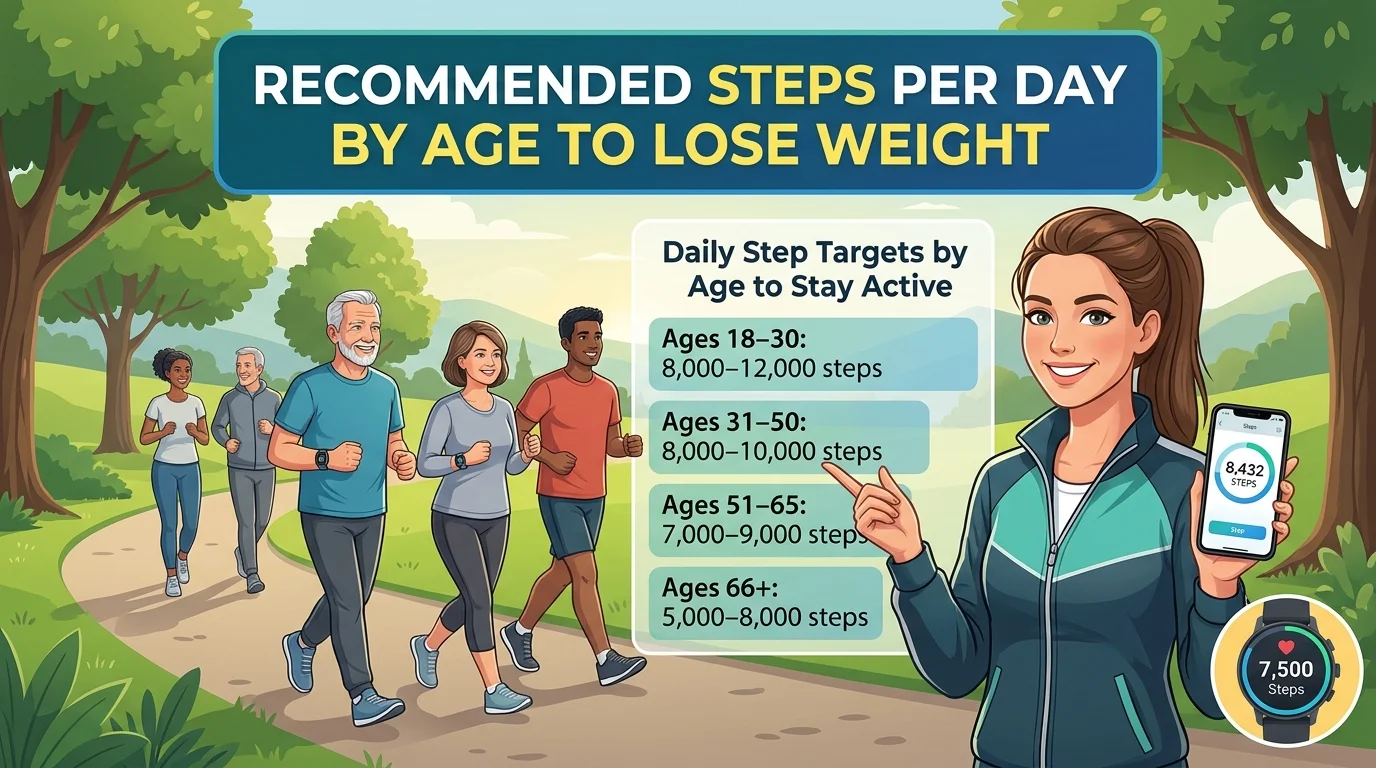
Recommended Steps Per Day by Age to Lose Weight
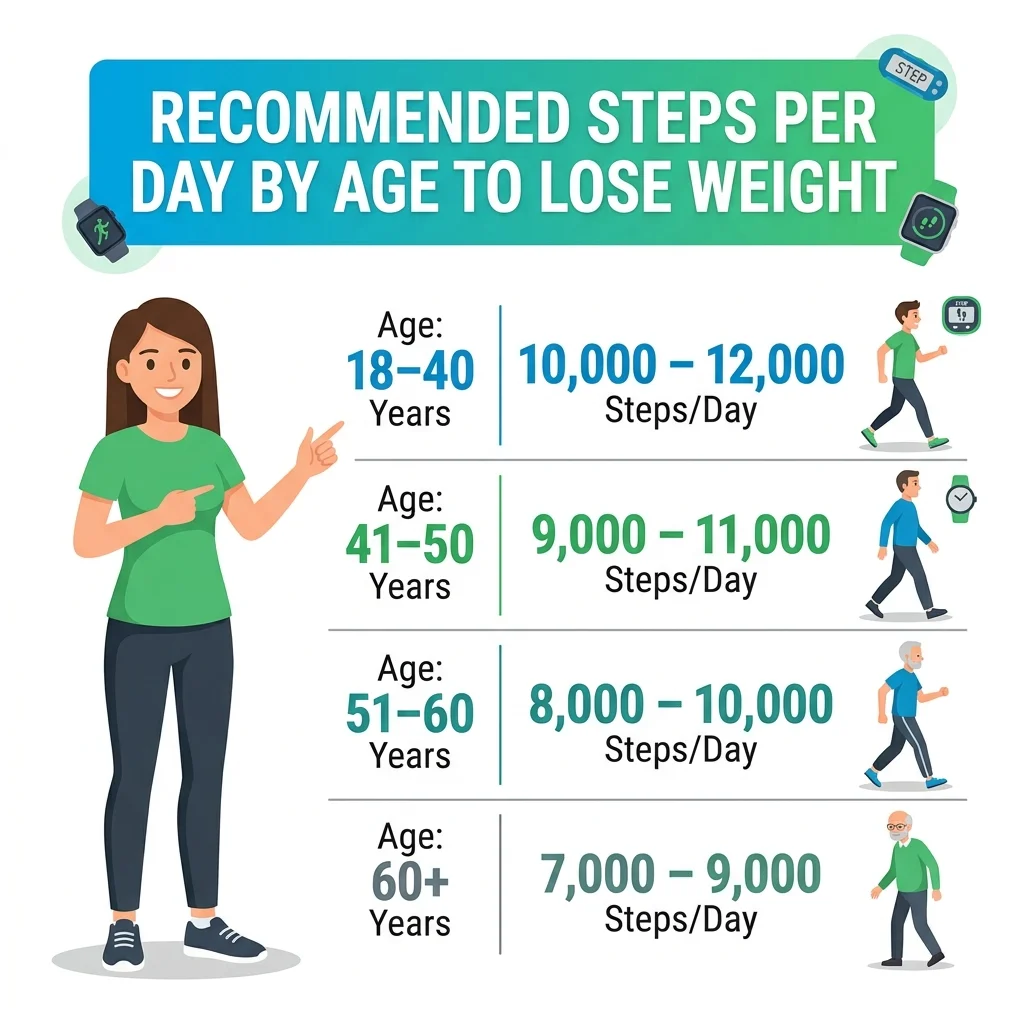
Age can influence your physical abilities, recovery, and exercise preferences. However, there is no scientifically established rule that says everyone needs a particular number of steps simply because they have reached a certain birthday.
The following steps per day by age chart offers practical starting targets for generally healthy adults. Adjust the numbers according to your current fitness and mobility.
| Age group | Illustrative daily target | Main priority |
| 18–29 years | 8,000–10,000+ | Build an active lifestyle |
| 30–39 years | 7,000–10,000 | Maintain daily movement |
| 40–49 years | 7,000–10,000 | Support fitness and weight management |
| 50–59 years | 6,000–9,000 | Maintain strength and activity |
| 60–69 years | 6,000–8,000 | Support mobility and endurance |
| 70–79 years | 4,000–7,000, if comfortable | Maintain independence |
| 80+ years | Individualized, with 3,000–5,000 as a possible goal | Prioritize safe movement |
Important: These ranges are editorial fitness suggestions, not official age-specific medical prescriptions. The 2025 research discussed above did not establish separate step requirements for every age group. People with chronic conditions, disabilities, balance problems, or limited mobility may need different goals.
Ages 18–29: Build Toward 8,000–10,000 Steps or More
Young adults often have more opportunities to develop an active lifestyle. However, studying, working remotely, gaming, and spending long hours on smartphones can reduce daily movement.
If you’re between 18 and 29, a target of 8,000–10,000 steps can be a useful goal if your body is accustomed to regular activity.
You can divide your daily walking into smaller sessions:
- Morning: 2,000 steps.
- Lunch break: 2,000 steps.
- Evening: 3,000 steps.
- Other daily activities: 1,000 steps.
This example provides 8,000 steps without requiring one long workout.
If you’re already physically active, you may comfortably walk more. However, additional steps aren’t automatically better if they cause exhaustion or interfere with recovery.
Ages 30–39: Aim for Consistent Daily Movement
During your thirties, professional responsibilities, childcare, and family commitments may reduce your exercise time.
A target of 7,000–10,000 daily steps can help many adults maintain an active routine.
Consider these simple changes:
- Walk for 15 minutes before starting work.
- Take a short walk during lunch.
- Stand and move between work sessions.
- Walk after dinner.
- Choose stairs when appropriate.
You don’t need to complete your entire step goal in one session.
The most important thing is finding a routine that fits your responsibilities.
Ages 40–49: Combine Walking With Strength Training
Your forties can bring changes in muscle mass, sleep, recovery, and everyday activity. These factors may influence weight management.
However, losing weight during this decade is still achievable.
A practical starting target is 7,000–10,000 steps if you can comfortably manage that amount.
Walking supports cardiovascular fitness and increases daily movement. Strength training can complement it by helping maintain muscle strength.
Try combining regular walks with two weekly strength-training sessions.
You can use bodyweight exercises, resistance bands, or appropriate weights.
Ages 50–59: Focus on Sustainable Activity
People in their fifties can benefit from regular walking without chasing extremely high step counts.
A daily target of approximately 6,000–9,000 steps may be practical for some adults, depending on their current activity level.
If you haven’t exercised regularly, start lower.
For example:
- Morning: 15-minute walk.
- Afternoon: 10-minute walk.
- Evening: 15–20-minute walk.
You can increase your walking time as your fitness improves.
Pay attention to joint discomfort, footwear, and recovery. If pain persists, seek professional advice instead of trying to push through it.
Ages 60–69: Prioritize Walking, Balance, and Mobility
Walking remains a valuable activity during your sixties. It can help maintain endurance, mobility, and independence.
A target of 6,000–8,000 steps may be suitable for some healthy adults in this age group.
However, your ability to walk safely is more important than reaching a particular number.
Consider adding balance exercises and strength training to your weekly routine. These activities can complement walking and support everyday physical function.
The CDC recommends that older adults include aerobic activity, muscle strengthening, and balance activities in their weekly exercise routines.
Ages 70–79: Choose a Comfortable Walking Goal
People in their seventies have different fitness levels and health needs. Some can comfortably walk 8,000 steps, while others may find 4,000 steps challenging.
A starting range of 4,000–7,000 steps may be appropriate for some older adults who can walk safely.
Helpful habits include:
- Walking on flat, familiar surfaces.
- Wearing supportive shoes.
- Taking breaks when necessary.
- Avoiding slippery or uneven routes.
- Using a walking aid if recommended.
- Including gentle balance activities.
Don’t compare your progress with younger people or more active Older people.
Your goal should be maintaining a level of activity that supports your independence and quality of life.
Ages 80 and Older: Make Safety the Priority
There is no universal step requirement for adults aged 80 and older.
Some people remain highly active, while others experience mobility limitations or medical conditions that affect their walking ability.
For someone who can walk safely, 3,000–5,000 steps may be a possible starting goal. Others may benefit from much shorter walking sessions.
Try splitting movement into several small periods throughout the day.
For example, a five-minute walk after breakfast, another after lunch, and a gentle evening walk can help reduce long periods of sitting.
If walking is difficult, chair-based exercises and other forms of gentle physical activity may be useful alternatives.
Recommended Steps Per Day by Age for Females
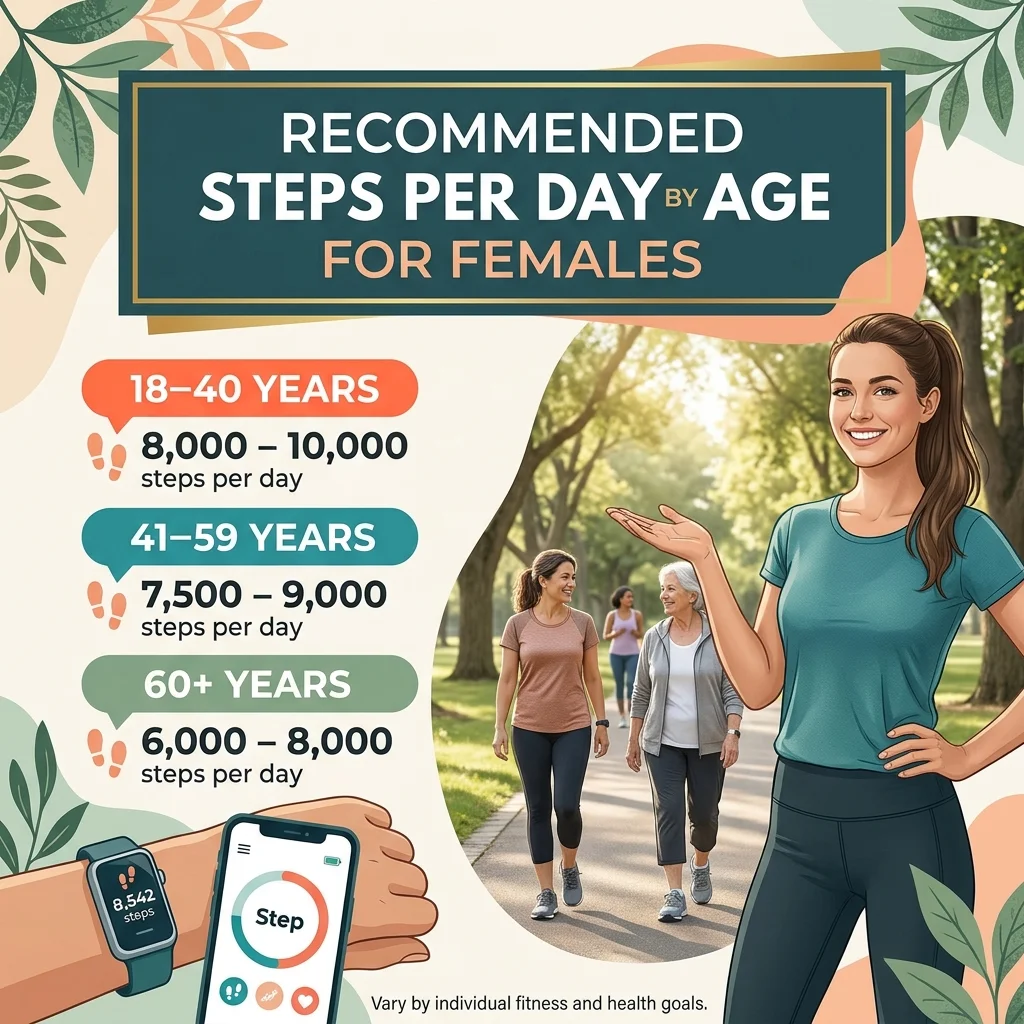
Women can generally follow the same adult physical activity recommendations as men. There isn’t an established separate daily step requirement for females who want to lose weight.
However, pregnancy, postpartum recovery, menopause, muscle mass, and individual health conditions can influence exercise needs.
Here is a practical overview of daily steps for women to lose weight:
| Age group | Illustrative daily target |
| 18–29 years | 8,000–10,000+ |
| 30–39 years | 7,000–10,000 |
| 40–49 years | 7,000–10,000 |
| 50–59 years | 6,000–9,000 |
| 60–69 years | 6,000–8,000 |
| 70–79 years | 4,000–7,000, if comfortable |
| 80+ years | Individualized |
Walking Tips for Women Who Want to Lose Weight
Walking is a convenient way to increase daily movement without requiring complicated exercise equipment.
For example, a woman who works from home can take a morning walk, move around during lunch, and enjoy another walk after dinner.
Women approaching or experiencing menopause may also benefit from resistance training to support muscle strength.
If you’re pregnant or recovering after childbirth, follow appropriate medical guidance before changing your exercise routine.
Recommended Steps Per Day by Age for Males
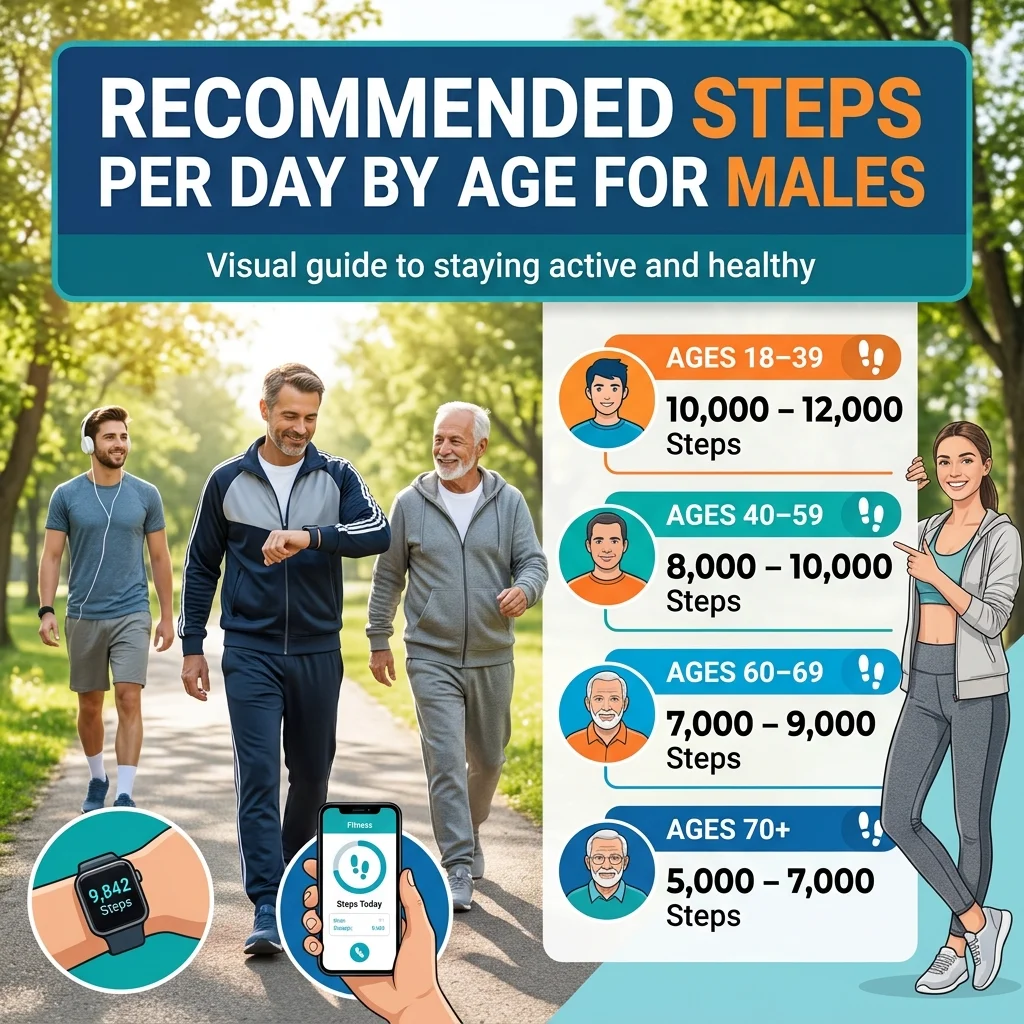
Men can also use age-based activity goals as general guidance. However, their actual walking needs depend on body weight, physical fitness, health, and lifestyle.
Here is a practical daily steps for men to lose weight chart:
| Age group | Illustrative daily target |
| 18–29 years | 8,000–10,000+ |
| 30–39 years | 7,000–10,000 |
| 40–49 years | 7,000–10,000 |
| 50–59 years | 6,000–9,000 |
| 60–69 years | 6,000–8,000 |
| 70–79 years | 4,000–7,000, if comfortable |
| 80+ years | Individualized |
How Men Can Make Walking Part of Their Routine
Men with desk-based jobs can add walking without changing their entire daily schedule.
For example:
- Walk for 15–20 minutes before work.
- Take a short lunchtime walk.
- Walk after dinner.
- Use stairs when appropriate.
- Take movement breaks during long sitting periods.
Combining these habits with strength training and balanced meals can support long-term weight management.
Is 10,000 Steps a Day Enough to Lose Weight?
Yes, 10,000 steps can help you become more active and support weight loss. However, reaching this number doesn’t guarantee that you’ll lose weight.
Weight loss depends on your overall calorie balance.
For example, someone who walks 10,000 steps but regularly consumes more calories than their body uses may not lose weight.
Another person who walks 7,000 steps and follows a balanced eating plan may experience better weight-management results.
Research published in The Lancet Public Health in 2025 examined 57 studies involving 35 cohorts. The researchers found that approximately 7,000 daily steps were associated with improvements in several health outcomes compared with 2,000 steps.
The study also reported that 10,000 steps remained a reasonable goal for people who were more active. However, it examined health outcomes rather than proving that a particular step count causes a specific amount of weight loss.
The takeaway is simple: 7,000 steps can be a valuable goal, and 10,000 steps isn’t a mandatory requirement.
How Many Calories Can You Burn by Walking?
The number of calories burned while walking depends on several factors:
- Body weight.
- Walking speed.
- Distance covered.
- Walking surface.
- Inclines and terrain.
- Individual fitness and movement efficiency.
A person weighing 90 kg may burn more calories during the same walk than someone weighing 60 kg. However, the exact difference depends on walking speed, distance, and other individual factors.
Steps and Walking Distance Comparison
Here is an approximate distance chart:
| Daily steps | Approximate distance |
| 2,500 | 1–1.25 miles |
| 5,000 | 2–2.5 miles |
| 7,500 | 3–3.75 miles |
| 10,000 | 4–5 miles |
| 12,500 | 5–6.25 miles |
Actual distance varies according to stride length. A shorter person may take more steps to cover the same distance than a taller person.
How Many Calories Does Walking 10,000 Steps Burn?
There is no reliable single calorie figure for 10,000 steps because people differ in body weight, stride length, pace, and terrain.
Instead of relying on a generic calorie estimate, use a fitness tracker as an approximate guide. Remember that wearable devices estimate energy expenditure and may not measure it precisely.
The distance and time spent walking can also help you understand your activity.
Does Walking Faster Burn More Calories?
Generally, yes. Brisk walking uses more energy per minute than slow walking.
However, total calorie expenditure also depends on how long you walk and how far you travel.
Once comfortable with regular walking, try alternating between three minutes of comfortable walking and two minutes of brisk walking.
Repeat the pattern several times if it feels manageable.
How Long Should You Walk Every Day to Lose Weight?
You don’t need to walk for hours to support weight loss.
For many beginners, starting with 10–15 minutes of daily walking is more manageable than attempting a long workout.
Here are some practical starting ranges:
| Fitness level | Suggested walking time |
| Beginner | 10–15 minutes |
| Lightly active | 20–30 minutes |
| Moderately active | 30–45 minutes |
| More active | 45–60 minutes |
These are suggested routines, not strict medical requirements.
According to the CDC, adults should aim for at least 150 minutes of moderate-intensity aerobic activity each week. Brisk walking can count toward this goal.
Adults should also perform muscle-strengthening activities at least two days per week.
You can divide your walking time into smaller sessions. For example, three 10-minute walks provide 30 minutes of daily movement.
A Practical 30-Day Walking Plan for Weight Loss
A structured walking plan can make it easier to develop a consistent routine.
However, the right starting point depends on your current activity level.
The following plan is designed as an example for a generally healthy beginner who can walk comfortably. It is not suitable for everyone, and you should adjust it if you experience pain, excessive fatigue, or balance problems.
Week 1: Establish Your Walking Habit
Goal: Discover your starting level and become consistent.
- Walk for 10–15 minutes on most days.
- Record your daily steps.
- Take short movement breaks.
- Choose comfortable walking shoes.
- Avoid trying to reach 10,000 steps immediately.
If you currently average 3,000 steps, maintaining approximately that level while adding a short walk may be enough to get started.
Week 2: Increase Your Daily Movement
Goal: Gradually add activity.
- Add approximately 500 steps to your comfortable baseline.
- Walk for 15–20 minutes on most days.
- Take a short walk after meals when convenient.
- Continue monitoring your recovery.
If your body responds well, you can continue building your routine.
Week 3: Develop Your Endurance
Goal: Improve consistency and walking duration.
- Add another 500 steps if comfortable.
- Include 20–25-minute walks.
- Try short periods of brisk walking.
- Include gentle strength exercises if appropriate.
You don’t need to increase both walking speed and distance at the same time.
Week 4: Build a Sustainable Routine
Goal: Establish a realistic long-term target.
- Continue your comfortable step count.
- Gradually work toward 6,000–8,000 steps if appropriate.
- Maintain regular walking sessions.
- Review your weekly activity.
- Plan how to continue after the 30 days.
30-Day Walking Progress Overview
| Period | Example daily target |
| Days 1–7 | Establish your baseline |
| Days 8–14 | Baseline + approximately 500 steps |
| Days 15–21 | Baseline + approximately 1,000 steps |
| Days 22–30 | Maintain or gradually increase |
For someone starting at 3,000 steps, this might mean progressing toward approximately 4,000 steps rather than automatically reaching 8,000.
The objective is to build a habit, not complete a challenge at any cost.
How to Increase Your Daily Steps Without Overexertion
If your current activity level is low, small lifestyle changes can help you increase your daily movement.
1. Start With a Morning Walk
A short morning walk can help establish a consistent exercise habit.
Start with 10 minutes and gradually increase your duration.
2. Walk After Meals
A short walk after breakfast, lunch, or dinner can contribute to your daily steps.
Some research also suggests that brief post-meal walking can help reduce blood sugar rises after eating.
3. Take Movement Breaks at Work
If you sit for long periods, get up regularly.
Walk around your workplace, move between tasks, or take a short outdoor break.
4. Choose Walking for Nearby Errands
If your destination is nearby and the route is safe, consider walking instead of driving.
5. Walk With Friends or Family
Walking with someone can make exercise more enjoyable and help you maintain consistency.
6. Use a Pedometer or Smartphone
A step tracker can help you understand your activity patterns.
Check your average for one week before choosing a new goal.
7. Choose Comfortable Walking Shoes
Supportive footwear can make walking more comfortable, especially when you increase your daily distance.
8. Include Brisk Walking Gradually
Once regular walking feels comfortable, introduce short periods of faster walking.
Increase your pace gradually rather than forcing yourself to walk quickly from the beginning.
Does Walking Alone Help You Lose Belly Fat?
Walking can contribute to overall fat loss, including abdominal fat, when it helps create a consistent calorie deficit.
However, you cannot choose where your body loses fat.
This means walking 10,000 steps every day doesn’t guarantee that your stomach will become flatter first.
If your goal is to reduce belly fat, combine regular walking with:
- Balanced meals.
- Appropriate portion sizes.
- Protein-rich foods.
- Fruits and vegetables.
- Strength training.
- Adequate sleep.
- Consistent physical activity.
Avoid products or exercise routines that promise to remove belly fat from one specific area.
What Should You Eat Alongside Walking to Lose Weight?
Your diet plays an important role in weight management.
Walking increases energy expenditure, but your food choices influence how many calories you consume.
You don’t need to follow an extreme diet. Focus on balanced meals and habits you can maintain.
Include Protein-Rich Foods
Protein helps maintain muscle and supports recovery.
Useful options include eggs, chicken, fish, lentils, beans, yogurt, milk, and tofu.
Eat More Fruits and Vegetables
Fruits and vegetables provide fiber, vitamins, minerals, and water.
Try adding apples, oranges, bananas, carrots, cucumbers, spinach, and other vegetables to your meals.
Choose High-Fiber Foods
Oats, whole grains, beans, lentils, and vegetables can help you feel satisfied.
Watch Your Portion Sizes
Healthy foods still contain calories. Pay attention to serving sizes and avoid eating more than you need.
Stay Hydrated
Drink water throughout the day, especially when walking in hot weather or exercising for longer periods.
A balanced eating plan is generally more sustainable than eliminating entire food groups without a medical reason.
Common Walking Mistakes That Can Slow Your Progress
Even a simple exercise routine can become difficult if you make unrealistic changes.
Avoid these common mistakes.
Increasing Your Steps Too Quickly
A sudden increase can cause soreness, fatigue, or discomfort.
Increase your activity gradually and allow your body to adapt.
Ignoring Your Eating Habits
Walking can support weight loss, but it doesn’t automatically compensate for consistently consuming more calories than your body uses.
Wearing Uncomfortable Shoes
Poorly fitting footwear can make longer walks uncomfortable.
Choose supportive shoes that fit properly.
Ignoring Recovery
Rest and recovery matter. Take easier days when necessary.
Focusing Only on the Number of Steps
Your step count doesn’t measure every part of your fitness.
Walking intensity, muscle strength, balance, and flexibility also matter.
Expecting Immediate Results
Weight changes take time. Normal fluctuations in water weight can also affect the scale.
Focus on long-term trends rather than expecting daily changes.
How to Track Your Walking and Weight-Loss Progress
Tracking can help you understand whether your activity is increasing.
You don’t need expensive equipment.
Follow these steps:
- Record your starting average: Monitor your daily steps for approximately one week.
- Set a realistic goal: Choose a target slightly above your current average.
- Monitor weekly progress: Look at your weekly average rather than individual days.
- Track walking time: Record how long you walk and whether you include brisk sessions.
- Monitor other habits: Pay attention to nutrition, sleep, and strength training.
- Review your results: Adjust your target when it becomes comfortable.
If you’re tracking weight, weigh yourself under similar conditions each time. Weekly trends are more useful than reacting to everyday fluctuations.
Frequently Asked Questions
How Many Steps a Day Should I Walk to Lose Weight?
Many adults can gradually work toward 7,000–10,000 daily steps as a practical activity goal. However, your ideal target depends on your fitness, health, and current activity level.
Is 7,000 Steps a Day Enough to Lose Weight?
Yes, 7,000 steps can support weight management by increasing daily movement. Whether you lose weight depends on your overall calorie balance and other lifestyle habits.
Can I Lose Weight by Walking 5,000 Steps a Day?
Yes. Walking 5,000 steps can be a useful starting point, particularly if you previously had a sedentary lifestyle. You can gradually increase your activity as your fitness improves.
How Many Steps Should a 50-Year-Old Woman Walk?
A 50-year-old woman can consider approximately 6,000–9,000 steps as an illustrative activity goal if she can comfortably manage that amount. Her current fitness and health should guide the final target.
How Many Steps Should Older people Walk Daily?
There isn’t one requirement for all older people. Some older adults can comfortably walk 6,000–8,000 steps, while others benefit from lower targets. Mobility and balance should guide the decision.
How Many Steps Should Beginners Walk to Lose Weight?
Beginners can start with their current daily average or approximately 3,000–5,000 steps if comfortable. Gradually increase the target rather than forcing a sudden jump.
Can Walking 10,000 Steps a Day Help You Lose 10 Pounds?
Walking 10,000 steps may support a weight-loss plan, but it doesn’t guarantee a 10-pound reduction. The result depends on your calorie deficit, body composition, diet, and consistency. There is no reliable universal timeline for losing 10 pounds through walking alone.
Is Walking 10,000 Steps Better Than Walking for 30 Minutes?
These goals measure different things. Ten thousand steps measure total daily movement, while 30 minutes measures exercise duration. A 30-minute brisk walk can provide meaningful benefits even if you don’t reach 10,000 steps.
How Many Steps Should an heavier person Beginner Walk?
An Heavier person beginner should start with a comfortable daily baseline. For some people, this may be 3,000–4,000 steps. Increase gradually and choose low-impact movement if joint discomfort is a concern.
Can I Lose Weight by Walking Without Changing My Diet?
It’s possible, particularly if walking creates a calorie deficit. However, weight loss may be limited if your calorie intake increases alongside your activity. Combining walking with sustainable eating habits can make progress easier.
Does Walking at Night Help With Weight Loss?
Yes. Evening walking contributes to your daily physical activity just like morning walking. Choose a safe route and a time that fits your schedule.
Is Walking Every Day Safe?
Many people can walk daily, provided they adjust the intensity and duration to their abilities. However, people with medical conditions, persistent pain, or balance problems may need individualized guidance.
What Is Better for Weight Loss: Walking or Running?
Both can support weight loss. Running generally uses more energy per minute, while walking is lower impact and may be easier to maintain. The best option is one that matches your fitness, health, and preferences.
Final Thoughts
The recommended steps per day by age to lose weight aren’t determined by a single universal number. Your age provides useful context, but your fitness level, health, mobility, and lifestyle are equally important. For many adults, gradually working toward 7,000–10,000 daily steps can be a practical way to increase physical activity. Older adults may benefit from lower targets, particularly when mobility or balance is a concern.
You don’t need to begin with 10,000 steps. Start with your current average, add a little more movement, and build a routine you can maintain. Most importantly, combine walking with balanced nutrition, strength training, sufficient sleep, and realistic expectations. Consistent habits are more valuable than chasing a perfect step count.

I am James Carter, a passionate writer dedicated to creating informative, engaging, and valuable content for readers. I enjoy exploring different topics, researching new ideas, and sharing knowledge through clear and meaningful writing. I am committed to providing accurate information, helpful insights, and well-crafted articles that inspire and educate audiences. With a strong focus on quality and creativity, I aim to connect with readers and deliver content that adds real value.