If you are 5 feet 5 inches tall, you may wonder how much you should weigh to stay healthy. You might also want to know whether 120, 130, 140, or 150 pounds is a suitable weight for your height. These are common questions, but the answer is not exactly the same for every woman.
The weight for 5’5″ female depends on several factors, including age, muscle mass, body composition, bone structure, physical activity, and overall health. According to standard adult Body Mass Index (BMI) guidelines, the healthy weight range for someone who is 5 feet 5 inches tall is approximately 111 to 150 pounds (50 to 68 kilograms).
This range is a useful starting point, not a universal ideal. For example, a woman who exercises regularly and has more muscle may weigh more than someone with less muscle. Both may have different health profiles despite having the same height.
In this guide, you will learn about the healthy weight for a 5’5″ female, see a detailed weight chart in pounds and kilograms, understand BMI calculations, and explore how age and body composition affect weight. You will also find practical advice and answers to common questions about maintaining a healthy weight.
What Is the Healthy Weight for a 5’5″ Female?
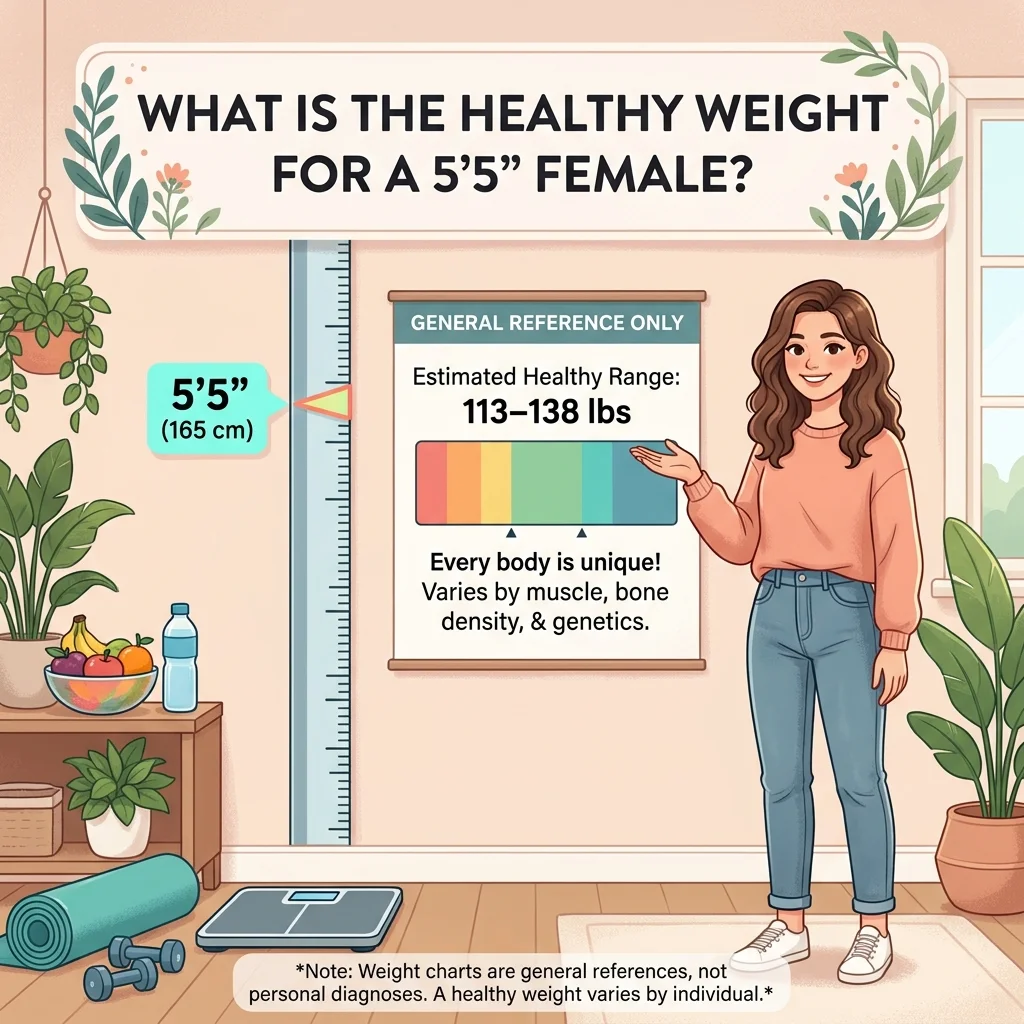
The commonly used BMI-based healthy weight range for an adult woman who is 5 feet 5 inches tall is approximately 111–150 pounds.
This range corresponds to a BMI of 18.5 to less than 25. BMI compares your weight with your height and provides a general screening measure of weight status.
Here is a quick overview:
| Measurement | Value |
| Height in feet | 5’5″ |
| Height in inches | 65 inches |
| Height in centimeters | 165.1 cm |
| Lower end of healthy range | Approximately 111 lbs |
| Upper end of healthy range | Approximately 150 lbs |
| Weight in kilograms | Approximately 50–68 kg |
| Standard healthy BMI | 18.5–24.9 |
However, the healthy weight for a 5’5″ female is not determined by BMI alone. Your waist measurement, medical history, physical activity, and body composition also matter.
For instance, a woman weighing 145 pounds may have a different amount of muscle and body fat from another woman with the same weight. Therefore, you should use the chart as a reference rather than treating its numbers as strict personal targets.
An important consideration for South Asian women: Some clinical guidance uses lower BMI thresholds when assessing weight-related health risks in people of South Asian backgrounds. This is because health risks associated with abdominal fat can occur at lower BMI values. A healthcare professional can help interpret your measurements using appropriate population-specific guidance.
5’5″ Female Weight Chart in Pounds and Kilograms
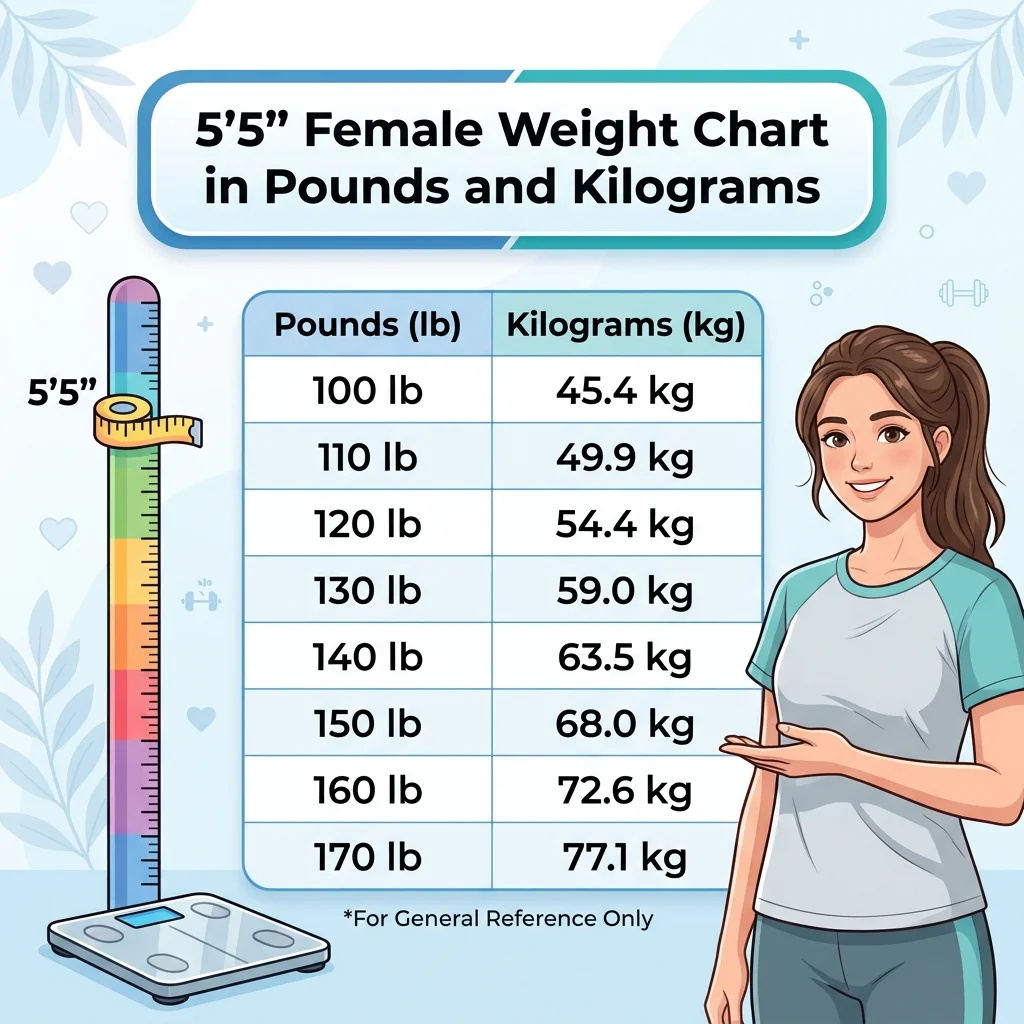
A weight chart makes it easier to understand how your weight relates to your height. The following 5’5″ female weight chart shows approximate BMI values for different weights.
| Weight (lbs) | Weight (kg) | Approximate BMI | Standard adult category |
| 105 | 47.6 | 17.5 | Underweight |
| 110 | 49.9 | 18.3 | Underweight |
| 115 | 52.2 | 19.1 | Healthy weight |
| 120 | 54.4 | 20.0 | Healthy weight |
| 125 | 56.7 | 20.8 | Healthy weight |
| 130 | 59.0 | 21.6 | Healthy weight |
| 135 | 61.2 | 22.5 | Healthy weight |
| 140 | 63.5 | 23.3 | Healthy weight |
| 145 | 65.8 | 24.1 | Healthy weight |
| 150 | 68.0 | 24.9 | Healthy weight |
| 155 | 70.3 | 25.8 | higher-weight person |
| 160 | 72.6 | 26.6 | higher-weight person |
| 165 | 74.8 | 27.5 | higher-weight person |
| 170 | 77.1 | 28.3 | higher-weight person |
| 175 | 79.4 | 29.1 | higher-weight person |
| 180 | 81.6 | 30.0 | Obesity |
| 185 | 83.9 | 30.8 | Obesity |
| 190 | 86.2 | 31.6 | Obesity |
| 200 | 90.7 | 33.3 | Obesity |
BMI values are rounded. Categories use standard adult BMI screening thresholds for people aged 20 and older.
How to Read the Weight Chart
You can use this chart to understand where your current weight falls within standard BMI categories.
For example:
- 115 pounds: Your BMI is approximately 19.1, which falls within the healthy range.
- 125 pounds: Your BMI is approximately 20.8, also within the healthy range.
- 135 pounds: Your BMI is approximately 22.5, which is within the healthy range.
- 145 pounds: Your BMI is approximately 24.1, still within the healthy range.
- 160 pounds: Your BMI is approximately 26.6, which falls within the higher-weight person category.
These classifications do not automatically tell you whether you are healthy or unhealthy. BMI does not measure body fat directly or distinguish between muscle, bone, and fat.
What Is the Ideal Weight for a 5’5″ Woman?
There is no single ideal weight for every woman who is 5 feet 5 inches tall. Your appropriate weight depends on your individual body composition, health, and lifestyle.
The standard BMI-based healthy range of approximately 111–150 pounds offers a useful reference. However, you do not have to aim for the middle of this range or choose a particular number simply because someone else considers it ideal.
Consider two women who are both 5’5″ and weigh 140 pounds. One may have more muscle because she regularly performs strength exercises. The other may have a different body composition and activity level. Their health needs may not be identical.
When thinking about your ideal weight, consider these factors:
Muscle Mass
Muscle contributes to your overall body weight. Women who lift weights, participate in sports, or perform resistance exercises may develop more muscle.
As a result, their weight may be higher than that of someone with less muscle, even when they have a relatively lean body composition.
This is one reason BMI may not provide a complete picture of health.
Bone Structure and Body Frame
Women naturally have different body frames. Some have narrower shoulders and hips, while others have broader skeletal structures.
These differences contribute to variations in body shape and overall weight. However, bone structure alone cannot establish whether a particular weight is healthy.
Body Fat Distribution
Where your body stores fat can also matter.
Some women carry more fat around their hips and thighs, while others store more around their abdomen. Abdominal fat can be particularly relevant when assessing certain metabolic and cardiovascular health risks.
For this reason, healthcare professionals may consider waist circumference along with BMI.
Lifestyle and Fitness
Your daily routine affects your weight and physical condition.
Regular walking, strength training, swimming, cycling, and other activities can help support muscle strength and cardiovascular health.
Your eating habits, sleep quality, stress levels, and daily movement also influence weight management.
Medical History
Pregnancy, menopause, hormonal conditions, certain medications, and other medical factors can affect body weight.
If you have unexplained weight changes, a healthcare professional can help identify possible causes and recommend an appropriate approach.
BMI Calculator for a 5’5″ Female: How to Calculate Your BMI
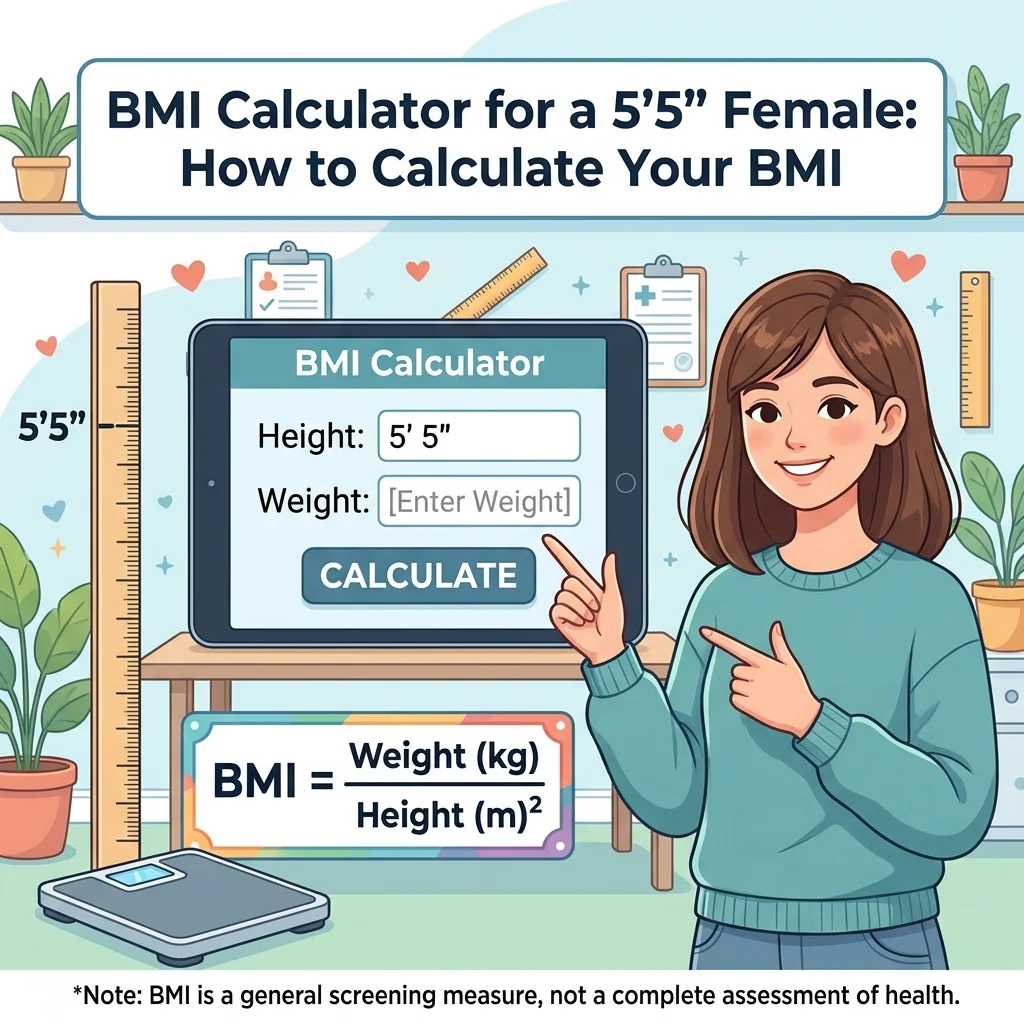
Body Mass Index, commonly known as BMI, is a measurement that compares your weight with your height.
It is frequently used as a screening tool for adults. You can calculate your BMI manually if you know your height and weight.
The metric formula is:
BMI = Weight in kilograms ÷ Height in meters²
For a woman who is 5 feet 5 inches tall:
- Height: 65 inches
- Height in centimeters: 165.1 cm
- Height in meters: 1.651 m
Suppose you weigh 140 pounds.
Step 1: Convert pounds into kilograms.
140 ÷ 2.2046 = 63.50 kg
Step 2: Square your height in meters.
1.651 × 1.651 = 2.726
Step 3: Divide your weight by your squared height.
63.50 ÷ 2.726 = 23.3
Your BMI is approximately 23.3.
According to standard adult BMI categories, this result falls within the healthy weight range.
Adult BMI Categories
| BMI | Classification |
| Below 18.5 | Underweight |
| 18.5–24.9 | Healthy weight |
| 25.0–29.9 | higher-weight person |
| 30.0–34.9 | Obesity, Class 1 |
| 35.0–39.9 | Obesity, Class 2 |
| 40 or higher | Obesity, Class 3 |
These categories are intended for adults aged 20 and older. Children and teenagers require a different assessment based on age- and sex-specific BMI percentiles.
What Are the Limitations of BMI?
BMI is convenient, but it has important limitations.
First, it does not directly measure body fat. Instead, it uses height and weight to estimate weight status.
Second, it cannot distinguish muscle from fat. A woman with substantial muscle mass may have a higher BMI without having the same body fat level as another woman with that BMI.
Third, it does not show where fat is stored. Abdominal fat distribution may provide additional information about health risks.
Finally, BMI does not account for every individual medical circumstance.
For a more complete assessment, a healthcare professional may consider waist circumference, blood pressure, blood glucose, cholesterol, physical examination findings, and medical history.
Weight for a 5’5″ Woman by Age
Many women search for the ideal weight for a 5’5″ woman by age because they notice changes in their bodies over time.
Age can influence muscle mass, hormones, metabolism, activity levels, and fat distribution. However, standard adult BMI categories do not have separate weight ranges for every age group.
Here is how different life stages can affect weight management.
Weight for a 5’5″ Woman in Her 20s
Women in their 20s may experience changes in weight as they move from education into employment or develop new routines.
Changes in physical activity, eating habits, sleep, and stress can influence body weight.
The standard adult BMI-based healthy range remains approximately 111–150 pounds. However, your individual fitness and nutritional needs should guide your health goals.
Weight for a 5’5″ Woman in Her 30s
Pregnancy, childbirth, work responsibilities, and changing schedules can affect weight during your 30s.
Some women may also experience changes in muscle mass and physical activity.
If you are pregnant, do not use the standard adult weight chart to determine how much weight you should gain. Pregnancy weight recommendations depend on your pre-pregnancy BMI and individual circumstances.
Weight for a 5’5″ Woman in Her 40s
Women in their 40s may experience perimenopause, hormonal changes, and differences in fat distribution.
Some notice that they gain more abdominal fat or find it harder to maintain their previous body composition.
Regular resistance training, adequate nutrition, and physical activity can help support muscle strength and general health.
Weight for a 5’5″ Woman in Her 50s
Menopause can influence body composition, sleep, and fat distribution.
Rather than focusing only on the scale, women in their 50s should also pay attention to bone health, muscle strength, mobility, and nutritional needs.
Weight for a 5’5″ Woman Over 60
Maintaining muscle strength, balance, and mobility becomes especially important as you get older.
Unintentional weight loss can be concerning, particularly if it occurs alongside weakness, fatigue, or reduced appetite.
Older women should avoid aggressive dieting without medical advice. A healthcare professional can help determine an appropriate weight-management approach.
Is 120, 130, 140, or 150 Pounds Healthy for a 5’5″ Female?
Many people search for specific weight measurements instead of general BMI ranges. The following examples explain how common weights compare with standard adult BMI categories.
Is 120 Pounds a Healthy Weight for a 5’5″ Female?
Yes. At 120 pounds, a woman who is 5’5″ has a BMI of approximately 20.0.
This is within the standard healthy adult BMI category.
A weight of 120 pounds may be suitable for a woman who maintains adequate nutrition and has no underlying health concerns related to her weight. However, there is no need to aim for this number if your current weight is different and appropriate for your health.
Is 130 Pounds a Healthy Weight for a 5’5″ Female?
Yes. A woman who weighs 130 pounds at 5’5″ has an approximate BMI of 21.6.
This falls within the standard healthy range.
Your activity level, muscle mass, and overall health are still important considerations.
Is 140 Pounds a Healthy Weight for a 5’5″ Female?
Yes. At 140 pounds, your BMI is approximately 23.3.
This is within the standard healthy adult category.
There is no automatic reason to lose weight simply because you weigh 140 pounds. Consider your overall health indicators and discuss any concerns with a qualified healthcare professional.
Is 150 Pounds a Healthy Weight for a 5’5″ Female?
A weight of 150 pounds corresponds to a BMI of approximately 24.9.
This is at the upper end of the standard healthy adult BMI range.
Normal daily fluctuations may move your weight slightly above or below this number. Hydration, digestion, menstrual cycles, and food intake can all affect the scale.
Is 160 or 170 Pounds higher-weight person for a 5’5″ Woman?
Weights above approximately 150 pounds fall into higher standard adult BMI categories at this height. However, these categories should be interpreted carefully.
Is 160 Pounds higher-weight person for a 5’5″ Female?
At 160 pounds, your BMI is approximately 26.6.
This falls within the standard higher-weight person screening category.
However, this classification does not automatically mean that you have a health problem. Muscle mass, abdominal fat, blood pressure, blood glucose, and other health indicators should also be considered.
Is 170 Pounds Too Much for a 5’5″ Woman?
At 170 pounds, your BMI is approximately 28.3.
This also falls within the standard higher-weight person category.
Whether weight loss would benefit you depends on your individual circumstances. A healthcare professional can help assess possible health risks and discuss realistic options.
Avoid extreme diets or rapid weight-loss plans. Sustainable lifestyle changes are generally a more practical starting point.
What Is a Healthy Body Fat Percentage for a 5’5″ Woman?
Body fat percentage refers to the proportion of your total body weight that consists of fat.
Unlike BMI, it attempts to measure body composition. However, there is no single body fat percentage that is ideal for every woman.
Your age, activity level, genetics, and measurement method all influence how body fat results should be interpreted.
For example, a woman who participates in regular strength training may have a different body composition from someone with a sedentary lifestyle, even when both weigh 140 pounds.
Body fat can be estimated through several methods:
- Skinfold measurements.
- Bioelectrical impedance devices.
- Specialized body composition assessments.
- Dual-energy X-ray absorptiometry (DEXA).
Each method has limitations. Home body fat scales, for example, can produce estimates that vary with hydration and other conditions.
You should not use a single body fat percentage to determine whether you are healthy. A healthcare professional can help interpret body composition alongside other measurements.
What Should the Waist Size Be for a 5’5″ Female?
Waist circumference provides additional information about abdominal fat distribution.
For someone who is 5 feet 5 inches tall, half their height is approximately 32.5 inches.
A waist-to-height ratio below 0.5 is a commonly used general screening target for adults. This is a screening guide, not a guaranteed boundary between healthy and unhealthy.
To measure your waist:
- Stand upright and relax your abdomen.
- Find the midpoint between the bottom of your ribs and the top of your hip bones.
- Place a flexible measuring tape around your waist.
- Keep the tape level without pulling it tightly.
- Measure after breathing out naturally.
Your waist measurement should be interpreted alongside BMI and other health information.
For South Asian women, clinicians may also consider population-specific waist circumference thresholds when assessing metabolic health risks.
Why Does Your Weight Change During the Day?
It is normal for your weight to fluctuate throughout the day. A change on the scale does not necessarily mean you have gained or lost body fat.
Several factors can explain short-term changes.
Water Retention
Your body may temporarily retain more water because of salt intake, hormonal changes, or other factors.
Food and Digestion
Food and drinks contribute to your body weight until they are digested and eliminated.
Menstrual Cycle
Hormonal changes during the menstrual cycle can cause temporary bloating and fluid retention.
Exercise
Exercise can temporarily affect hydration and fluid balance. Muscle recovery may also involve short-term changes in water retention.
Bowel Movements
Changes in digestion and bowel habits can influence your scale weight.
If you choose to monitor your weight, measure it under similar conditions and look at longer-term trends rather than reacting to individual readings.
How to Maintain a Healthy Weight at 5’5″
Maintaining a healthy weight does not require complicated diets or expensive supplements. A consistent routine that supports your nutrition, movement, and general health is a better foundation.
1. Eat Balanced Meals
Include a variety of nutritious foods in your daily meals.
A balanced eating pattern may contain:
- Fruits and vegetables.
- Whole grains.
- Beans and lentils.
- Eggs, fish, chicken, or other protein sources.
- Milk, yogurt, or suitable alternatives.
- Nuts, seeds, and healthy fats.
For example, breakfast might include eggs, whole-grain toast, and fruit. Lunch could include chicken or lentils with rice and vegetables.
The goal is to provide your body with sufficient energy and essential nutrients.
2. Include Enough Protein
Protein supports muscle maintenance, tissue repair, and other important bodily functions.
Useful sources include eggs, chicken, fish, yogurt, milk, beans, lentils, tofu, nuts, and seeds.
Your protein needs depend on your age, body weight, activity level, and health conditions.
3. Stay Physically Active
Regular physical activity supports cardiovascular health, muscle strength, mobility, and general fitness.
The CDC recommends that adults aim for at least 150 minutes of moderate-intensity aerobic activity each week, along with muscle-strengthening activities on at least two days.
Activities can include:
- Brisk walking.
- Swimming.
- Cycling.
- Dancing.
- Resistance training.
- Recreational sports.
You can divide your weekly activity into shorter sessions that fit your schedule.
4. Drink Enough Water
Water supports digestion, circulation, and temperature regulation.
Your hydration needs depend on your activity level, climate, diet, and health.
Keep water available throughout the day, especially when exercising or spending time in hot weather.
5. Get Enough Sleep
Most adults need at least seven hours of sleep each night.
A consistent sleep schedule can support energy levels and make it easier to maintain healthy eating and exercise habits.
Try to keep your bedroom comfortable, reduce screen use before bedtime, and avoid excessive caffeine late in the day.
6. Avoid Extreme Diets
Crash diets and severe calorie restrictions can cause fatigue, nutritional deficiencies, and muscle loss.
If weight loss is appropriate for your health, choose a gradual approach that provides sufficient nutrition.
A registered dietitian or qualified healthcare professional can help develop an eating plan suited to your needs.
7. Monitor Your Health Beyond the Scale
Your weight is only one part of your overall health.
Consider other indicators, including blood pressure, cholesterol, blood glucose, waist circumference, physical fitness, and general well-being.
These measurements can help provide a more complete picture than BMI alone.
How Can a 5’5″ Woman Know If She Is at a Healthy Weight?
You can start by comparing your height and weight using an adult BMI calculator. However, do not stop there.
A more complete assessment may include:
BMI: Helps estimate weight status based on height and weight.
Waist circumference: Provides information about abdominal fat distribution.
Blood pressure: Helps assess cardiovascular health.
Blood tests: Cholesterol and blood glucose results can identify certain health concerns.
Physical fitness: Strength, endurance, balance, and mobility provide useful information about physical condition.
Medical history: Existing conditions, medications, family history, and hormonal changes may affect weight and health.
If your weight changes unexpectedly or you have concerns about your health, arrange an appointment with a healthcare professional.
When Should You Talk to a Healthcare Professional?
Weight changes are not always caused by diet or physical activity. Medical conditions, medications, hormonal changes, and other factors can contribute.
Consider seeking professional advice if you experience:
- Unexplained or rapid weight gain.
- Unintentional weight loss.
- Persistent fatigue or weakness.
- Significant changes in appetite.
- Irregular menstrual periods.
- Difficulty maintaining adequate nutrition.
- Concerns about restrictive eating or excessive exercise.
A healthcare professional can assess your symptoms, review your medical history, and recommend appropriate tests or treatment when necessary.
Frequently Asked Questions About Weight for a 5’5″ Female
1. What Is the Average Weight for a 5’5″ Female?
There is no single average weight that determines good health. The standard adult BMI-based healthy weight range for a 5’5″ woman is approximately 111–150 pounds (50–68 kg).
2. What Is the Ideal Weight for a 5’5″ Female?
There is no universally ideal weight. The standard healthy BMI-based range is approximately 111–150 pounds, but your muscle mass, body composition, and health history also matter.
3. How Much Should a 5’5″ Woman Weigh?
For an adult woman, approximately 111–150 pounds falls within the standard healthy BMI range. Your appropriate weight may differ depending on your individual health circumstances.
4. What Is the Normal Weight for a 5’5″ Female?
The commonly used adult BMI-based healthy weight range is approximately 111–150 pounds, or 50–68 kilograms.
5. What Is the Healthy Weight for a 5’5″ Female in kg?
The standard healthy BMI-based weight range for an adult woman who is 5’5″ is approximately 50–68 kg.
6. Is 125 Pounds a Good Weight for a 5’5″ Woman?
Yes. A weight of 125 pounds corresponds to a BMI of approximately 20.8, which falls within the standard healthy adult range.
7. Is 135 Pounds Healthy for a 5’5″ Female?
Yes. At 135 pounds, your BMI is approximately 22.5. This is within the standard healthy weight category.
8. Is 145 Pounds a Healthy Weight for a 5’5″ Female?
Yes. A woman who weighs 145 pounds at 5’5″ has an approximate BMI of 24.1, which falls within the standard healthy adult category.
9. Is 150 Pounds a Healthy Weight for a 5’5″ Female?
Yes. A BMI of approximately 24.9 places 150 pounds at the upper end of the standard healthy adult BMI range.
10. Is 160 Pounds higher-weight person for a 5’5″ Female?
According to standard adult BMI categories, 160 pounds corresponds to a BMI of approximately 26.6, which falls within the higher-weight person category. BMI alone cannot determine your complete health status.
11. Can a 5’5″ Woman Weigh 160 Pounds and Still Be Healthy?
Yes, it is possible. BMI does not directly measure body fat or distinguish muscle from fat. Your waist measurement, fitness, medical history, and other health indicators also matter.
12. Does Age Change the Healthy Weight for a 5’5″ Woman?
Standard adult BMI categories remain the same for people aged 20 and older. However, muscle mass, hormones, fat distribution, and health needs can change with age.
13. What Is a Healthy Waist Size for a 5’5″ Female?
A waist-to-height ratio below 0.5 is a commonly used general screening target. For a height of 65 inches, half your height is 32.5 inches. Individual risk assessment may require additional considerations.
14. Can Muscle Make a 5’5″ Woman Weigh More?
Yes. Muscle contributes to total body weight. A woman who performs regular strength training may weigh more than someone with less muscle, even if her body composition is different.
15. How Often Should a 5’5″ Woman Check Her Weight?
You do not need to weigh yourself every day. If tracking your weight is useful, occasional measurements under similar conditions can help you identify longer-term trends.
Final Thoughts
Finding the right weight for 5’5″ female involves more than choosing a number from a chart. For adult women of this height, approximately 111–150 pounds (50–68 kilograms) falls within the standard BMI-based healthy weight range. However, this is a general screening reference rather than a personal weight prescription. Muscle mass, waist circumference, age, lifestyle, and medical history all contribute to a more complete picture of health.
Whether you weigh 120, 130, 140, or 150 pounds, focus on maintaining good nutrition, regular physical activity, sufficient sleep, and sustainable habits. You do not need to compare your body with someone else’s or chase an arbitrary number. If you are uncertain about your weight or have unexplained changes, a qualified healthcare professional can help you understand what is appropriate for your individual health.

I am Daniel Scott, a passionate writer dedicated to creating meaningful and engaging content that informs, inspires, and connects with readers worldwide. I am passionate about exploring ideas, sharing knowledge, and presenting stories with clarity and creativity. My writing focuses on delivering valuable insights through well-researched articles and thoughtful perspectives. I am committed to maintaining accuracy, originality, and a reader-first approach in every piece I create.