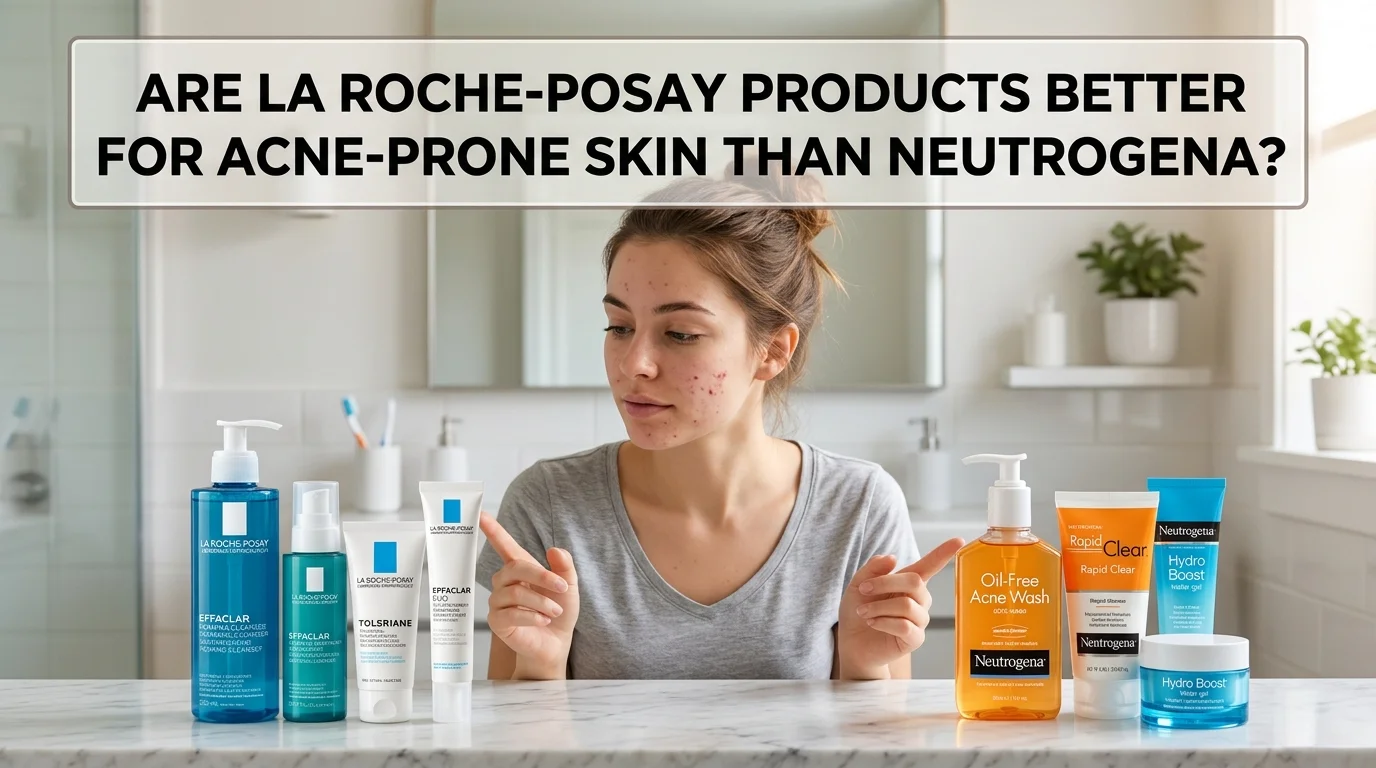
Choosing the right skincare products can feel overwhelming when you have acne-prone skin. As a college student, you probably want something that controls breakouts, reduces excess oil, and keeps your skin comfortable without taking a large part of your monthly budget. However, with so many cleansers, moisturizers, and acne treatments available, deciding which products deserve your money isn’t always easy.
Two skincare brands that frequently come up in acne discussions are La Roche-Posay and Neutrogena. Both offer products designed to address clogged pores, oily skin, and recurring breakouts. However, their formulations, ingredients, product ranges, and prices differ.
So, are La Roche-Posay products better for acne-prone skin than Neutrogena?
La Roche-Posay may be worth considering if you want targeted skincare products, while Neutrogena offers several affordable options for everyday acne care. However, neither brand is automatically more effective for everyone. The right choice depends on your skin type, acne concerns, ingredient preferences, and budget.
For example, two popular cleansers from these brands contain the same concentration of salicylic acid: 2%. This means choosing between them requires looking beyond the active ingredient and considering the complete formula.
In this guide, we’ll compare La Roche-Posay vs Neutrogena for acne, examine their popular products, explain important skincare ingredients, and explore which brand may suit different skin types. You’ll also learn how to build a simple, affordable skincare routine that fits your college schedule.
Understanding La Roche-Posay and Neutrogena
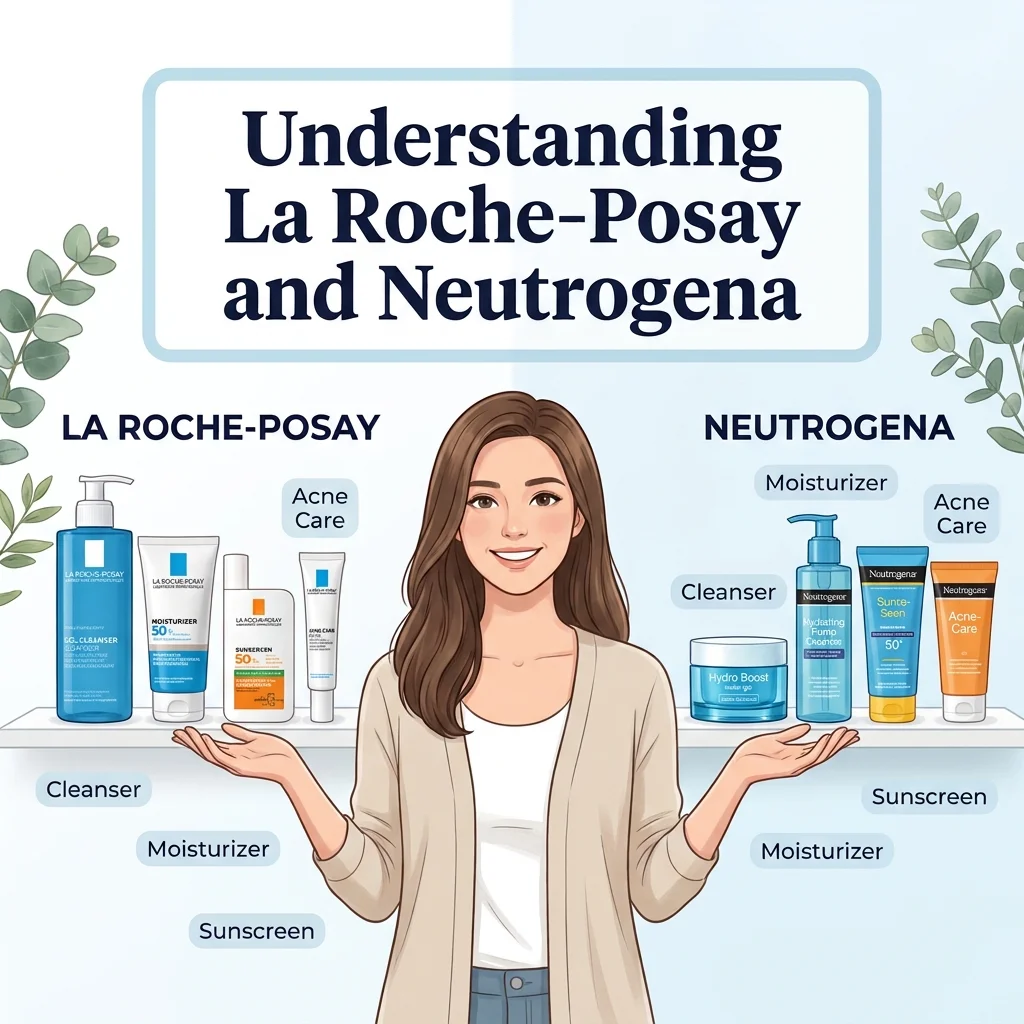
Before comparing individual products, it’s helpful to understand what each brand offers and how its skincare collections differ.
What Is La Roche-Posay?
La Roche-Posay is a French skincare brand known for products developed around different skin concerns, including sensitivity, dryness, and acne.
One of its best-known collections for oily and acne-prone skin is Effaclar. This range includes cleansers, moisturizers, and treatments designed to address excess oil, clogged pores, and blemishes.
Some La Roche-Posay products contain ingredients such as salicylic acid, glycerin, niacinamide, and other skin-conditioning ingredients.
However, not every product in the Effaclar collection has the same purpose. Some focus on cleansing, while others target specific acne concerns or support skin hydration.
The brand also offers the Toleriane collection, which includes products for people who need gentle skincare and additional moisture.
For someone with acne-prone skin, the advantage is having several product options rather than relying on one type of acne cleanser.
What Is Neutrogena?
Neutrogena is an American skincare brand with a broad selection of everyday skincare products. Its range includes facial cleansers, moisturizers, sunscreens, and acne treatments.
The brand is particularly recognizable for its Oil-Free Acne Wash, which contains 2% salicylic acid.
Neutrogena also offers products with benzoyl peroxide and hydrating ingredients such as hyaluronic acid.
One advantage of Neutrogena is its variety of product formats and price points. Students can find basic skincare products without necessarily purchasing an expensive collection.
For people comparing Neutrogena for acne-prone skin with premium skincare alternatives, the brand offers a practical starting point.
However, affordability alone doesn’t determine whether a product will suit your skin. You still need to consider its ingredients and formulation.
La Roche-Posay vs Neutrogena: Detailed Comparison
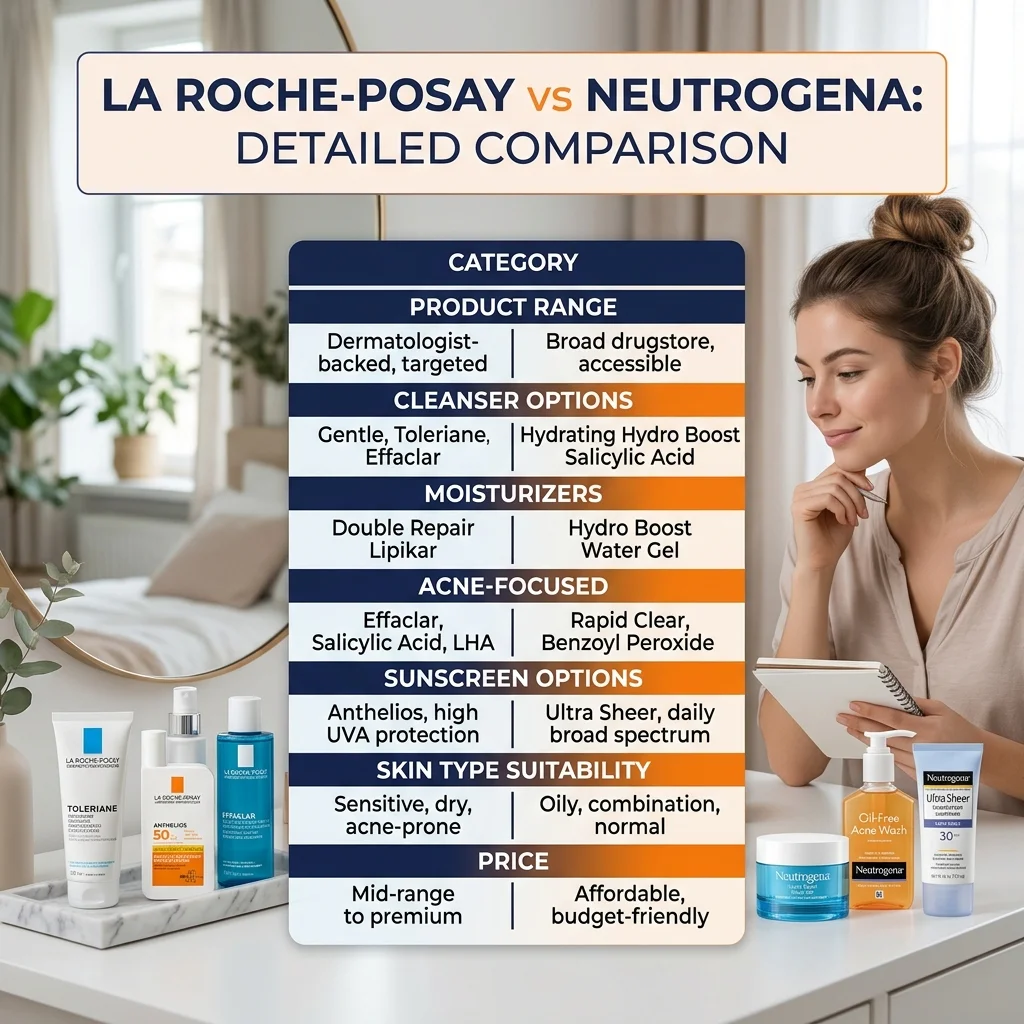
Both brands offer useful options for acne-prone skin, but their individual products have different strengths.
Here’s a quick overview of La Roche-Posay vs Neutrogena skincare.
| Comparison factor | La Roche-Posay | Neutrogena |
| Brand origin | France | United States |
| Popular acne collection | Effaclar | Oil-Free Acne and Stubborn Acne |
| Salicylic acid cleansers | Available | Available |
| Benzoyl peroxide treatments | Available in selected markets | Available in selected markets |
| Hydrating ingredients | Glycerin and other moisturizers | Glycerin and hyaluronic acid in selected products |
| Sensitive-skin options | Toleriane and selected Effaclar products | Selected fragrance-free and gentle products |
| Product variety | Targeted skincare collections | Broad everyday skincare range |
| Price positioning | Generally higher | Generally more budget-friendly |
| Best purchasing consideration | Specific formulation and skin concern | Affordability and formulation |
This comparison shows that both brands cover many of the same skincare needs.
The biggest differences often appear in their individual formulations, additional ingredients, and prices.
For example, a cleanser with the same active ingredient concentration can still feel different because of its cleansing agents, fragrance, and other ingredients.
Therefore, the best skincare brand for acne-prone skin isn’t necessarily the one with the most expensive products.
Which Brand Has Better Ingredients for Acne-Prone Skin?
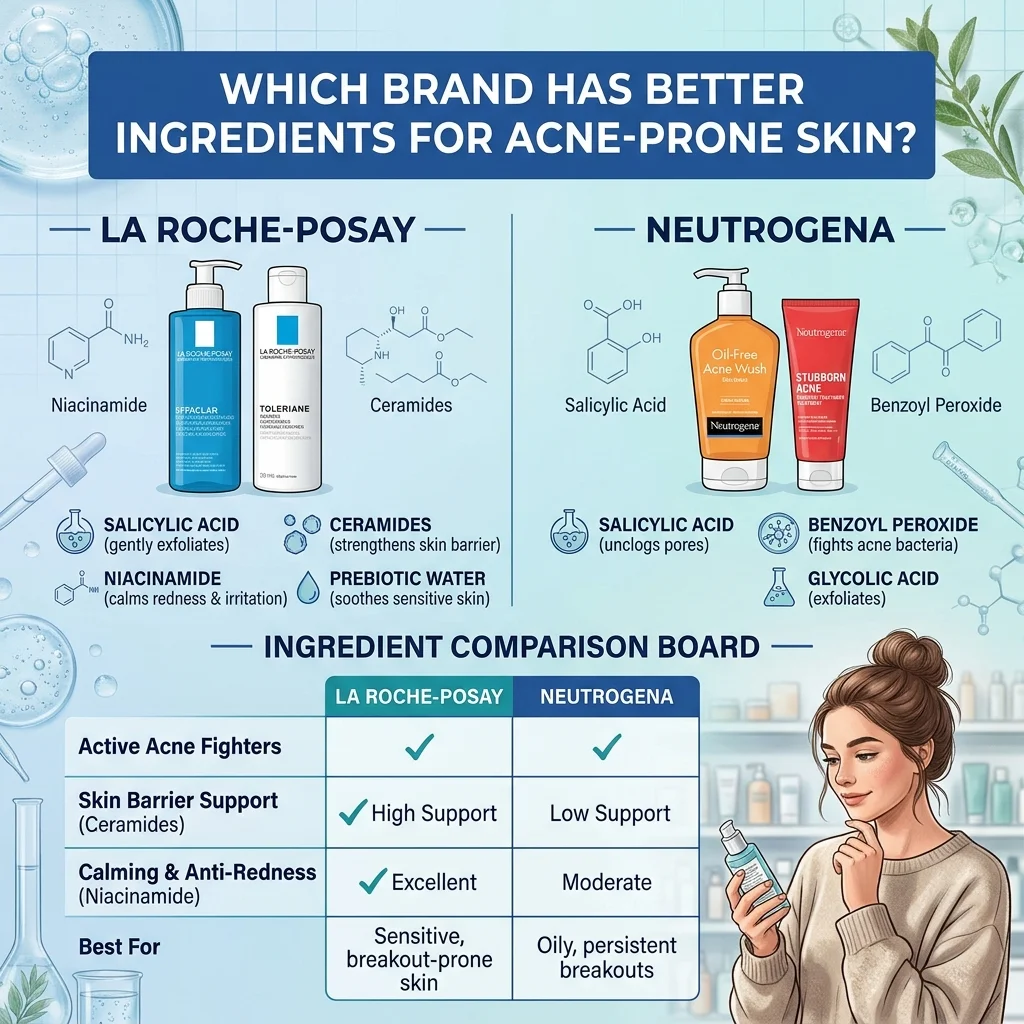
When comparing La Roche-Posay vs Neutrogena ingredients, start with the active ingredients that have established uses in acne treatment.
The American Academy of Dermatology recognizes several topical acne treatments, including benzoyl peroxide, topical retinoids, salicylic acid, and azelaic acid.
These ingredients serve different purposes. Understanding their differences can help you choose products that address your actual skin concerns.
Salicylic Acid
Salicylic acid is a beta hydroxy acid commonly used in acne cleansers and treatments.
It helps exfoliate inside the pores and remove accumulated dead skin cells. This makes it particularly useful for people who experience blackheads, whiteheads, and clogged pores.
Both La Roche-Posay and Neutrogena offer cleansers containing 2% salicylic acid.
For example:
- La Roche-Posay Effaclar Medicated Gel Cleanser contains 2% salicylic acid.
- Neutrogena Oil-Free Acne Wash contains 2% salicylic acid.
Because both products have the same active ingredient concentration, there is no obvious concentration advantage for either cleanser.
However, their inactive ingredients differ.
The La Roche-Posay cleanser contains glycerin, zinc gluconate, and capryloyl salicylic acid, also known as LHA. Its formula also contains menthol.
The Neutrogena Oil-Free Acne Wash contains ingredients such as glycerin, aloe vera extract, chamomile extract, and fragrance in the listed US formulation.
These differences may influence how each cleanser feels on your skin.
Which is better?
La Roche-Posay may appeal to someone interested in its additional exfoliating ingredients, while Neutrogena may be more attractive to someone seeking an affordable acne cleanser.
However, fragrance and menthol can bother some sensitive skin types. Neither formula should be assumed to suit everyone.
Benzoyl Peroxide
Benzoyl peroxide is another widely used acne ingredient.
Unlike salicylic acid, which mainly helps unclog pores, benzoyl peroxide reduces acne-causing bacteria and helps address inflammatory acne.
It may be useful for people who experience:
- Red pimples.
- Inflamed breakouts.
- Pus-filled blemishes.
- Recurring inflammatory acne.
Both brands offer benzoyl peroxide products, although availability and concentrations vary.
When comparing products, check the active ingredient percentage rather than assuming that two treatments from different brands are equivalent.
Benzoyl peroxide can cause dryness, redness, peeling, and irritation. It can also bleach towels, clothing, and pillowcases.
Which is better?
Neither brand has a universal advantage. The best option depends on the treatment concentration, product format, skin tolerance, and your acne concerns.
If you have sensitive skin, starting with a lower-strength product may be more comfortable.
Niacinamide
Niacinamide is a form of vitamin B3 that supports several skin functions.
It can help support the skin barrier, improve hydration, and reduce the appearance of redness.
It may also help improve the appearance of uneven skin tone after breakouts.
La Roche-Posay includes niacinamide in selected skincare formulations. Neutrogena also uses this ingredient in some of its products.
However, not every acne cleanser or moisturizer from either brand contains niacinamide.
Always check the individual product’s ingredient list before purchasing.
Glycerin and Hyaluronic Acid
Hydration is important even if your skin produces a lot of oil.
Glycerin and hyaluronic acid are humectants. They help attract and retain water in the skin.
La Roche-Posay uses glycerin in several skincare products.
Neutrogena includes glycerin and hyaluronic acid in selected moisturizers, including its Hydro Boost Gel Cream Fragrance Free.
These ingredients don’t directly treat acne, but they can help keep your skin comfortable while you use acne treatments.
A suitable moisturizer can also make it easier to maintain a consistent skincare routine.
La Roche-Posay vs Neutrogena: Product-by-Product Comparison
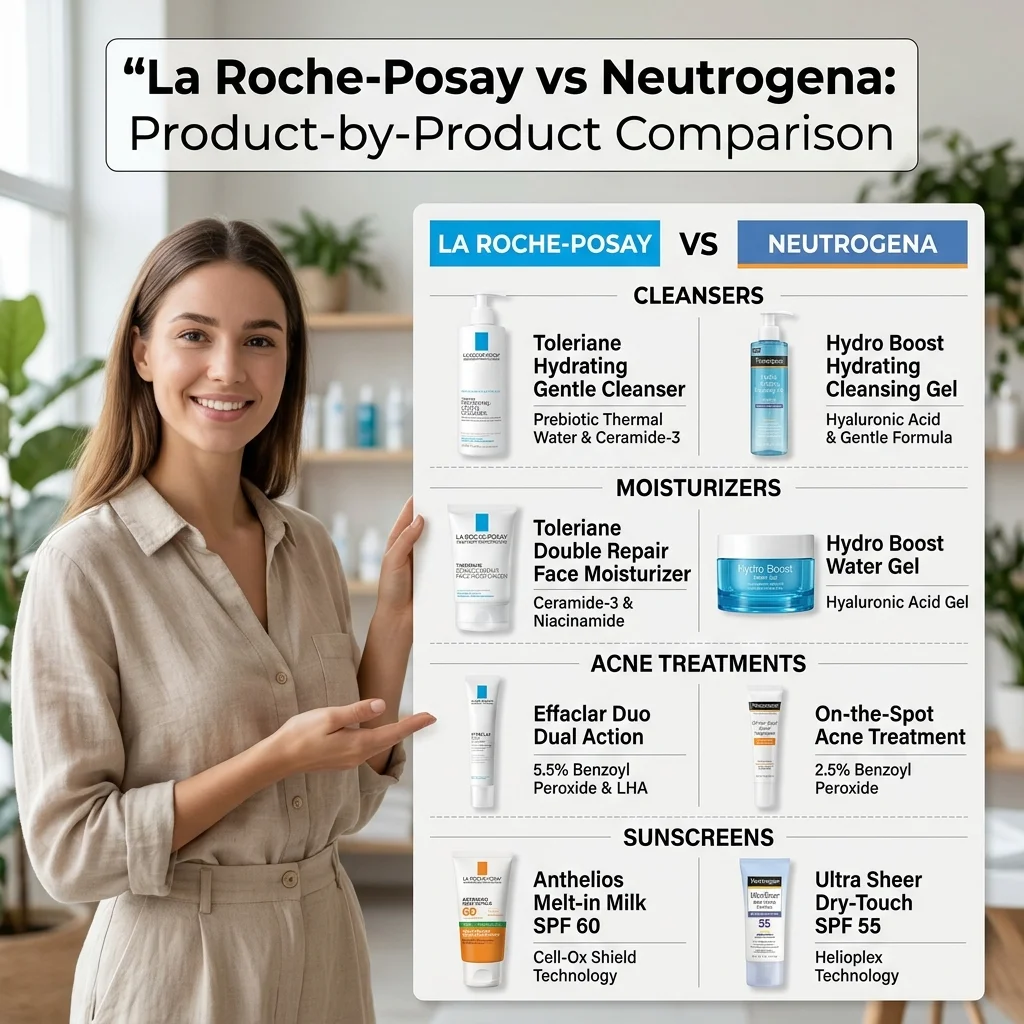
Comparing products directly gives you a clearer idea of what you’re paying for.
Instead of comparing entire brands, let’s look at some recognizable products and their intended uses.
1. La Roche-Posay Effaclar Medicated Gel Cleanser vs Neutrogena Oil-Free Acne Wash
<text> </text>
Both products are designed for acne-prone skin and contain 2% salicylic acid.
However, their supporting ingredients differ.
| Feature | La Roche-Posay Effaclar Cleanser | Neutrogena Oil-Free Acne Wash |
| Active ingredient | 2% salicylic acid | 2% salicylic acid |
| Product type | Medicated gel cleanser | Acne facial cleanser |
| Additional ingredients | Glycerin, zinc gluconate, LHA | Glycerin, aloe, chamomile |
| Fragrance | Check the current label | Contains fragrance in the listed US formula |
| Main purpose | Acne cleansing and exfoliation | Acne cleansing and pore care |
| Best consideration | Additional exfoliating ingredients | Budget-conscious acne cleansing |
Which one should you choose?
If you want a cleanser with salicylic acid and additional exfoliating ingredients, La Roche-Posay is worth considering.
If you want a more affordable option, Neutrogena Oil-Free Acne Wash may be suitable.
However, if you have sensitive skin, pay attention to the full ingredient list. The La Roche-Posay cleanser contains menthol, while the listed Neutrogena formula contains fragrance.
Both ingredients may be problematic for certain individuals.
Neither cleanser is automatically the gentler choice.
2. La Roche-Posay Effaclar Treatments vs Neutrogena Stubborn Acne Treatments
Both brands offer treatments intended to address acne breakouts.
Neutrogena’s Stubborn Acne collection includes benzoyl peroxide products. La Roche-Posay also offers acne treatments, although product names and formulations vary by market.
When comparing these products, consider:
- Benzoyl peroxide concentration.
- Whether the product is a wash or leave-on treatment.
- Recommended application frequency.
- Other active ingredients.
- Possible dryness and irritation.
A leave-on treatment has a different exposure time from a cleanser that you rinse off.
Therefore, comparing only the percentage of an active ingredient can be misleading.
Which one should you choose?
Choose the product whose active ingredient and concentration match your acne concerns and skin tolerance.
If you have frequent painful or deep breakouts, ordinary cosmetic skincare may not be enough. A dermatologist can help determine whether you need a more appropriate acne treatment.
3. La Roche-Posay Toleriane Moisturizers vs Neutrogena Hydro Boost Gel Cream
Moisturizer is an important part of an acne skincare routine.
La Roche-Posay’s Toleriane collection offers different moisturizers for sensitive and dry skin.
Neutrogena Hydro Boost Gel Cream Fragrance Free contains hyaluronic acid, glycerin, and other moisturizing ingredients.
Its formula is designed to provide hydration without a heavy cream texture.
| Feature | La Roche-Posay Toleriane | Neutrogena Hydro Boost Gel Cream |
| Main purpose | Moisture and skin comfort | Lightweight hydration |
| Product variety | Multiple moisturizer options | Gel cream format |
| Hydrating ingredients | Vary by product | Glycerin and hyaluronic acid |
| Suitable for | Depends on selected formula | Marketed for normal to dry skin |
| Main advantage | Different formulations for skin concerns | Lightweight, fragrance-free option |
Which one should you choose?
If you prefer a lightweight moisturizer, Neutrogena Hydro Boost Gel Cream Fragrance Free is worth considering.
If you want to explore different moisturizer formulations for dryness and sensitivity, La Roche-Posay Toleriane offers several options.
Remember that the best moisturizer for acne-prone skin is one that hydrates without causing irritation or worsening your breakouts.
Which Brand Is Better for Different Skin Types?
Your skin type can make a bigger difference than the brand name.
A product that works well for someone with oily skin may feel uncomfortable on dry or sensitive skin.
Here’s how to compare the two brands based on your individual needs.
Oily and Acne-Prone Skin
If your face becomes shiny a few hours after washing it, you may have oily skin.
Excess oil can combine with dead skin cells and contribute to clogged pores.
Both brands offer salicylic acid cleansers that may help address this concern.
La Roche-Posay Effaclar Medicated Gel Cleanser contains salicylic acid and LHA.
Neutrogena Oil-Free Acne Wash also contains 2% salicylic acid.
For oily skin, either may be worth considering.
However, avoid using an acne cleanser repeatedly throughout the day. Overwashing can irritate your skin and make it feel uncomfortable.
Recommendation: Compare the complete formulas and choose the cleanser your skin tolerates best.
Dry and Acne-Prone Skin
Dry skin and acne can occur together.
You might experience small breakouts while also dealing with tightness, flaking, or rough patches.
In this situation, using multiple strong acne treatments can make dryness worse.
Look for:
- A gentle cleanser.
- A moisturizer that supports hydration.
- One appropriate acne treatment.
- A comfortable sunscreen.
La Roche-Posay offers Toleriane moisturizers, while Neutrogena has hydrating options such as Hydro Boost Gel Cream Fragrance Free.
Recommendation: Focus on maintaining moisture and avoiding unnecessary exfoliation. You may find a gentle moisturizer more useful than purchasing another acne treatment.
Sensitive and Acne-Prone Skin
Sensitive skin can react to fragrance, menthol, harsh cleansing agents, and certain active ingredients.
If your skin becomes red, itchy, or uncomfortable after applying skincare products, examine the full ingredient list.
La Roche-Posay offers products specifically developed for sensitive skin. However, its entire product range isn’t fragrance-free or irritation-free.
Neutrogena also has fragrance-free options, including its Hydro Boost Gel Cream Fragrance Free and selected sensitive-skin cleansers.
Recommendation: Don’t automatically assume La Roche-Posay is better for sensitive skin. Compare the exact formulations and introduce new products carefully.
Combination and Acne-Prone Skin
Combination skin often has an oily forehead, nose, and chin, while the cheeks feel normal or dry.
This makes product selection more complicated.
A strong acne cleanser might feel comfortable on your T-zone but leave your cheeks feeling tight.
Both brands offer options that may work for combination skin.
You could use a gentle cleanser, lightweight moisturizer, and one targeted acne treatment.
Recommendation: Choose products that balance cleansing and hydration rather than trying to remove every trace of oil.
Which Brand Is More Affordable for College Students?
Skincare expenses can add up quickly when you’re studying.
You may already be paying for transportation, food, textbooks, internet, and other college expenses.
That’s why affordability matters when comparing La Roche-Posay vs Neutrogena for acne.
Generally, La Roche-Posay occupies a higher price position, while Neutrogena offers more drugstore-oriented options.
However, exact prices depend on product size, retailer, country, and availability.
For students in Pakistan, imported skincare products may also have different prices because of shipping charges, taxes, exchange rates, and retailer markups.
Instead of assuming that one brand always costs a specific amount, compare the price per milliliter or gram.
When La Roche-Posay May Be Worth the Extra Money
Consider La Roche-Posay if:
- You find a specific Effaclar product that suits your acne concerns.
- You need a particular formulation for your skin.
- You prefer its texture and application experience.
- You have tested the product and know your skin tolerates it.
- The product fits your skincare budget.
When Neutrogena May Be the Better Budget Choice
Consider Neutrogena if:
- You want an affordable salicylic acid cleanser.
- You need a simple moisturizer.
- You prefer widely available everyday skincare.
- You find a fragrance-free formula that suits your skin.
- You want to avoid purchasing an expensive skincare collection.
How to Save Money on Acne Skincare
You don’t need to buy every product from the same brand.
For example, you could choose:
- A Neutrogena cleanser.
- A moisturizer from either brand.
- An affordable, suitable sunscreen.
- One acne treatment that addresses your specific concern.
You should also avoid purchasing several products with the same active ingredient unless a dermatologist recommends that approach.
A simple routine can be more affordable and easier to maintain.
Which Brand Works Faster for Acne?
This is a common question, especially when you’re spending money on a new skincare product.
Unfortunately, there isn’t enough direct comparative evidence to say that La Roche-Posay products consistently work faster than Neutrogena products.
The results depend on the active ingredient, product formulation, acne type, and how consistently you use the treatment.
For example, two cleansers may contain the same concentration of salicylic acid but produce different experiences because of their supporting ingredients.
You should also understand that cleansers and leave-on treatments don’t work in exactly the same way.
A cleanser is rinsed off, while a leave-on treatment remains on the skin for a longer period.
The American Academy of Dermatology recommends giving acne treatments time to work. You may notice improvement after approximately 6–8 weeks, while more complete clearing can take several months.
Changing products every few days can make it harder to determine whether a treatment is helping.
The practical answer: Choose an appropriate product, follow its directions, and evaluate your results over time rather than expecting one brand to deliver overnight improvement.
Can La Roche-Posay and Neutrogena Help With Acne Marks?
Acne marks are another concern for students who experience recurring breakouts.
However, it’s important to distinguish between post-acne discoloration and actual acne scars.
Post-Inflammatory Hyperpigmentation
Post-inflammatory hyperpigmentation, or PIH, refers to flat dark spots that remain after acne heals.
These spots can appear brown, red, or darker than the surrounding skin.
Some skincare ingredients may help improve the appearance of uneven skin tone over time.
For example, niacinamide can support a more even-looking complexion.
Sun protection is also important because ultraviolet exposure can make discoloration more noticeable or persistent.
Actual Acne Scars
Indented or raised acne scars are different from flat dark marks.
They involve changes in the skin’s structure and may require professional treatments.
Ordinary cleansers and moisturizers from either brand cannot be expected to remove established acne scars.
If you have deep scars, a dermatologist can discuss appropriate treatment options.
Recommendation: Focus on controlling active acne, using suitable skincare, and protecting your skin from the sun. Seek professional advice if scars are a major concern.
A Simple Acne Skincare Routine for College Students
You don’t need ten different products to take care of acne-prone skin.
A basic routine can help you cleanse, moisturize, treat breakouts, and protect your skin without taking too much time.
Here’s a practical skincare routine for college students using products from La Roche-Posay, Neutrogena, or a combination of both.
Morning Skincare Routine
Step 1: Cleanse Your Face
Start with a gentle cleanser.
If your skin tolerates salicylic acid well, you may choose an acne-focused cleanser. However, a gentle non-medicated cleanser may be more suitable if your skin feels dry or irritated.
Avoid scrubbing your face aggressively.
Step 2: Apply Moisturizer
Use a lightweight, non-comedogenic moisturizer.
Neutrogena Hydro Boost Gel Cream Fragrance Free is one option to consider. You can also explore an appropriate La Roche-Posay Toleriane moisturizer.
Choose the formula that feels comfortable on your skin.
Step 3: Apply Sunscreen
Finish your morning routine with broad-spectrum sunscreen with SPF 30 or higher.
Look for a formula labeled non-comedogenic or suitable for acne-prone skin.
Sunscreen is especially important if you’re using acne treatments that can increase irritation or sun sensitivity.
Evening Skincare Routine
Step 1: Cleanse Your Face
Wash away sunscreen, sweat, makeup, and everyday impurities.
Use a gentle cleanser and avoid washing repeatedly.
Step 2: Apply Your Acne Treatment
Choose one suitable treatment based on your skin concerns.
Salicylic acid may be useful for clogged pores and blackheads, while benzoyl peroxide may help with inflammatory acne.
Follow the product directions and introduce active ingredients gradually.
Step 3: Moisturize
Finish with a moisturizer to help reduce dryness and support your skin barrier.
This step is important if you’re using salicylic acid or benzoyl peroxide.
Weekly Skincare Habits
Small habits can support your skincare routine:
- Change your pillowcase regularly.
- Clean your phone screen.
- Remove makeup before sleeping.
- Avoid picking or squeezing pimples.
- Wash your face after heavy sweating.
- Avoid harsh physical scrubs.
- Introduce new products one at a time.
These habits won’t replace acne treatment, but they can help you avoid unnecessary irritation.
Common Mistakes to Avoid When Treating Acne
Even good skincare products may cause problems when used incorrectly.
Here are some mistakes worth avoiding.
Using Multiple Acne Treatments Together
Using several strong active ingredients at once can irritate your skin.
For example, combining a salicylic acid cleanser with multiple leave-on exfoliants and benzoyl peroxide may cause excessive dryness.
Some acne treatments can be combined as part of a dermatologist-directed routine, but introducing everything at once makes it harder to identify irritation.
Start gradually and follow product directions.
Washing Your Face Too Often
Washing your face repeatedly doesn’t guarantee clearer skin.
The American Academy of Dermatology recommends gently washing up to twice daily and after sweating.
Overwashing and scrubbing can irritate acne-prone skin.
Skipping Moisturizer
Oily skin still needs hydration.
A suitable moisturizer can help reduce dryness caused by acne treatments and support the skin barrier.
Look for a non-comedogenic product that feels comfortable.
Changing Products Too Quickly
Trying a new cleanser or treatment every few days can make your skin more irritated.
Give an appropriate acne treatment enough time to work.
If you experience severe irritation, stop using the product rather than forcing your skin to tolerate it.
Picking or Squeezing Pimples
Picking at blemishes can increase inflammation and raise the risk of dark marks and scarring.
Avoid squeezing pimples, especially deep or painful ones.
If your acne is difficult to control, professional treatment is a better option.
How to Choose the Right Acne Product
If you’re still unsure whether to purchase La Roche-Posay or Neutrogena, use these practical steps.
1. Identify Your Main Skin Concern
Are you dealing with oily skin, clogged pores, blackheads, inflammatory pimples, or dryness?
Different products address different concerns.
A salicylic acid cleanser may be useful for clogged pores, while benzoyl peroxide may be more appropriate for inflammatory acne.
2. Read the Active Ingredient Label
Don’t rely entirely on product names.
Check the active ingredient and concentration.
For example, both La Roche-Posay Effaclar Medicated Gel Cleanser and Neutrogena Oil-Free Acne Wash contain 2% salicylic acid in their US formulations.
This makes them a useful comparison.
3. Check Supporting Ingredients
Look for ingredients that suit your skin.
If fragrance bothers you, choose a fragrance-free formula.
If you experience dryness, consider products containing moisturizing ingredients such as glycerin.
4. Consider the Product Format
A cleanser, serum, cream, and leave-on treatment have different purposes.
Don’t assume that two products with the same active ingredient will provide identical results.
5. Compare the Cost
Calculate the cost per unit rather than comparing packaging prices alone.
A larger bottle may provide better value, but only if you actually tolerate and use the product.
6. Introduce Products Gradually
Avoid changing your entire skincare routine at once.
Introduce one new product at a time so you can identify what works and what causes irritation.
When Should You See a Dermatologist?
Drugstore skincare can help manage some mild acne concerns, but not every type of acne responds to ordinary cleansers and moisturizers.
Consider consulting a dermatologist if you experience:
- Deep or painful pimples.
- Persistent cystic or nodular acne.
- Acne that leaves scars.
- Frequent breakouts despite consistent treatment.
- Significant redness or irritation.
- Acne affecting your confidence or daily life.
A dermatologist can assess your acne and recommend treatments based on its severity.
You may need prescription medication rather than another over-the-counter skincare product.
Getting professional advice early can also help reduce the risk of permanent scarring.
Frequently Asked Questions
Are La Roche-Posay products better for acne-prone skin than Neutrogena?
Not necessarily. La Roche-Posay offers targeted acne and sensitive-skin products, while Neutrogena provides affordable everyday skincare options. Both brands offer products containing established acne ingredients. The better choice depends on your skin type, product formulation, and budget.
Is La Roche-Posay better than Neutrogena for oily skin?
Both brands offer products for oily and acne-prone skin. La Roche-Posay’s Effaclar collection includes salicylic acid cleansers, while Neutrogena’s Oil-Free Acne Wash also contains 2% salicylic acid. Compare their supporting ingredients and choose the formula your skin tolerates.
Is Neutrogena good for college students with acne?
Yes. Neutrogena offers affordable cleansers and moisturizers that may fit a student budget. Its Oil-Free Acne Wash contains 2% salicylic acid, making it an option for people concerned about clogged pores and breakouts.
Which brand is better for sensitive acne-prone skin?
La Roche-Posay offers several products developed for sensitive skin, but not every formula is suitable for everyone. Neutrogena also has fragrance-free options. Compare individual ingredient lists rather than assuming one entire brand is gentler.
Can I use La Roche-Posay and Neutrogena together?
Yes. You can combine products from both brands if their formulations suit your skin. For example, you might use a cleanser from one brand and a fragrance-free moisturizer from the other. Avoid unnecessary combinations of strong acne treatments.
Which is better: La Roche-Posay Effaclar or Neutrogena Oil-Free Acne Wash?
Both cleansers contain 2% salicylic acid in their US formulations. La Roche-Posay also includes LHA and glycerin, while the listed Neutrogena formula contains glycerin, aloe, chamomile, and fragrance. Your skin’s tolerance and the complete formulation should guide your decision.
Is La Roche-Posay worth the extra money?
It may be worth the additional cost if you find a particular product that suits your skin and skincare goals. However, a higher price doesn’t guarantee better acne results. Neutrogena offers useful alternatives for students who want affordable skincare.
Can Neutrogena and La Roche-Posay remove acne scars?
Neither brand can guarantee the removal of established acne scars. Some skincare ingredients may improve the appearance of post-acne discoloration, but indented and raised scars may require professional treatment.
Should I use salicylic acid or benzoyl peroxide?
Salicylic acid is commonly used for clogged pores, blackheads, and whiteheads. Benzoyl peroxide helps address acne-causing bacteria and inflammatory breakouts. The best choice depends on your acne type and skin tolerance.
Do I need moisturizer if I have oily skin?
Yes. Oily skin can still become dry or irritated, especially when you’re using acne treatments. Choose a lightweight, non-comedogenic moisturizer that supports hydration without feeling uncomfortable.
How long does acne treatment take to work?
Some people notice improvements after four to eight weeks of consistent treatment. More complete clearing may take several months. Results vary depending on acne severity, the active ingredient, and individual skin response.
Is it okay to use an acne cleanser every day?
That depends on the cleanser and your skin’s tolerance. Follow the product directions and watch for dryness or irritation. If your skin becomes uncomfortable, reduce use or switch to a gentler cleanser.
Final Thought :
So, are La Roche-Posay products better for acne-prone skin than Neutrogena? The answer isn’t a simple yes or no. Both brands offer useful skincare products, but the best option depends on your individual needs. Choose La Roche-Posay if you want to explore targeted skincare products, particularly its Effaclar collection for oily and acne-prone skin. Its Toleriane range is also worth considering if you need additional hydration or gentle skincare options.
Choose Neutrogena if you’re looking for affordable acne cleansers and everyday moisturizers. Its Oil-Free Acne Wash provides a 2% salicylic acid option, while its Hydro Boost Gel Cream Fragrance Free offers lightweight hydration. For a college student, my recommendation is to start with a simple routine instead of purchasing an expensive collection. Choose one suitable cleanser, a moisturizer, an appropriate acne treatment, and a sunscreen.

I am Daniel Scott, a passionate writer dedicated to creating meaningful and engaging content that informs, inspires, and connects with readers worldwide. I am passionate about exploring ideas, sharing knowledge, and presenting stories with clarity and creativity. My writing focuses on delivering valuable insights through well-researched articles and thoughtful perspectives. I am committed to maintaining accuracy, originality, and a reader-first approach in every piece I create.