Gaining weight can be frustrating when you have a naturally high metabolism. You might eat three meals a day, enjoy snacks between meals, and still struggle to increase your weight. While some people gain weight easily, others need a more structured approach to consume enough calories and build muscle.
If you are searching for how to gain weight with high metabolism, the first step is understanding how your body uses energy. Your metabolism is influenced by several factors, including genetics, age, body composition, hormones, and physical activity. However, having a fast metabolism does not mean you are unable to gain weight.
The most effective approach is to consume more calories than your body burns, choose nutritious calorie-dense foods, eat enough protein, and follow a consistent strength-training programme. You should also get sufficient sleep and monitor your progress instead of expecting immediate results.
You do not need to depend on junk food, expensive supplements, or extreme eating plans. Everyday foods such as eggs, milk, rice, chicken, potatoes, bananas, nuts, and peanut butter can help you increase your calorie intake.
In this guide, you will learn how to gain weight with a fast metabolism naturally, calculate your calorie requirements, choose the best foods, prepare a practical weight gain meal plan, and follow exercises that support healthy muscle development.
What Does Having a High Metabolism Mean?
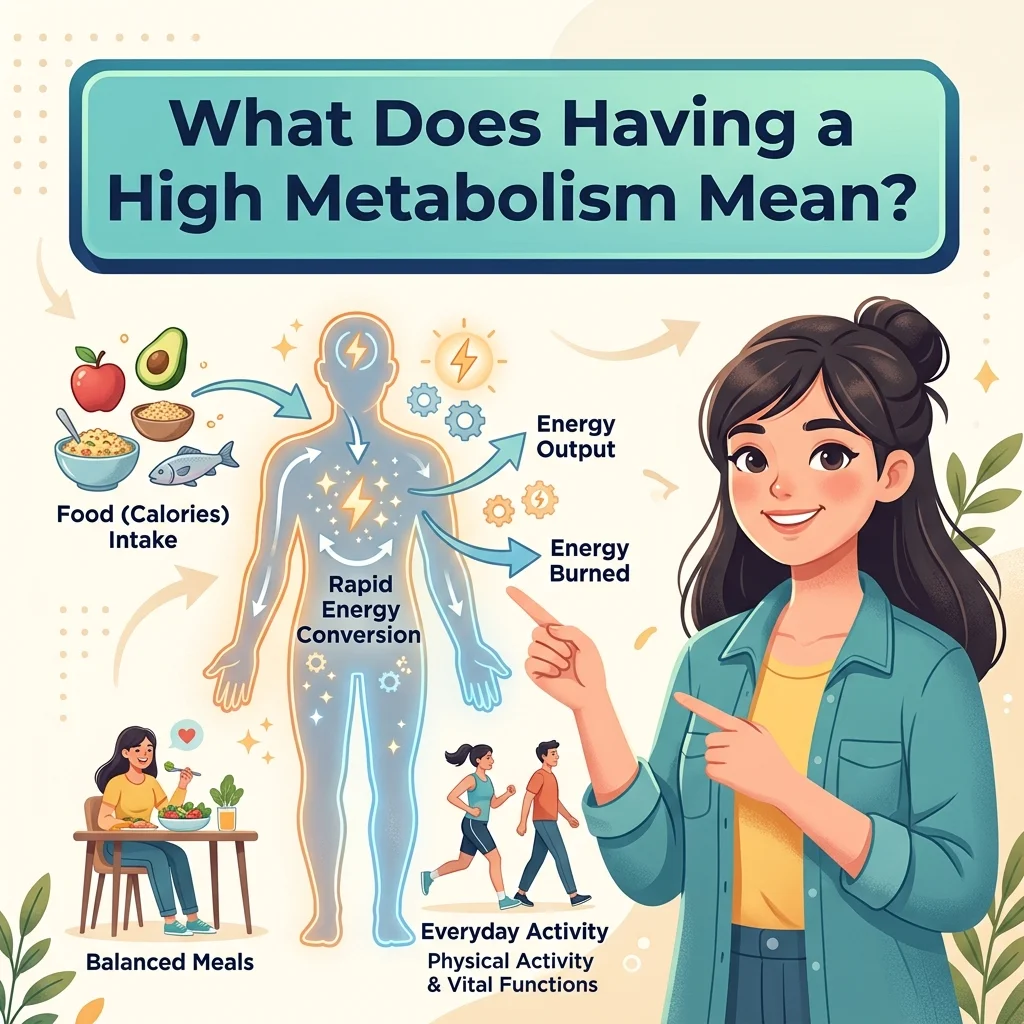
Metabolism is the process through which your body converts food and drinks into energy. Your body uses this energy for essential functions such as breathing, blood circulation, digestion, maintaining body temperature, and physical activity.
Your metabolic rate describes how much energy your body uses over a specific period. However, metabolism is not the only factor that determines whether you gain or lose weight.
Your total daily energy expenditure (TDEE) includes several components:
- Basal metabolic rate (BMR): The energy your body needs to maintain essential functions while resting.
- Physical activity: Calories used during exercise, walking, household tasks, and other movements.
- Thermic effect of food: Energy your body uses to digest, absorb, and process nutrients.
- Non-exercise activity: Everyday movements such as standing, climbing stairs, and changing positions.
Some people naturally use more calories because they have a higher activity level, greater body mass, or other individual differences.
Factors That Influence Your Metabolism
Genetics: Your inherited characteristics can influence your metabolic rate, body composition, and appetite.
Age: Energy requirements and body composition often change as you get older.
Muscle mass: Muscle tissue requires energy to maintain, although its resting energy expenditure is not dramatically higher than that of other tissues.
Physical activity: People who exercise frequently or have physically demanding jobs generally require more calories.
Hormones: Thyroid hormones and other hormonal processes influence how your body uses energy.
Body size: Your height, weight, and overall body composition affect your daily energy requirements.
Having a high metabolism does not mean you cannot gain weight. It simply means you need to understand your energy requirements and consume enough food to support your goals.
Why Is It Difficult to Gain Weight With High Metabolism?

If you struggle to gain weight despite eating regularly, several factors could explain the problem.
1. You May Not Be Eating Enough Calories
One of the most common reasons people struggle to gain weight is that they underestimate how much food they need.
You might eat three meals daily and believe you are consuming plenty of calories. However, your total intake may still be lower than the energy your body uses.
For example, someone who walks frequently, exercises, and has a physically demanding job may need significantly more food than someone who spends most of the day sitting.
Track your meals and snacks for several days to understand your actual calorie intake.
2. You Have a Very Active Lifestyle
Daily activities contribute to your total energy expenditure. Walking to work, climbing stairs, playing sports, exercising, and performing household tasks all require energy.
If you are naturally active, you may need additional food to maintain a calorie surplus.
You do not necessarily need to stop exercising. Instead, adjust your food intake to support your activity level and recovery.
3. You Have a Small Appetite
Some people feel full after eating relatively small portions. This can make it difficult to consume enough calories through three traditional meals.
If you want to learn how to gain weight with a fast metabolism and small appetite, consider eating smaller meals more frequently.
You can also include calorie-dense snacks and homemade smoothies between meals.
4. Your Meals Contain Too Many Low-Calorie Foods
Vegetables, fruits, and other high-fibre foods are important for good health. However, meals containing mostly low-calorie foods may make it difficult to consume enough energy.
For example, a large bowl of plain salad may provide plenty of nutrients but relatively few calories.
Improve the meal by adding olive oil, avocado, cheese, boiled eggs, chicken, nuts, or seeds.
5. An Underlying Health Condition May Be Affecting Your Weight
Sometimes, difficulty gaining weight is not simply related to metabolism or eating habits.
Certain health conditions can affect appetite, digestion, nutrient absorption, or energy expenditure. Examples include an overactive thyroid, type 1 diabetes, and digestive conditions such as coeliac disease.
If you are losing weight unexpectedly or cannot maintain a healthy weight despite adequate food intake, speak with a healthcare professional.
NHS+1
How to Gain Weight With High Metabolism: 12 Effective Strategies

The most effective approach combines increased calorie intake, balanced nutrition, strength training, and consistent daily habits. These healthy weight gain tips can help you increase your weight gradually without depending on unhealthy eating habits.
1. Eat More Calories Than Your Body Burns
The foundation of weight gain is consuming more calories than your body uses.
This is known as a calorie surplus. When you consistently consume more energy than you expend, your body has additional energy available for weight gain.
For many adults, adding approximately 300 to 500 calories to their usual daily intake is a reasonable starting point for gradual weight gain.
NHS+1
For example, you could add:
- A banana with peanut butter.
- A glass of whole milk.
- A handful of almonds.
- An additional serving of rice.
- A bowl of Greek yogurt.
- An avocado sandwich.
These additions can increase your calorie intake without requiring you to eat significantly larger meals.
Monitor your weight over several weeks. If it remains unchanged, review your food portions and activity level before making further adjustments.
2. Eat Five to Six Times a Day
If you have a fast metabolism and a small appetite, eating five or six times daily may be easier than consuming three very large meals.
Frequent meals give you more opportunities to consume additional calories throughout the day.
A practical eating schedule might include:
| Meal | Suggested foods |
| Breakfast | Eggs, whole-grain toast, milk, and banana |
| Morning snack | Yogurt, nuts, and dried fruit |
| Lunch | Rice, chicken, vegetables, and yogurt |
| Afternoon snack | Peanut butter sandwich and milk |
| Dinner | Potatoes, fish or meat, and vegetables |
| Evening snack | Milk smoothie or Greek yogurt |
You do not need to follow this exact schedule. Adjust the timing and portions according to your appetite and daily routine.
3. Choose Calorie-Dense and Nutritious Foods
Calorie-dense foods provide more energy in relatively small portions. They are particularly useful if you get full quickly.
If you want to know what to eat to gain weight with high metabolism, start by including more nutrient-dense foods in your regular meals.
Some excellent options include:
- Peanut butter and other nut butters.
- Almonds, walnuts, and cashews.
- Avocados.
- Whole milk.
- Full-fat yogurt.
- Cheese.
- Olive oil.
- Eggs.
- Oats.
- Dried dates and raisins.
- Salmon and other oily fish.
For example, adding peanut butter to oatmeal can increase its calorie content while providing protein and healthy fats.
4. Increase Your Protein Intake
Protein is essential for repairing tissues and supporting muscle growth. If your goal is to gain weight while developing a stronger body, include protein-rich foods in your daily meals.
Some of the best protein foods for weight gain include:
- Eggs.
- Chicken.
- Fish.
- Beef.
- Milk.
- Greek yogurt.
- Cottage cheese.
- Lentils.
- Chickpeas.
- Kidney beans.
- Soybeans and tofu.
For healthy adults who regularly perform resistance training, approximately 1.4 to 2.0 grams of protein per kilogram of body weight per day is a commonly used sports-nutrition range.
PubMed Central (PMC)+1
For example, a person weighing 60 kilograms might use a daily target of approximately 84 to 120 grams when following an appropriate muscle-building programme.
However, this is not a universal requirement. People who do not exercise regularly may need less protein. Those with kidney disease or other medical conditions should discuss their protein intake with a healthcare professional.
Eating excessive amounts of protein does not automatically produce more muscle. You also need sufficient calories, resistance training, and recovery.
5. Drink Homemade Weight-Gain Smoothies
Homemade smoothies are an easy way to increase your daily calorie intake. They are especially helpful if you want to gain weight naturally at home without purchasing expensive products.
You can prepare homemade weight gain shakes using milk, bananas, oats, peanut butter, yogurt, and other nutritious ingredients.
Example: High-Calorie Banana Smoothie
Ingredients:
- 1 large banana.
- 1 cup whole milk.
- 2 tablespoons peanut butter.
- ¼ cup oats.
- ½ cup Greek yogurt.
- A small amount of honey, if desired.
Preparation:
- Add all the ingredients to a blender.
- Blend until smooth and creamy.
- Pour into a glass.
- Enjoy it between meals or after a workout.
The exact calorie content depends on ingredient brands and serving sizes. Depending on the products and portions, this smoothie may provide approximately 500–650 calories.
Other smoothie combinations include:
- Mango, milk, yogurt, and almonds.
- Dates, banana, milk, and peanut butter.
- Strawberries, Greek yogurt, oats, and milk.
- Avocado, banana, and milk.
Choose homemade smoothies instead of relying on sugary commercial drinks or unverified weight-gain products.
6. Eat More Healthy Carbohydrates
Carbohydrates provide energy for your muscles, brain, and everyday activities. They can also make it easier to increase your calorie intake.
If you want to learn how to gain weight fast with high metabolism, include sufficient carbohydrate-rich foods in your daily meals.
Some useful choices include:
- Rice.
- Potatoes.
- Sweet potatoes.
- Whole-grain bread.
- Oatmeal.
- Pasta.
- Whole-grain cereals.
- Bananas.
- Dates.
- Beans and lentils.
For example, you can combine rice with chicken and vegetables for a balanced lunch. At dinner, try potatoes with eggs, fish, or another protein source.
You do not need to avoid carbohydrates to build muscle. Instead, choose a balanced combination of carbohydrates, protein, and healthy fats.
7. Include Healthy Fats in Your Diet
Dietary fat provides more calories per gram than carbohydrates or protein. This makes healthy fat sources useful when you need to increase your calorie intake without eating very large portions.
Include foods such as:
- Avocados.
- Almonds.
- Walnuts.
- Peanut butter.
- Chia seeds.
- Flaxseeds.
- Olive oil.
- Fatty fish.
For example, adding a tablespoon of olive oil to a meal increases its energy content without significantly changing the portion size.
Prioritize unsaturated fats while keeping excessive saturated and trans fat intake in check.
8. Follow a Regular Strength-Training Routine
Eating more food can increase your weight, but strength training helps you develop muscle.
If your goal is to gain muscle with a fast metabolism, resistance exercise should be part of your routine.
Man lifting dumbbells in a modern gym setting
Useful strength-training exercises include:
- Squats.
- Push-ups.
- Pull-ups.
- Dumbbell rows.
- Bench presses.
- Lunges.
- Shoulder presses.
- Deadlifts.
Beginners can start with two or three weekly sessions and gradually increase the difficulty as their strength improves.
Focus on proper technique rather than lifting the heaviest possible weights. Allow your muscles time to recover between challenging sessions.
9. Avoid Skipping Breakfast
Breakfast is an opportunity to begin your day with a nutritious and calorie-rich meal.
If you regularly skip breakfast, you may find it harder to reach your daily calorie target.
Some breakfast ideas include:
- Three eggs with whole-grain toast and milk.
- Oatmeal with banana, walnuts, and peanut butter.
- Greek yogurt with granola and dried fruit.
- A cheese and egg sandwich with a smoothie.
- Whole-wheat paratha with eggs and yogurt.
Consistency is more important than eating an unusually large breakfast.
10. Avoid Drinking Too Much Water Immediately Before Meals
Water is essential for hydration, digestion, and normal body functions. You should not reduce your daily fluid intake just to gain weight.
However, if drinking large amounts immediately before meals makes you feel full, consider adjusting your drinking schedule.
For example, drink most of your fluids between meals rather than consuming several large glasses immediately before eating.
You can also include nutritious milk-based drinks between meals to increase your calorie intake.
11. Get Enough Sleep and Recovery
Sleep plays an important role in overall health, physical performance, and muscle recovery.
When you exercise regularly, your muscles need time to repair and adapt. Poor sleep can make it harder to maintain a consistent training routine.
Most adults should aim for at least seven hours of sleep each night, although individual needs vary.
To improve your sleep routine:
- Go to bed at a consistent time.
- Avoid excessive caffeine late in the day.
- Keep your bedroom comfortable and quiet.
- Reduce screen use before bedtime.
- Avoid intense workouts immediately before sleep if they interfere with your rest.
Good recovery habits support your overall weight-gain programme.
12. Track Your Food Intake and Weight Progress
You cannot easily identify what is working if you never monitor your progress.
Tracking your food intake can help you understand whether you are eating enough calories and protein.
You can also:
- Weigh yourself under similar conditions.
- Record your weight once or twice weekly.
- Track changes in exercise performance.
- Monitor your appetite.
- Take occasional progress measurements.
Daily weight fluctuations are normal. Changes in hydration, food intake, and digestion can affect the number on the scale.
Focus on longer-term trends rather than individual readings.
How to Calculate Your Daily Calorie Needs

One of the biggest mistakes people make when trying to gain weight is choosing an arbitrary calorie target.
For example, eating 3,000 calories daily might help one person gain weight, while another person may need considerably less or more.
Your calorie needs depend on your body size, age, sex, physical activity, and individual energy expenditure.
Step 1: Estimate Your Maintenance Calories
Maintenance calories are the approximate amount of energy you need to maintain your current weight.
You can estimate this using an online TDEE calculator. You will generally need to enter:
- Age.
- Sex.
- Height.
- Current weight.
- Daily activity level.
The calculator estimates your basal metabolic rate and adjusts it according to your activity level.
Remember that these calculations provide estimates, not exact measurements.
Step 2: Add a Small Calorie Surplus
Once you have estimated your maintenance calories, add approximately 300–500 calories per day as an initial target if gradual weight gain is appropriate for you.
For example:
| Daily energy requirement | Additional calories | Initial weight-gain target |
| 1,800 | 300 | 2,100 |
| 2,000 | 400 | 2,400 |
| 2,200 | 300 | 2,500 |
| 2,500 | 500 | 3,000 |
These examples are illustrations rather than personalized prescriptions.
Step 3: Monitor Your Results
Follow your estimated calorie target consistently and monitor your weight for two to three weeks.
If your weight is not increasing, review your food records and consider adjusting your portions.
If your weight increases faster than intended, you can reduce your calorie surplus slightly.
The goal is to find an intake that supports gradual, sustainable progress.
Best Foods to Gain Weight With High Metabolism

Choosing the right foods can make healthy weight gain easier. Instead of depending on processed snacks, build your diet around nutritious foods that provide calories, protein, vitamins, minerals, and healthy fats.
| Food | How it supports weight gain |
| Whole milk | Provides calories, protein, and calcium |
| Eggs | Supply protein and essential nutrients |
| Peanut butter | Provides concentrated calories and healthy fats |
| Bananas | Offer carbohydrates and potassium |
| Oats | Provide carbohydrates, fibre, and energy |
| Almonds | Contain healthy fats, protein, and calories |
| Avocados | Supply energy and unsaturated fats |
| Chicken | Provides high-quality protein |
| Rice | Offers an easy way to increase carbohydrate intake |
| Potatoes | Provide carbohydrates and potassium |
| Greek yogurt | Supplies protein and calcium |
| Dates | Provide carbohydrates and natural sugars |
Pakistani Foods That Can Help You Gain Weight
You do not need expensive imported foods or complicated recipes to increase your calorie intake. Many traditional foods can fit into a balanced high metabolism weight gain diet.
Consider these options:
- Doodh (milk): Drink whole milk between meals or use it in homemade smoothies.
- Anda (eggs): Include boiled eggs or an omelette in your breakfast.
- Daal (lentils): Add lentils to rice or enjoy them with roti.
- Chicken curry: Combine chicken with roti or rice for a protein-rich meal.
- Dahi (yogurt): Enjoy plain yogurt alongside lunch or dinner.
- Chana (chickpeas): Add chickpeas to salads, curries, or homemade snacks.
- Dates: Enjoy dates with milk or nuts.
- Peanuts: Use them as an affordable snack between meals.
- Aloo (potatoes): Include potatoes in homemade curries or other meals.
- Paratha: Pair a homemade paratha with eggs or yogurt.
These foods make it easier to prepare an affordable weight gain diet plan using familiar ingredients.
A Sample 3,000-Calorie Weight Gain Meal Plan
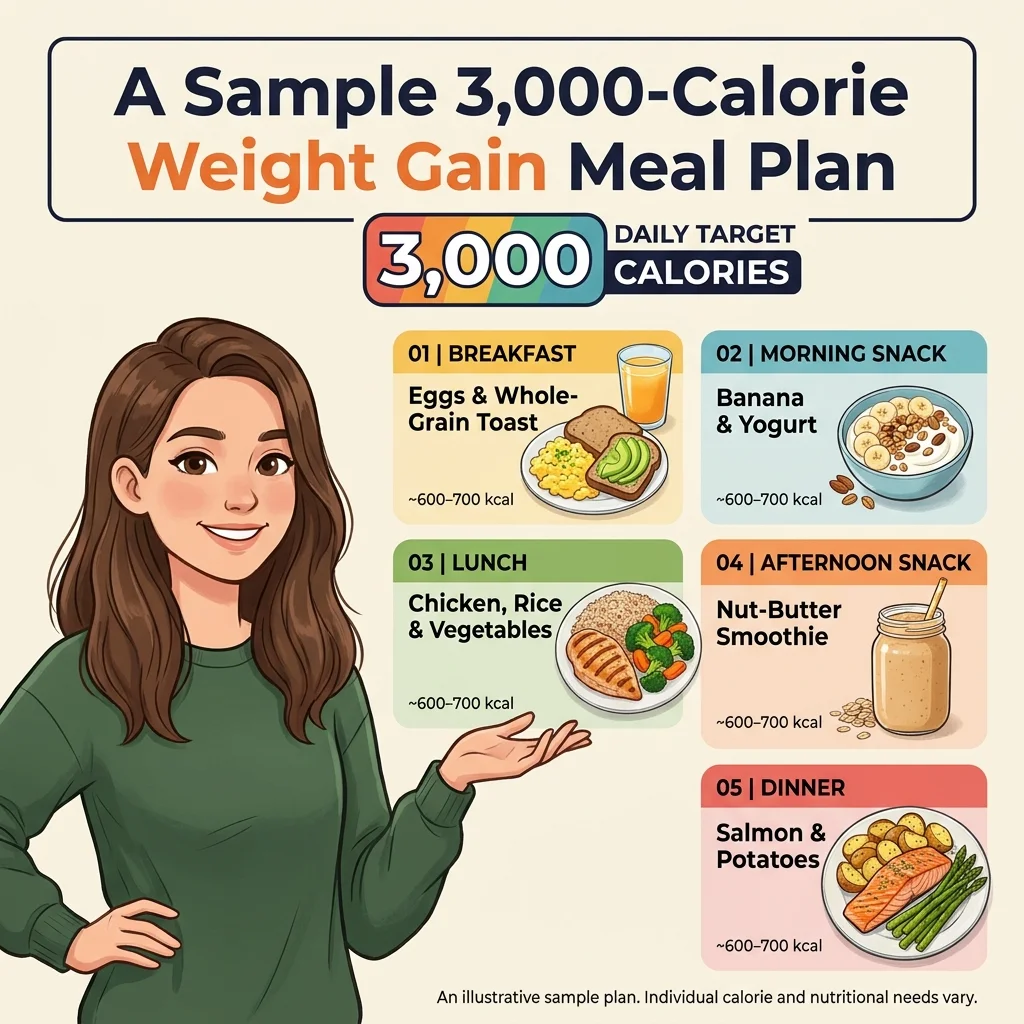
A structured weight gain meal plan can make it easier to consume enough calories consistently. The following example shows how you might distribute food throughout the day.
| Meal | Food and approximate portions | Calories |
| Breakfast | 3 eggs, 2 slices whole-grain bread, 1 banana, 250 ml milk | 650 |
| Morning snack | 30 g almonds, 2 dates, 150 g yogurt | 350 |
| Lunch | 1.5 cups cooked rice, 120 g chicken, vegetables, yogurt | 700 |
| Afternoon snack | Banana and peanut butter smoothie | 500 |
| Dinner | 250 g potatoes, 120 g fish or chicken, vegetables | 550 |
| Evening snack | 250 ml whole milk and peanut butter toast | 250 |
| Daily total | 3,000 |
Calorie values are estimates. Actual amounts depend on food brands, cooking methods, and serving sizes.
This is an example for someone whose calorie requirements are close to 3,000 calories. It is not a universal prescription. If your maintenance requirement is 2,000 calories, for example, you may not need to eat 3,000 calories to gain weight.
How to Adjust the Meal Plan to Your Needs
You can increase or decrease portions according to your calorie requirements.
If you struggle to finish your meals, try these adjustments:
- Add a tablespoon of peanut butter to your breakfast.
- Include an additional glass of milk between meals.
- Add olive oil to rice or cooked vegetables.
- Eat a handful of almonds as an afternoon snack.
- Prepare a banana and yogurt smoothie.
If you feel uncomfortably full, divide your food into smaller portions throughout the day.
How to Gain Muscle Instead of Just Body Fat

Many people who want to gain weight are actually interested in improving their overall physique.
They want stronger arms, broader shoulders, bigger legs, and more developed muscles rather than simply increasing their body fat.
The key is to combine a calorie surplus with resistance training.
Focus on Progressive Overload
Progressive overload means gradually increasing the challenge placed on your muscles.
You can do this by:
- Increasing the weight you lift.
- Performing additional repetitions.
- Completing more sets.
- Improving exercise technique.
- Gradually increasing training difficulty.
For example, if you can comfortably perform 10 push-ups, you might gradually work toward 12 or 15 repetitions.
You do not need to increase the difficulty every workout. Make changes gradually and prioritize good technique.
Train Different Muscle Groups
A balanced strength-training programme should target your major muscle groups.
| Muscle group | Example exercises |
| Chest | Push-ups and bench presses |
| Back | Pull-ups and dumbbell rows |
| Shoulders | Shoulder presses and lateral raises |
| Arms | Bicep curls and tricep extensions |
| Legs | Squats and lunges |
| Core | Planks and controlled abdominal exercises |
Beginners can start with two or three full-body sessions weekly. As they gain experience, they can adjust their programme according to their recovery and fitness goals.
Do Not Overdo Cardio
Cardiovascular exercise supports heart health and overall fitness. You do not need to eliminate it to gain weight.
However, long or frequent cardio sessions may increase your daily calorie requirements.
If you enjoy running, cycling, or playing sports, continue doing activities you enjoy. Make sure your food intake provides enough energy to cover your activity and support your weight-gain goals.
Beginner-Friendly Weekly Workout Plan for Weight Gain
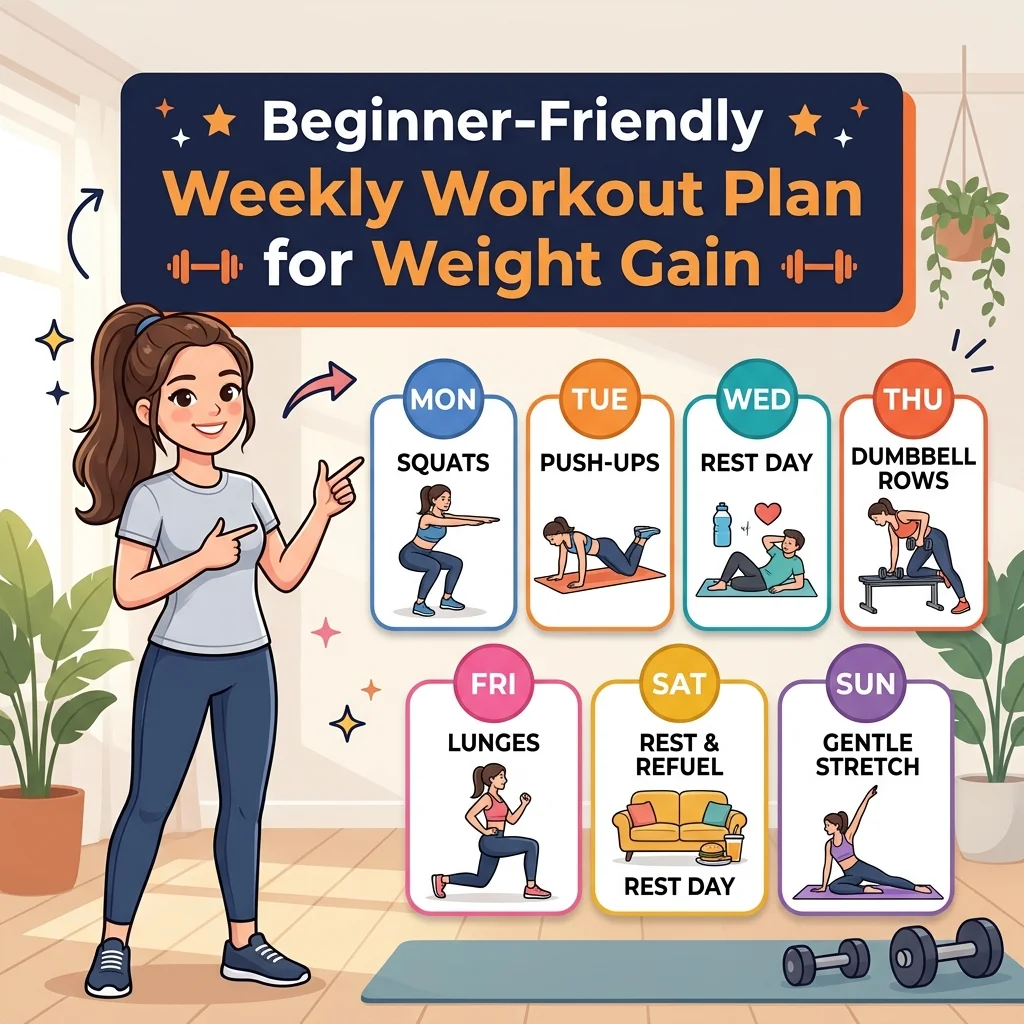
You do not need to spend hours in the gym every day to develop muscle. A simple, consistent programme can be effective when combined with proper nutrition and recovery.
Here is an example of a beginner-friendly weekly workout schedule.
| Day | Workout | Main exercises |
| Monday | Full-body strength | Squats, push-ups, dumbbell rows |
| Tuesday | Recovery | Light walking and stretching |
| Wednesday | Full-body strength | Lunges, shoulder presses, glute bridges |
| Thursday | Recovery | Gentle walking and mobility |
| Friday | Full-body strength | Squats, rows, push-ups, planks |
| Saturday | Light activity | Walking or cycling |
| Sunday | Rest | Recovery and sleep |
How Many Sets and Repetitions Should Beginners Do?
A beginner can start with two sets of approximately 8–12 repetitions for suitable exercises.
For exercises such as planks, begin with short holds and gradually improve your endurance.
Use weights that allow you to maintain good technique. If you experience pain, stop the exercise and seek appropriate guidance.
You can gradually increase the resistance as your strength improves.
The purpose of this routine is to stimulate muscle development without making exercise unnecessarily complicated.
How to Gain Weight With High Metabolism for Men

Men who struggle to gain weight may need to pay particular attention to their calorie intake, strength training, and daily activity.
However, there is no single weight-gain diet that works for every man. Individual requirements depend on height, weight, age, activity level, and health.
If you want to gain weight with high metabolism as a man, consider these practical strategies:
Eat substantial balanced meals: Include eggs, chicken, fish, rice, potatoes, milk, and other protein-rich foods.
Prioritize strength training: Exercises such as squats, bench presses, rows, and shoulder presses can support muscle development.
Increase calories gradually: Add nutritious snacks and larger portions instead of immediately making extreme changes to your diet.
Monitor your progress: Track your weight and strength to understand whether your routine is working.
For example, a man who performs physically demanding work may need more calories than someone who spends most of the day sitting.
How to Gain Weight With High Metabolism for Women
Women can also experience difficulty gaining weight because of genetics, appetite, activity levels, or individual energy requirements.
A healthy weight-gain strategy for women follows the same basic principles: sufficient calories, balanced nutrition, protein intake, and appropriate resistance training.
Helpful foods include:
- Eggs and dairy products.
- Chicken and fish.
- Lentils and chickpeas.
- Whole-grain bread and rice.
- Nuts and seeds.
- Bananas and avocados.
- Homemade smoothies.
Women should avoid comparing their calorie requirements with those of men or following extreme bulking diets.
Menstrual health, pregnancy, breastfeeding, hormonal conditions, and other individual factors may affect nutritional needs. Seek professional advice when these factors are relevant.
The goal should be to support healthy body weight, strength, and overall well-being rather than reaching an arbitrary number on the scale.
How to Gain Weight Without Increasing Too Much Body Fat
It is important to understand that gaining weight does not mean every additional kilogram will become muscle.
When you consume more calories than your body burns, some weight gain may come from muscle, fat, water, and stored carbohydrates.
If you want to prioritize muscle development, follow these strategies:
Maintain a Moderate Calorie Surplus
Avoid consuming far more calories than you need.
A modest surplus can support gradual weight gain without unnecessarily increasing your food intake.
Eat Enough Protein
Include protein sources such as eggs, chicken, fish, milk, yogurt, and beans in your meals.
Combine them with sufficient carbohydrates and healthy fats.
Perform Resistance Training
Train your major muscle groups consistently and gradually increase exercise difficulty.
Monitor Your Body Composition
Do not judge your progress by body weight alone.
You can also monitor:
- Changes in strength.
- Waist measurements.
- Muscle development.
- Exercise performance.
- Overall energy levels.
Remember that home body-fat measurements and smart scales can be inaccurate. Use them as rough estimates rather than definitive measurements.
Best Budget-Friendly Foods for Weight Gain
You do not need an expensive diet to gain weight. Many affordable foods provide the calories and nutrients needed to support healthy weight gain.
| Affordable food | Practical way to use it |
| Eggs | Boiled eggs, omelettes, and sandwiches |
| Rice | Combine with chicken, lentils, or beans |
| Milk | Drink between meals or make smoothies |
| Peanuts | Enjoy as a snack or add to homemade mixtures |
| Bananas | Add to oatmeal and smoothies |
| Potatoes | Prepare homemade curries or roasted potatoes |
| Lentils | Serve with rice or whole-wheat roti |
| Chickpeas | Prepare chickpea curry or snacks |
| Oats | Combine with milk, dates, and nuts |
| Dates | Enjoy with milk or yogurt |
An Affordable Daily Food Combination
A simple daily combination could include:
- Breakfast: Eggs, roti, and milk.
- Snack: Banana and peanuts.
- Lunch: Daal, rice, and yogurt.
- Afternoon snack: Dates and milk.
- Dinner: Chicken curry, potatoes, and roti.
- Evening snack: Homemade banana smoothie.
Adjust the quantities according to your energy requirements.
This approach makes healthy weight gain more accessible without relying on expensive imported supplements or packaged products.
Common Mistakes to Avoid When Trying to Gain Weight
Even when you follow a calorie-surplus diet, certain habits can make progress more difficult.
1. Eating Only Junk Food
Fast food, sweets, chips, and sugary drinks can increase your calorie intake. However, relying on these foods can leave your diet short of important nutrients.
Choose nutritious calorie-dense foods instead.
2. Skipping Meals
Skipping breakfast, lunch, or dinner can make it difficult to maintain a consistent calorie surplus.
Create a realistic eating schedule that works with your daily routine.
3. Depending Entirely on Protein Shakes
Protein shakes can be convenient, but they should not replace a balanced diet.
Whole foods provide a wider range of nutrients, including fibre, vitamins, and minerals.
4. Expecting Overnight Results
Healthy weight gain takes time. Your body needs consistent nutrition and appropriate training to develop muscle.
Avoid extreme eating plans that promise rapid changes.
5. Exercising Without Eating Enough
Strength training increases your body’s demand for energy and nutrients.
If you exercise regularly but fail to eat enough, you may struggle to recover and gain weight.
6. Ignoring Sleep
Poor sleep can affect your energy levels, exercise performance, and ability to maintain healthy routines.
Make sufficient rest part of your weight-gain strategy.
7. Taking Unverified Weight-Gain Supplements
Some products make exaggerated promises about increasing weight or accelerating muscle growth.
Avoid relying on unverified pills, powders, or appetite stimulants. Speak with a healthcare professional before taking supplements, particularly if you have an existing health condition or use medication.
How Long Does It Take to Gain Weight With High Metabolism?
There is no fixed timeline for gaining weight with a high metabolism.
Your progress depends on your starting weight, calorie intake, activity level, genetics, training routine, and overall health.
Some people notice gradual changes within a few weeks, while others need several months to achieve their desired results.
The most important factor is consistency.
For example, if you begin eating an additional 300 calories daily, maintain a balanced diet, and follow a suitable strength-training programme, you may gradually notice changes in your weight and strength.
How to Monitor Your Progress
Use these simple methods to evaluate your results:
- Weigh yourself once or twice a week.
- Compare weekly averages instead of daily measurements.
- Track your calorie intake when necessary.
- Record your strength-training progress.
- Monitor changes in your energy and appetite.
- Adjust your meal portions if your weight remains stable.
If you are not gaining weight after several weeks, review your food intake and activity level. Consider increasing your daily calories gradually.
If you are losing weight unexpectedly or experiencing unexplained symptoms, seek medical advice rather than simply eating more.
When Should You See a Doctor About Difficulty Gaining Weight?
Some people are naturally slim and have difficulty gaining weight because of genetics, appetite, or lifestyle factors.
However, persistent difficulty maintaining weight can sometimes indicate an underlying health problem.
Consider speaking with a healthcare professional if you experience:
- Unexplained or sudden weight loss.
- Persistent diarrhoea or digestive problems.
- Excessive thirst and frequent urination.
- Unusual sweating or a racing heartbeat.
- Persistent fatigue or weakness.
- Significant changes in appetite.
- Difficulty gaining weight despite consistently adequate food intake.
An overactive thyroid can increase energy expenditure and contribute to unexplained weight loss. Diabetes and certain digestive disorders can also affect body weight.
A healthcare professional can assess your symptoms and decide whether tests are necessary.
Can You Be Naturally Underweight?
Yes. Some people naturally have a smaller body frame or lower body weight because of genetic and individual differences.
For adults, a body mass index (BMI) below 18.5 is commonly classified as underweight. However, BMI is only a screening measure and cannot independently determine whether someone is healthy.
If you have always been naturally slim, your doctor can help assess your nutritional status and determine whether gaining weight would benefit your health.
Unexpected weight loss deserves medical attention, even if you previously had difficulty gaining weight.
NHS+1
Frequently Asked Questions About How to Gain Weight With High Metabolism
1. How can I gain weight quickly with high metabolism?
Start by consuming more calories than your body burns. Add approximately 300 to 500 calories to your usual daily intake, eat frequent meals, include protein-rich foods, and follow a strength-training routine. Avoid extreme weight-gain methods because gradual progress is generally more sustainable.
2. What should I eat to gain weight with high metabolism?
Include eggs, whole milk, rice, chicken, potatoes, bananas, peanut butter, oats, nuts, yogurt, and avocados. These foods provide a combination of calories, protein, carbohydrates, fats, and essential nutrients.
3. Can someone with a high metabolism gain muscle?
Yes. People with naturally high energy expenditure can build muscle through appropriate resistance training and sufficient nutrition. They may need to consume additional calories to support muscle growth and recovery.
4. How many calories should I eat to gain weight?
Your calorie requirements depend on your age, height, weight, sex, and activity level. A common starting point is to consume approximately 300 to 500 calories above your maintenance needs and monitor your progress.
5. Is drinking milk good for weight gain?
Yes. Whole milk provides protein, carbohydrates, fat, and calcium. Drinking it between meals or using it in smoothies can help increase your daily calorie intake.
6. How many meals should I eat to gain weight?
There is no mandatory number of meals. However, five or six smaller meals may be helpful if you have a small appetite. You can also gain weight with three larger meals and additional snacks if that schedule suits you better.
7. Does eating bananas help you gain weight?
Bananas provide carbohydrates and calories. They can support weight gain when included in a diet that provides more calories than your body uses. Combining bananas with milk, oats, yogurt, or peanut butter increases the nutritional and calorie content of your snacks.
8. Should I exercise if I want to gain weight?
Yes. Strength training is particularly useful because it stimulates muscle growth. You can also continue moderate cardiovascular exercise for general health while adjusting your food intake to meet your energy requirements.
9. Can I gain weight without supplements?
Absolutely. You can gain weight through regular meals containing eggs, dairy products, meat, fish, beans, rice, potatoes, nuts, and other nutritious foods. Supplements are not essential for everyone.
10. Why am I eating a lot but not gaining weight?
You may be overestimating your calorie intake, underestimating your activity level, or eating less consistently than you realize. Genetics and medical conditions can also influence body weight. Track your food intake and consider speaking with a healthcare professional if the problem continues.
11. Can I gain weight with high metabolism without going to the gym?
Yes. You can start with bodyweight exercises such as push-ups, squats, lunges, and planks at home. Combine these exercises with sufficient calories and protein. However, gradually increasing resistance is important for continued muscle development.
12. Are weight-gain supplements necessary?
No. Most people can meet their nutritional requirements through regular food. Protein powder can be convenient when you struggle to obtain enough protein from meals, but it is not essential for gaining weight.
Conclusion
Learning how to gain weight with high metabolism requires patience, consistency, and a balanced approach to nutrition. The most important step is to understand your daily calorie requirements and consume enough energy to support gradual weight gain.
Start by eating regular meals and adding nutritious snacks between them. Include calorie-dense foods such as peanut butter, whole milk, nuts, eggs, rice, bananas, and avocados. Make protein a regular part of your meals and follow a strength-training programme to support muscle development.

I am William Harris, a passionate writer dedicated to creating informative, engaging, and valuable content for readers around the world. I enjoy researching different topics and sharing well-crafted articles that provide useful insights, practical tips, and meaningful information. I am committed to delivering high-quality content with accuracy, clarity, and a reader-focused approach. Through my writing, I aim to educate, inspire, and help people discover new ideas.