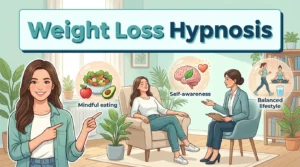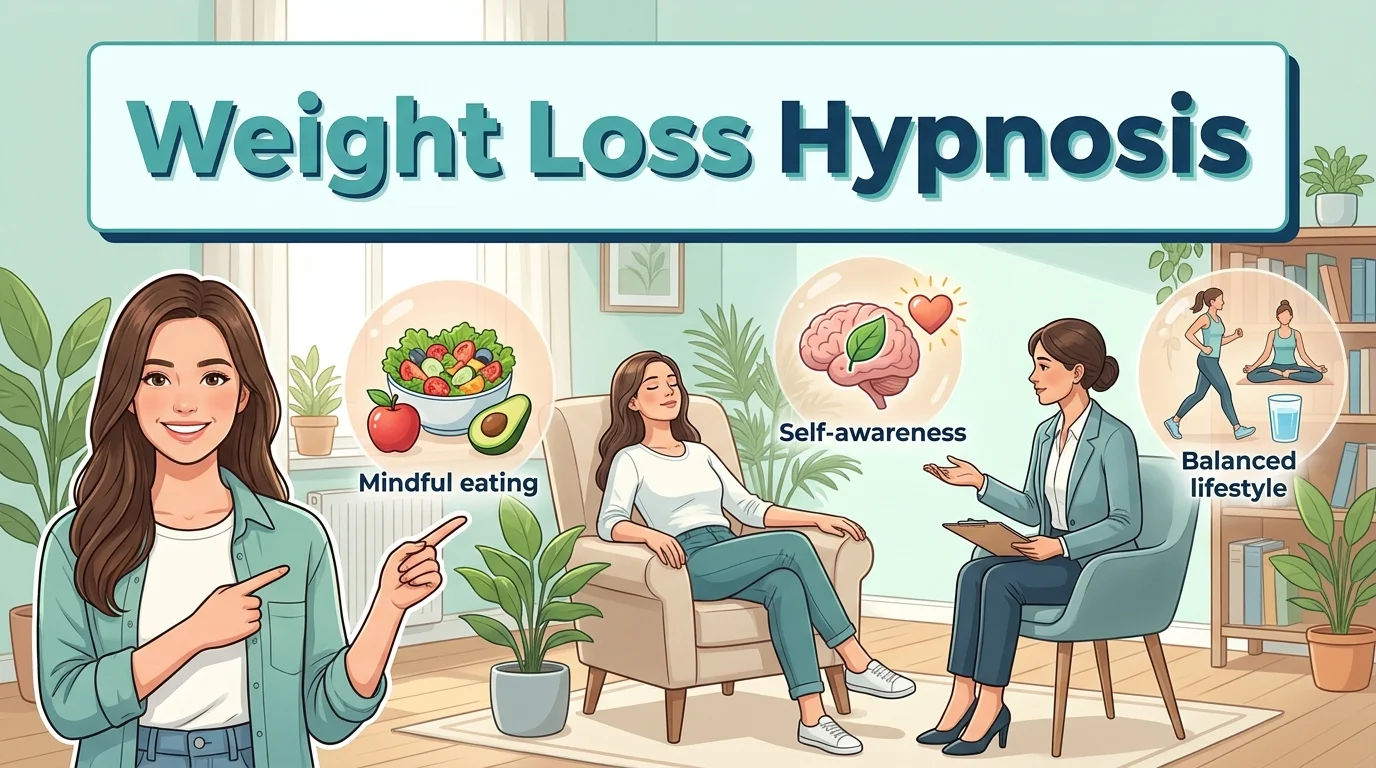
Losing weight can be challenging, especially when food cravings, emotional eating, stress, and unhealthy routines make it difficult to maintain consistent habits. Many people try different diets and exercise programs but struggle to achieve lasting results. Although nutrition and physical activity remain important parts of weight management, changing the behaviors behind eating habits can also make a difference. This is where weight loss hypnosis has gained attention as a complementary approach.
Weight loss hypnosis uses relaxation, focused attention, guided imagery, and positive suggestions to encourage healthier attitudes toward food and lifestyle choices. Instead of directly burning calories or breaking down body fat, it focuses on the psychological patterns that may influence eating behavior. For example, someone who frequently eats when feeling stressed may use hypnotherapy to recognize emotional triggers and practice healthier ways to respond.
Some people explore hypnosis for weight loss to manage food cravings, improve portion awareness, reduce mindless snacking, and develop greater motivation. Others combine professional hypnotherapy with balanced nutrition, regular exercise, and behavioral counseling.
However, an important question remains: Does weight loss hypnosis really work? Can self-hypnosis help you lose weight? Are guided recordings effective, and what does scientific research actually say?
This comprehensive guide explains how weight loss hypnosis works, its potential benefits, different techniques, scientific evidence, safety considerations, costs, and practical ways to incorporate it into a healthy weight management plan.
What Is Weight Loss Hypnosis?
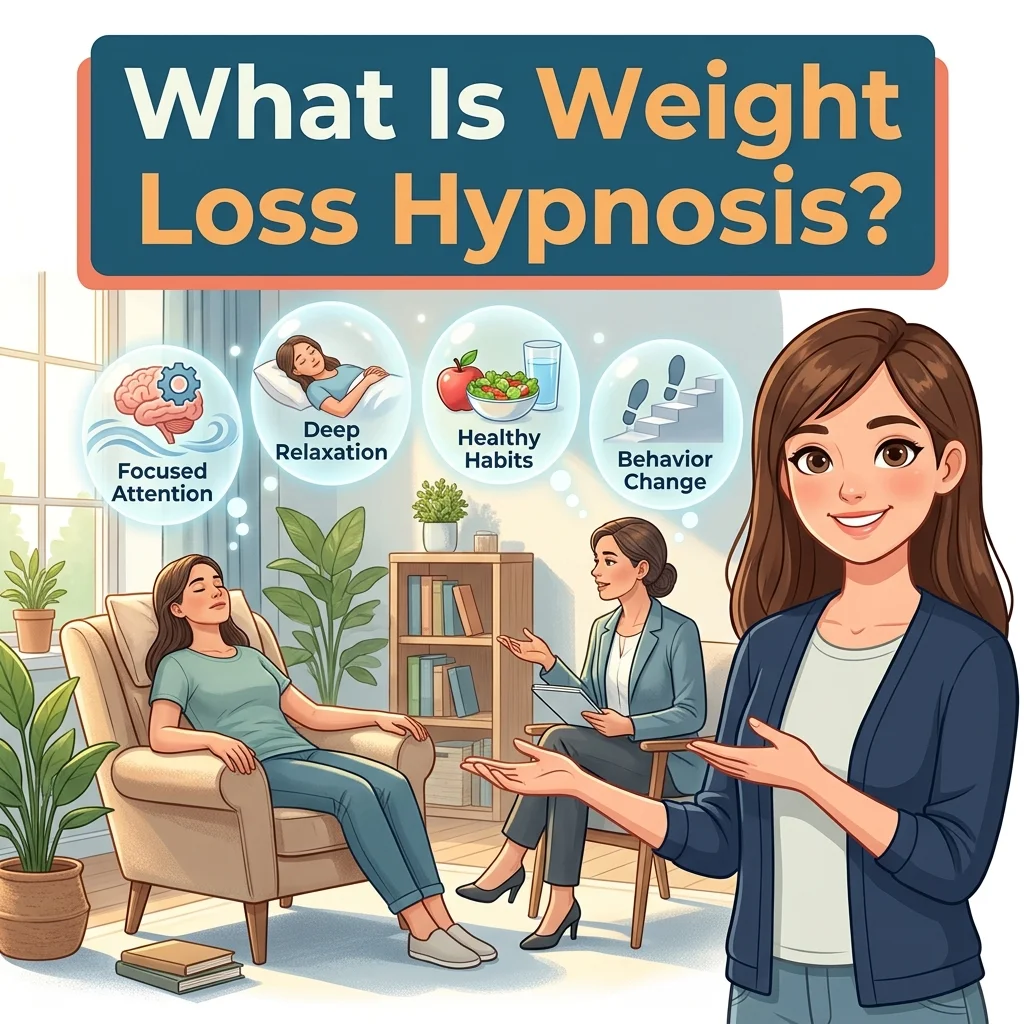
Weight loss hypnosis is a complementary behavioral technique that uses hypnotic suggestions to encourage healthier eating patterns and lifestyle decisions. During a session, a trained practitioner guides an individual through relaxation exercises and focused attention. The process may also include visualization and positive suggestions related to food, hunger, motivation, and personal goals.
The main purpose of hypnosis for weight loss is to help people become more aware of automatic behaviors that influence their eating habits.
For example, imagine someone who regularly eats snacks while watching television. They may continue eating even when they are no longer hungry because the activity has become part of their daily routine. Hypnotherapy may help them recognize this connection and practice more intentional eating habits.
Similarly, someone who turns to sugary foods whenever they feel anxious may explore healthier ways to manage those emotions.
Weight loss hypnosis does not put someone under another person’s control. Most people remain aware of their surroundings during hypnosis and can respond or stop the session if they feel uncomfortable.
Common goals of weight loss hypnotherapy include:
- Developing greater awareness of hunger and fullness.
- Recognizing emotional eating triggers.
- Reducing mindless snacking.
- Practicing healthier responses to food cravings.
- Improving motivation for regular physical activity.
- Encouraging balanced food choices.
- Building a healthier relationship with eating.
- Supporting consistent lifestyle changes.
It is important to understand that hypnosis does not directly burn fat, accelerate metabolism, or guarantee a specific number on the weighing scale. Its possible value comes from supporting behavioral changes that may contribute to a healthier lifestyle.
How Does Weight Loss Hypnosis Work?
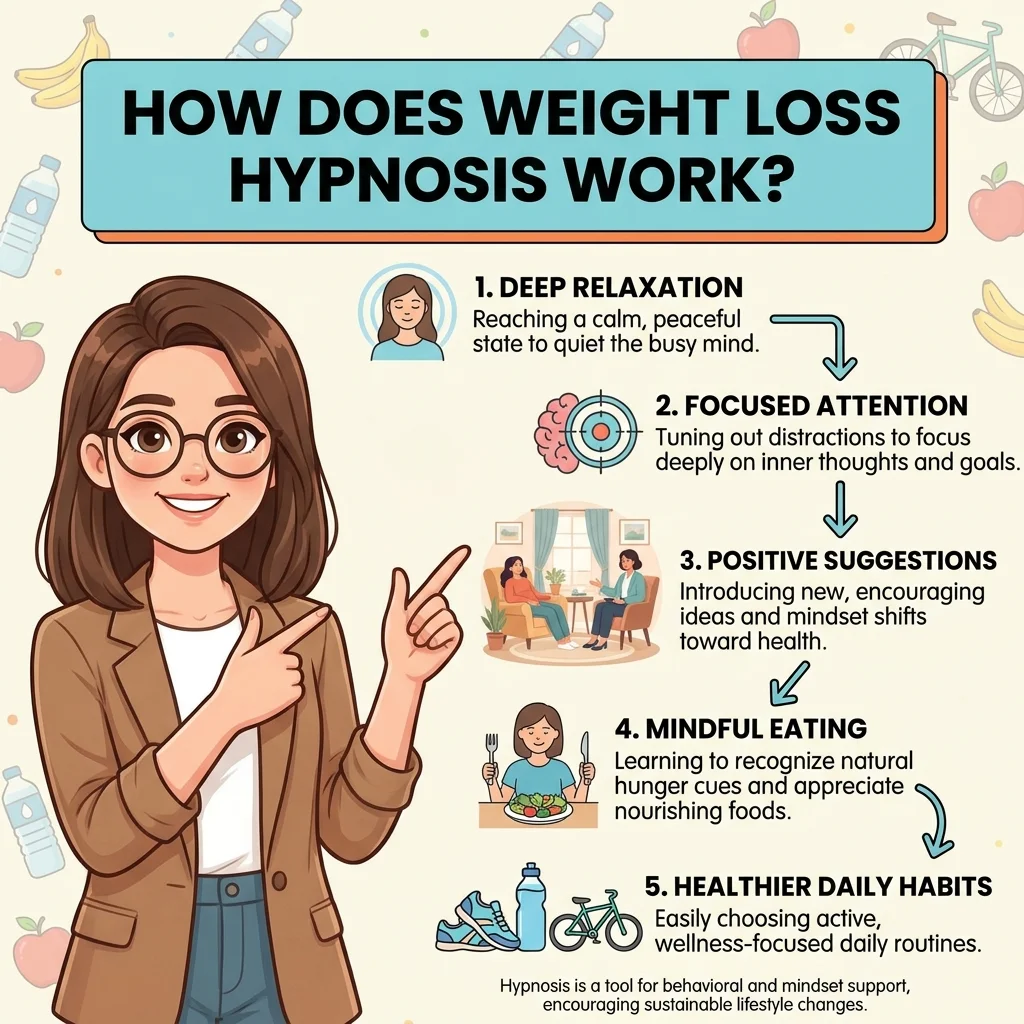
Understanding how weight loss hypnosis works can help you decide whether it is worth exploring.
Eating habits often develop through repetition. Over time, certain situations become associated with food. Someone might eat whenever they feel bored, snack after dinner, or automatically purchase sweets when visiting a particular store.
These behaviors can continue even when physical hunger is not present.
Hypnosis attempts to address some of these patterns through relaxation, focused attention, positive suggestions, and mental rehearsal.
Relaxation and Focused Attention
A hypnosis session usually begins with a relaxation exercise.
The practitioner may ask you to sit comfortably, close your eyes, and breathe naturally. You might also be guided to focus on a calming image or a particular sensation.
The purpose is to reduce distractions and encourage concentration.
People experience hypnosis differently. Some feel deeply relaxed, while others describe it as a calm state of focused attention. You do not have to become unconscious or lose control.
Identifying Unhealthy Eating Behaviors
Once you are comfortable, the practitioner may guide you through situations that influence your eating habits.
For example, they might encourage you to think about:
- Eating when you feel stressed or frustrated.
- Consuming snacks without noticing how much you eat.
- Feeling uncomfortable when leaving food unfinished.
- Eating quickly without recognizing fullness.
- Craving particular foods during specific situations.
Recognizing these patterns can help you identify behaviors you want to change.
Positive Hypnotic Suggestions
The practitioner may introduce suggestions related to your personal goals.
For example, someone who eats too quickly might practice the idea of slowing down and enjoying each bite. Another person may focus on recognizing emotional triggers before reaching for food.
Suggestions might include:
- I can recognize when I am physically hungry.
- I can enjoy meals without rushing.
- I can make balanced food choices.
- I can respond to stress without automatically turning to food.
- I can develop healthier habits gradually.
These suggestions are intended to reinforce personal goals rather than control someone’s decisions.
Guided Visualization
Guided imagery involves mentally picturing yourself performing healthier behaviors.
You might imagine preparing a nutritious meal, choosing a satisfying portion, taking a walk, or responding calmly when a craving appears.
The purpose is to mentally rehearse actions that you want to practice in everyday life.
Reinforcing Healthy Habits
Some practitioners encourage clients to continue practicing relaxation and positive suggestions between appointments.
For example, you might pause before eating, check whether you are hungry, and notice how you feel throughout a meal.
These techniques can support self-awareness, although they do not guarantee weight loss.
Does Weight Loss Hypnosis Really Work? What Research Says
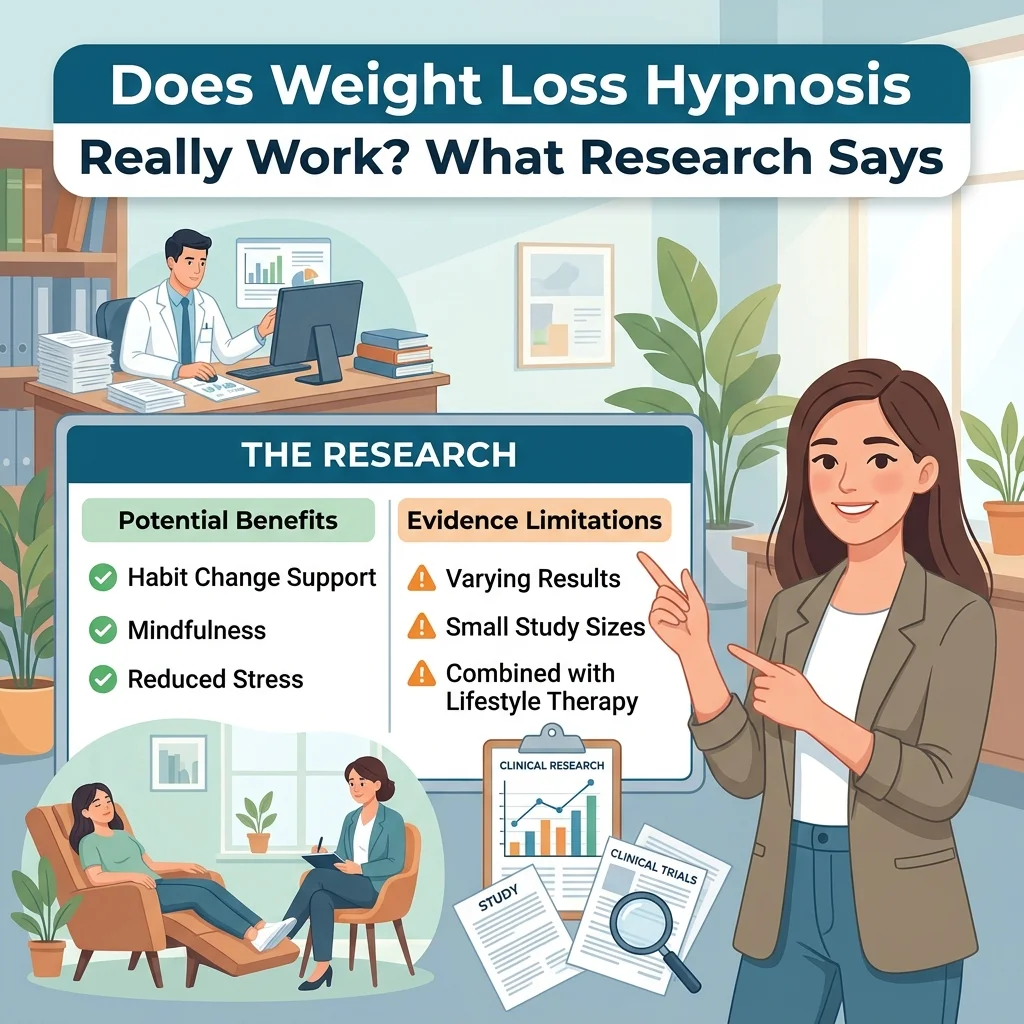
One of the most important questions is whether weight loss hypnosis actually produces measurable results.
The scientific evidence is promising in some areas but remains limited. Certain studies suggest that hypnosis may improve eating behavior or provide additional support when combined with lifestyle interventions. Other studies have not found significant differences in weight loss.
It is therefore more accurate to describe hypnosis as a possible complementary technique rather than an established standalone obesity treatment.
2018 Randomized Controlled Trial
A randomized controlled trial published in Obesity in 2018 examined self-hypnosis among 120 adults with severe obesity.
All participants received individualized dietary recommendations and guidance about exercise and behavior. One group also received hypnosis sessions and learned self-hypnosis techniques.
After one year, the researchers found similar average weight loss in both groups. The hypnosis group lost approximately 6.5 kg, while the control group lost approximately 5.6 kg. The difference was not statistically significant.
However, researchers observed improvements in satiety, quality of life, and certain inflammatory measurements in the hypnosis group. Participants who regularly practiced self-hypnosis also showed encouraging results in additional analyses.
These findings suggest that hypnosis may have potential benefits beyond the number on the scale, but they do not establish that everyone will lose more weight through hypnosis.
Research details: 2018 Self-Hypnosis Randomized Controlled Trial.
2022 Study Comparing Hypnosis With Conventional Weight Management
A 2022 randomized study published in the American Journal of Clinical Hypnosis investigated whether adding hypnotherapy to conventional weight management could improve results.
The researchers included 104 participants who received health education involving diet, exercise, and behavioral recommendations. The intervention group also received three hypnotherapy sessions over 12 weeks.
Average weight reduction was approximately 4.61% in the hypnosis group and 3.04% in the control group.
The difference favored the hypnosis group. However, the study was relatively short, and body fat percentage and waist circumference did not show significant improvements.
The findings are encouraging but require confirmation through larger and longer studies.
Research details: Does Hypnosis Result in Greater Weight Loss Compared to Conventional Approach?.
2022 Audio Self-Hypnosis Pilot Study
Another study published in PeerJ in December 2022 investigated whether listening to an audio self-hypnosis recording could support weight loss.
The randomized pilot trial included adults with higher-weight person or obesity who listened to either a self-hypnosis recording or a control audio recording.
Forty-six participants completed the three-week follow-up.
The researchers did not find a statistically significant difference in weight loss between the groups. They also found no significant association between self-hypnosis and progression through the stages of behavioral change.
The researchers recommended larger studies with longer follow-up periods.
Research details: Audio Self-Hypnosis and Weight Loss Study.
What Do These Findings Mean?
Taken together, these studies show that weight loss hypnosis deserves further investigation, particularly as an addition to established lifestyle interventions.
However, the results are not consistent enough to establish it as an effective standalone treatment.
Some people may find hypnosis useful for improving awareness, motivation, and eating behaviors. Others may experience little or no benefit.
The most sensible approach is to consider hypnosis an optional support technique rather than a replacement for evidence-based weight management.
Potential Benefits of Weight Loss Hypnosis

Although hypnosis cannot guarantee weight reduction, it may offer several psychological and behavioral benefits.
The following are potential advantages, not guaranteed clinical outcomes.
Better Awareness of Eating Habits
Many people eat without paying attention to their hunger or fullness signals.
For example, someone might snack while working, watch television during dinner, or continue eating simply because food remains on the plate.
Hypnosis may encourage greater awareness of these automatic behaviors.
You might become more conscious of your eating patterns and recognize situations in which you consume food without physical hunger.
Support for Emotional Eating
Emotional eating happens when someone uses food to respond to feelings rather than physical hunger.
Stress, boredom, frustration, sadness, and loneliness can sometimes trigger a desire to eat.
Hypnosis for emotional eating may help individuals identify these triggers and consider alternative coping strategies.
For example, someone who usually eats chocolate after a stressful day might practice taking a walk, writing in a journal, or speaking with a trusted person instead.
People experiencing persistent emotional eating or wallow eating may need additional psychological support.
Improved Motivation
Making long-term lifestyle changes requires consistency.
However, motivation can decrease when progress seems slow or everyday responsibilities become overwhelming.
Hypnosis sessions may include suggestions that reinforce personal goals and encourage healthier decisions.
For example, someone might mentally rehearse preparing meals at home, taking regular walks, or returning to a healthy routine after a difficult day.
Greater Confidence
Negative thoughts can make lifestyle changes feel difficult.
Someone might repeatedly tell themselves that they cannot manage cravings or will never maintain a healthy routine.
Hypnotherapy may use positive suggestions to encourage a more constructive mindset.
This does not mean that positive thinking automatically causes weight loss. Instead, it may help some individuals approach challenges with greater confidence.
Encouragement of Mindful Eating
Mindful eating involves paying attention to the experience of eating.
It includes noticing taste, texture, hunger, fullness, and satisfaction.
Hypnosis may encourage people to slow down during meals and become more aware of their eating experiences.
This can be useful for individuals who frequently eat while distracted or rush through meals.
Support for Long-Term Lifestyle Changes
Healthy weight management requires sustainable habits.
Hypnosis may help reinforce personal commitments to balanced meals, regular movement, adequate sleep, and consistent routines.
However, maintaining these behaviors still requires practical planning and ongoing effort.
Different Types of Hypnosis for Weight Loss

There are several ways to experience hypnosis for weight management. The main differences involve how the sessions are delivered and how much professional support is available.
Professional Weight Loss Hypnotherapy
Professional hypnotherapy involves working with a trained practitioner who guides you through structured sessions.
The practitioner may first discuss your eating habits, lifestyle, goals, and previous weight management experiences.
Sessions can then focus on specific challenges.
For example, someone who struggles with stress-related eating might work on recognizing emotional triggers. Another person may focus on portion awareness or motivation.
Professional support can also help you understand whether hypnosis is appropriate for your circumstances.
Self-Hypnosis for Weight Loss
Self-hypnosis for weight loss involves practicing relaxation and positive suggestions independently.
People may learn these techniques during professional sessions or use suitable self-help resources.
A typical practice involves finding a comfortable environment, relaxing your body, focusing your attention, and repeating realistic suggestions.
Self-hypnosis can be convenient because it does not require an appointment every time you want to practice.
However, research has not established that self-hypnosis alone consistently produces significant weight loss.
Guided Hypnosis for Weight Loss
Guided hypnosis for weight loss uses an audio recording or another guided format to lead listeners through relaxation and positive suggestions.
These recordings often focus on:
- Managing food cravings.
- Improving motivation.
- Practicing mindful eating.
- Developing portion awareness.
- Recognizing emotional eating.
- Building confidence in healthy routines.
Guided recordings may be convenient for people who prefer practicing at home.
However, their effectiveness varies, and listening to an audio session does not guarantee a particular result.
Weight Loss Hypnosis Recordings
Weight loss hypnosis recordings are available through websites, mobile applications, and audio platforms.
Some recordings are designed for relaxation, while others focus on specific eating behaviors.
Before choosing one, consider the creator’s qualifications, the recording’s purpose, and whether its claims are realistic.
Avoid recordings that promise rapid weight loss, eliminate all cravings, or encourage extreme food restriction.
Virtual Gastric Band Hypnosis
Virtual gastric band hypnosis is a technique that uses suggestions and guided imagery to make someone imagine having undergone gastric band surgery.
The idea is to encourage smaller portions and greater satisfaction with meals.
However, this procedure does not involve actual surgery or physically placing a band around the stomach.
A 2016 pilot investigation involving 30 participants compared virtual gastric band hypnotherapy with relaxation hypnotherapy. The researchers found no significant difference in weight loss between the two approaches.
Therefore, virtual gastric band hypnosis should not be considered equivalent to bariatric surgery or a proven obesity treatment.
Research details: Virtual Gastric Band Hypnotherapy Study.
Professional Hypnotherapy vs. Self-Hypnosis vs. Audio Recordings
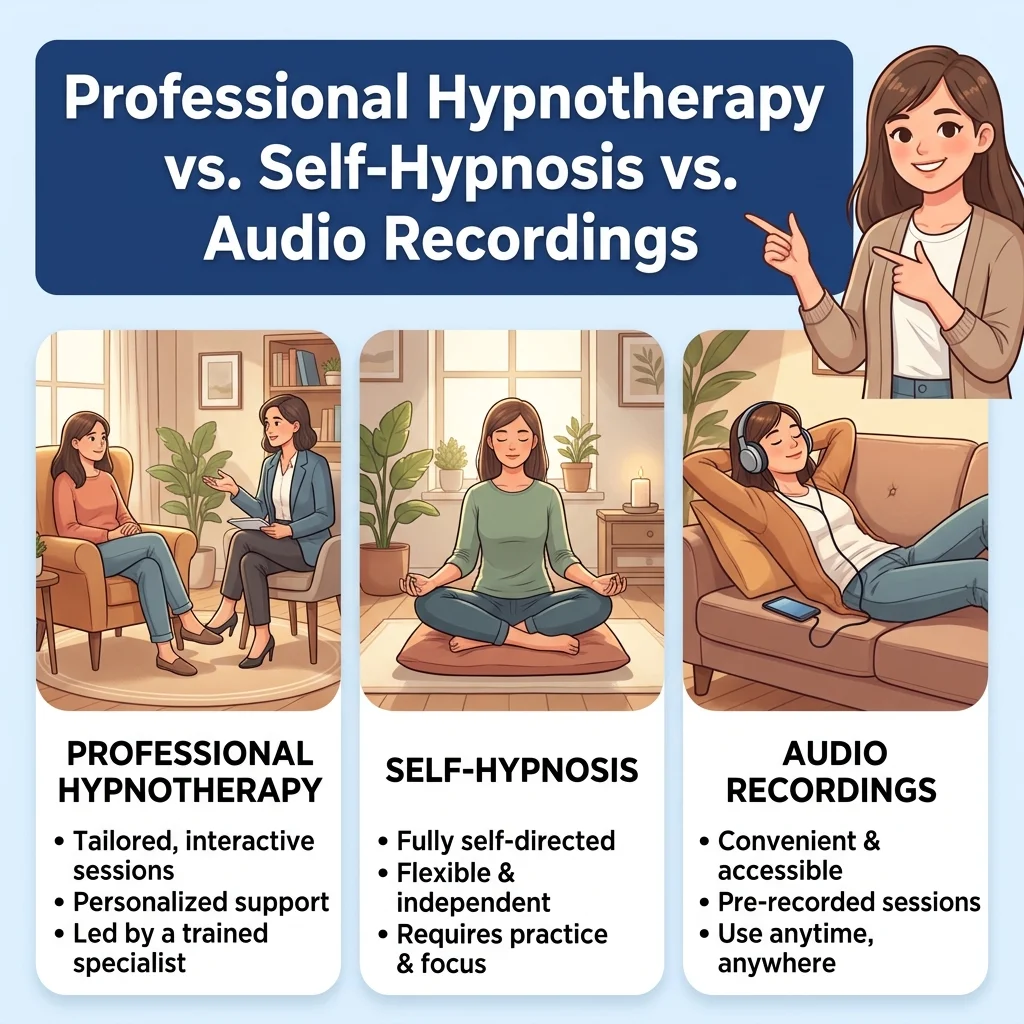
Choosing the right approach depends on your preferences, goals, and need for professional support.
| Feature | Professional Hypnotherapy | Self-Hypnosis | Audio Recordings |
| Guidance | Trained practitioner | Independent practice | Recorded narrator |
| Personalization | Can be tailored to individual needs | Depends on your practice | Usually general |
| Convenience | Requires appointments | Flexible | Flexible |
| Cost | Usually involves session fees | Often low cost | Free or paid |
| Feedback | Available from practitioner | Self-assessment | Usually limited |
| Scientific evidence for weight loss | Limited and mixed | Limited and mixed | Limited |
Professional hypnotherapy may be useful for people who want individualized guidance. Self-hypnosis and recordings may suit those who prefer independent relaxation exercises.
None of these approaches has been established as a guaranteed method of weight loss.
Can Hypnosis Reduce Appetite and Food Cravings?

Food cravings are strong desires to eat particular foods, even when you are not physically hungry.
They may be influenced by emotions, habits, environmental cues, sleep patterns, and individual preferences.
For example, someone might crave chocolate after a stressful workday or want salty snacks whenever they sit down to watch television.
Hypnosis may help some people become more aware of these triggers.
A session might encourage you to pause when a craving appears, identify what triggered it, and consider whether eating is actually what you need.
You might also practice responding to cravings without immediately acting on them.
However, hypnosis cannot guarantee that cravings will disappear or reliably suppress appetite.
Cravings are a normal part of human eating behavior. You do not need to eliminate every favorite food to develop healthier habits.
If you experience persistent or unusual changes in appetite, consult a healthcare professional to investigate possible underlying causes.
What Happens During a Weight Loss Hypnosis Session?
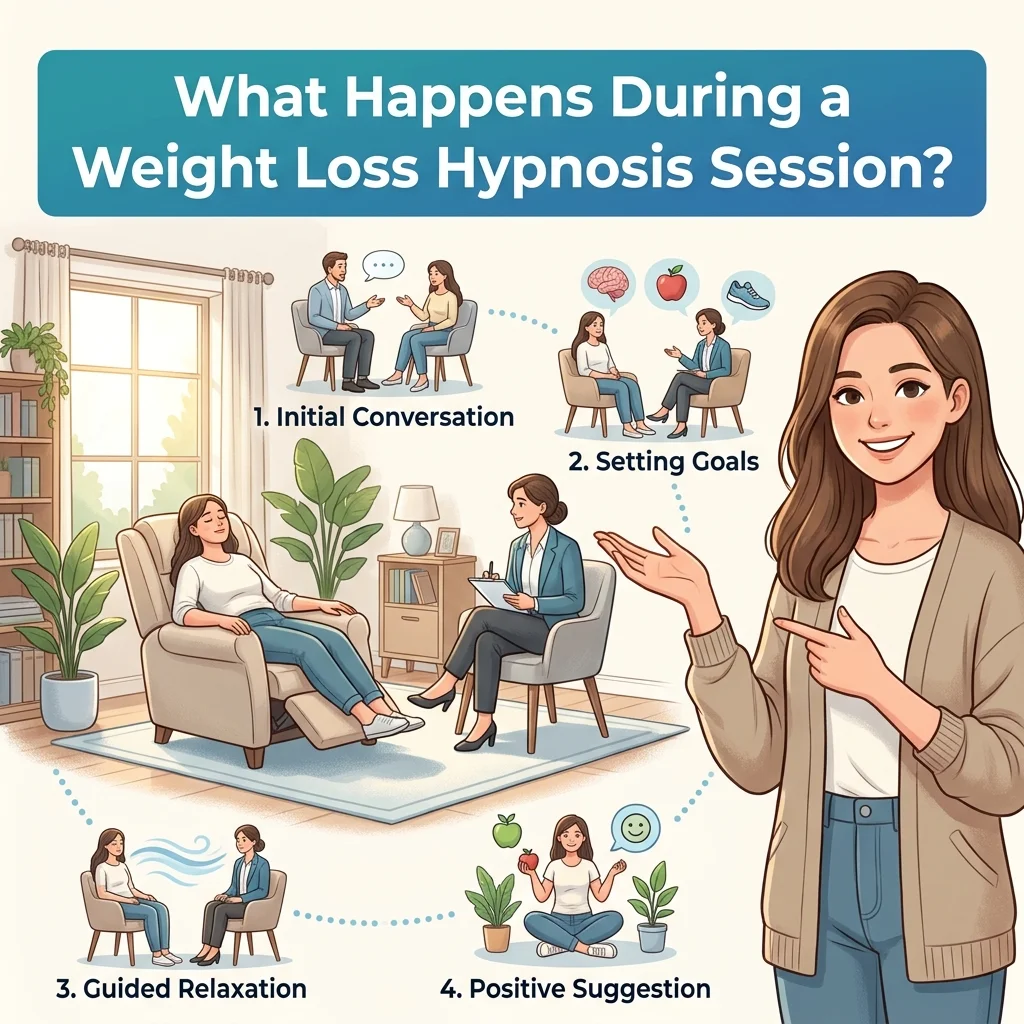
A professional weight loss hypnosis session usually involves several stages.
The exact process depends on the practitioner, your goals, and the techniques being used.
Initial Consultation
The practitioner discusses your eating habits, lifestyle, goals, and challenges.
You may talk about stress-related eating, food cravings, previous diets, and situations in which you struggle to maintain healthy habits.
This conversation helps establish whether hypnosis is an appropriate option.
Relaxation and Induction
The session may begin with breathing exercises, calming instructions, and focused attention.
The practitioner guides you toward a relaxed state.
You remain aware and can communicate if you feel uncomfortable.
Therapeutic Suggestions
Once you are relaxed, the practitioner introduces suggestions related to your goals.
These may focus on mindful eating, recognizing hunger, responding to cravings, and developing confidence in healthier choices.
Guided Visualization
You may be asked to imagine yourself following a healthier routine.
For example, you could picture yourself preparing a nutritious breakfast, enjoying a balanced lunch, or taking a walk after dinner.
Returning to Normal Awareness
At the end of the session, the practitioner gradually guides you back to your usual level of awareness.
You may feel relaxed, refreshed, or simply normal.
Reviewing Your Experience
During follow-up appointments, you may discuss which suggestions felt useful and whether you noticed changes in your behavior.
There is no scientifically established number of sessions that guarantees weight loss.
How to Practice Self-Hypnosis for Weight Loss
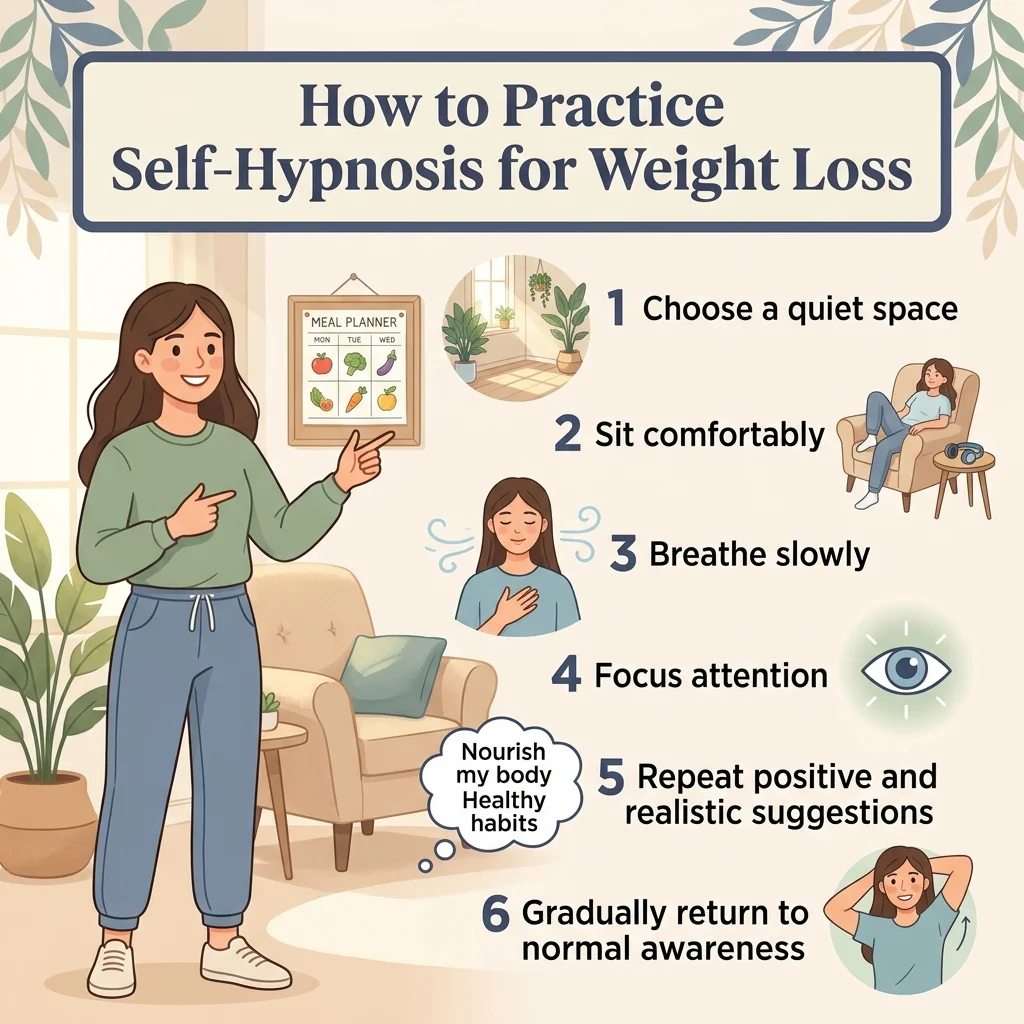
If you prefer independent practice, self-hypnosis can be a way to explore relaxation and positive mental suggestions.
Although it is not a proven standalone weight loss treatment, some people find it useful as part of a broader behavior-change routine.
Here is a simple practice you can try.
Step 1: Find a Comfortable Place
Choose a quiet environment where you can sit comfortably without unnecessary interruptions.
Avoid practicing when you need to drive, operate machinery, or concentrate on another important activity.
Step 2: Choose One Realistic Goal
Focus on a specific behavior you want to improve.
For example, you might want to:
- Eat more slowly.
- Reduce distracted snacking.
- Recognize emotional eating triggers.
- Become more aware of fullness.
- Maintain a consistent walking routine.
Choosing one goal makes the exercise more focused.
Step 3: Relax Your Body
Sit comfortably and take several slow, natural breaths.
Allow your shoulders, hands, and facial muscles to relax.
Do not force your breathing or hold your breath.
Step 4: Focus Your Attention
Imagine a peaceful place, such as a quiet garden, a beach, or a comfortable room.
Focus on the details of this mental image.
If your attention wanders, gently bring it back.
Step 5: Repeat Positive Suggestions
Use realistic statements that reflect the behavior you want to practice.
Examples include:
- I can recognize when I am physically hungry.
- I can take my time while eating.
- I can enjoy food without rushing.
- I can make balanced choices without unnecessary restrictions.
- I can respond to stress in ways that do not involve food.
- I can build healthy habits one step at a time.
Step 6: Visualize a Healthy Decision
Imagine yourself responding to a familiar challenge in a positive way.
For example, picture yourself feeling stressed, pausing for a moment, and choosing a helpful coping strategy instead of automatically reaching for a snack.
Step 7: Return to the Present
Gradually bring your attention back to the room.
Open your eyes when you feel ready and continue with your day.
Remember that self-hypnosis is a relaxation and mental practice, not a substitute for nutrition guidance or medical treatment.
How Much Does Weight Loss Hypnosis Cost?
The cost of weight loss hypnosis depends on several factors, including the practitioner’s qualifications, location, experience, session length, and service format.
Professional hypnotherapy generally involves a fee for each appointment. Some practitioners also offer packages that include multiple sessions.
Self-hypnosis recordings and digital resources may be available at little or no cost, while some guided programs require payment.
Because pricing varies significantly between providers and countries, there is no reliable universal price for weight loss hypnotherapy.
Before purchasing a service, consider the following questions:
- What qualifications does the practitioner have?
- How long does each session last?
- What techniques will be used?
- Is the program personalized?
- Are follow-up appointments included?
- What is the cancellation or refund policy?
- Are there additional charges?
- Does the provider make realistic claims about results?
Avoid expensive programs that guarantee dramatic weight loss or pressure you into purchasing large packages.
A higher price does not automatically mean better treatment or stronger scientific evidence.
Weight Loss Hypnosis Before and After: What Results Should You Expect?
People searching for weight loss hypnosis before and after results often want to know how much weight they can realistically lose.
However, there is no standard result that applies to everyone.
Some individuals may notice improvements in their awareness of eating habits. Others may become more confident about managing stressful situations without automatically reaching for food.
These behavioral changes do not necessarily produce measurable weight loss.
Weight changes depend on several factors, including:
- Overall food intake.
- Physical activity.
- Sleep quality.
- Medical conditions.
- Medications.
- Genetics.
- Long-term lifestyle habits.
- Consistency with healthy behaviors.
Before-and-after photographs can also be misleading because lighting, clothing, posture, and photography angles may create the impression of changes that are not representative of actual results.
If you explore hypnosis, focus on meaningful behavioral improvements rather than expecting a dramatic physical transformation.
A healthcare professional can help you monitor appropriate health indicators and establish realistic weight management goals.
Can Hypnosis Help Prevent Weight Regain?
Maintaining weight loss can be challenging because successful weight management involves more than reaching a particular number on the scale.
People may return to previous habits when they experience stress, changes in routine, emotional difficulties, or reduced motivation.
Hypnosis may help some individuals reinforce the behaviors they want to maintain.
For example, someone who has developed a habit of eating balanced meals might use relaxation exercises to reconnect with that routine during a stressful period.
Similarly, guided suggestions may encourage individuals to respond constructively after setbacks rather than abandoning their entire plan.
However, there is insufficient evidence to establish hypnosis as a reliable method for preventing weight regain.
Long-term weight management generally requires sustainable nutrition, physical activity, behavioral support, and appropriate medical care when necessary.
Are Weight Loss Hypnosis Apps and Online Recordings Worth Trying?
Digital hypnosis resources make guided relaxation more accessible.
Many applications and websites offer recordings focused on appetite awareness, emotional eating, motivation, and healthy habits.
They may be convenient for people who want to practice independently.
However, not every application or recording is based on clinical research.
A review of self-help approaches for obesity treatment highlighted concerns about the limited scientific evidence behind many hypnosis applications and online resources.
Before choosing an app or recording, consider these factors:
Creator Qualifications: Check whether the person providing the recording has relevant professional training.
Clear Purpose: Choose a program that explains which behavior it aims to support.
Realistic Claims: Avoid products promising guaranteed weight loss or permanent elimination of cravings.
Healthy Messaging: Prefer resources that encourage balanced eating and positive body image.
Privacy: Review the app’s privacy policy before sharing personal or health-related information.
A recording can be a convenient relaxation resource, but it should not replace professional support when you need medical or psychological care.
Is Weight Loss Hypnosis Safe?
Hypnosis is generally considered a low-risk complementary technique when practiced appropriately by a trained professional.
However, it is not suitable for every person or situation.
The Mayo Clinic notes that hypnosis may not be safe for some people with severe mental illness. Possible unwanted reactions include dizziness, headaches, nausea, sleepiness, anxiety, emotional distress, and sleep problems.
People with significant psychological conditions or a history of trauma should discuss hypnosis with an appropriate healthcare professional before beginning.
Additional precautions include:
- Choose a practitioner with suitable training and professional credentials.
- Discuss relevant medical and psychological concerns before treatment.
- Do not stop prescribed medication because of hypnosis.
- Avoid programs that encourage extreme dieting.
- Do not use hypnosis as a replacement for eating disorder treatment.
- Stop a session if you experience significant discomfort.
- Never practice hypnosis while driving or operating machinery.
Hypnosis should support your well-being rather than encourage shame, fear, or unhealthy attitudes toward food.
For more information, see the Mayo Clinic’s guide to hypnosis.
Who May Benefit From Weight Loss Hypnosis?
Weight loss hypnosis may be worth exploring for adults who want additional psychological support while developing healthier habits.
It may be particularly interesting to people who:
- Frequently eat without paying attention to hunger.
- Want to understand their emotional eating triggers.
- Struggle with motivation and consistency.
- Find relaxation techniques helpful.
- Want to develop more mindful eating habits.
- Are already following a structured weight management plan.
However, being interested in hypnosis does not mean that you necessarily need it.
Many people can improve their eating habits through practical lifestyle changes, nutritional support, and behavioral counseling.
A healthcare professional can help you decide whether hypnosis is appropriate for your circumstances.
Common Mistakes to Avoid When Using Weight Loss Hypnosis
Hypnosis may be less useful when people approach it with unrealistic expectations or misunderstand its purpose.
Here are several common mistakes to avoid.
Expecting Immediate Weight Loss
Hypnosis does not automatically change body weight.
Expecting dramatic results after one session can create unnecessary disappointment.
Focus on realistic behavioral goals instead.
Ignoring Nutrition and Physical Activity
Hypnosis should not replace balanced eating or regular movement.
These remain important parts of a comprehensive weight management plan.
Choosing Unqualified Practitioners
Not everyone advertising hypnotherapy has appropriate training.
Check professional qualifications and avoid providers who promise guaranteed results.
Using Hypnosis to Restrict Food Excessively
Healthy eating does not require eliminating every favorite food.
Avoid programs that promote extreme restriction, fear of eating, or unrealistic body expectations.
Practicing Without a Clear Goal
Listening to random recordings without understanding their purpose may make it difficult to evaluate whether the practice is useful.
Choose a realistic behavior to work on, such as mindful eating or recognizing emotional triggers.
Ignoring Underlying Health Concerns
Persistent appetite changes, wallow eating, and difficulty managing weight can sometimes involve medical or psychological factors.
Seek appropriate professional support rather than relying exclusively on hypnosis.
Weight Loss Hypnosis vs. Traditional Weight Loss Methods
Weight loss hypnosis and conventional weight management approaches serve different purposes.
Traditional methods focus on nutrition, physical activity, behavioral changes, and medical treatment when appropriate. Hypnosis focuses more specifically on attention, thoughts, and behavioral patterns.
| Method | Main Focus | Potential Contribution |
| Balanced nutrition | Food quality and portions | Supports healthy eating patterns |
| Physical activity | Movement and fitness | Supports overall health |
| Behavioral therapy | Thoughts and habits | Addresses behaviors affecting weight |
| Weight loss hypnosis | Relaxation and suggestions | May support behavioral changes |
| Self-hypnosis | Independent mental practice | Reinforces personal goals |
| Medical weight management | Individualized clinical care | Addresses health-related weight concerns |
These methods do not necessarily compete with one another.
For some individuals, hypnosis may be more useful when combined with established lifestyle interventions.
For example, someone receiving nutritional guidance might use hypnosis to practice mindful eating and recognize emotional triggers.
The important point is that hypnosis should complement evidence-based care rather than replace it.
Frequently Asked Questions About Weight Loss Hypnosis
Does Weight Loss Hypnosis Really Work?
Weight loss hypnosis may help some individuals improve eating behaviors and support lifestyle changes. However, research findings are mixed, and it has not been established as a reliable standalone weight loss treatment.
Can Hypnosis Help You Lose Weight Without Dieting?
Hypnosis may encourage greater awareness of eating habits, but there is insufficient evidence that it consistently produces meaningful weight loss without broader lifestyle changes. Balanced nutrition remains important.
Does Self-Hypnosis Help With Weight Loss?
Self-hypnosis may help some people practice relaxation and reinforce personal goals. However, scientific evidence supporting self-hypnosis as a standalone weight loss method remains limited.
Can Hypnosis Stop Food Cravings?
Hypnosis may help individuals recognize food-related triggers and practice healthier responses. However, it cannot guarantee that cravings will disappear.
How Long Does Weight Loss Hypnosis Take to Work?
There is no established timeline. Some people may notice changes in their awareness or eating behaviors after practicing hypnosis, while others may experience little benefit. Weight loss itself depends on several factors.
How Many Hypnosis Sessions Are Needed for Weight Loss?
There is no scientifically established number of sessions that guarantees weight loss. The number depends on your goals, the practitioner, and the approach being used.
Can You Listen to Weight Loss Hypnosis While Sleeping?
You can listen to relaxing audio before bedtime if it feels comfortable. However, there is no established evidence that playing hypnosis recordings while asleep causes weight loss. Listening while awake allows you to follow the suggestions more consciously.
Is Virtual Gastric Band Hypnosis Effective?
Research is limited. A small 2016 pilot study found no significant difference in weight loss between virtual gastric band hypnosis and relaxation hypnotherapy. It is not equivalent to actual bariatric surgery.
Can Hypnosis Help With Emotional Eating?
It may help some individuals recognize emotional triggers and consider alternative coping strategies. However, persistent emotional eating or wallow eating may require professional psychological treatment.
Are Weight Loss Hypnosis Recordings Effective?
Some people find guided recordings useful for relaxation and self-reflection. However, research has not established that these recordings consistently produce significant weight loss.
Is Weight Loss Hypnosis Better Than Traditional Dieting?
Hypnosis has not been established as a replacement for evidence-based weight management. It may provide additional psychological support, but nutrition, physical activity, behavioral changes, and medical care remain important.
Does Weight Loss Hypnosis Have Side Effects?
Hypnosis is generally low risk when appropriately practiced. However, some individuals may experience dizziness, headaches, nausea, sleepiness, anxiety, or emotional discomfort. Discuss potential risks with a qualified professional.
Final Thoughts
Weight loss hypnosis is a complementary approach that may help some people become more aware of their eating habits, recognize emotional triggers, and practice healthier behaviors. Through relaxation, focused attention, positive suggestions, and guided imagery, it offers a different way to address the psychological side of weight management.
However, weight loss hypnosis is not a magic solution. Scientific studies have produced mixed findings, and there is not enough consistent evidence to recommend it as a standalone treatment for obesity or significant weight reduction. Its potential value lies in supporting behavioral changes, particularly when combined with balanced nutrition, regular physical activity, and appropriate medical or psychological guidance.

I am Daniel Scott, a passionate writer dedicated to creating meaningful and engaging content that informs, inspires, and connects with readers worldwide. I am passionate about exploring ideas, sharing knowledge, and presenting stories with clarity and creativity. My writing focuses on delivering valuable insights through well-researched articles and thoughtful perspectives. I am committed to maintaining accuracy, originality, and a reader-first approach in every piece I create.