Have you ever looked at your little puppy and wondered how big it will become? Whether you have a tiny Chihuahua, a playful Labrador Retriever, or a mixed-breed puppy, knowing its potential adult size can help you prepare for the future.
A puppy weight predictor helps estimate how much your dog may weigh when fully grown. By considering your puppy’s current weight, age, breed, and growth pattern, you can get an idea of its expected adult size.
However, every puppy develops differently. Small breeds usually mature faster than large and giant breeds. Genetics, nutrition, sex, health, and individual development can also influence adult weight.
A puppy weight calculator can provide a useful starting estimate, but the most reliable approach combines regular weight measurements with an appropriate veterinary growth chart.
In this guide, you’ll learn how to predict your puppy’s adult weight, understand puppy growth stages, compare breed sizes, calculate weight in pounds and kilograms, and recognize healthy development. You’ll also find practical examples and answers to common questions about puppy growth.
What Is a Puppy Weight Predictor?
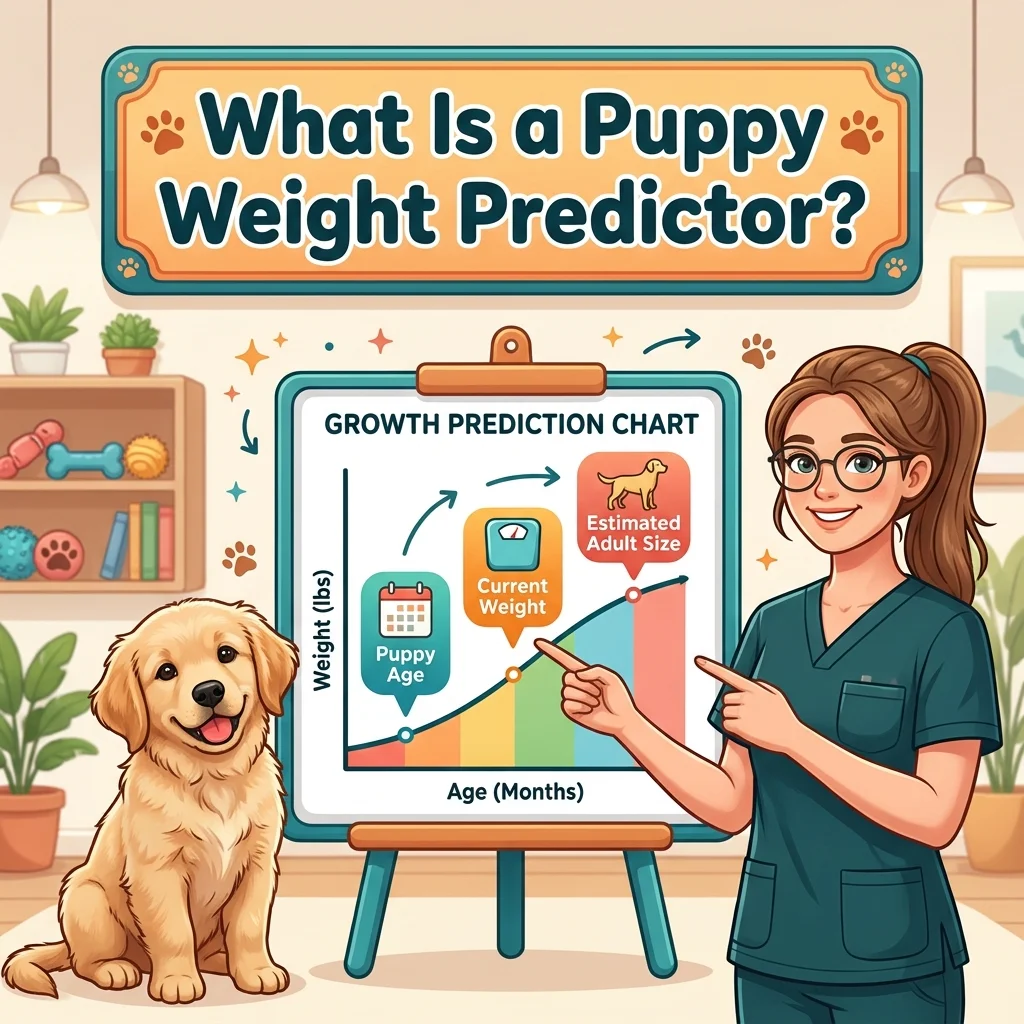
A puppy weight predictor is an online tool or calculation method that estimates a dog’s potential adult weight using its current measurements and development stage.
For example, if your puppy weighs 8 pounds at 12 weeks old, a puppy adult weight calculator can use its age, expected breed size, and typical growth pattern to estimate how much it might weigh as an adult.
Most puppy weight predictors use several important details:
- Current weight: Your puppy’s latest measured weight in pounds or kilograms.
- Age: Your puppy’s age in weeks or months.
- Breed: The breed or estimated breed mix.
- Expected adult size: Whether your puppy is likely to become a toy, small, medium, large, or giant dog.
- Sex: Male and female puppies can have different growth patterns.
Some advanced puppy growth calculators also use repeated weight measurements to determine whether a puppy is following a healthy growth pattern.
The main benefit is that you can get an approximate idea of your dog’s future size before it reaches adulthood.
However, an estimated adult weight is not a guarantee. Two puppies from the same litter can have different body structures and adult weights.
How Does a Puppy Weight Calculator Work?

A puppy weight calculator estimates future size by comparing a puppy’s current development with the expected growth pattern of similar dogs.
Puppies do not grow at a constant rate. Their weight usually increases quickly during early development and gradually slows as they approach adulthood.
The growth pattern also depends on breed size.
For example, a Chihuahua may reach adult size much earlier than a Great Dane. Therefore, a calculator should not use the same growth assumptions for both dogs.
The Puppy Weight Prediction Formula
A commonly used mathematical approach is:
Estimated adult weight = Current puppy weight ÷ Proportion of adult weight already reached
For example, suppose a puppy currently weighs 10 pounds and a suitable growth reference indicates that it has reached approximately 50% of its expected adult weight.
The calculation would be:
10 ÷ 0.50 = 20 pounds.
The estimated adult weight would be approximately 20 pounds.
However, the 50% figure is only an example. You should not assume that every puppy reaches half its adult weight at the same age.
The appropriate growth percentage depends on the puppy’s age, breed size, and individual growth curve.
Why Age Matters
Age is one of the most important details in a puppy growth calculator.
Consider two puppies that both weigh 10 pounds.
- Puppy A is 8 weeks old.
- Puppy B is 20 weeks old.
Their estimated adult weights could be very different because they are at different stages of development.
This is why entering the correct age is essential when using a puppy weight predictor.
If you do not know your puppy’s exact birth date, ask the breeder, rescue organization, or veterinarian whether they can help estimate its age.
Why Breed Size Matters
Breed size determines which growth pattern is most appropriate.
Toy and small breeds generally mature faster than large and giant breeds. A medium-sized puppy also follows a different growth pattern from a giant-breed puppy.
For mixed-breed dogs, information about the parents can help estimate the puppy’s potential adult size.
A reliable puppy size predictor should account for these differences instead of treating every dog as identical.
Puppy Weight Calculator: How to Estimate Adult Weight

You can estimate your puppy’s potential adult weight using a suitable growth chart and regular measurements.
Follow these steps to understand the process.
Step 1: Measure Your Puppy’s Current Weight
Start by weighing your puppy accurately.
You can use a pet scale for small puppies. For larger puppies, a veterinary clinic can provide a reliable measurement.
You can also weigh yourself while holding your puppy and then weigh yourself without the puppy. Subtract your individual weight from the combined measurement.
For example:
- Your weight: 65 kg
- Your combined weight with puppy: 70 kg
- Puppy’s weight: 5 kg
Calculation:
70 – 65 = 5 kg.
For more reliable results, use the same scale whenever possible.
Step 2: Find Your Puppy’s Exact Age
Record your puppy’s age in weeks.
This is important because a few weeks can make a significant difference during early development.
For example:
| Age in months | Approximate age in weeks |
| 1 month | 4.3 weeks |
| 2 months | 8.7 weeks |
| 3 months | 13 weeks |
| 4 months | 17.4 weeks |
| 5 months | 21.7 weeks |
| 6 months | 26 weeks |
| 9 months | 39 weeks |
| 12 months | 52 weeks |
These are approximate conversions. Use the actual birth date when available.
Step 3: Identify the Breed or Expected Adult Size
Find out whether your puppy belongs to a toy, small, medium, large, or giant breed.
If you have a purebred puppy, breed standards and parental weights can provide useful information.
For mixed-breed puppies, consider the size of both parents and any known breed ancestry.
Step 4: Use an Appropriate Growth Chart
Choose a puppy growth chart that matches your dog’s sex and expected adult weight range.
Veterinary growth charts use age and repeated weight measurements to show how a puppy develops over time.
For example, the WALTHAM Puppy Growth Charts were developed using information from approximately 50,000 healthy young dogs.
They provide separate growth curves for different expected adult sizes and sexes.
Step 5: Interpret the Estimated Adult Weight
Compare your puppy’s measurements with the appropriate growth curve.
A puppy that consistently follows a similar growth curve is generally easier to assess than one with only a single weight measurement.
If its growth pattern changes significantly, discuss the results with a veterinarian.
Important: A puppy weight prediction is an estimate, not a medical assessment. Your veterinarian can help determine whether the predicted size and actual development are appropriate.
Puppy Weight Chart by Age and Breed Size
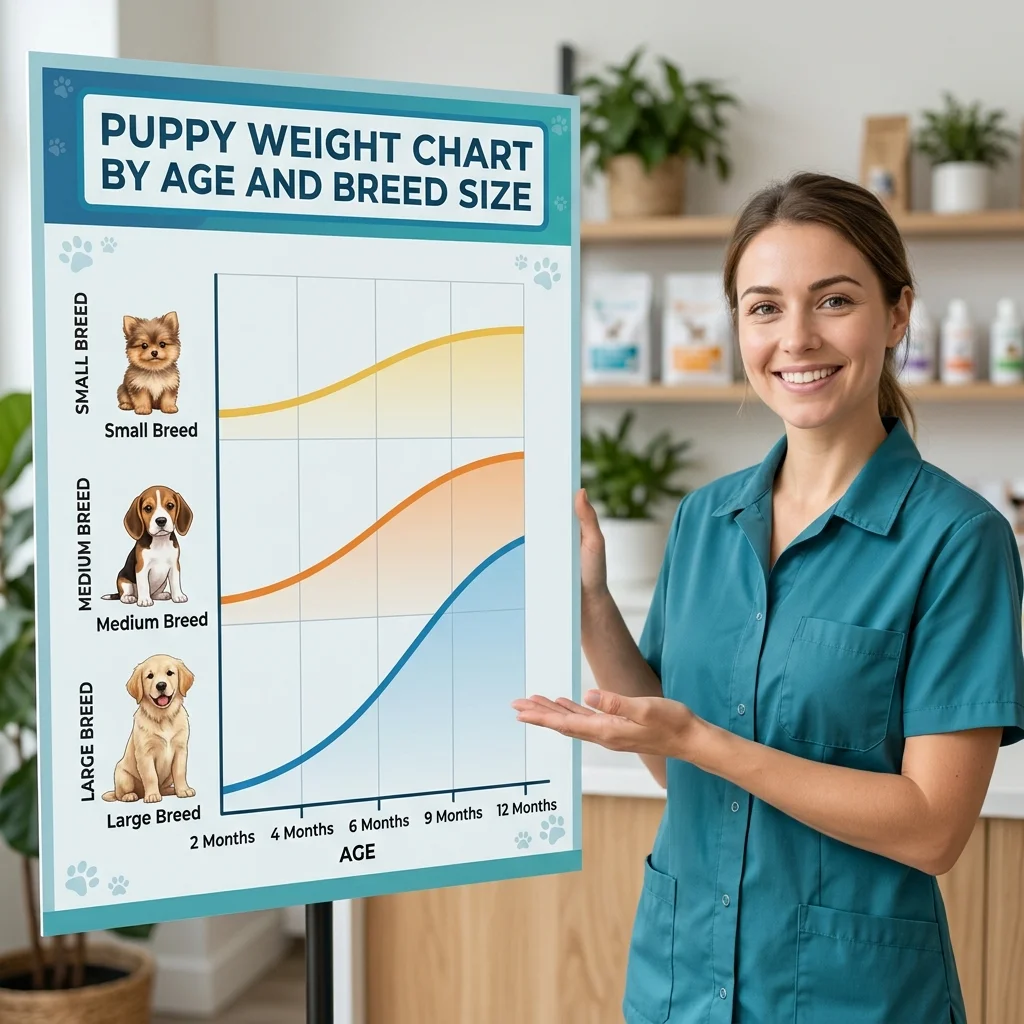
A puppy weight chart by age helps explain how different dogs develop as they grow.
The following table shows general maturity periods rather than exact weights. Actual development varies between breeds and individual puppies.
| Expected adult size | General examples | Approximate time to maturity |
| Toy | Chihuahua, Toy Poodle | Around 8–12 months |
| Small | Pomeranian, Yorkshire Terrier | Around 8–12 months |
| Medium | Beagle, Border Collie | Around 12 months |
| Large | Labrador, Golden Retriever | Around 12–18 months |
| Giant | Great Dane, Saint Bernard | Up to approximately 24 months |
These timeframes are general guidelines, not strict deadlines.
A dog may reach most of its adult height before its body has finished developing. Some dogs continue gaining muscle and filling out after their height has stabilized.
Toy and Small-Breed Puppy Growth
Toy and small-breed puppies generally reach adult size faster than larger dogs.
Examples include:
- Chihuahua
- Pomeranian
- Yorkshire Terrier
- Toy Poodle
- Maltese
Many small dogs approach their adult weight within their first year.
Because these puppies have smaller bodies, owners should monitor feeding carefully and avoid unnecessary weight loss or excessive weight gain.
Medium-Breed Puppy Growth
Medium-sized breeds include:
- Beagle
- Border Collie
- Cocker Spaniel
- Australian Shepherd
These puppies often approach adult size around their first birthday.
However, individual development can vary. Some dogs continue gaining muscle and filling out after reaching their adult height.
Large-Breed Puppy Growth
Large breeds include:
- Labrador Retriever
- Golden Retriever
- German Shepherd
- Rottweiler
These puppies generally need more time to complete their development.
Many large dogs approach skeletal maturity between 12 and 18 months.
Owners should pay particular attention to balanced nutrition and healthy weight gain because excessive growth can place additional stress on developing joints.
Giant-Breed Puppy Growth
Giant breeds include:
- Great Dane
- Saint Bernard
- Mastiff
- Newfoundland
These dogs have longer growth periods than smaller breeds.
Some giant dogs continue developing until approximately 18–24 months.
Generic growth charts may not be appropriate for every giant-breed puppy. Your veterinarian can recommend a suitable growth reference.
Puppy Weight Predictor by Breed

Breed information can help you narrow down your puppy’s possible adult size.
However, the following examples are general breed characteristics, not individual puppy weight predictions. Breed standards, sex, genetics, and body condition can influence adult weight.
Labrador Retriever Puppy Weight
Labrador Retrievers are medium-to-large dogs with a strong, athletic body structure.
Their adult size depends on genetics, sex, and individual development.
A Labrador puppy weight chart can help owners monitor development by comparing repeated measurements with an appropriate large-breed growth reference.
Avoid trying to make a Labrador puppy gain weight quickly. Maintaining a healthy body condition is more important than reaching a particular number on the scale.
German Shepherd Puppy Weight
German Shepherds are large working dogs that generally take longer to mature than small breeds.
Their adult size can vary depending on sex, genetics, and breeding lines.
A German Shepherd puppy growth chart can help track weight throughout development.
If your puppy’s weight changes unexpectedly or its growth slows significantly, consult your veterinarian.
Golden Retriever Puppy Weight
Golden Retrievers are medium-to-large dogs with a strong body structure.
They continue developing throughout puppyhood, and some take 12–18 months or longer to complete physical maturity.
A Golden Retriever puppy weight chart can help owners monitor development and recognize unusual changes.
Chihuahua Puppy Weight
Chihuahuas are one of the smallest dog breeds.
They usually reach adult size much earlier than large and giant dogs.
A Chihuahua puppy growth chart should use small-breed growth references rather than percentages designed for larger dogs.
Mixed-Breed Puppy Weight
Mixed-breed puppies are more difficult to predict because their genetics can come from different-sized parents.
A puppy with one small parent and one large parent may develop in several different ways.
Knowing the parents’ weights and breed backgrounds can improve your estimate, but it cannot guarantee the puppy’s final size.
How Much Should a Puppy Weigh at Different Ages?

There is no single correct weight for every puppy at a particular age.
For example, a 12-week-old Chihuahua and a 12-week-old German Shepherd should not be expected to weigh the same.
The most useful approach is to compare your puppy with a growth reference appropriate for its expected adult size.
Here are some important ages to monitor.
Puppy Weight at 8 Weeks
Eight weeks is an important stage for many puppies because they are often settling into their new homes.
Their weights can vary considerably depending on breed and parental size.
Record the puppy’s starting weight and arrange routine veterinary care.
Puppy Weight at 12 Weeks
At 12 weeks, many puppies are experiencing rapid development.
This is a useful age to begin more structured growth tracking.
The WALTHAM growth charts begin validated growth curves from 12 weeks, although individual veterinary assessment remains important.
Puppy Weight at 16 Weeks
By 16 weeks, puppies may have gained a noticeable amount of weight.
Their development still depends on breed size and genetics.
Use repeated measurements instead of relying on a single calculation.
Puppy Weight at 6 Months
At six months, small breeds may be approaching much of their adult size, while large and giant breeds still have substantial development ahead.
Continue monitoring weight and body condition.
Puppy Weight at 12 Months
Many small and medium dogs are close to adult size by this age.
Large and giant breeds may continue growing.
Do not assume that every dog has finished developing just because it has reached its first birthday.
Puppy Weight Calculator: Pounds to Kilograms
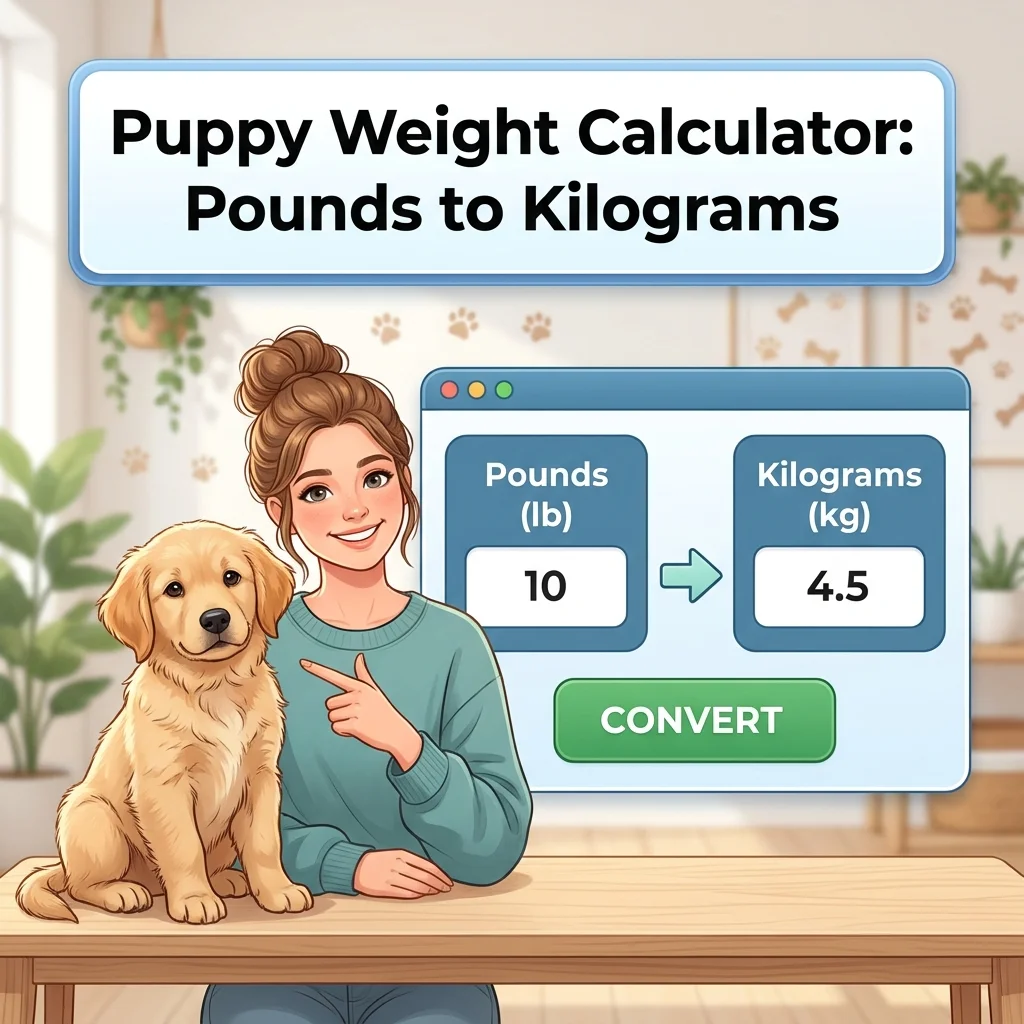
Many puppy owners use pounds, while others prefer kilograms.
You can convert your puppy’s weight using these simple measurements:
| Pounds (lb) | Kilograms (kg) |
| 2 lb | 0.91 kg |
| 5 lb | 2.27 kg |
| 10 lb | 4.54 kg |
| 15 lb | 6.80 kg |
| 20 lb | 9.07 kg |
| 25 lb | 11.34 kg |
| 30 lb | 13.61 kg |
| 40 lb | 18.14 kg |
| 50 lb | 22.68 kg |
| 60 lb | 27.22 kg |
| 70 lb | 31.75 kg |
| 80 lb | 36.29 kg |
| 100 lb | 45.36 kg |
The conversion formulas are:
Pounds to kilograms:
Pounds ÷ 2.20462 = Kilograms
Kilograms to pounds:
Kilograms × 2.20462 = Pounds
For example, if your puppy weighs 12 pounds:
12 ÷ 2.20462 = approximately 5.44 kg.
Using consistent units helps prevent mistakes when recording puppy growth.
Factors That Affect Your Puppy’s Adult Weight

Several factors influence how much your puppy may weigh as an adult.
Understanding these factors can help you interpret your puppy weight predictor results more realistically.
1. Genetics and Parental Size
Genetics is one of the most important factors affecting adult size.
Puppies inherit physical characteristics from their parents, including body structure, height, and potential weight.
For example, a puppy from two large parents may have a greater potential adult size than a puppy from two small parents.
For mixed-breed puppies, parental information can be particularly helpful.
2. Nutrition and Feeding Habits
Proper nutrition supports healthy development.
Puppies need complete and balanced food designed for growth. Their nutritional requirements change as they get older.
Large- and giant-breed puppies may require specially formulated food to support controlled growth and appropriate mineral intake.
Overfeeding is not a healthy way to increase adult weight. Excessive calorie intake can contribute to unwanted weight gain.
3. Exercise and Physical Activity
Regular, age-appropriate activity helps puppies develop coordination, muscle strength, and general fitness.
However, excessive exercise is not suitable for young dogs.
Avoid forcing puppies into strenuous running, repeated jumping, or prolonged exercise.
Provide safe opportunities for play and sufficient rest.
4. Overall Health
Health conditions can influence normal growth.
Parasites, digestive problems, infections, and other illnesses may affect appetite and nutrient absorption.
If your puppy suddenly loses weight or stops gaining weight, arrange a veterinary examination.
5. Sex and Individual Differences
Male and female dogs can have different growth patterns.
Males are often larger in some breeds, although this is not universal.
Individual genetics also matter. Puppies from the same litter can eventually develop into dogs with different adult weights.
6. Neutering and Growth
Neutering can influence growth and body composition.
The timing of neutering and the individual dog’s development should be discussed with a veterinarian.
Do not use a generic adult-weight formula without considering the puppy’s overall growth history.
How to Know If Your Puppy Is Growing Normally
A puppy’s weight alone cannot determine whether it is healthy.
You should also consider its body condition, appetite, energy, and general development.
Check Your Puppy’s Body Condition
Look at your puppy from above and from the side.
A dog in appropriate body condition generally has:
- Ribs that can be felt without excessive pressure.
- A visible waist when viewed from above.
- A slight abdominal tuck when viewed from the side.
- No excessive fat covering the body.
Very prominent ribs, hip bones, or a visible spine may indicate that a puppy is too thin.
However, body shape varies between breeds, and thick coats can make visual assessment difficult.
Ask your veterinarian to demonstrate how to assess body condition properly.
Monitor Weight Consistently
A regular puppy growth record helps you understand how your dog is developing.
Include these details:
- Measurement date.
- Puppy’s age.
- Current weight.
- Food changes.
- Appetite and activity changes.
- Any recent illness.
WALTHAM recommends weighing puppies every 2–4 weeks up to six months and then every 1–3 months until they are fully grown.
Using the same scale helps make comparisons more meaningful.
Recognize Unusual Growth Patterns
Contact your veterinarian if your puppy experiences:
- Sudden weight loss.
- Persistent failure to gain weight.
- Unexplained rapid weight gain.
- Repeated vomiting or diarrhea.
- Poor appetite.
- A swollen abdomen.
- Unusual weakness.
- Significant changes in activity.
These signs do not always indicate a serious problem, but they deserve attention.
How to Support Healthy Puppy Growth
Healthy development should be your priority.
Rather than trying to make your puppy bigger or heavier, focus on nutrition, regular monitoring, appropriate activity, and veterinary care.
Choose the Right Puppy Food
Select a complete and balanced food suitable for your puppy’s age and expected adult size.
Large-breed puppies may need a specially formulated growth diet.
Read the nutritional information and consult your veterinarian if you are unsure which food is appropriate.
Measure Food Portions
Avoid guessing how much your puppy should eat.
Use the food manufacturer’s feeding recommendations as a starting point and adjust portions with veterinary guidance.
A digital kitchen scale can help measure food more consistently.
Provide Fresh Drinking Water
Clean drinking water should always be available.
Water supports normal digestion, circulation, and other important body functions.
Wash your puppy’s water bowl regularly.
Encourage Suitable Exercise
Provide age-appropriate play and activity.
Allow your puppy to explore its surroundings safely and take sufficient rest between activities.
Avoid strenuous exercise that may place unnecessary stress on developing joints.
Schedule Veterinary Checkups
Regular veterinary visits help monitor:
- Weight and growth.
- Body condition.
- Vaccination schedules.
- Parasite prevention.
- Dental development.
- General health.
Your veterinarian can also help identify unusual growth patterns and recommend suitable nutrition.
Puppy Weight Predictor vs. Puppy Growth Chart
A puppy weight predictor and a puppy growth chart are related, but they serve different purposes.
A predictor estimates future adult weight, while a growth chart helps monitor actual development.
| Feature | Puppy weight predictor | Puppy growth chart |
| Main purpose | Estimate adult weight | Track development |
| Information required | Age, weight, breed size | Age and repeated weight measurements |
| Result | Approximate future weight | Growth pattern |
| Best use | Estimating potential adult size | Monitoring healthy development |
| Main limitation | Cannot guarantee final weight | Needs accurate repeated measurements |
Using both approaches can provide a better understanding of your puppy’s development.
For example, a calculator may initially estimate an adult weight of 25 pounds. A growth chart can then help you see whether the puppy’s actual development follows a similar pattern.
The WALTHAM Puppy Growth Charts are particularly useful because they include different growth curves for different expected adult sizes and sexes.
For very large or giant breeds, ask your veterinarian which growth reference is suitable.
Common Puppy Weight Prediction Mistakes
Many puppy owners make mistakes when estimating adult weight.
Avoiding these errors can help you interpret results more accurately.
Using One Formula for Every Breed
A growth formula designed for a small dog may not be appropriate for a giant breed.
Always consider the expected adult size.
Relying Only on Paw Size
Large paws may sometimes suggest that a puppy will become a larger dog, but paw size is not a reliable way to calculate adult weight.
Use breed information, parental size, age, and repeated weight measurements instead.
Assuming Every Puppy Grows at the Same Rate
Puppies have individual growth patterns.
Even dogs from the same litter may develop at different rates.
Avoid comparing your puppy’s weight directly with another dog without considering breed, sex, and body structure.
Ignoring Body Condition
A higher weight does not automatically mean a healthier or larger adult dog.
Excess body fat can increase weight without indicating healthy development.
Expecting an Exact Prediction
No general puppy weight predictor can guarantee a dog’s final adult weight.
Treat the result as an estimate and monitor your puppy’s actual growth.
Frequently Asked Questions About Puppy Weight Predictors
How accurate is a puppy weight predictor?
A puppy weight predictor can provide a useful estimate, but accuracy depends on the puppy’s age, breed, current weight, genetics, and growth pattern.
A single measurement is less informative than several measurements recorded over time. Veterinary growth charts can help provide a more meaningful assessment.
How can I calculate my puppy’s adult weight?
You can estimate adult weight by dividing current weight by the proportion of adult weight already reached.
For example, if a puppy weighs 10 pounds and a suitable growth reference indicates it has reached 50% of its adult weight, the estimated adult weight is 20 pounds.
However, the growth percentage must match the puppy’s age and expected size.
Can I predict my puppy’s adult weight at 8 weeks?
You can make an early estimate, but it may be less reliable because the puppy is still in an early stage of development.
Knowing the parents’ weights and breed background can help improve your estimate.
Continue recording weight as your puppy grows.
How much should a 12-week-old puppy weigh?
There is no universal weight for a 12-week-old puppy.
A Chihuahua, Beagle, and German Shepherd can have very different weights at this age.
Use a breed-appropriate growth chart and consult your veterinarian if you are concerned about development.
Does puppy paw size predict adult weight?
No. Paw size alone cannot accurately predict adult weight.
It may provide a rough visual clue, but genetics, breed, age, and current growth measurements are more useful.
Do male puppies weigh more than female puppies?
Males are often heavier than females in some breeds, but this varies.
The expected adult size of the breed and individual genetics have a significant influence.
When should I weigh my puppy?
Regular measurements are useful throughout puppyhood.
A practical schedule is every 2–4 weeks until six months, followed by every 1–3 months until full maturity.
Your veterinarian may recommend a different schedule depending on your puppy’s health and growth pattern.
Why is my puppy smaller than other puppies of the same breed?
Puppies can have different growth patterns, even within the same litter.
Genetics, parental size, nutrition, and health all influence development.
If your puppy consistently falls away from its previous growth pattern, arrange a veterinary assessment.
Should I feed my puppy more to increase its adult weight?
No. Overfeeding is not a healthy way to increase adult size.
Excessive calorie intake can lead to unwanted weight gain and may be particularly harmful during large-breed development.
Provide a balanced diet and aim for an appropriate body condition.
Do large-breed puppies take longer to grow?
Yes. Large and giant breeds generally take longer to reach skeletal maturity than smaller dogs.
Some giant breeds continue developing until approximately 18–24 months.
Can a puppy weight predictor work for mixed-breed dogs?
Yes, a puppy weight predictor can provide an initial estimate for mixed-breed puppies.
However, predictions can be less certain because mixed-breed dogs may inherit different physical characteristics from their parents.
Knowing parental size and tracking repeated measurements can help.
When do puppies stop growing?
Small breeds often reach adult size within approximately 8–12 months. Medium breeds may mature around 12 months, while large breeds can take 12–18 months.
Some giant breeds continue developing for up to two years.
These are general timeframes, not exact deadlines.
Is adult height the same as full physical maturity?
No. A dog may reach its adult height before its body finishes developing.
Muscle development, body composition, and skeletal maturity can continue after height growth slows.
Final Thoughts
A puppy weight predictor is a helpful starting point when you want to understand how big your puppy might become as an adult. By considering current weight, age, breed size, genetics, and growth patterns, you can estimate your dog’s potential adult weight. However, every puppy develops differently. No simple formula can guarantee an exact result.
For a more reliable estimate, record your puppy’s weight regularly, consider the size of its parents, and use an appropriate veterinary growth chart. Pay attention to body condition rather than focusing only on the number displayed on the scale. Most importantly, prioritize healthy development over rapid weight gain. Balanced nutrition, suitable exercise, regular veterinary visits, and consistent monitoring will help your puppy build a healthy foundation for adulthood.

I am James Carter, a passionate writer dedicated to creating informative, engaging, and valuable content for readers. I enjoy exploring different topics, researching new ideas, and sharing knowledge through clear and meaningful writing. I am committed to providing accurate information, helpful insights, and well-crafted articles that inspire and educate audiences. With a strong focus on quality and creativity, I aim to connect with readers and deliver content that adds real value.