If you are trying to gain weight, understanding your daily calorie requirements is one of the most important steps. Eating more food can help increase your body weight, but choosing the right foods and consuming enough nutrients are equally important. A balanced approach can help you gain weight gradually while supporting muscle development and overall health.
So, how many calories should I eat to gain weight? For many adults, eating approximately 300–500 calories above their daily maintenance calorie requirements is a practical starting point. This additional energy creates a calorie surplus, allowing your body to store extra energy and gradually increase its weight.
However, your ideal calorie intake depends on several factors, including your age, sex, height, current weight, metabolism, and physical activity level. Someone who weighs 110 pounds and spends most of the day sitting may need fewer calories than someone who weighs 160 pounds and exercises regularly.
In this guide, you will learn how many calories to gain weight, how to calculate your daily calorie requirements, which foods provide healthy calories, and how to create a practical meal plan. You will also find examples for human beings, a seven-day eating plan, and useful tips for gaining weight without relying on unhealthy foods.
How Many Calories Should I Eat to Gain Weight?

The number of calories you should eat to gain weight depends on how much energy your body uses throughout the day.
Your body burns calories to perform essential functions such as breathing, maintaining body temperature, digesting food, moving, and exercising. When you consume approximately the same amount of energy that you burn, your weight generally stays stable.
To increase your weight, you need to consume more calories than your body uses. This is known as a calorie surplus for weight gain.
A practical starting point for many adults is:
- 300 extra calories daily: A modest surplus for gradual weight gain.
- 400 extra calories daily: A moderate increase that may support steady progress.
- 500 extra calories daily: A larger surplus that may help some people gain weight more quickly.
For example, if your body requires 2,000 calories daily to maintain your current weight, you could begin with approximately 2,300–2,500 calories.
| Maintenance calories | Daily weight-gain target |
| 1,600 | 1,900–2,100 |
| 1,800 | 2,100–2,300 |
| 2,000 | 2,300–2,500 |
| 2,200 | 2,500–2,700 |
| 2,400 | 2,700–2,900 |
| 2,600 | 2,900–3,100 |
| 2,800 | 3,100–3,300 |
| 3,000 | 3,300–3,500 |
These figures are examples, not personalized prescriptions. Your actual calorie requirements may be different.
The NHS recommends that adults trying to gain weight consider gradually adding approximately 300–500 calories daily. It also recommends eating balanced meals, adding nutritious snacks, and including protein-rich foods.
The goal is to increase your calorie intake consistently without forcing yourself to eat excessively large meals.
What Determines Your Daily Calorie Requirements?
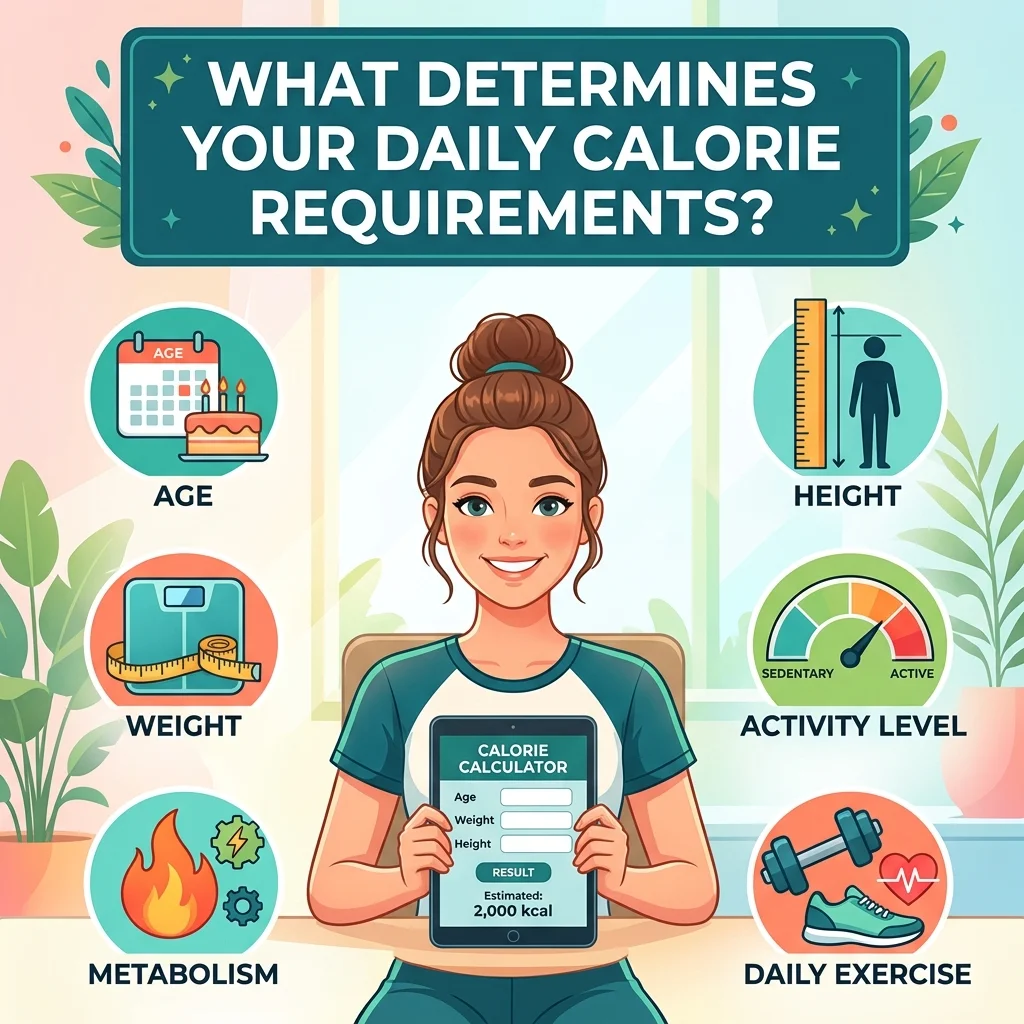
There is no universal calorie target for everyone. Several factors influence how much energy your body needs.
Understanding these factors helps you choose a realistic daily calorie intake to gain weight.
Age
Age influences your energy requirements because metabolism, muscle mass, and physical activity can change throughout life.
Children and teenagers need sufficient energy for normal growth and development. They should not follow adult weight-gain calorie targets without appropriate professional guidance.
Adults may also experience changes in muscle mass and activity as they get older. These changes can affect their daily calorie requirements.
Sex
Biological sex can influence average calorie requirements because of differences in body composition, muscle mass, and body size.
Men may have higher average energy requirements than women of similar age and activity levels. However, individual differences are substantial.
Your calorie target should depend on your personal measurements and lifestyle rather than sex alone.
Height and Current Weight
Your height and current body weight help estimate how much energy your body needs.
Generally, someone with a larger body requires more energy to maintain their weight than someone with a smaller body.
However, two people with the same weight can have different calorie requirements because of differences in height, muscle mass, and daily movement.
Physical Activity
Physical activity is another important factor.
A person who works at a desk and rarely exercises generally needs fewer calories than someone who walks frequently, performs manual work, or exercises several times a week.
| Activity level | Description |
| Sedentary | Mostly sitting with little exercise |
| Lightly active | Light exercise or walking 1–3 days weekly |
| Moderately active | Moderate exercise around 3–5 days weekly |
| Very active | Hard exercise or physical work most days |
| Extra active | Intense training combined with physically demanding work |
If you exercise regularly, your body may need additional calories to replace the energy used during training.
Metabolism and Body Composition
Metabolism includes the chemical processes your body uses to produce and use energy.
Your resting energy requirements depend partly on body size and composition. Muscle tissue and other metabolically active tissues contribute to your energy expenditure.
Genetics, sleep, hormones, and everyday movement can also influence how much energy you use.
This explains why two people following similar diets may experience different weight changes.
Health Conditions and Medication
Some medical conditions affect appetite, digestion, nutrient absorption, or metabolism.
For example, an overactive thyroid, digestive disorders, diabetes, and certain other conditions can contribute to unexplained weight changes.
Some medications may also affect appetite or body weight.
If you are losing weight without trying or cannot gain weight despite eating consistently, consult a healthcare professional before making major dietary changes.
How to Calculate Calories for Weight Gain

The easiest way to calculate calories for weight gain is to estimate your maintenance calories and add a moderate surplus.
You can use an online weight gain calorie calculator or estimate your requirements using a mathematical formula.
One commonly used method is the Mifflin-St Jeor equation, which estimates resting energy expenditure in adults.
Step 1: Calculate Your Basal Metabolic Rate
Your basal metabolic rate, or BMR, estimates the energy your body uses at rest.
The Mifflin-St Jeor equations are:
For men:
BMR = (10 × weight in kg) + (6.25 × height in cm) − (5 × age) + 5
For women:
BMR = (10 × weight in kg) + (6.25 × height in cm) − (5 × age) − 161
These equations use population-based sex-specific constants. They provide estimates rather than exact measurements.
Step 2: Multiply Your BMR by Your Activity Level
Your BMR does not include all the calories you burn through walking, working, exercising, and other daily activities.
To estimate your total daily energy expenditure, multiply your BMR by an activity factor.
| Activity level | Example multiplier |
| Sedentary | 1.20 |
| Lightly active | 1.375 |
| Moderately active | 1.55 |
| Very active | 1.725 |
| Extra active | 1.90 |
The result provides an estimated maintenance calorie requirement.
Step 3: Add a Calorie Surplus
Once you have estimated your maintenance calories, add approximately 300–500 calories as an initial target.
For example:
- Estimated maintenance: 2,100 calories
- Additional calories: 300–500
- Weight-gain target: 2,400–2,600 calories
This approach provides a starting estimate that you can adjust according to your actual weight changes.
Step 4: Monitor and Adjust Your Intake
Follow your calorie target consistently and monitor your weight for two to three weeks.
If your weekly average weight is gradually increasing, your calorie intake may be appropriate.
If your weight remains unchanged, check your food portions and tracking accuracy. You may need to increase your intake slightly.
If your weight increases faster than intended, consider reducing your surplus.
Your calorie requirements can change as your weight and activity levels change, so review your target regularly.
For a more personalized estimate, the National Institute of Diabetes and Digestive and Kidney Diseases provides the NIDDK Body Weight Planner. It is designed for adults aged 18 and older and is not intended for pregnant or breastfeeding women.
How Many Calories Should I Eat Based on My Weight?

Your current weight can provide useful information, but it cannot determine your calorie needs by itself.
The following examples show how different maintenance calorie requirements translate into weight-gain targets.
| Maintenance calories | With 300 extra | With 500 extra |
| 1,500 | 1,800 | 2,000 |
| 1,700 | 2,000 | 2,200 |
| 1,900 | 2,200 | 2,400 |
| 2,100 | 2,400 | 2,600 |
| 2,300 | 2,600 | 2,800 |
| 2,500 | 2,800 | 3,000 |
| 2,700 | 3,000 | 3,200 |
| 2,900 | 3,200 | 3,400 |
For example, a person weighing 120 pounds might maintain their weight at 1,800 calories, while another person with the same weight may require 2,200 calories.
The difference could come from height, age, body composition, and physical activity.
Do not select a calorie target based only on your body weight. Estimate your maintenance requirements first.
How Many Calories Should a Woman Eat to Gain Weight?

Women have different calorie requirements depending on age, height, weight, activity level, and individual health factors.
A woman who weighs 120 pounds and has a sedentary lifestyle may need fewer calories than a woman who weighs the same amount but exercises regularly.
For example, if a woman’s estimated maintenance requirement is 1,800 calories, she could begin with approximately 2,100–2,300 calories.
If her maintenance requirement is 2,200 calories, a starting target could be 2,500–2,700 calories.
These are examples, not standard recommendations for all women.
Women who want to build muscle should combine an appropriate calorie surplus with resistance training and sufficient protein.
Pregnancy, breastfeeding, menstrual health, and certain medical conditions can also influence nutritional needs. Women in these circumstances should seek individualized guidance.
How Many Calories Should a Man Eat to Gain Weight?
Men also have different calorie requirements depending on body size, age, metabolism, and activity level.
A man who performs physically demanding work may need considerably more calories than someone who spends most of the day sitting.
For example, if a man’s estimated maintenance requirement is 2,400 calories, he could start with approximately 2,700–2,900 calories.
Someone maintaining their weight at 2,800 calories might start around 3,100–3,300 calories.
The same principle applies to human beings: calculate maintenance calories, add a suitable surplus, and monitor the results.
How Many Calories to Gain 1 Pound a Week?

Gaining one pound per week is a common goal, but it is not necessary or appropriate for everyone.
A traditional estimate suggests that one pound of body weight represents approximately 3,500 calories of stored energy. This is sometimes used to explain why a daily surplus of 500 calories may produce roughly one pound of weight gain per week.
However, this is only a simplified estimate. Human metabolism adapts to changes in energy intake, and weight changes do not follow a perfectly predictable mathematical pattern.
Your weight also includes water, glycogen, muscle, fat, and digestive contents.
A moderate surplus is a more useful starting point than trying to force your body to gain exactly one pound every week.
If your goal is muscle development, gradual weight gain may help limit unnecessary fat accumulation.
How Many Calories Should I Eat to Gain Weight and Muscle?

If you want to increase muscle mass rather than simply increase your body weight, you need three important things:
- Enough total calories
- Sufficient protein
- Regular resistance training
Eating more calories alone does not guarantee muscle growth. Your body needs appropriate exercise and recovery to develop muscle tissue.
Choose an Appropriate Calorie Surplus
People focused on building muscle may begin with a smaller surplus of approximately 150–300 calories daily.
This can be useful when limiting unnecessary fat gain is a priority.
People who are significantly underweight or have difficulty gaining weight may need a different approach with professional guidance.
Eat Enough Protein
Protein provides amino acids that your body uses to repair and build muscle tissue.
Useful protein sources include:
- Eggs
- Chicken
- Fish
- Milk
- Greek yogurt
- Cottage cheese
- Lentils
- Beans
- Tofu
- Lean meat
The International Society of Sports Nutrition suggests approximately 1.4–2.0 grams of protein per kilogram of body weight daily for most healthy exercising individuals.
For example, someone weighing 65 kilograms could use this calculation:
65 × 1.4 = 91 grams
65 × 2.0 = 130 grams
This gives an approximate daily protein range of 91–130 grams.
People with kidney disease or other relevant medical conditions should discuss their protein requirements with a healthcare professional.
Include Strength Training
Strength training provides the stimulus needed for muscle development.
Useful exercises include:
- Squats
- Push-ups
- Lunges
- Bench presses
- Rows
- Shoulder presses
- Deadlifts
Start with manageable exercises and gradually increase resistance as your strength improves.
Allow your muscles enough time to recover between challenging sessions.
Do Not Avoid Carbohydrates and Fats
Protein is important, but carbohydrates and fats also play essential roles.
Carbohydrates provide energy for workouts and everyday activities. Rice, potatoes, oats, bread, fruit, and whole grains are useful choices.
Dietary fats provide concentrated calories and support normal body functions. Nuts, seeds, olive oil, peanut butter, and avocados are good options.
A balanced diet containing all three macronutrients supports a more complete weight-gain plan.
Best High-Calorie Foods for Weight Gain

Choosing nutritious, calorie-dense foods can make it easier to reach your daily calorie target.
You do not need to depend on fast food, candy, or sugary drinks. Instead, choose foods that provide energy along with protein, fiber, vitamins, minerals, and healthy fats.
The following table provides approximate calorie values. Actual amounts depend on serving size, preparation, and food brands.
| Food | Example serving | Approximate calories |
| Whole milk | 1 cup (240 ml) | 150 |
| Peanut butter | 2 tablespoons | 190 |
| Almonds | 28 g | 165 |
| Walnuts | 28 g | 185 |
| Banana | 1 medium | 105 |
| Whole egg | 1 large | 70 |
| Cooked rice | 1 cup | 205 |
| Oats | ½ cup dry | 150 |
| Avocado | ½ medium | 120 |
| Greek yogurt | 170 g, plain | 100–180 |
| Olive oil | 1 tablespoon | 120 |
| Dates | 2 medium | 130–140 |
Milk and Dairy Products
Whole milk, yogurt, cheese, and cottage cheese can help increase calorie and protein intake.
Add milk to oatmeal, enjoy yogurt with fruit, or use cheese in sandwiches and omelets.
Nuts and Nut Butters
Almonds, walnuts, cashews, and peanut butter provide concentrated calories and unsaturated fats.
A small handful of nuts makes a convenient snack between meals.
Eggs and Lean Protein
Eggs, chicken, fish, and lean meat provide protein and other important nutrients.
Include these foods in balanced meals alongside rice, potatoes, vegetables, or bread.
Fruits and Dried Fruits
Bananas, dates, raisins, and other dried fruits can provide additional energy.
Combine them with milk, yogurt, oats, or nuts to create more filling snacks.
Rice, Potatoes, and Whole Grains
Carbohydrate-rich foods make it easier to meet your daily energy requirements.
Choose portions that match your calorie target and combine them with protein-rich foods.
How to Eat More Calories Without Feeling Too Full
A common challenge for people trying to gain weight is a small appetite.
Eating three enormous meals may feel uncomfortable, particularly if you are used to smaller portions.
These strategies can make increasing your calorie intake easier.
Eat Five or Six Smaller Meals
Instead of relying on three large meals, divide your food into smaller meals and snacks.
For example:
- Breakfast
- Morning snack
- Lunch
- Afternoon snack
- Dinner
- Evening snack
You can adjust the number of meals according to your appetite and schedule.
Add Calories to Foods You Already Eat
You do not need to change your entire diet.
Small additions can increase your calorie intake.
For example:
- Add peanut butter to toast.
- Mix nuts into oatmeal.
- Add cheese to eggs.
- Use olive oil when cooking vegetables.
- Add avocado to sandwiches.
- Drink milk with breakfast.
Drink Homemade Smoothies
Smoothies are useful when solid food makes you feel full quickly.
Banana and peanut butter smoothie
Ingredients:
- 1 medium banana
- 1 cup whole milk
- 2 tablespoons peanut butter
- ¼ cup oats
- A little honey, if desired
Blend everything until smooth.
The total calorie content depends on the ingredients and serving sizes. Check the labels or use a food-tracking application to calculate the exact amount.
Drink your smoothie between meals if drinking it before a meal reduces your appetite.
Keep Convenient Snacks Available
Prepare snacks in advance so you do not skip meals when you are busy.
Good options include:
- Boiled eggs
- Bananas
- Yogurt
- Nuts
- Peanut butter sandwiches
- Homemade milkshakes
- Dates
Increase Portions Gradually
If you currently eat small meals, do not force yourself to double your portions immediately.
Add a little more food to your usual meals and increase your intake gradually.
This can make the transition more comfortable.
A Seven-Day Weight-Gain Meal Plan
A structured meal plan can help you reach your daily calorie target without repeatedly deciding what to eat.
The following seven-day plan provides a variety of meals and snacks. It is designed as an example for adults who need approximately 2,500 calories daily.
The calorie values are estimates. Portion sizes, brands, cooking oil, and preparation methods can change the total. Adjust the portions to match your actual calorie requirements.
Day 1
| Meal | Food |
| Breakfast | 2 eggs, 2 slices whole-grain toast, banana, whole milk |
| Morning snack | Greek yogurt and almonds |
| Lunch | Grilled chicken, rice, vegetables, avocado |
| Afternoon snack | Banana and peanut butter smoothie |
| Dinner | Baked fish, potatoes, green vegetables |
| Evening snack | Cottage cheese and berries |
Estimated target: 2,400–2,600 calories.
Day 2
| Meal | Food |
| Breakfast | Oatmeal with milk, banana, peanut butter |
| Morning snack | Dates and almonds |
| Lunch | Chicken sandwich, yogurt, fruit |
| Afternoon snack | Whole-milk smoothie |
| Dinner | Rice, lentils, chicken, vegetables |
| Evening snack | Greek yogurt |
Estimated target: 2,400–2,600 calories.
Day 3
| Meal | Food |
| Breakfast | Vegetable omelet, roti, milk |
| Morning snack | Banana and walnuts |
| Lunch | Chicken rice bowl with vegetables |
| Afternoon snack | Peanut butter toast |
| Dinner | Fish, potatoes, salad |
| Evening snack | Milk and dates |
Estimated target: 2,400–2,600 calories.
Day 4
| Meal | Food |
| Breakfast | Oats, whole milk, raisins, almonds |
| Morning snack | Boiled eggs and fruit |
| Lunch | Chicken karahi, roti, dahi |
| Afternoon snack | Banana shake |
| Dinner | Rice, daal, vegetables, yogurt |
| Evening snack | Cottage cheese |
Estimated target: 2,400–2,600 calories.
Day 5
| Meal | Food |
| Breakfast | 2 eggs, toast, avocado, milk |
| Morning snack | Greek yogurt and granola |
| Lunch | Grilled chicken, potatoes, vegetables |
| Afternoon snack | Banana and peanut butter |
| Dinner | Fish, rice, salad |
| Evening snack | Milk and dates |
Estimated target: 2,400–2,600 calories.
Day 6
| Meal | Food |
| Breakfast | Roti, omelet, whole milk |
| Morning snack | Almonds and banana |
| Lunch | Daal, rice, chicken, yogurt |
| Afternoon snack | Oat and banana smoothie |
| Dinner | Chicken curry, roti, vegetables |
| Evening snack | Greek yogurt |
Estimated target: 2,400–2,600 calories.
Day 7
| Meal | Food |
| Breakfast | Oatmeal, milk, peanut butter, fruit |
| Morning snack | Boiled eggs and dates |
| Lunch | Chicken pulao, raita, salad |
| Afternoon snack | Yogurt, nuts, banana |
| Dinner | Baked fish, potatoes, vegetables |
| Evening snack | Whole milk |
Estimated target: 2,400–2,600 calories.
You can exchange meals between days and substitute foods according to your preferences.
If your calorie requirement is 2,000 calories, reduce the portions. If you need 2,800 calories, increase the portions or add nutritious snacks.
Pakistani Foods That Help With Healthy Weight Gain
You do not need expensive supplements or imported foods to gain weight.
Traditional Pakistani meals can provide carbohydrates, protein, and healthy fats when prepared with balanced ingredients and appropriate portions.
| Pakistani food | Nutritional benefit |
| Doodh | Protein and calcium |
| Anda | High-quality protein |
| Daal | Plant protein and carbohydrates |
| Chana | Protein, fiber, and energy |
| Chicken karahi | Protein and calories |
| Rice | Carbohydrates |
| Roti | Energy and carbohydrates |
| Dahi | Protein and calcium |
| Badam and kaju | Healthy fats and calories |
| Dates | Carbohydrates and energy |
| Banana shake | Carbohydrates and additional calories |
A practical daily routine could include:
Breakfast: Two eggs, roti, and a glass of milk.
Morning snack: Banana and almonds.
Lunch: Chicken, rice, and dahi.
Afternoon snack: Homemade banana shake.
Dinner: Daal, roti, and vegetables.
Evening snack: Milk or yogurt if you are hungry.
This type of eating routine can be adapted to different calorie targets by changing portion sizes.
Budget-Friendly Foods for Weight Gain
Healthy weight gain does not require an expensive grocery budget.
You can build a balanced eating plan using affordable foods available in local markets.
Some economical choices include:
- Eggs for protein.
- Daal and chickpeas for plant protein.
- Rice and roti for carbohydrates.
- Seasonal bananas for convenient snacks.
- Milk and homemade yogurt for protein and calcium.
- Peanuts for concentrated calories.
- Potatoes for carbohydrates.
- Seasonal vegetables for vitamins and minerals.
A simple shopping list might include eggs, milk, oats, rice, lentils, chickpeas, bananas, peanuts, seasonal vegetables, yogurt, and chicken when your budget allows.
Buying staple foods in suitable quantities and preparing meals at home can make your eating plan more affordable.
How to Track Your Weight-Gain Progress
Tracking your progress helps you understand whether your daily calorie intake is sufficient.
However, daily weight changes do not always represent actual muscle or fat gain.
Your body weight can fluctuate because of water retention, sodium intake, digestion, carbohydrate storage, and other factors.
Follow these steps:
- Weigh yourself in the morning after using the bathroom.
- Use the same weighing scale whenever possible.
- Wear similar clothing each time.
- Record your weight several times weekly.
- Calculate or compare your weekly average.
- Review your progress over two to three weeks.
Here is an example of a simple tracking record:
| Week | Average weight | Observation |
| Week 1 | 55.0 kg | Starting average |
| Week 2 | 55.1 kg | Small change |
| Week 3 | 55.3 kg | Gradual increase |
| Week 4 | 55.5 kg | Continued progress |
These figures are illustrative rather than a promised rate of weight gain.
If your weight remains unchanged, check whether you are consistently reaching your calorie target before increasing it.
If your weight is increasing faster than intended, consider a smaller surplus.
How Long Does It Take to Gain Weight?
The time required to gain weight depends on your calorie surplus, physical activity, health, and individual response to dietary changes.
Some people notice changes in their weight within a few weeks. Others need several months to see substantial differences.
A general timeline might look like this:
| Period | Possible changes |
| First week | Water weight and food-volume changes |
| 2–3 weeks | An early weight trend may become noticeable |
| 4–6 weeks | More consistent progress may appear |
| 2–3 months | Changes may become easier to notice |
| 3–6 months | More substantial changes may develop |
These are general examples, not guaranteed milestones.
The important thing is to follow a consistent eating routine and monitor your average weight rather than expecting immediate results.
Common Weight-Gain Mistakes to Avoid
Increasing calories is important, but some habits can make your efforts less effective.
Eating Too Much Junk Food
Fast food, cakes, candy, and sugary drinks can provide additional calories, but relying on them can leave your diet lacking important nutrients.
Choose foods that provide energy along with protein, fiber, vitamins, and minerals.
Not Eating Enough Protein
If you want to build muscle, adequate protein is important.
Include eggs, chicken, fish, milk, yogurt, beans, or lentils in your regular meals.
Skipping Meals
Skipping meals makes it harder to reach your calorie target.
Prepare convenient snacks and establish a regular eating schedule.
Depending Only on Supplements
Protein powders and weight-gain supplements are not essential for everyone.
Most people can meet their nutritional needs through ordinary foods. Supplements may be convenient in certain circumstances, but they should not replace balanced meals.
Ignoring Exercise
If your goal is to develop muscle, resistance training can help stimulate muscle growth.
Eating more calories without strength training may increase body fat without providing the muscle development you want.
Expecting Overnight Results
Healthy weight gain requires consistency.
Extreme diets and very large calorie increases are not necessary for most people.
Focus on sustainable eating habits and gradual progress.
Is Being Underweight a Health Concern?
Being naturally slim does not automatically mean you have a medical problem. However, being underweight can sometimes indicate that your body is not receiving enough energy or nutrients.
For adults, body mass index is one screening tool used to assess weight relative to height.
BMI is calculated using:
BMI = Weight in kilograms ÷ Height in meters²
For example, someone who weighs 50 kilograms and is 1.70 meters tall has a BMI of approximately 17.3.
A BMI below 18.5 is generally classified as underweight for adults.
However, BMI is not a complete assessment of health. It does not directly measure body fat, muscle mass, nutritional status, or individual health risks.
If you are concerned about your weight, a healthcare professional can assess your overall health rather than relying on BMI alone.
When Should You Speak With a Healthcare Professional?
Consider seeking medical advice if:
- You have lost weight suddenly or without trying.
- You have a consistently poor appetite.
- You experience persistent diarrhea or vomiting.
- You have ongoing digestive discomfort.
- You feel unusually tired or weak.
- You cannot gain weight despite consistent eating.
- You suspect a medication or medical condition is affecting your weight.
Unexplained weight loss can sometimes indicate an underlying medical problem.
People who have been eating very little for an extended period may also need medical supervision before substantially increasing their food intake because of the risk of refeeding complications.
Children, teenagers, pregnant people, breastfeeding women, and people with certain medical conditions require different nutritional guidance from the adult recommendations in this article.
Frequently Asked Questions About Calories for Weight Gain
How many calories should I eat to gain weight fast?
Many adults can begin with approximately 300–500 calories above their estimated maintenance requirements. Increasing calories excessively does not guarantee better results and may lead to unnecessary fat gain.
How many calories should I eat to gain 5 pounds?
Your calorie target depends on your maintenance requirements and desired rate of weight gain. Start with a moderate calorie surplus and monitor your progress over several weeks.
How many calories should I eat to gain 10 pounds?
To gain 10 pounds, you need a consistent calorie surplus over time. Your daily target depends on your current weight, activity level, height, age, and metabolism.
Is 2,000 calories enough to gain weight?
It depends on your maintenance calorie requirements. If your body maintains its weight at 1,700 calories, eating 2,000 calories creates an estimated 300-calorie surplus. If your maintenance requirement is 2,200 calories, it may not be enough.
Is 2,500 calories enough to gain weight?
Yes, 2,500 calories may support weight gain if your maintenance requirements are lower. Someone who maintains their weight at 2,000 calories would have an estimated 500-calorie surplus at this intake.
Is 3,000 calories a day enough to gain weight?
For many adults, 3,000 calories may create a surplus. However, highly active individuals may need more, while people with lower energy requirements may gain weight with less.
How many calories should a woman eat to gain weight?
There is no single calorie target for all women. Their requirements depend on age, height, current weight, physical activity, and health. Estimating maintenance calories and adding a suitable surplus is a better approach.
How many calories should a man eat to gain weight?
Men have different calorie requirements depending on their body size, age, metabolism, and activity level. A surplus of approximately 300–500 calories is a practical starting point for many adults.
How many calories should I eat to gain weight and muscle?
People focused on muscle development may start with a modest surplus of approximately 150–300 calories daily. Combine this with sufficient protein and regular resistance training.
What is the best calorie surplus for healthy weight gain?
A surplus of approximately 300–500 calories daily is a practical starting point for many adults. People who prioritize gradual muscle development may prefer a smaller surplus.
What are the best high-calorie foods for weight gain?
Peanut butter, whole milk, nuts, seeds, avocados, oats, rice, eggs, and full-fat yogurt are useful choices. They provide energy alongside important nutrients.
Can I gain weight without going to the gym?
Yes. You can gain weight by consuming more calories than your body uses. However, resistance training can help you develop muscle while gaining weight.
Can I gain weight by drinking banana shakes?
Yes. Banana shakes made with whole milk, oats, and peanut butter can provide additional calories and nutrients. They are useful for people who struggle to eat large meals.
Why am I not gaining weight even though I eat a lot?
You may be consuming fewer calories than you think, burning more energy through daily activity, or experiencing an underlying medical issue. Track your food portions accurately and seek medical advice if the problem continues.
Should I eat before bed to gain weight?
You can eat a nutritious snack before bed if it helps you reach your daily calorie target. Milk, yogurt, or cottage cheese with fruit are convenient options. However, eating before bed is not necessary for weight gain.
Conclusion
So, how many calories should you eat to gain weight? For many adults, adding approximately 300–500 calories to their daily maintenance requirements is a practical starting point. However, your exact calorie intake depends on your age, sex, height, current weight, metabolism, and physical activity. Use a reliable calorie calculator or estimate your maintenance requirements before choosing your daily target.
Focus on nutritious foods such as eggs, milk, rice, oats, nuts, chicken, beans, and fruits. Eat regular meals, include enough protein, and consider strength training if building muscle is your goal. Monitor your weight using weekly averages and adjust your calorie intake when necessary. If you are underweight or experiencing unexplained weight loss, seek professional advice.

I am William Harris, a passionate writer dedicated to creating informative, engaging, and valuable content for readers around the world. I enjoy researching different topics and sharing well-crafted articles that provide useful insights, practical tips, and meaningful information. I am committed to delivering high-quality content with accuracy, clarity, and a reader-focused approach. Through my writing, I aim to educate, inspire, and help people discover new ideas.